Recent Posts

The Book of Exodus Chapter 22


Chapter 22 of the Book of Exodus continues with the various laws that God gave to Moses on Mount Sinai. These laws primarily deal with property rights and social justice. The chapter can be summarized as follows:

  1. Laws about Theft and Property Damage: The chapter begins with regulations regarding theft. If a thief is caught breaking in and is struck so that he dies, there will be no bloodguilt. However, if this happens after sunrise, there is bloodguilt for the assailant. Restitution is required if an animal is stolen; if the animal is found alive in the thief’s possession, he must pay double. If a thief cannot make restitution, he is to be sold for his theft. If stolen property is found in the thief’s possession, he must pay double.
  2. Restitution for Grazing or Fire Damage: If a man lets his livestock graze in another’s field or vineyard, or if he lets a fire spread and it burns in another’s field, he must make restitution from the best of his own field or vineyard.
  3. Borrowing and Custody of Property: Specific laws are given for situations where property is damaged or lost when borrowed or kept in someone else’s custody. If someone borrows an animal and it is injured or dies in the absence of the owner, restitution must be made. But if the owner is with it, there is no need for restitution.
  4. Social and Moral Laws: The chapter also contains laws regarding seduction, sorcery, bestiality, and idolatry. These laws emphasize social responsibility and moral conduct. For instance, there are stern punishments for those who seduce a virgin and for those who engage in sorcery.
  5. Laws about Treating Others Fairly: Exodus 22 also includes instructions on treating foreigners, widows, and orphans with respect and fairness. It emphasizes the importance of lending money to the poor without charging interest and not mistreating or oppressing foreigners, as the Israelites were foreigners in Egypt.
  6. Laws about Respect for God and Leaders: The chapter ends with laws about respect for God and authority figures. It includes instructions for giving the firstfruits to God and prohibitions against blasphemy and cursing the rulers of your people.

“If a man steals an ox or a sheep, and kills it or sells it, he shall pay five oxen for an ox, and four sheep for a sheep. 

If the thief is found breaking in, and is struck so that he dies, there shall be no guilt of bloodshed for him. 

If the sun has risen on him, he is guilty of bloodshed. He shall make restitution. If he has nothing, then he shall be sold for his theft. 

If the stolen property is found in his hand alive, whether it is ox, donkey, or sheep, he shall pay double.

“If a man causes a field or vineyard to be eaten by letting his animal loose, and it grazes in another man’s field, he shall make restitution from the best of his own field, and from the best of his own vineyard.

“If fire breaks out, and catches in thorns so that the shocks of grain, or the standing grain, or the field are consumed; he who kindled the fire shall surely make restitution.

“If a man delivers to his neighbor money or stuff to keep, and it is stolen out of the man’s house, if the thief is found, he shall pay double. 

If the thief isn’t found, then the master of the house shall come near to God, to find out whether or not he has put his hand on his neighbor’s goods. 

For every matter of trespass, whether it is for ox, for donkey, for sheep, for clothing, or for any kind of lost thing, about which one says, ‘This is mine,’ the cause of both parties shall come before God. He whom God condemns shall pay double to his neighbor.

10 “If a man delivers to his neighbor a donkey, an ox, a sheep, or any animal to keep, and it dies or is injured, or driven away, no man seeing it; 

11 the oath of Yahweh shall be between them both, he has not put his hand on his neighbor’s goods; and its owner shall accept it, and he shall not make restitution. 

12 But if it is stolen from him, the one who stole shall make restitution to its owner. 

13 If it is torn in pieces, let him bring it for evidence. He shall not make good that which was torn.

14 “If a man borrows anything of his neighbor’s, and it is injured, or dies, its owner not being with it, he shall surely make restitution. 

15 If its owner is with it, he shall not make it good. If it is a leased thing, it came for its lease.

16 “If a man entices a virgin who isn’t pledged to be married, and lies with her, he shall surely pay a dowry for her to be his wife. 

17 If her father utterly refuses to give her to him, he shall pay money according to the dowry of virgins.

18 “You shall not allow a sorceress to live.

19 “Whoever has sex with an animal shall surely be put to death.

20 “He who sacrifices to any god, except to Yahweh only, shall be utterly destroyed.

21 “You shall not wrong an alien or oppress him, for you were aliens in the land of Egypt.

22 “You shall not take advantage of any widow or fatherless child. 

23 If you take advantage of them at all, and they cry at all to me, I will surely hear their cry; 

24 and my wrath will grow hot, and I will kill you with the sword; and your wives shall be widows, and your children fatherless.

25 “If you lend money to any of my people with you who is poor, you shall not be to him as a creditor. You shall not charge him interest. 

26 If you take your neighbor’s garment as collateral, you shall restore it to him before the sun goes down, 

27 for that is his only covering, it is his garment for his skin. What would he sleep in? It will happen, when he cries to me, that I will hear, for I am gracious.

28 “You shall not blaspheme God, nor curse a ruler of your people.

29 “You shall not delay to offer from your harvest and from the outflow of your presses.

“You shall give the firstborn of your sons to me. 

30 You shall do likewise with your cattle and with your sheep. It shall be with its mother seven days, then on the eighth day you shall give it to me.

31 “You shall be holy men to me, therefore you shall not eat any meat that is torn by animals in the field. You shall cast it to the dogs.
The Book of Exodus Chapter 21


Chapter 21 of the Book of Exodus is a significant part of the Mosaic Law, focusing primarily on various civil and social laws following the Ten Commandments. This chapter deals with several key areas:

  1. Slavery Laws: It begins with regulations concerning Hebrew servants. If a Hebrew becomes a servant, they should serve for six years and be freed in the seventh year without owing anything. If the servant entered with a wife, she is to be freed with him; if he married while in service, his wife and children remain with the master unless he decides to stay with them permanently. A ritual involving an awl and the servant’s ear is described for those who choose to remain with their master for life.
  2. Personal Injury Laws: The chapter outlines laws concerning physical harm to individuals. This includes penalties for murder, striking one’s parents, and kidnapping. It also addresses injuries caused by an owner’s ox and the compensation for such injuries or death.
  3. Property and Restitution Laws: This part deals with compensation required for stealing or damaging property, including oxen and sheep. It establishes the principle of restitution and the value assessment for various damages.
  4. Laws about Social Responsibility: The chapter also details social responsibilities, like regulations concerning a pit owner’s liability for injuries caused by the pit and restitution for grazing livestock on another’s field.
  5. Moral and Ethical Conduct: There are rules about moral and ethical behavior, such as prohibitions against sorcery, bestiality, and sacrificing to false gods.

Exodus 21 is a complex mixture of various laws that were meant to guide the Israelites in their social, moral, and legal conduct, reflecting the values and norms of ancient Israelite society. These laws were seen as direct commands from God, delivered to Moses, and were integral in shaping the Israelite community.

“Now these are the ordinances which you shall set before them:

“If you buy a Hebrew servant, he shall serve six years, and in the seventh he shall go out free without paying anything. 

If he comes in by himself, he shall go out by himself. If he is married, then his wife shall go out with him. If his master gives him a wife and she bears him sons or daughters, the wife and her children shall be her master’s, and he shall go out by himself. 

But if the servant shall plainly say, ‘I love my master, my wife, and my children. I will not go out free;’ 

then his master shall bring him to God, and shall bring him to the door or to the doorpost, and his master shall bore his ear through with an awl, and he shall serve him forever.

“If a man sells his daughter to be a female servant, she shall not go out as the male servants do. 

If she doesn’t please her master, who has married her to himself, then he shall let her be redeemed. He shall have no right to sell her to a foreign people, since he has dealt deceitfully with her. 

If he marries her to his son, he shall deal with her as a daughter. 

10 If he takes another wife to himself, he shall not diminish her food, her clothing, and her marital rights. 

11 If he doesn’t do these three things for her, she may go free without paying any money.

12 “One who strikes a man so that he dies shall surely be put to death, 

13 but not if it is unintentional, but God allows it to happen; then I will appoint you a place where he shall flee. 

14 If a man schemes and comes presumptuously on his neighbor to kill him, you shall take him from my altar, that he may die.

15 “Anyone who attacks his father or his mother shall be surely put to death.

16 “Anyone who kidnaps someone and sells him, or if he is found in his hand, he shall surely be put to death.

17 “Anyone who curses his father or his mother shall surely be put to death.

18 “If men quarrel and one strikes the other with a stone, or with his fist, and he doesn’t die, but is confined to bed; 

19 if he rises again and walks around with his staff, then he who struck him shall be cleared; only he shall pay for the loss of his time, and shall provide for his healing until he is thoroughly healed.

20 “If a man strikes his servant or his maid with a rod, and he dies under his hand, the man shall surely be punished. 

21 Notwithstanding, if his servant gets up after a day or two, he shall not be punished, for the servant is his property.

22 “If men fight and hurt a pregnant woman so that she gives birth prematurely, and yet no harm follows, he shall be surely fined as much as the woman’s husband demands and the judges allow. 23 But if any harm follows, then you must take life for life, 

24 eye for eye, tooth for tooth, hand for hand, foot for foot, 

25 burning for burning, wound for wound, and bruise for bruise.

26 “If a man strikes his servant’s eye, or his maid’s eye, and destroys it, he shall let him go free for his eye’s sake. 27 If he strikes out his male servant’s tooth, or his female servant’s tooth, he shall let the servant go free for his tooth’s sake.

28 “If a bull gores a man or a woman to death, the bull shall surely be stoned, and its meat shall not be eaten; but the owner of the bull shall not be held responsible. 

29 But if the bull had a habit of goring in the past, and this has been testified to its owner, and he has not kept it in, but it has killed a man or a woman, the bull shall be stoned, and its owner shall also be put to death. 

30 If a ransom is imposed on him, then he shall give for the redemption of his life whatever is imposed. 

31 Whether it has gored a son or has gored a daughter, according to this judgment it shall be done to 

him. 

32 If the bull gores a male servant or a female servant, thirty shekels of silver shall be given to their master, and the ox shall be stoned.

33 “If a man opens a pit, or if a man digs a pit and doesn’t cover it, and a bull or a donkey falls into it, 

34 the owner of the pit shall make it good. He shall give money to its owner, and the dead animal shall be his.

35 “If one man’s bull injures another’s, so that it dies, then they shall sell the live bull, and divide its price; and they shall also divide the dead animal. 

36 Or if it is known that the bull was in the habit of goring in the past, and its owner has not kept it in, he shall surely pay bull for bull, and the dead animal shall be his own.

The Book of Exodus Chapter 20


Chapter 20 of the Book of Exodus is a fundamental portion of the Hebrew Bible and Christian Old Testament. This chapter is most famous for presenting the Ten Commandments, which are given by God to Moses on Mount Sinai. These commandments form a central part of Jewish, Christian, and Islamic moral teachings. Here’s a summary of the key elements of Exodus Chapter 20:

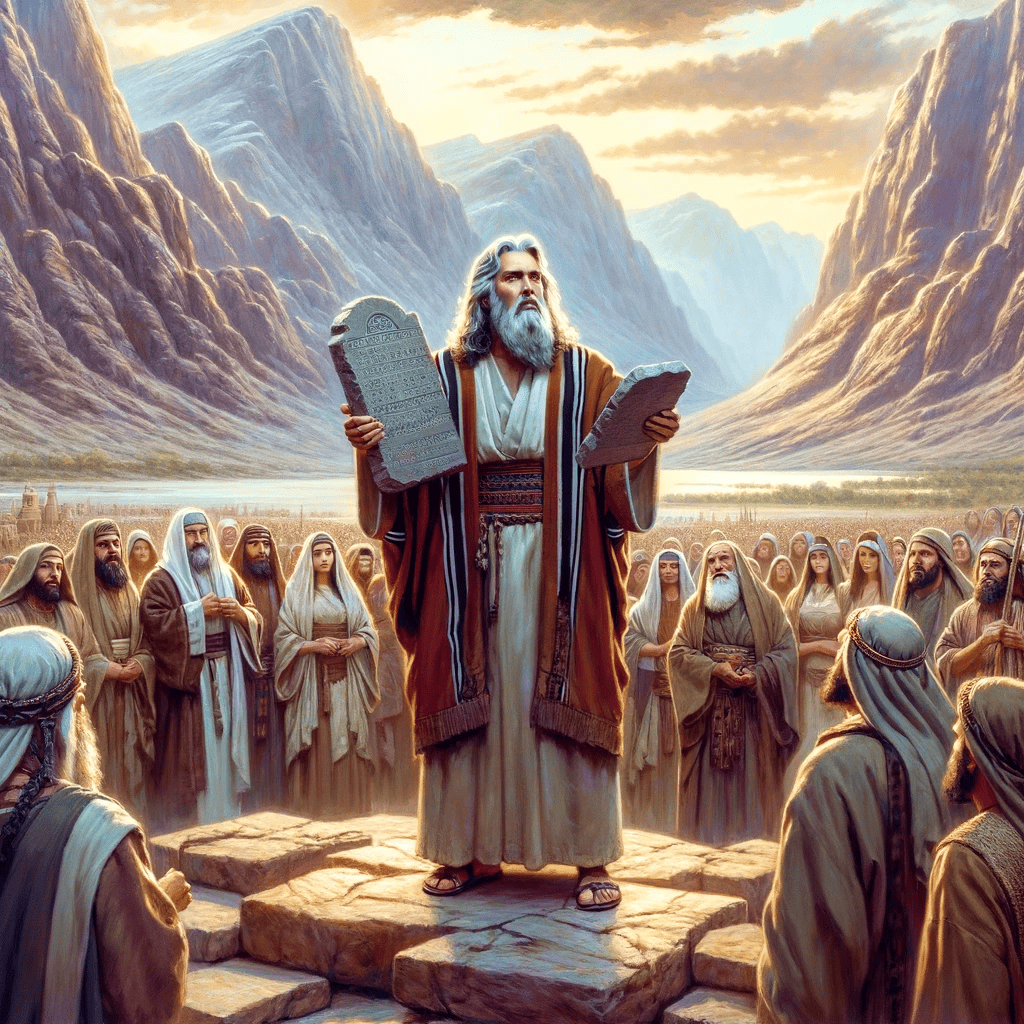
  1. The Ten Commandments: The chapter begins with God speaking to Moses, giving him the Ten Commandments, which are laws or rules that are intended to guide the Israelites in their worship of God and their interactions with each other.
  2. The commandments include directives to worship only God, to not make idols, to not misuse God’s name, to remember the Sabbath day and keep it holy, to honor one’s parents, and prohibitions against murder, adultery, theft, false testimony, and coveting.
  3. The Context and Setting: The events in Exodus 20 occur after the Israelites have been led out of Egypt by Moses, escaping their life of slavery. The setting is Mount Sinai, where Moses has gone to meet with God. This setting is crucial as it represents a direct communication between God and Moses, the leader of the Israelites.
  4. The Covenant: The giving of these commandments is part of a larger covenant between God and the Israelites. In this covenant, God promises to protect and favor the Israelites as His chosen people, in return for their commitment to follow His laws and commandments.
  5. The People’s Reaction: After receiving the commandments, Moses communicates them to the Israelites. The people are overwhelmed by the experience of witnessing God’s power and voice and express fear. They ask Moses to speak to God on their behalf in the future, rather than having God speak directly to them.
  6. Additional Instructions: The chapter concludes with God giving Moses additional instructions about how to worship Him properly, including directives about building altars and the appropriate sacrifices to offer.

God spoke all these words, saying, 

“I am Yahweh your God, who brought you out of the land of Egypt, out of the house of bondage.

“You shall have no other gods before me.

“You shall not make for yourselves an idol, nor any image of anything that is in the heavens above, or that is in the earth beneath, or that is in the water under the earth: 

you shall not bow yourself down to them, nor serve them, for I, Yahweh your God, am a jealous God, visiting the iniquity of the fathers on the children, on the third and on the fourth generation of those who hate me, 

and showing loving kindness to thousands of those who love me and keep my commandments.

“You shall not misuse the name of Yahweh your God, for Yahweh will not hold him guiltless who misuses his name.

“Remember the Sabbath day, to keep it holy.

 You shall labor six days, and do all your work, 

10 but the seventh day is a Sabbath to Yahweh your God. You shall not do any work in it, you, nor your son, nor your daughter, your male servant, nor your female servant, nor your livestock, nor your stranger who is within your gates; 

11 for in six days Yahweh made heaven and earth, the sea, and all that is in them, and rested the seventh day; therefore Yahweh blessed the Sabbath day, and made it holy.

12 “Honor your father and your mother, that your days may be long in the land which Yahweh your God gives you.

13 “You shall not murder.

14 “You shall not commit adultery.

15 “You shall not steal.

16 “You shall not give false testimony against your neighbor.

17 “You shall not covet your neighbor’s house. You shall not covet your neighbor’s wife, nor his male servant, nor his female servant, nor his ox, nor his donkey, nor anything that is your neighbor’s.”

18 All the people perceived the thunderings, the lightnings, the sound of the trumpet, and the mountain smoking. When the people saw it, they trembled, and stayed at a distance. 

19 They said to Moses, “Speak with us yourself, and we will listen; but don’t let God speak with us, lest we die.”

20 Moses said to the people, “Don’t be afraid, for God has come to test you, and that his fear may be before you, that you won’t sin.” 

21 The people stayed at a distance, and Moses came near to the thick darkness where God was.

22 Yahweh said to Moses, “This is what you shall tell the children of Israel: ‘You yourselves have seen that I have talked with you from heaven. 

23 You shall most certainly not make gods of silver or gods of gold for yourselves to be alongside me. 

24 You shall make an altar of earth for me, and shall sacrifice on it your burnt offerings and your peace offerings, your sheep and your cattle. In every place where I record my name I will come to you and I will bless you. 

25 If you make me an altar of stone, you shall not build it of cut stones; for if you lift up your tool on it, you have polluted it. 

26 You shall not go up by steps to my altar, that your nakedness may not be exposed to it.’

The Book of Exodus Chapter 19


Exodus Chapter 19 marks a significant moment in the history of Israel. This chapter describes the Israelites’ arrival at Mount Sinai three months after leaving Egypt. Upon their arrival, Moses goes up the mountain to speak with God. God reminds Moses of how He carried the Israelites on eagles’ wings and brought them to Himself.

God proposes a covenant with the Israelites: if they obey His voice and keep His covenant, they will be a treasured possession among all peoples, a kingdom of priests, and a holy nation. Moses conveys this message to the people, who collectively agree to do all that the Lord has spoken.

Moses relays the people’s response to God. Then, God gives instructions for the people to consecrate themselves in preparation for the third day, when He will come down on Mount Sinai in the sight of all the people. Specific instructions are given to set boundaries around the mountain, warning that touching the mountain would be deadly.

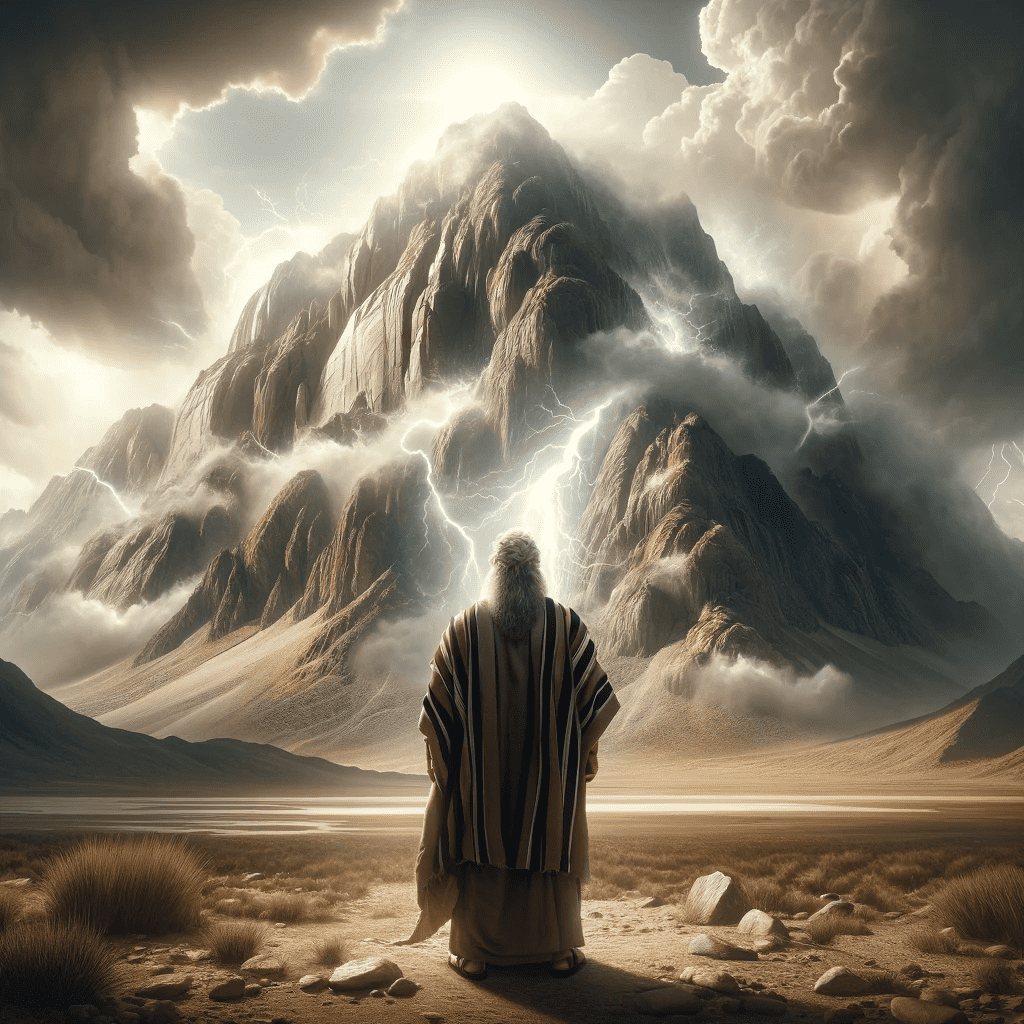
On the morning of the third day, there are thunder and lightning, a thick cloud on the mountain, and a very loud trumpet blast. Everyone in the camp trembles. Moses leads the people out of the camp to meet God, and they stand at the foot of the mountain. Mount Sinai is covered in smoke because the Lord descends on it in fire, and the whole mountain trembles greatly.

The sound of the trumpet grows louder and louder. Moses speaks, and God answers him in thunder. God comes down on the top of Mount Sinai and calls Moses to the top of the mountain. Moses goes up, and God instructs him to go down and warn the people not to break through to the Lord to look, lest many of them perish. Moses is also to bring Aaron up with him, but the priests and the people must not break through to come up to the Lord, or He will break out against them.

Moses goes down to the people and conveys God’s instructions, setting the stage for the subsequent revelation of the Ten Commandments.

In the third month after the children of Israel had gone out of the land of Egypt, on that same day they came into the wilderness of Sinai. 

When they had departed from Rephidim, and had come to the wilderness of Sinai, they encamped in the wilderness; and there Israel encamped before the mountain. 

Moses went up to God, and Yahweh called to him out of the mountain, saying, “This is what you shall tell the house of Jacob, and tell the children of Israel: 

‘You have seen what I did to the Egyptians, and how I bore you on eagles’ wings, and brought you to myself. 

Now therefore, if you will indeed obey my voice and keep my covenant, then you shall be my own possession from among all peoples; for all the earth is mine; 

and you shall be to me a kingdom of priests and a holy nation.’ These are the words which you shall speak to the children of Israel.”

Moses came and called for the elders of the people, and set before them all these words which Yahweh commanded him. 

All the people answered together, and said, “All that Yahweh has spoken we will do.”

Moses reported the words of the people to Yahweh. 

Yahweh said to Moses, “Behold, I come to you in a thick cloud, that the people may hear when I speak with you, and may also believe you forever.” Moses told the words of the people to Yahweh. 

10 Yahweh said to Moses, “Go to the people, and sanctify them today and tomorrow, and let them wash their garments, 11 and be ready for the third day; for on the third day Yahweh will come down in the sight of all the people on Mount Sinai. 

12 You shall set bounds to the people all around, saying, ‘Be careful that you don’t go up onto the mountain, or touch its border. Whoever touches the mountain shall be surely put to death. 

13 No hand shall touch him, but he shall surely be stoned or shot through; whether it is animal or man, he shall not live.’ When the trumpet sounds long, they shall come up to the mountain.”

14 Moses went down from the mountain to the people, and sanctified the people; and they washed their clothes. 

15 He said to the people, “Be ready by the third day. Don’t have sexual relations with a woman.”

16 On the third day, when it was morning, there were thunders and lightnings, and a thick cloud on the mountain, and the sound of an exceedingly loud trumpet; and all the people who were in the camp trembled. 

17 Moses led the people out of the camp to meet God; and they stood at the lower part of the mountain. 18 All of Mount Sinai smoked, because Yahweh descended on it in fire; and its smoke ascended like the smoke of a furnace, and the whole mountain quaked greatly. 

19 When the sound of the trumpet grew louder and louder, Moses spoke, and God answered him by a voice.

 20 Yahweh came down on Mount Sinai, to the top of the mountain. Yahweh called Moses to the top of the mountain, and Moses went up.

21 Yahweh said to Moses, “Go down, warn the people, lest they break through to Yahweh to gaze, and many of them perish. 

22 Let the priests also, who come near to Yahweh, sanctify themselves, lest Yahweh break out on them.”

23 Moses said to Yahweh, “The people can’t come up to Mount Sinai, for you warned us, saying, ‘Set bounds around the mountain, and sanctify it.’ ”

24 Yahweh said to him, “Go down! You shall bring Aaron up with you, but don’t let the priests and the people break through to come up to Yahweh, lest he break out against them.”

25 So Moses went down to the people, and told them.

The Book of Exodus Chapter 18


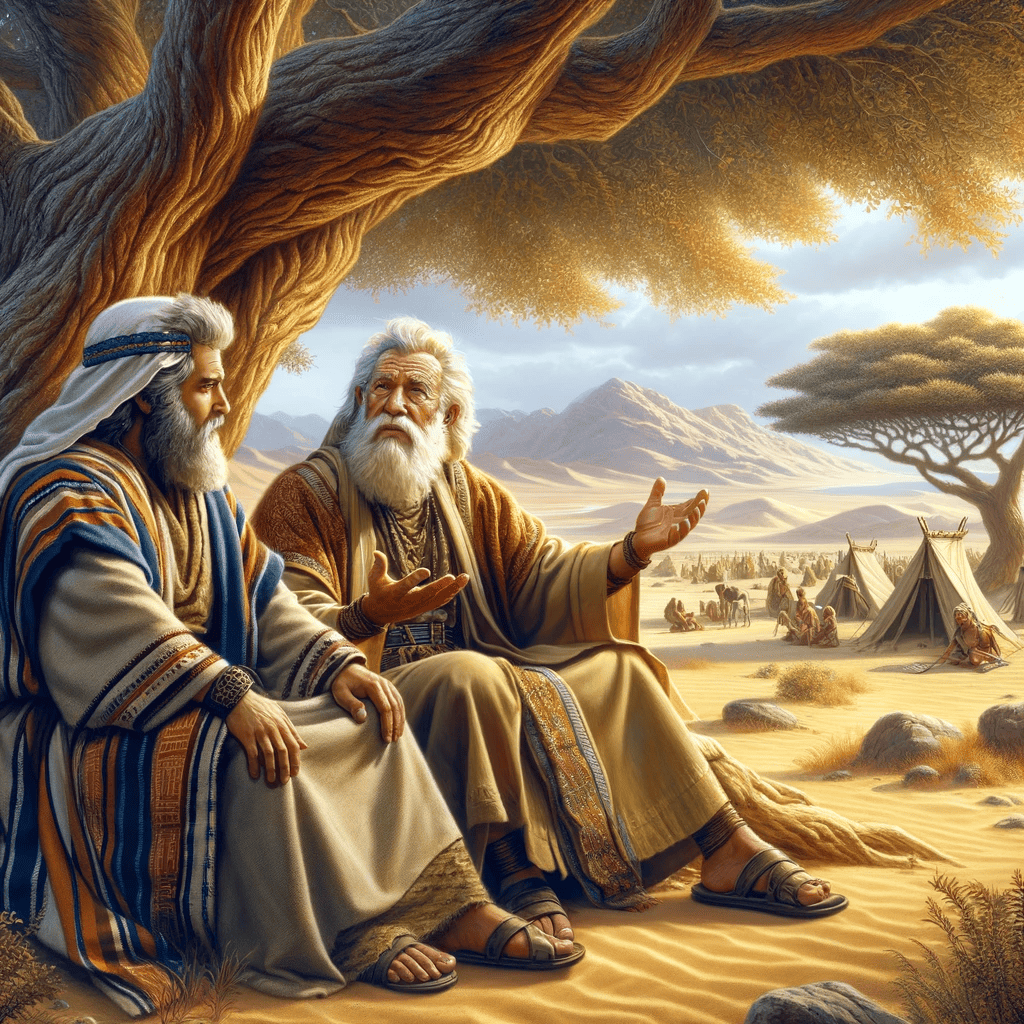
Chapter 18 of the Book of Exodus details an important encounter between Moses and his father-in-law, Jethro. In this chapter, Jethro, who is a priest of Midian, hears of the wonderful things God has done for the Israelites and decides to visit Moses, bringing with him Moses’ wife, Zipporah, and their two sons.

Upon arrival, Jethro rejoices and praises God for delivering the Israelites from Egypt. He offers sacrifices to God, and the elders of Israel join him in a meal before God. During his visit, Jethro observes Moses judging the people from morning till evening. Concerned about this, he advises Moses that the task is too heavy for him to handle alone. He suggests appointing able men as leaders over thousands, hundreds, fifties, and tens to judge the smaller matters themselves, reserving only the great matters for Moses. This way, Moses can endure, and the people can go to their place in peace.

Moses listens to Jethro’s advice and implements his plan, appointing capable men as leaders over the people. After this, Jethro returns to his own land. This chapter is significant for showing the delegation of authority and the establishment of a more efficient system of governance among the Israelites.

Now Jethro, the priest of Midian, Moses’ father-in-law, heard of all that God had done for Moses and for Israel his people, how Yahweh had brought Israel out of Egypt.

Jethro, Moses’ father-in-law, received Zipporah, Moses’ wife, after he had sent her away, 

and her two sons. The name of one son was Gershom, for Moses said, “I have lived as a foreigner in a foreign land”. 

The name of the other was Eliezer, for he said, “My father’s God was my help and delivered me from Pharaoh’s sword.” 

Jethro, Moses’ father-in-law, came with Moses’ sons and his wife to Moses into the wilderness where he was encamped, at the Mountain of God. 

He said to Moses, “I, your father-in-law Jethro, have come to you with your wife, and her two sons with her.”

Moses went out to meet his father-in-law, and bowed and kissed him. They asked each other of their welfare, and they came into the tent. 

Moses told his father-in-law all that Yahweh had done to Pharaoh and to the Egyptians for Israel’s sake, all the hardships that had come on them on the way, and how Yahweh delivered them. 

Jethro rejoiced for all the goodness which Yahweh had done to Israel, in that he had delivered them out of the hand of the Egyptians. 

10 Jethro said, “Blessed be Yahweh, who has delivered you out of the hand of the Egyptians, and out of the hand of Pharaoh; who has delivered the people from under the hand of the Egyptians. 

11 Now I know that Yahweh is greater than all gods because of the way that they treated people arrogantly.” 

12 Jethro, Moses’ father-in-law, took a burnt offering and sacrifices for God. Aaron came with all the elders of Israel, to eat bread with Moses’ father-in-law before God.

13 On the next day, Moses sat to judge the people, and the people stood around Moses from the morning to the evening. 

14 When Moses’ father-in-law saw all that he did to the people, he said, “What is this thing that you do for the people? Why do you sit alone, and all the people stand around you from morning to evening?”

15 Moses said to his father-in-law, “Because the people come to me to inquire of God. 

16 When they have a matter, they come to me, and I judge between a man and his neighbor, and I make them know the statutes of God, and his laws.” 

17 Moses’ father-in-law said to him, “The thing that you do is not good. 

18 You will surely wear away, both you, and this people that is with you; for the thing is too heavy for you. You are not able to perform it yourself alone. 

19 Listen now to my voice. I will give you counsel, and God be with you. You represent the people before God, and bring the causes to God. 

20 You shall teach them the statutes and the laws, and shall show them the way in which they must walk, and the work that they must do. 

21 Moreover you shall provide out of all the people able men which fear God: men of truth, hating unjust gain; and place such over them, to be rulers of thousands, rulers of hundreds, rulers of fifties, and rulers of tens. 

22 Let them judge the people at all times. It shall be that every great matter they shall bring to you, but every small matter they shall judge themselves. So shall it be easier for you, and they shall share the load with you. 

23 If you will do this thing, and God commands you so, then you will be able to endure, and all these people also will go to their place in peace.”

24 So Moses listened to the voice of his father-in-law, and did all that he had said. 

25 Moses chose able men out of all Israel, and made them heads over the people, rulers of thousands, rulers of hundreds, rulers of fifties, and rulers of tens. 

26 They judged the people at all times. They brought the hard cases to Moses, but every small matter they judged themselves. 

27 Moses let his father-in-law depart, and he went his way into his own land.

The Book of Exodus Chapter 17


Chapter 17 of the Book of Exodus narrates two significant events in the journey of the Israelites after their exodus from Egypt. The chapter is divided into two main parts:

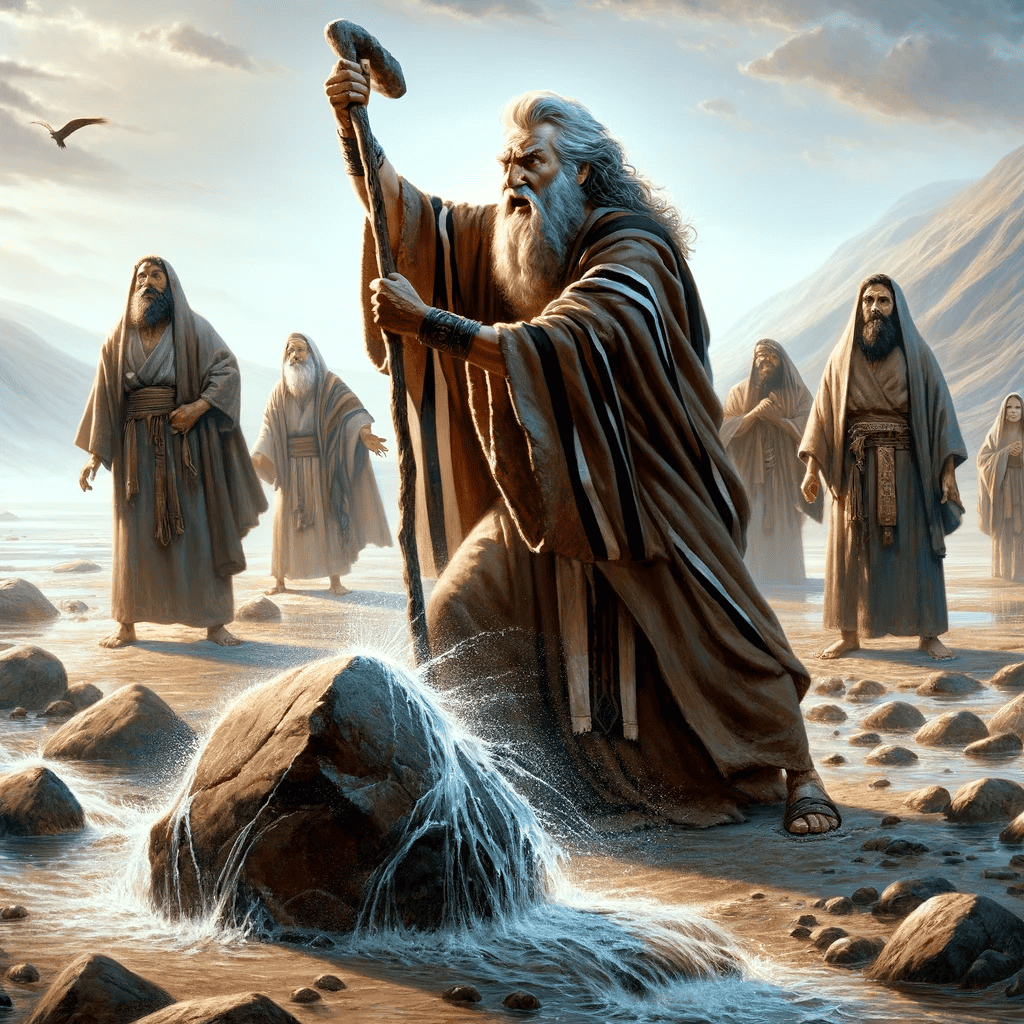
  1. Water from the Rock at Rephidim: The Israelites, journeying through the desert, face a severe water shortage at Rephidim and complain to Moses. They question Moses’ leadership and doubt the presence of God among them. In response to their distress, God instructs Moses to strike a rock at Horeb with his staff.
  2. When Moses does so, water miraculously flows from the rock, providing the necessary sustenance for the people. This event is a testament to God’s ongoing provision for the Israelites despite their doubts and complaints.
  3. Battle with the Amalekites: The second part of the chapter describes the Israelites’ encounter with the Amalekites. The Amalekites attack the Israelites, leading to a battle. Moses, Aaron, and Hur go up to the top of a hill. As long as Moses keeps his hands raised, the Israelites prevail; when he lowers his hands, the Amalekites gain the upper hand. Aaron and Hur support Moses’ arms, keeping them steady until sunset.
  4. With this divine intervention, Joshua and the Israelite army defeat the Amalekites. The chapter concludes with God instructing Moses to record this victory as a remembrance and declaring that He will completely blot out the memory of Amalek from under heaven.

All the congregation of the children of Israel traveled from the wilderness of Sin, starting according to Yahweh’s commandment, and encamped in Rephidim; but there was no water for the people to drink. 

Therefore the people quarreled with Moses, and said, “Give us water to drink.”

Moses said to them, “Why do you quarrel with me? Why do you test Yahweh?”

The people were thirsty for water there; so the people murmured against Moses, and said, “Why have you brought us up out of Egypt, to kill us, our children, and our livestock with thirst?”

Moses cried to Yahweh, saying, “What shall I do with these people? They are almost ready to stone me.”

Yahweh said to Moses, “Walk on before the people, and take the elders of Israel with you, and take the rod in your hand with which you struck the Nile, and go. 

Behold, I will stand before you there on the rock in Horeb. You shall strike the rock, and water will come out of it, that the people may drink.” Moses did so in the sight of the elders of Israel. 

He called the name of the place Massah, and Meribah, because the children of Israel quarreled, and because they tested Yahweh, saying, “Is Yahweh among us, or not?”

Then Amalek came and fought with Israel in Rephidim. 

Moses said to Joshua, “Choose men for us, and go out to fight with Amalek. Tomorrow I will stand on the top of the hill with God’s rod in my hand.” 

10 So Joshua did as Moses had told him, and fought with Amalek; and Moses, Aaron, and Hur went up to the top of the hill. 

11 When Moses held up his hand, Israel prevailed. When he let down his hand, Amalek prevailed. 

12 But Moses’ hands were heavy; so they took a stone, and put it under him, and he sat on it. Aaron and Hur held up his hands, the one on the one side, and the other on the other side. His hands were steady until sunset. 

13 Joshua defeated Amalek and his people with the edge of the sword. 

14 Yahweh said to Moses, “Write this for a memorial in a book, and rehearse it in the ears of Joshua: that I will utterly blot out the memory of Amalek from under the sky.” 

15 Moses built an altar, and called its name “Yahweh our Banner”. 

16 He said, “Yah has sworn: ‘Yahweh will have war with Amalek from generation to generation.’ ”