Nestled in the heart of Florence, Kentucky, a historic institution has stood as a beacon of spiritual resilience since 1806. Founded by Virginia settlers in Boone County, this congregation’s story reflects the determination of pioneers to establish lasting traditions. Their legacy lives on through a Late Gothic Revival building completed in 1917, the fourth structure to occupy this sacred ground.
The site’s cemetery offers a quiet tribute to generations of families who shaped the area’s identity. Recognized on the National Register of Historic Places in 1989, the grounds blend architectural beauty with cultural significance. Visitors today can trace local history through weathered headstones and admire craftsmanship that has weathered over a century of change.
What makes this place unique isn’t just its age, but its ability to evolve while honoring original values. From hosting community events to preserving ancestral connections, it demonstrates how institutions can adapt without losing their core purpose. The blend of past and present creates a living testament to shared faith and collective effort.
Key Takeaways
- Founded in 1806 by Virginia settlers, making it one of Boone County’s oldest religious institutions
- Current Late Gothic Revival building constructed in 1917 as the fourth iteration on the same site
- Historic cemetery listed on the National Register of Historic Places in 1989
- Showcases how communities maintain traditions while adapting to modern needs
- Architectural details and burial grounds provide tangible links to regional heritage
Historical Journey and Community Origins
Fourteen families packed their lives into wagons in 1805, determined to plant their faith in Kentucky’s untamed soil. Their 700-mile trek from Virginia’s Hebron Lutheran community became the foundation story of Boone County’s oldest religious institution.
Founding and Early Beginnings
The Hoffman, Rouse, and Zimmermann families faced swollen rivers and mountain passes during their seven-week journey. Guided by Daniel Boone’s trail, they reached Boone County just before winter. “We carried our hymns like seeds,” one settler later recalled, describing how German-language services began in George Rouse’s cabin.
By 1807, these pioneers built a log meetinghouse on donated land. For eight years, farmer Ephraim Tanner led services until Rev. William Carpenter arrived. A Revolutionary War veteran, Carpenter brought structure from his Virginia congregation, blending frontier resilience with traditional practices.
Community Impact in Early Boone County
The settlers’ German constitution, adopted in 1806, became a social anchor. Their worship space doubled as a school and town hall, fostering unity among frontier families. Annual harvest festivals drew neighbors from miles away, weaving the congregation into the county’s cultural fabric.
Graves in the church cemetery tell silent stories of early pioneers. Their legacy shaped local education, land use, and civic traditions—proof that determined families could thrive where wilderness once ruled.
Architectural and Renovation Milestones
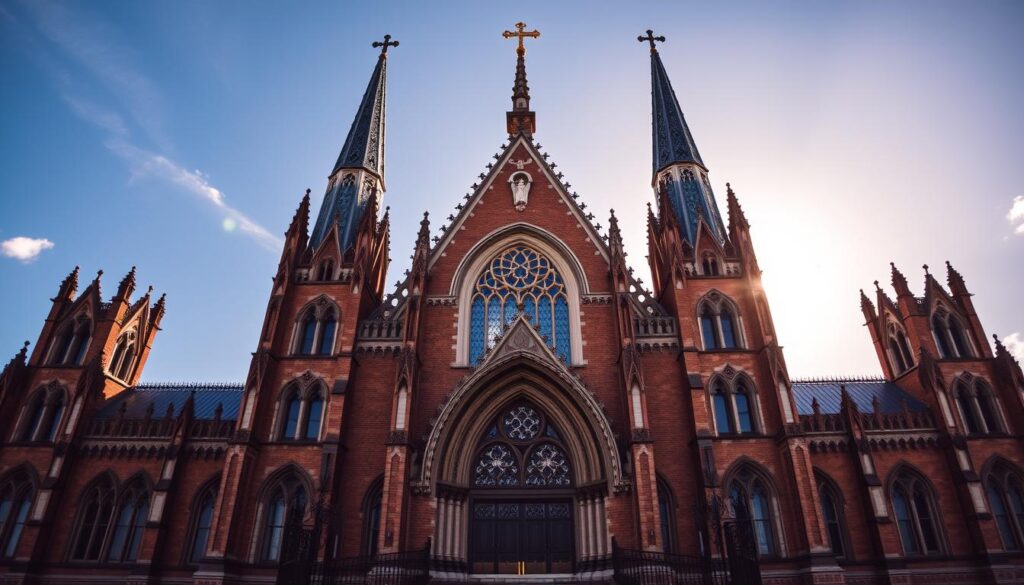
Rebuilding became a recurring theme for this Boone County congregation. After flames claimed three earlier buildings, the 1917 structure rose as a triumph of persistence. Its Late Gothic Revival design featured pointed arches and stone tracery, blending tradition with modern comforts like electric lighting—a rarity in rural Kentucky at the time.
Evolution of Church Structures and Repairs
The $12,000 construction budget funded groundbreaking amenities. A spacious auditorium hosted gatherings, while the kitchen’s enameled sinks reflected contemporary standards. “We’ve built not just walls, but a legacy,” declared one member during the 1917 dedication. Over 1,000 attendees celebrated the achievement, contributing $4,000 in a single day toward remaining costs.
Historic Preservation and the National Register
Decades later, the site earned federal recognition. Added to the National Register of Historic Places in 1989, its 0.5-acre grounds now enjoy protected status. The designation preserves both the building and adjacent cemetery through the National Park Service’s information system. This ensures future generations can study the property’s architectural details and community impact.
Original blueprints show how designers balanced beauty with practicality. Sturdy brick walls replaced flammable materials from earlier structures. Today, careful restorations maintain stained glass windows while upgrading facilities for modern use—a seamless blend of past and present.
Hopeful Lutheran Church in Boone County
This Boone County institution remains a living archive of regional identity. Its impact extends beyond Sunday services, shaping education, genealogy studies, and local traditions for over 200 years.
Influence on Local Heritage and Community Life
The grounds serve as both spiritual home and historical record. With 2,209 memorials, the cemetery documents pioneer stories through weathered inscriptions. Genealogists frequently visit to trace family roots using these markers.
| Identifier | System | Code |
|---|---|---|
| GIS Unique ID | Boone County | 88 |
| Cemetery Index | County Map | 89 |
| Feature ID | US Geological Survey | 2090237 |
Descendants of original families still lead community initiatives today. “Our ancestors taught us to build bridges, not walls,” notes a Hoffman family member active in preservation efforts.
Legacy of Pastoral Leadership
Rev. William Carpenter’s Revolutionary War-era values still guide the congregation. Later pastors expanded outreach programs, including food drives and youth mentorship. This tradition of service strengthens Boone County’s social fabric.
The National Register designation attracts architecture enthusiasts nationwide. Visitors admire Gothic Revival details while learning about Kentucky’s religious history. Through tours and events, the site keeps pioneer stories alive for new generations.
Conclusion
Over two centuries of perseverance have shaped this Boone County landmark into more than just a place of worship. From log cabin meetings to a National Register-listed site, its story showcases how communities endure through shared purpose. Three rebuilds after devastating fires prove that foundations matter more than walls.
Today, the property serves dual roles. It’s both active congregation space and open-air history book. Visitors trace family roots through weathered headstones while admiring Late Gothic Revival architecture that’s survived generations.
What began with fourteen families now impacts thousands annually. Their descendants still lead preservation efforts, ensuring pioneer values inform modern outreach programs. This living legacy reminds us that true institutions outlast buildings—they’re built through collective action and unwavering vision.
FAQ
When was the congregation established in Boone County?
The parish traces its roots to 1848, when German immigrants formed a tight-knit spiritual community. Early services were held in homes before constructing their first sanctuary.
Has the building undergone significant renovations?
Yes. The original 1850s log structure was replaced by a brick edifice in 1898. Major repairs in the 1950s and 1990s preserved its Gothic Revival features, ensuring its place on the National Register of Historic Places.
How did early members shape local heritage?
Founding families like the Muellers and Schmidts contributed to agriculture, education, and civic leadership. Their legacy is honored through preserved records and a maintained cemetery dating to the 1850s.
What role does the parish play today?
It remains a hub for worship, outreach, and cultural events. Annual gatherings like Harvest Fest connect generations while supporting food pantries and youth programs across the region.
Are historical records accessible to the public?
Yes. Archives include minutes from 19th-century meetings, baptismal registries, and photos. Researchers can request access through the Hebron Lutheran Synod’s regional office.
Who were notable leaders in its early years?
Rev. Friedrich Braun, who served from 1862–1889, expanded Sunday school programs. His sermons, written in German script, are displayed during heritage months at the Boone County History Museum.