In the 16th century, England experienced a religious shift that changed its history forever. While many assume this transformation stemmed from theological debates, the truth is far more personal. At its core, the split from Rome was driven by one man’s quest for control—and a heir.
The king’s famous break with the Catholic Church began not with sermons or scripture, but with a marriage dispute. Desperate to annul his union with Catherine of Aragon, he clashed with papal authority. When Rome refused to grant the divorce, political ambition outweighed loyalty to tradition.
By 1534, the Act of Supremacy declared the monarch the sole leader of England’s religious affairs. This bold move created a unique institution—one that kept Catholic rituals but rejected foreign influence. Though often called the start of the Reformation in England, the change prioritized royal power over genuine doctrinal reform.
Key Takeaways
- The split from Rome was fueled by personal needs, not religious beliefs
- Royal authority replaced papal control through the 1534 Act of Supremacy
- Traditional Catholic practices remained despite the political break
- Marriage disputes and succession concerns drove the king’s actions
- This shift laid groundwork for future Protestant changes in England
Historical Context of Henry VIII’s Reign
Ascending to the throne at just 18, Henry VIII inherited a kingdom still healing from decades of conflict. The Tudor dynasty had secured power only 24 years earlier through the brutal War of the Roses. This bloody civil war left England craving stability—a burden that fell squarely on the young monarch’s shoulders.
The Tudor Dynasty and Its Legacy
Henry’s father, Henry VII, spent his reign cementing Tudor authority. Victory over Richard III in 1485 ended generations of feudal warfare but required careful alliances. Religious approval became crucial—the crown relied on Rome’s blessing to justify its rule. As one court observer noted: “No king reigns long without God’s favor—or the Pope’s.”
This dependency shaped Henry VIII’s early decisions. His swift marriage to Catherine of Aragon—despite biblical objections—showed how deeply royal strategy intertwined with Church diplomacy. Even as he later defied papal authority, the king initially embraced Catholic traditions, earning the title “Defender of the Faith” for opposing Protestant reforms.
England in the 16th Century
By 1509, England stood at a crossroads. Decades of civil war had weakened noble families, giving monarchs unprecedented control. Yet producing a male heir remained urgent—without one, rival claims could reignite chaos. The geopolitical chessboard also pressured Henry: France and the Holy Roman Empire loomed as both allies and threats.
Three factors defined this era:
- A fragile monarchy seeking legitimacy
- Growing royal power over fractured nobles
- International tensions requiring shrewd alliances
These forces explain why Henry’s later break from Rome stunned Europe. It wasn’t just a marital dispute—it risked undoing decades of careful state-building.
Catalysts for Religious Change in England
England’s religious landscape transformed through a perfect storm of personal crises and international politics. At the heart of this shift lay a royal marriage crumbling under the weight of succession demands and papal power plays.
Political Pressures and Papal Interference
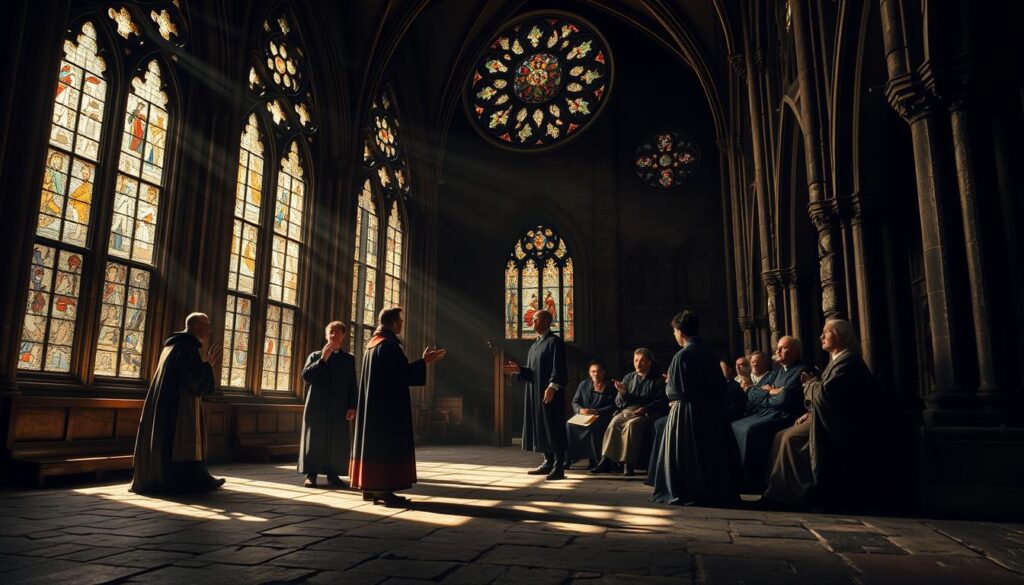
Charles V, Holy Roman Emperor and nephew of Catherine Aragon, held immense sway over Pope Clement VII. When king henry sought to end his marriage, the pope faced impossible choices. Imperial troops surrounded Rome, making approval of the divorce politically dangerous.
This stalemate revealed a harsh truth: religious authority bowed to earthly power. As one diplomat noted, “The keys of heaven rust when emperors draw swords.”
Marital Disputes and the Quest for a Male Heir
Catherine’s six pregnancies yielded only one surviving daughter—Mary. Meanwhile, Henry’s mistress proved he could father sons, intensifying pressure to secure a legitimate male heir. Anne Boleyn’s refusal to be anything less than queen added fuel to the fire.
The king’s legal team made a controversial case:
- Their marriage violated Levitical law (she was his brother‘s widow)
- God’s displeasure showed through failed pregnancies
- National stability required a son
| Factor | Key Players | Impact |
|---|---|---|
| Political Blackmail | Charles V | Blocked annulment |
| Dynastic Crisis | Catherine Aragon | Succession doubts |
| Legal Argument | Henry VIII | Religious justification |
These intertwined issues created an irreversible momentum. By 1533, Henry took radical action—marrying Anne Boleyn without papal approval. The stage was set for England’s dramatic break with Rome.
Key Figures Who Shaped the Religious Reformation
Behind England’s seismic religious changes stood individuals whose ambitions and beliefs reshaped a kingdom. Their alliances and rivalries turned personal dramas into national policy, forging a new path for English spirituality.
Advisors and Theologians: Architects of Change
Thomas Cranmer, appointed Archbishop of Canterbury in 1533, became the king’s theological bulldozer. He declared Henry’s first marriage invalid, arguing that royal authority trumped papal decrees. His reforms laid groundwork for later Protestant practices while maintaining traditional rituals.
Thomas Cromwell operated as the political mastermind. He engineered legal frameworks to transfer power from Rome to the crown. One court observer noted: “Cromwell’s pen wrote laws faster than priests could recite prayers.”
Royal Partners: From Thrones to Scaffolds
Catherine of Aragon‘s refusal to accept annulment made her a stubborn obstacle. As Henry’s first wife, her defiance forced radical solutions. Meanwhile, Anne Boleyn‘s rise as queen brought reformist ideas to the court—until her failure to bear a son led to her execution.
Jane Seymour’s brief reign produced the desired male heir but left no lasting religious legacy. Even Cardinal Thomas Wolsey, once the king’s closest advisor, learned the price of failure when he couldn’t secure the papal annulment.
| Figure | Role | Impact |
|---|---|---|
| Thomas Cranmer | Archbishop of Canterbury | Legalized royal divorce |
| Anne Boleyn | Queen Consort | Advanced reformist ideas |
| Thomas Cromwell | Chief Minister | Destroyed papal authority |
| Cardinal Wolsey | Former Advisor | Showed consequences of failure |
These players’ intersecting stories reveal how personal motives and statecraft merged. Their actions didn’t just change marriages—they redirected an entire nation’s spiritual journey.
The Emergence of the protestant church henry 8th
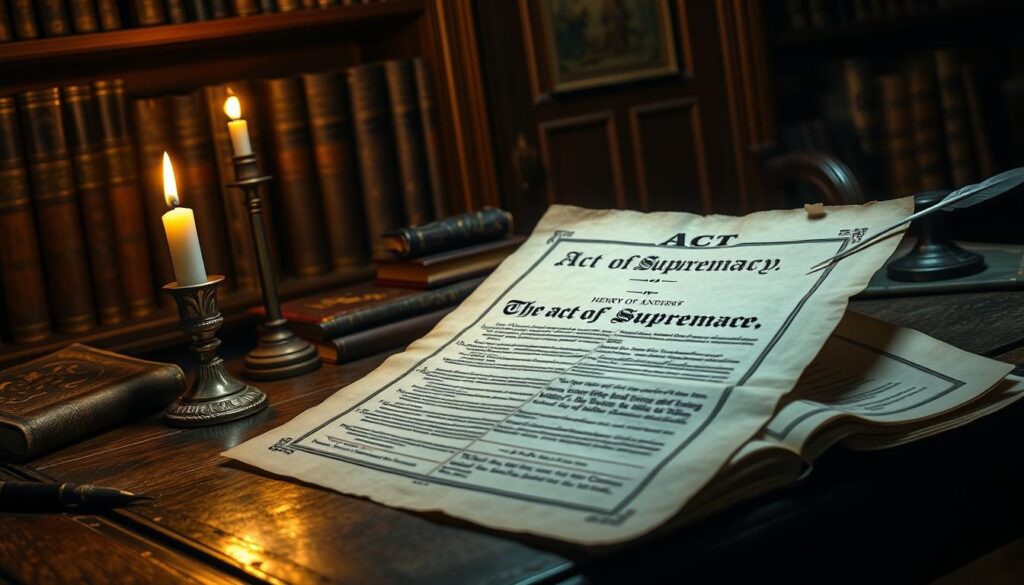
In 1534, a single law reshaped England’s spiritual landscape forever. Parliament’s Act of Supremacy didn’t just tweak religious rules—it launched a constitutional revolution. Overnight, centuries of papal control vanished as the monarch became the undisputed head of the Church of England.
The Act of Supremacy and Its Impact
This groundbreaking law made the king the ultimate religious authority. Clergy now answered to the crown, not Rome. But the real teeth came with the Treasons Act—disagreeing with royal supremacy became punishable by death. Sir Thomas More learned this brutally when he refused to endorse the new order.
“Loyalty to conscience now meant treason to the state,” wrote one terrified monk in his diary. The laws created a climate where silence became safer than speech.
Legal and Political Maneuvers That Redefined Authority
Thomas Cranmer and Anne Boleyn pushed reforms while walking a tightrope. They introduced English Bibles but kept traditional rituals. Monasteries stayed open, yet the crown seized their wealth. This balancing act created a unique hybrid faith—politically independent but doctrinally cautious.
Three key changes emerged:
- Nationalized religious governance
- Royal control over doctrine
- Selective adoption of Reformation ideas
Though surface practices looked familiar, the Church of England now served state interests first. This fusion of spiritual and political authority would shape English identity for centuries.
Reformation Dynamics: Shifts, Dissolution, and Redistribution
Between 1536 and 1540, England witnessed the greatest property transfer in its history. Monasteries crumbled as the crown seized their assets—land equal to one-third of the kingdom. This bold move reshaped power structures and created loyalties that lasted generations.

Dissolution of Monasteries and Property Redistribution
The crown dismantled over 800 religious houses, funneling their wealth into royal coffers. Henry VIII cleverly rewarded both Protestant allies and Catholic nobles with former monastic lands. A court insider wrote: “Gold buys loyalty better than prayers ever could.”
Surprisingly, public outrage stayed muted. Many commoners resented the Catholic Church‘s vast holdings. When news spread that clergy owned more property than all nobles combined, even devout followers questioned the imbalance.
Long-term Changes in Ecclesiastical Practices
English Bibles appeared in parishes by royal decree—a revolutionary shift. For the first time, ordinary people could read scripture without Latin translators. This change planted seeds for future reforms, though Henry VIII still executed those challenging traditional doctrine.
The land redistribution created powerful allies. New owners—whether Protestant or Catholic—fiercely opposed returning estates to Rome. Their self-interest became England’s safeguard against reversing the break with the Catholic Church.
Conclusion
England’s religious identity took a dramatic turn through royal ambition and personal crises. The king’s desperate need for a male heir reshaped national faith, creating the Church of England as a political tool. Though rooted in marital disputes, this split from the Catholic Church planted seeds for future spiritual reforms.
Anne Boleyn’s influence accelerated changes, but her failure to produce a son sealed her tragic fate. The crown’s new religious authority blended old rituals with royal control—a compromise that angered traditionalists and reformers alike.
Legacy emerged from chaos. While the king secured his dynasty through Jane Seymour’s son, his daughter Elizabeth later solidified England’s unique path. Personal desires, not theology, forged a system where power and faith became inseparable partners.
FAQ
Why did Henry VIII split from the Catholic Church?
The king sought to annul his marriage to Catherine of Aragon after she failed to produce a male heir. When the Pope refused, Henry used Parliament to pass laws declaring himself Supreme Head of the Church of England, bypassing Rome’s authority.
What was the significance of the Act of Supremacy?
Passed in 1534, this law formally recognized Henry as the highest authority in England’s religious affairs. It severed ties with the Pope and granted the monarchy control over church doctrine, property, and appointments.
How did Henry’s marriages influence religious reforms?
His desire to marry Anne Boleyn—and later others—drove his break with Rome. Advisors like Thomas Cranmer and Thomas Cromwell leveraged these personal crises to push legal and theological changes, reshaping England’s religious identity.
What happened to monasteries during this period?
Between 1536 and 1541, Henry ordered the dissolution of monasteries. Their lands and wealth were seized by the Crown, redistributed to nobles, or sold. This weakened Catholic influence and enriched the monarchy and its allies.
Did Henry VIII fully embrace Protestant beliefs?
Despite rejecting papal authority, Henry retained many Catholic practices. The Ten Articles of 1536 blended traditional doctrines with reformist ideas, reflecting his desire to balance change with political stability.
How did Anne Boleyn impact the Reformation?
Anne supported reformist thinkers and pushed Henry toward defiance of the Pope. Her marriage to the king accelerated legislative actions like the Act of Supremacy, though her execution later shifted the court’s religious dynamics.
What long-term effects did Henry’s reforms have?
His actions laid the groundwork for England’s Protestant future. By centralizing power under the monarchy and redistributing church wealth, he reshaped political, social, and religious structures for generations.