Step into a world where every stone tells a story and the air hums with ancient wisdom. These sacred spaces blend stunning artistry with deep spiritual purpose, creating environments that inspire awe across generations. At their core, they serve as homes for divine energies, inviting visitors to connect with something greater than themselves.
The design of these structures reflects centuries of philosophical thought. Towering spires point toward the heavens, while intricate carvings depict timeless myths. Visitors often describe feeling transported by the scent of fresh flowers, rhythmic chants, and flickering oil lamps that illuminate sacred icons.
Modern versions maintain traditional values while embracing new communities worldwide. From bustling cities to quiet suburbs, these spaces preserve cultural heritage while adapting to contemporary needs. They welcome both lifelong devotees and curious explorers seeking meaning.
This guide illuminates the hidden layers of significance within every corner. You’ll discover how architecture shapes spiritual experiences and why rituals create lasting connections. Let’s explore how these living traditions continue to thrive in our modern world.
Key Takeaways
- Sacred structures blend artistic mastery with spiritual symbolism
- Design elements guide visitors through transformative experiences
- Rituals create personal connections with divine energies
- Global communities preserve traditions while adapting to new contexts
- Every detail carries layers of historical and philosophical meaning
- Sensory elements enhance meditative practices and reflection
Understanding the Historical Origins of Hindu Temples
Ancient civilizations laid the groundwork for spiritual spaces that would evolve into magnificent structures over millennia. Early societies blended practical needs with symbolic meaning, creating blueprints that still shape sacred architecture today.
Indus Valley and Early Vedic Influences
Archaeologists found stone platforms and water systems in Indus Valley sites (3300–1300 BCE). These suggest early attempts at organized worship spaces. Vedic traditions later used temporary altars for fire rituals, focusing on cosmic forces rather than physical icons.
| Region | Construction Start | Key Material | Unique Feature |
|---|---|---|---|
| North India | 5th century CE | Sandstone | Curved spires |
| South India | 6th century CE | Granite | Pyramid towers |
The Emergence of Bhakti Movements
Devotional practices changed everything. By 700 CE, people wanted personal connections with deities. This shift created demand for permanent spaces where communities could gather. Wealthy patrons funded elaborate projects, turning local legends into stone-carved realities.
Sacred texts like the Puranas inspired temple locations. Builders chose sites linked to divine stories, making each structure feel like part of an eternal narrative. Craftsmen developed precise design rules, ensuring every detail carried spiritual weight.
Sacred Architecture: Styles and Regional Varieties
Across India’s diverse landscapes, sacred structures rise with distinct personalities shaped by geography and tradition. Builders adapted to local climates while honoring cosmic principles, creating spaces that feel both timeless and regionally specific. These designs reveal how communities interpreted spiritual concepts through their environment.

North Indian Temples: Shikhara and Garbhagriha
Northern designs reach skyward with shikhara spires resembling mountain peaks. These curved towers guide eyes upward, symbolizing humanity’s connection to the divine. At their base lies the garbhagriha – a square chamber housing the primary deity.
This inner sanctum stays dimly lit, creating intense focus during worship. Narrow passages lead devotees through progressively sacred zones, building anticipation before entering the main shrine.
South Indian Temples: Vimanas and Gopurams
Southern complexes announce their presence with gopuram gateways towering over surrounding landscapes. These pyramid-shaped entries feature thousands of carved figures telling mythological stories. Beyond them rises the vimana – a stepped tower marking the sanctum’s location.
| Feature | North Indian | South Indian |
|---|---|---|
| Main Tower | Curved shikhara | Stepped vimana |
| Entryway | Subtle arches | Ornate gopuram |
| Sanctum | Compact square | Expansive complex |
| Materials | Sandstone | Granite |
Water plays vital roles in southern sites. Temple tanks provide ritual cleansing areas while cooling surrounding spaces. Kerala’s wooden structures with sloped roofs show adaptations to heavy rains, contrasting with Bengal’s curved terracotta designs.
Symbolism and Theology in Temple Design
Every curve, angle, and measurement in these sacred spaces whispers ancient secrets about our universe. Architects used sacred geometry to map divine principles into physical form, creating environments where stone becomes scripture. At the heart of this design philosophy lies the mandala – a cosmic blueprint guiding every construction decision.
The Mandala, Purusa, and Cosmic Order
The mandala’s geometric grid acts like a spiritual GPS. Each square corresponds to specific gods and cosmic forces, ensuring balance between earthly and heavenly realms. Vedic texts compare this system to DNA – a coded map shaping how energy flows through the space.
These structures mirror the universe’s layered nature. The foundation represents physical existence, while ascending levels symbolize higher consciousness. “Just as roots feed a tree,” notes a traditional architect, “the design nourishes visitors’ spiritual growth through intentional spatial relationships.”
East-facing deities follow sun symbolism rooted in life-giving principles. Morning light often illuminates primary icons during dawn rituals, creating dramatic visual connections between nature and devotion. This orientation guides visitors through clockwise movements that mirror planetary orbits.
“Daily rituals like bathing statues or offering meals transform cold stone into living entities. It’s housekeeping for the divine – maintaining a home where gods feel welcomed.”
The Purusa concept reveals a profound truth: these spaces aren’t just buildings but cosmic bodies. Every carving and chamber reflects parts of a divine anatomy, making each visit akin to walking through a god’s physical form. This philosophy turns architecture into meditation – where physical exploration becomes inner discovery.
Exploring temple hinduism: Spiritual Significance and Worship Practices
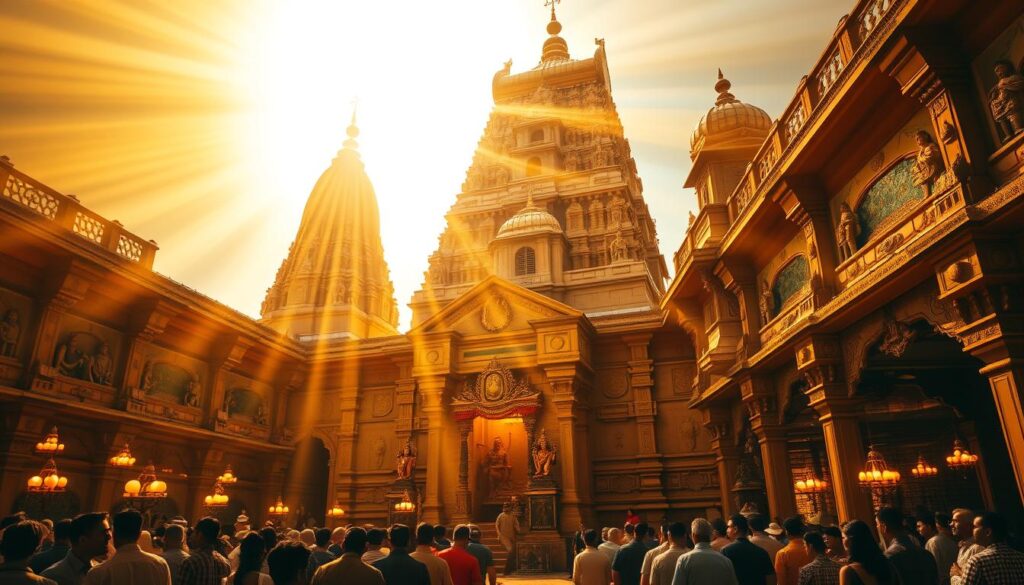
Sacred spaces hum with energy where earth meets eternity, offering seekers portals to the divine. These vibrant hubs blend community connection with personal transformation, drawing millions annually to experience their unique atmosphere. Regular visitors often describe feeling an invisible current that sharpens focus during prayer.
Divine Presence in Sacred Spaces
Devotees believe these sites concentrate spiritual forces like sunlight through a magnifying glass. Daily rituals maintain this energy – from chanting priests to fragrant flower offerings placed before carved icons. “You don’t just visit,” shares longtime devotee Anika Patel. “You step into a conversation that’s been ongoing for centuries.”
Special festivals amplify this connection. During events like Diwali, crowds witness deities adorned in gold, their shrine areas buzzing with collective excitement. These gatherings reinforce shared values while letting individuals recharge their spiritual batteries.
“The air here carries weight – like you’re breathing in wisdom from everyone who’s ever prayed in this space.”
Three key aspects shape these experiences:
- Darshan exchanges: The practice of mutual seeing between worshipper and divine image
- Energy circulation: Architectural layouts designed to amplify sacred vibrations
- Community rhythm: Shared celebrations that turn personal faith into collective power
Morning visitors often find the strongest sense of clarity, as dawn light filters through carved stone screens. Evening ceremonies counterbalance this with oil lamps casting dancing shadows, creating spaces where time seems to pause.
Rituals and Puja: Daily Temple Practices
Each dawn brings a sacred choreography to these spiritual hubs, where trained caretakers orchestrate ancient traditions. The rhythm of daily worship mirrors royal court ceremonies, treating divine icons as honored guests requiring meticulous care.
Abhishekam and Flower Offerings
Morning ceremonies begin with abhishekam – bathing rituals using milk, honey, and sandalwood water. Priests pour these sacred substances over bronze icons while chanting Vedic verses. Devotees believe this act purifies both the space and participants’ minds.
Flower arrangements transform sanctums into fragrant gardens. Fresh jasmine garlands frame deity statues, while marigold petals carpet ritual areas. “The colors and scents wake up our senses,” explains priest Ravi Sharma. “They remind us to offer life’s beauty back to the divine.”
| Abhishekam Substance | Symbolic Meaning | Flower Type | Offering Purpose |
|---|---|---|---|
| Milk | Purity | Jasmine | Divine sweetness |
| Honey | Wisdom | Marigold | Vitality |
| Sandalwood | Cooling energy | Lotus | Spiritual awakening |
The Role of the Pujari
These ritual experts train for years to master ceremonial details. A pujari’s day starts before sunrise, preparing offerings and memorizing Sanskrit hymns. Their precise movements during pujas maintain the structure’s spiritual charge.
Devotees approach priests with coconut, fruit, or cloth bundles. After sanctification, these become prasada – blessed items carrying divine energy home. Evening rituals often feature fire offerings where priests chant verses from ancient texts.
“We’re not just performing rituals – we’re keeping cosmic conversations alive through every gesture and chant.”
Timing remains crucial. Deities “rest” after lunch hours, while sunset ceremonies feature lamps circling icons. This daily rhythm connects modern worshippers to generations past through shared observance.
Deity Iconography and Sacred Imagery in Temples
Visual narratives in stone and color guide visitors through divine stories etched into sacred spaces. These artistic expressions transform architectural wonders into living textbooks of spiritual wisdom.
Main Murti and Secondary Shrines
The central deity image acts as a spiritual anchor, created through exacting rituals described in ancient texts. Master artisans shape these sacred figures to serve as divine hosts, blending artistic skill with metaphysical precision.
Smaller shrines form celestial neighborhoods around the main sanctum. Devotees might visit a wisdom-bestowing goddess before seeking protection from a warrior god, creating personalized spiritual journeys within one complex.
Artistic Carvings and Vibrant Colors
Carved pillars burst with scenes from sacred lore – dancing gods, mythical creatures, and cosmic events frozen in stone. These 3D stories invite touch and close inspection, making theology accessible through art.
Bold saffrons and deep blues adorn deity images, each hue carrying symbolic weight. Gold leaf accents catch flickering lamp light, creating dynamic visual effects that mirror the divine’s ever-changing nature.
Through precise placement and artistic mastery, these spaces become maps of cosmic relationships. Every color choice and sculpted pose whispers insights about life’s mysteries to those who look closely.
FAQ
What architectural features distinguish North and South Indian sacred structures?
North Indian designs often showcase towering shikhara spires above the inner sanctum, while South Indian ones feature pyramid-like vimanas and ornate entrance towers called gopurams.
How do daily rituals reflect the connection between devotees and deities?
Practices like abhishekam (ritual bathing of idols) and offering fresh flowers symbolize devotion, purification, and gratitude. These acts are guided by priests to maintain cosmic harmony.
Why are carvings and colors so prominent in these sacred spaces?
Intricate sculptures depict stories from scriptures, and vibrant hues represent divine energy. Every detail, from lotus motifs to celestial figures, conveys spiritual truths about life and the universe.
What role do priests play during worship ceremonies?
Priests (pujaris) perform rituals like lighting lamps, chanting mantras, and presenting offerings. They act as mediators, ensuring traditions align with ancient texts to honor the deities’ presence.
How does the layout of these structures mirror cosmic principles?
Designs follow mandala patterns and Vastu Shastra, symbolizing the union of earth and heaven. The central sanctum embodies the Purusha (cosmic being), creating a microcosm of universal order.
Are there specific rules for visitors entering these holy sites?
Yes. Many require removing shoes, dressing modestly, and avoiding photography in inner areas. Some spaces restrict entry during ceremonies to preserve the sanctity of rituals.