How well do you know the traditions, teachings, and history of your spiritual journey? This collection of faith-based questions offers a fun yet meaningful way to explore centuries of sacred wisdom. Designed for believers and curious minds alike, these challenges blend education with entertainment while honoring deep-rooted values.
From sacraments to saintly stories, each query sheds light on fascinating details often overlooked. Discover how liturgical practices evolved or uncover surprising facts about pivotal moments in Church history. You might even find answers that reshape your perspective on timeless doctrines.
Perfect for family gatherings or personal reflection, this approach turns complex topics into engaging conversations. Whether you’re mentoring others or nurturing your own growth, every correct answer strengthens your connection to a rich spiritual legacy.
Key Takeaways
- Faith-based quizzes make learning about sacred traditions enjoyable and accessible
- Questions cover sacraments, saints, historical events, and core teachings
- Reveal gaps in understanding while celebrating existing knowledge
- Simplify complex theological concepts through interactive formats
- Ideal for group activities or individual spiritual development
Exploring the Historical Foundations of Catholic Traditions
Discover how historical decisions continue to influence modern worship. The Second Vatican Council (1962-1965) revolutionized practices like Mass structure and interfaith dialogue. Its emphasis on Scripture and lay involvement reshaped how communities engage with their faith today.
Key Timelines: From Vatican Councils to Early Church History
Twenty-one ecumenical councils have guided the Church’s direction, but Vatican II stands out. It introduced Mass in local languages rather than Latin, making rituals more accessible. This council also encouraged cooperation with other Christian denominations while maintaining core teachings.
Popes like John Paul II left lasting marks through canonizations and social advocacy. He recognized over 480 saints, including St. John Paul II himself in 2014. The canonization process requires verified miracles, ensuring only exemplary lives receive this honor.
Influential Saints, Popes, and Catholic Figures
Saint John the Apostle remains vital as the patron of theologians. His writings shape understanding of Christ’s divinity. Meanwhile, modern leaders like Pope Francis address climate change and poverty, showing how traditions adapt to current needs.
Did you know cardinals gain their roles through papal appointment? Archbishop promotions often reflect cities’ spiritual significance. From the first pope, St. Peter, to today’s leadership, these connections highlight an unbroken chain of guidance spanning two millennia.
Understanding Sacred Catholic Teachings and Rituals
Sacred rituals form the heartbeat of spiritual practice, weaving ancient wisdom into daily life. The seven sacraments guide believers through key moments – from birth to eternal life. These sacred acts aren’t mere symbols but channels of divine grace rooted in Scripture.
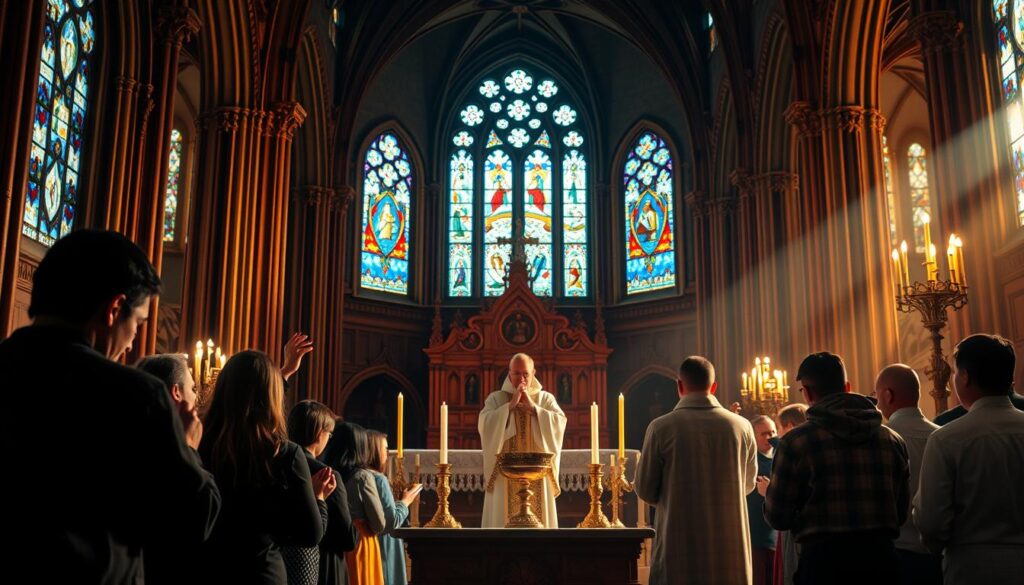
Sacraments, Holy Communion, and Church Rituals
At Mass, a profound transformation occurs during the Liturgy of the Eucharist. Through transubstantiation, bread and wine become Christ’s body and blood while keeping their physical appearance. This Real Presence forms the core of Holy Communion, described in the New Testament Gospels.
Key aspects of sacramental life include:
- Valid ordination required for consecrating the Eucharist
- Eastern Orthodox validity through apostolic succession
- Deacons assisting priests but lacking absolution power
The Impact of Church Councils on Modern Faith
Vatican II reshaped worship by allowing Mass in local languages. Yet sacraments retain their power regardless of a priest’s personal holiness – grace flows from Christ, not human virtue. This teaching underscores the holy spirit’s enduring role in church rituals.
Papal infallibility ensures clarity on faith matters while allowing practices to evolve. From Confession guidelines to Matrimony requirements, these decisions answer modern challenges while honoring ancient truths. Every teaching aims to strengthen believers’ connection to divine love.
Interactive Catholic Trivia to Test Your Faith and Knowledge
Put your understanding of sacred traditions to the test with thought-provoking questions designed for group activities or personal reflection. These interactive formats turn complex teachings into engaging challenges while reinforcing core beliefs.
Engaging Quiz Questions: Mass, Sacraments, and Doctrine
Can you explain why Eastern Orthodox priests can consecrate the Eucharist? What defines valid ordination? Our quiz clarifies these concepts through practical examples:
| Quiz Topic | Common Misconception | Church Teaching |
|---|---|---|
| Transubstantiation | “Bread symbolizes Christ” | Actual presence through substance change |
| Annulments | “Catholic divorce” | Declaration of invalid marriage |
| Papal Infallibility | “Pope never errs” | Applies only to faith/moral declarations |
Debunking Myths and Clarifying Church Teachings
Many confuse mortal sins with venial ones. Did you know missing Mass intentionally becomes grave matter only if done without serious reason? Our trivia separates fact from fiction:
- Communion fasting rule: 1 hour before receiving
- Deacons cannot hear confessions
- Purgatory isn’t a “second chance”
Real-life Applications: Teaching and Personal Growth
Families across the United States use these quizzes to spark faith discussions. Parish programs incorporate them into youth ministries, helping teens grasp concepts like apostolic succession. Teachers report better student engagement when using saint patronage questions during confirmation prep.
Conclusion
Exploring your spiritual heritage through interactive challenges becomes a pathway for growth. These engaging questions do more than test recall—they invite reflection on centuries of sacred wisdom. By connecting stories of saints and pivotal teachings, you strengthen bonds with a living tradition.
Families and parishes across America use these tools to spark heartfelt discussions. Whether explaining communion practices or tracing papal history, each answer deepens understanding. Shared discovery builds bridges between generations while honoring timeless truths.
Every exploration of doctrine or liturgy reveals new layers of meaning. What begins as curiosity often blossoms into lasting spiritual connection. Through this journey, believers carry forward a legacy of faith that continues to shape lives today.
FAQ
How many sacraments are recognized in the faith?
There are seven sacraments, including Baptism, Eucharist, and Confirmation. These rituals strengthen spiritual growth and connection to divine grace.
What changes did the Second Vatican Council introduce?
The council modernized practices like using local languages during Mass instead of Latin. It also emphasized lay participation and interfaith dialogue.
Who was the first leader of the early Church?
St. Peter, one of Jesus’ apostles, is traditionally regarded as the first pope. His teachings helped shape the foundation of Christian communities.
Are there common myths about Confession?
Yes! Some believe only priests can forgive sins, but the power comes through God. Others think sins must be “serious,” but regular reflection is encouraged.
What tools help teach younger generations about traditions?
Interactive quizzes, saint storybooks, and family rituals like prayer before meals make learning engaging. Many parishes also offer youth-focused programs.
Do saints play a role in daily spiritual life?
Saints serve as role models and intercessors. For example, St. Francis of Assisi inspires environmental care, while St. Therese emphasizes small acts of love.