Imagine needing a blood transfusion but having a type so rare that doctors must search across continents to find a match. For individuals with one of the world’s most uncommon blood types, this scenario isn’t hypothetical—it’s a reality. Fewer than 0.2% of people globally share this unique profile, creating urgent challenges during medical emergencies.
This blood group’s rarity stems from its complex antigen structure. Unlike common types, it lacks specific markers that most people carry. These missing antigens mean even “universal” donor blood can trigger dangerous reactions. Patients often rely on specialized networks connecting hospitals worldwide to locate compatible donors.
Take Francisca Akata’s case, for example. Her search for life-saving transfusions stretched across multiple countries. Stories like hers highlight why medical teams prioritize advance planning for rare blood cases. Specialized labs now maintain global databases to streamline emergency responses.
Key Takeaways
- Fewer than 2 in 1,000 people have this exceptionally rare blood profile
- Missing common antigens creates high risk during transfusions
- International donor networks are critical for emergency care
- Medical teams use advanced testing to confirm compatibility
- Early identification helps patients prepare for health crises
Introduction to Rare Blood Types and Lutheran B Negative
Your blood holds a unique biological fingerprint that could save lives—or create medical emergencies. Red blood cells carry up to 342 distinct antigens, acting like molecular ID badges. When someone lacks common markers found in 99% of people, their blood becomes exceptionally rare.
Overview of Rare Blood Groups
The human body recognizes 35 blood-group systems, each governed by specific genes. These systems determine which antigens appear on cell surfaces. High-prevalence antigens—present in nearly everyone—make mismatches dangerous when absent. For instance, lacking just one widespread marker classifies blood as rare, even if other antigens match.
Significance of Lutheran B Negative
Within these complex systems, the Lutheran group stands out for its medical impact. Patients missing the B antigen face heightened risks during transfusions or pregnancies. “A single mismatch can trigger life-threatening reactions,” explains a hematology specialist. This rarity demands global donor networks and tailored care plans long before emergencies arise.
Hospitals now prioritize early identification through advanced testing. International databases help locate compatible donors swiftly, turning logistical nightmares into manageable challenges. For those affected, awareness and preparation become as vital as the blood itself.
The Science Behind Blood Group Systems and Antigens
What makes one person’s blood compatible with another’s? The answer lies in microscopic markers called antigens. These protein molecules coat red blood cells like biological name tags, forming the basis of all blood group systems.
Understanding Blood Group Antigens
Antigens function as identification markers, helping the body distinguish its own cells from foreign ones. Over 35 blood group systems exist, each governed by specific genetic instructions. When someone lacks common antigens most people carry, their blood becomes harder to match.
Genetic inheritance plays a key role. Children receive antigen-determining genes from both parents, creating unique combinations. This explains why family members often share compatible blood traits—a crucial factor for rare types.
Importance in Transfusions
Mismatched antigens trigger immediate immune attacks. “The body sees unfamiliar antigens as threats,” notes a transfusion specialist. This reaction can destroy donor cells within hours, causing organ failure or death.
Modern labs use advanced tests to map over 300 antigens before transfusions. For rare blood types, this precision becomes lifesaving. Global donor networks now share antigen data, helping hospitals source compatible blood faster than ever.
Case Study: The Journey of a Rare Blood Type
Medical emergencies turn into global quests when patients have uncommon blood profiles. Francisca Akata’s story reveals how geographic boundaries dissolve during life-threatening situations. Her experience shows why international cooperation remains vital for rare medical cases.
The Diagnosis That Changed Everything
In 2013, a Nigerian grandmother traveled to the UAE for heart surgery. Pre-op tests revealed a shocking twist: her blood lacked two critical markers. Doctors identified a combination affecting fewer than 1 in 500,000 people worldwide.
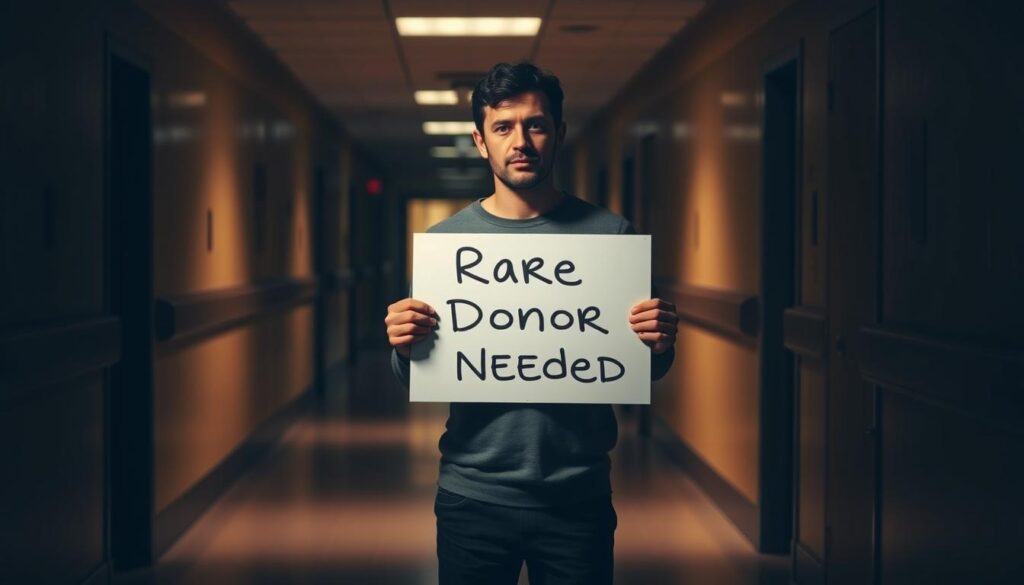
Hospitals in three countries scrambled to find compatible donors. “Time wasn’t on our side,” recalled Walter Udoeyop, the hematologist leading the search. Regional blood banks came up empty, forcing teams to expand their hunt across continents.
Breaking Through Systemic Barriers
The search exposed gaps in global healthcare systems. Some nations restrict cross-border blood transfers, while others lack centralized donor databases. Key challenges included:
| Challenge | Impact | Solution |
|---|---|---|
| Regional donor shortages | Delayed surgery | International networks |
| Policy restrictions | Limited options | Diplomatic coordination |
| Testing limitations | Missed matches | Advanced antigen mapping |
After six weeks, the American Rare Donor Program located two potential donors in Philadelphia. This breakthrough highlights how technology and teamwork can overcome even the rarest medical obstacles. Patients with uncommon blood types now benefit from improved global tracking systems developed through cases like this.
lutheran b negative: Navigating the International Blood Donation Network
When seconds count, a hidden system springs into action. Behind every rare blood request lies a meticulously organized global effort connecting patients to potential lifesavers. This network operates like a high-stakes matching service, where precision meets urgency.
Donor Identification and Registration Processes
The International Blood Group Reference Laboratory in England coordinates this lifesaving web. Their database tracks over 550 active donors for one rare type, with 73% located near London. Advanced search systems scan registries across 45 countries to find matches faster than ever.
Registration isn’t just paperwork—it’s science. Each donor undergoes 12+ tests to confirm antigen profiles. These details get added to secure databases updated hourly. As one coordinator notes: “We treat donor information like gold—precious and constantly refined.”
| Region | Registered Donors | Response Time |
|---|---|---|
| United Kingdom | 400 | 12-24 hours |
| North America | 90 | 36-48 hours |
| Asia-Pacific | 40 | 72+ hours |
| Other Regions | 20 | Variable |
Geography plays a surprising role. Certain regions have higher concentrations due to genetic patterns. This explains why 85% of matches for Francisca’s case came from one area. Modern systems now predict donor locations using migration data and population trends.
Innovations and Logistics in Rare Blood Management
Delivering life-saving blood across continents requires military precision and cutting-edge tech. Every step matters—from storage protocols to last-mile delivery in remote areas. Modern solutions combine science with logistics expertise to beat the clock.
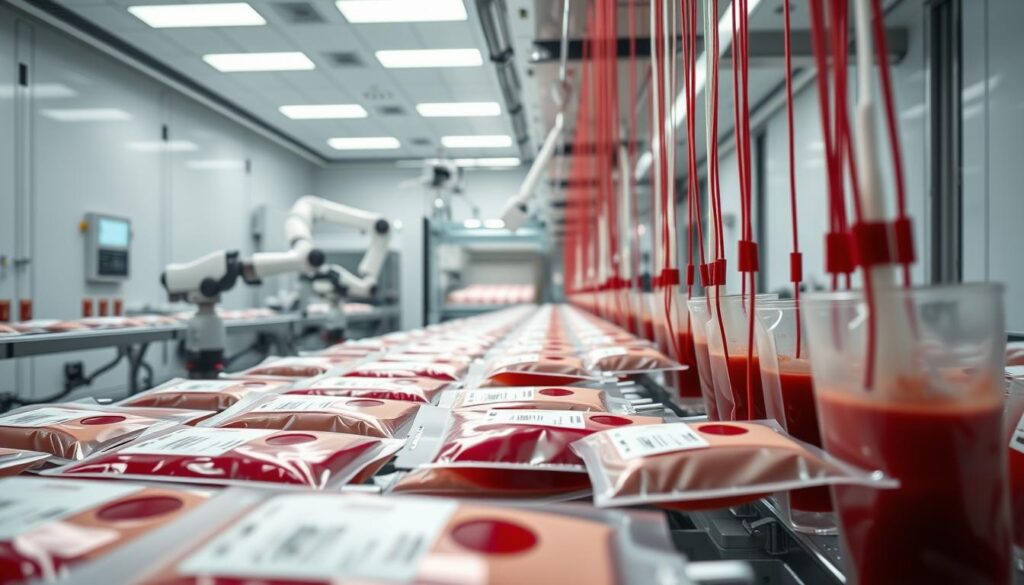
Modern Blood Storage and Transportation Methods
Keeping blood viable during transport demands strict temperature control. Red blood cells stay fresh for transfusions when maintained at 4°C. Even brief warmth exposure can ruin shipments. Francisca Akata’s six blood units traveled 4,000 miles using refrigerated trucks, climate-controlled planes, and a final helicopter dash.
| Storage Type | Temperature | Lifespan | Transport Needs |
|---|---|---|---|
| Fresh | 4°C | 4 weeks | Continuous cooling |
| Frozen | -65°C | 48 hours post-thaw | Specialized freezers |
Frozen blood offers longer storage but becomes urgent once thawed. “You have two days to use it or lose it,” notes a transfusion specialist. This creates tough decisions for medical teams balancing shelf life against emergency needs.
Advanced tracking systems monitor shipments in real time. Alerts trigger if temperatures drift. Customs clearance gets fast-tracked through medical channels. These actions turn logistical nightmares into success stories.
Emerging tech focuses on stabilizing blood during long hauls. New cooling materials and drone delivery options show promise. Every innovation brings us closer to eliminating preventable tragedies.
Medical and Ethical Considerations in Rare Blood Transfusions
Every medical decision becomes high-stakes when dealing with scarce biological resources. Patients with uncommon blood profiles face unique challenges where safety protocols and ethical guidelines collide. Thomas, a donor with rare blood, carries an emergency ID card and avoids remote travel—a testament to the constant vigilance required.

When Life-Saving Treatments Carry Risks
Mismatched transfusions can spark catastrophic immune responses. Antibodies attack foreign blood cells within hours, causing kidney failure or shock. This risk forces hospitals to run 12+ compatibility tests before proceeding. Even then, specialists keep emergency medications ready during the procedure.
Ethical debates center on resource allocation. Should a rare blood unit go to a trauma patient now or be saved for a scheduled surgery next week? A PubMed review notes that 68% of hematologists face this dilemma annually. Global registries help, but shortages persist.
Patients often adjust their lifestyles due to these risks. Many avoid high-risk activities and keep medical alerts handy. Healthcare teams use MeSH terminology to standardize search protocols across databases, improving match accuracy. These actions aim to reduce errors in time-sensitive situations.
Balancing immediate needs with future demands remains tricky. “We’re stewards of a limited resource,” explains a transfusion director. Strict guidelines govern when to use these precious supplies, prioritizing emergencies over elective procedures. Ongoing research seeks alternatives, but for now, careful management saves lives.
Overcoming Global Challenges
Global healthcare faces a silent crisis when matching rare blood supplies with urgent needs. Hospitals now use real-time tracking systems to connect with donors worldwide. These tools cut search times by 60% compared to a decade ago, turning impossible hunts into coordinated missions.
Policy reforms are breaking down barriers. Over 30 countries recently streamlined cross-border blood transfers. New agreements let medical teams bypass red tape during emergencies. “Every saved minute means another life protected,” says a WHO coordinator.
Public awareness drives play a crucial role. Social media campaigns help identify potential donors in unexpected places. Blood banks train staff to spot rare antigen patterns during routine screenings. These efforts build stronger safety nets for future crises.
Progress thrives on collaboration. Scientists share antigen data openly, while airlines prioritize medical shipments. Together, we’re rewriting what’s possible—one rare blood match at a time.
FAQ
Why is Lutheran B Negative considered a rare blood type?
This blood type is uncommon due to low global prevalence. Only a small percentage of people inherit the specific combination of Lutheran and B antigens, making donors hard to find.
How do medical teams identify compatible donors for rare types?
Labs use advanced antigen-matching techniques and global registries like the International Blood Group Reference Laboratory to locate donors. Local networks and international partnerships also streamline searches.
What risks are linked to transfusions with mismatched rare blood?
Incompatible transfusions can trigger severe immune reactions, including hemolysis or organ damage. Strict crossmatching and antibody screening are critical to ensure patient safety.
Can someone with this blood type donate to other groups?
While universal donation isn’t possible, Lutheran B Negative blood can sometimes help recipients with compatible antigens. Always consult a specialist to confirm eligibility.
How does global collaboration improve access to rare blood?
Organizations like the WHO and rare donor programs share resources, track inventories, and expedite shipments worldwide. This teamwork saves lives during emergencies or complex cases.
What steps can individuals take to support rare blood initiatives?
Registering with donation centers, participating in awareness campaigns, and joining global databases like ISBT help expand access. Every donor registration increases the chances of saving lives.