Imagine hearing life-changing truths for the first time in the way you think, dream, and express love. For millions worldwide, this vision drives a dedicated ministry focused on making sacred texts accessible across cultures. Over 3,500 communities still wait to engage with spiritual teachings in their heart language—the dialect shaping their deepest connections.
This work goes far beyond converting words. Teams equip local leaders with tools to preserve cultural identity while ensuring accuracy. With 180 million people lacking full access to these resources, the urgency grows daily. Nearly 7,000 languages exist globally, yet one-third have no translated materials at all.
Collaboration sits at the core of this effort. Partnerships with communities and churches create sustainable projects that outlast initial efforts. Literacy programs and leadership training empower people to share knowledge within their own networks, sparking lasting change.
Key Takeaways
- Over 3,500 language groups lack access to spiritual texts in their native dialects
- Local leaders receive training to maintain cultural authenticity in translations
- 180 million people currently have no complete texts in their heart language
- Strategic partnerships help create self-sustaining community projects
- Literacy initiatives complement translation work for broader impact
The Global Impact of Bible Translation Initiatives
When sacred texts speak your mother tongue, barriers crumble and connections form. Over 7,000 dialects shape how people share stories, pass down traditions, and build relationships. Yet 2,479 languages still wait for their first translated scripture passage.
Expanding Access for Every Language
Teams work with local speakers to capture cultural nuances. One village saw dramatic change after receiving materials in their heart language. “Five years ago, no one here followed these teachings,” shares a local leader. “Now, weekly gatherings unite hundreds.”
This progress requires more than linguistic skill. Experts combine ancient texts with modern tech tools while preserving oral traditions. Over 1,300 dialects now have complete New Testaments—a 40% increase since 2000.
Sparking Transformation Worldwide
Entire regions experience renewal when people grasp teachings in familiar words. Literacy rates rise as communities study translated materials. Social bonds strengthen through shared understanding.
Neighboring villages often adopt these resources, creating ripple effects. What begins with one language group can spread to five others within a decade. The true impact multiplies as local leaders train others.
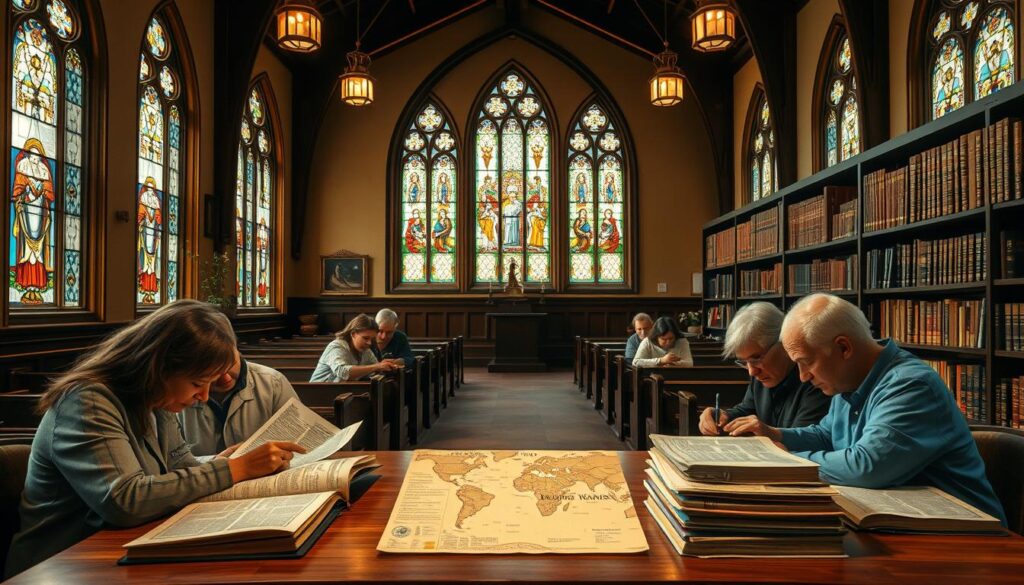
lutheran bible translators in Action
Communities thrive when knowledge flows through familiar words and trusted voices. This principle guides efforts to equip native speakers with tools for meaningful communication. Teams prioritize sustainable methods that honor cultural identity while delivering accurate resources.
Empowering Local Leaders and Training Programs
Local experts receive specialized coaching in linguistics and technology. Programs blend classroom learning with hands-on practice, ensuring skills stay within communities. In Cameroon, Rev. Touka Daniel leads projects that train speakers to preserve their dialects through written and audio formats.
| Training Component | Tools Provided | Outcome |
|---|---|---|
| Cultural Analysis Workshops | Digital recording devices | Preserved oral traditions |
| Translation Software Tutorials | Computer-assisted tools | Faster project completion |
| Community Engagement Strategies | Literacy materials | Increased local participation |
Overcoming Technical and Cultural Challenges
Balancing modern technology with traditional communication styles requires creativity. Teams use voice-recognition software to capture rare dialects while consulting elders about phrasing. One group spent six months finding the perfect equivalent for “grace” in a mountain dialect.
Partnerships with organizations like SIL International help navigate complex language structures. These collaborations ensure translated materials feel natural to native speakers rather than foreign imports.
Cultural Relevance and Community Engagement
What happens when ancient wisdom meets modern culture? Teams work hand-in-hand with communities to craft resources that honor both tradition and truth. This delicate balance transforms how people experience sacred teachings.
Speaking to Hearts Through Culture
Adapting spiritual concepts requires more than dictionaries. Teams spend months studying local proverbs and family dynamics. One group replaced “shepherd” with “rice farmer” in agricultural communities for clearer understanding.
A translator from Papua New Guinea shares:
“When you hear God’s Word in your mother tongue, it bypasses your head and goes straight to your heart.”
When Words Spark Change
Entire villages experience renewal through culturally resonant materials. After receiving the Gospel of Mark in their dialect, one community saw church attendance triple. Elders now use translated texts to resolve conflicts and celebrate traditions.
- A West African leader reported 40% literacy improvement after translation projects
- Youth groups formed using audio recordings for oral cultures
- Local artists create songs from translated scriptures
“I never knew these teachings could feel so familiar,” shared a grandmother in Guatemala. Her story echoes across 17 language groups now engaging with materials that reflect their daily lives.
Partnerships and Collaborative Ministry
True progress grows from shared purpose. Teams collaborate with communities through relationships built on trust and mutual goals. This approach ensures projects align with local needs while drawing on global expertise.

Building Strength Through Alliances
Local churches provide cultural insights that shape translation methods. In Cameroon, leaders like Rev. Touka Daniel guide projects while preserving traditions. Partnerships with groups like SIL Cameroon offer practical support—from housing translators to hosting skill-building workshops.
| Partner Type | Support Provided | Key Impact |
|---|---|---|
| Local Churches | Cultural guidance & leadership | Community-driven solutions |
| Translation Organizations | Technical training & tools | Faster project completion |
| Publishing Groups | Quality review & distribution | Multi-denominational access |
These alliances create lasting networks. The Cameroon Bible Society checks translations for accuracy before sharing them widely. This ensures materials serve all faith groups fairly.
Global connections multiply local efforts. Membership in groups like CLAIM helps teams share resources across borders. Together, partners build systems that outlive individual projects—planting seeds for future growth.
Innovations and Future Strategies in Bible Translation
Breaking language barriers isn’t just about words—it’s about opening doors to transformation. Modern teams blend time-tested methods with digital breakthroughs to accelerate progress. Over 600 million people still need access to spiritual texts in their native dialects, driving creative solutions that bridge ancient wisdom and 21st-century tools.

Tech Meets Tradition
Artificial intelligence now helps identify rare grammar patterns in unwritten dialects. Voice-to-text software preserves oral traditions while creating written resources. Teams in Papua New Guinea used solar-powered audio players to share teachings with remote villages.
| Approach | Tools Used | Impact |
|---|---|---|
| Cultural Adaptation | AI Language Models | 63% faster analysis |
| Oral Translation | Voice Recording Apps | 40+ dialects preserved |
| Community Training | Tablet Learning Kits | 89% retention rate |
United for Progress
Global alliances multiply local efforts. A recent partnership with Wycliffe Bible Translators helped launch 12 new projects across Asia. “Our collaboration cuts project timelines by half,” shares a field coordinator in Myanmar.
Mobile networks now deliver translated texts to smartphones in war-torn regions. Literacy programs teach villagers to read while preserving their cultural identity. These dual efforts create self-sustaining communities that grow their own teachers.
Future plans focus on reaching sign language groups and developing augmented reality tools. As one translator notes:
“Our tools change, but our goal remains—clear understanding for every heart.”
Conclusion
Every voice deserves to hear life’s deepest truths in words that resonate. The work of Lutheran Bible translators bridges divides by making spiritual wisdom accessible across cultures. Their approach honors local traditions while creating resources that spark genuine connection.
Effective bible translation requires more than linguistic skill—it demands cultural respect. Partnerships with communities ensure materials feel familiar rather than foreign. This collaboration builds trust and empowers leaders to sustain progress long after initial projects conclude.
One tribal elder shared: “When we received these teachings in our dialect, God’s word became a friend speaking our language.” Stories like this highlight why preserving heart languages matters. It transforms abstract concepts into lived experiences.
Looking ahead, Lutheran Bible translators continue refining methods to reach underserved groups. Combining tech tools with grassroots efforts, they amplify the impact of bible translation work. As one team member notes: “The goal remains clear—help every person encounter truth in words that feel like home.”
FAQ
How do translation initiatives ensure cultural relevance?
Teams collaborate closely with native speakers to adapt texts into local dialects. This preserves idioms, traditions, and values, making Scripture resonate deeply within communities.
What role do local leaders play in these projects?
Communities actively shape translations through workshops and feedback. Leaders also help navigate cultural nuances, ensuring messages align with their people’s worldview.
Are literacy programs part of the mission?
Yes! Teaching reading skills empowers individuals to engage directly with translated texts. Literacy efforts often run alongside translation work to maximize impact.
How long does a typical translation project take?
Timelines vary based on language complexity and team size. Some projects span years, while others leverage partnerships to accelerate progress without sacrificing quality.
Can technology speed up the process?
Tools like AI-assisted software help draft initial texts, but human expertise remains vital. Teams balance innovation with careful review to maintain accuracy and clarity.
How can individuals support this work?
Donations, volunteering, and advocacy all make a difference. Many also join prayer networks to uplift teams facing logistical or spiritual challenges.
Why prioritize lesser-known languages?
Every group deserves access to Scripture in their heart language. Focusing on underserved regions fosters inclusivity and strengthens global faith communities.