Since its founding in 1988, this faith-based organization has grown into a nationwide network of believers. With nearly 50,000 members and 268 congregations, it stands as the second-largest confessional Lutheran body in the country. Communities from British Columbia to Nova Scotia benefit from services offered in English, German, Spanish, French, and Korean, reflecting the diversity of its membership.
More than 230 pastors and 59 deacons support local groups through spiritual guidance and community programs. These efforts create spaces where individuals and families can grow in their beliefs while forming lasting connections. The blend of traditional values and modern outreach ensures relevance in today’s changing world.
A centralized office in Winnipeg coordinates resources while respecting each congregation’s unique identity. This structure allows for efficient collaboration on national initiatives without compromising local autonomy. Partnerships with like-minded institutions further strengthen shared missions and theological alignment.
Key Takeaways
- Founded in 1988 as an autonomous denomination with strong theological roots
- Serves over 47,000 members through 268 congregations nationwide
- Offers multilingual worship services to accommodate diverse communities
- Supported by 233 pastors and 59 deacons across all provinces
- Balances traditional Lutheran teachings with contemporary ministry approaches
- Operates through a national office while preserving local congregation autonomy
- Maintains collaborative partnerships with aligned faith organizations
Our Journey and Legacy
Our story begins with explorers and settlers who planted seeds of faith across Canada centuries ago. These early efforts laid the groundwork for a spiritual community that would grow into one of the nation’s most enduring religious bodies.
Historical Roots and Early Beginnings
Danish adventurers first brought Lutheran teachings to Canadian shores in 1619. German immigrants later strengthened this foundation, establishing North America’s first permanent worship site in Halifax by 1752. For generations, congregations relied on partnerships with American synods for support and resources.
From Congregational Sponsorship to National Independence
A turning point came in 1958 when communities united under a shared confessional framework. Three decades later, these groups achieved full self-governance while preserving ties to international partners. The original three-district system served members effectively until 2019, when evolving needs prompted a shift to a unified national structure.
This strategic reorganization allowed for better resource allocation while maintaining regional identities. Today, the denomination stands as the largest Lutheran body in Canada by confessional membership. Its ability to adapt while honoring tradition continues to shape its mission across provinces.
Our Mission, Values, and Community Impact
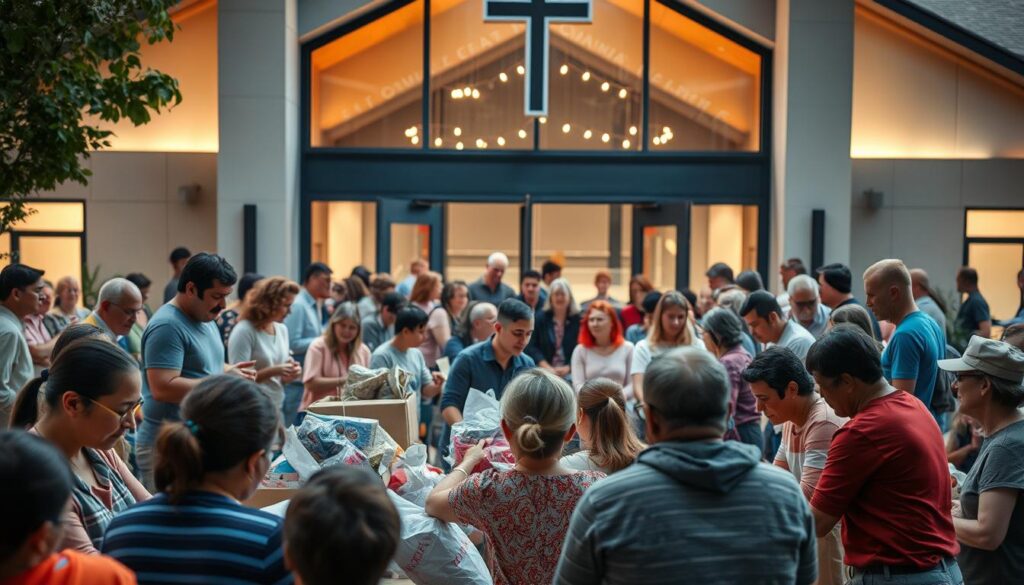
Guided by timeless principles and modern compassion, our community bridges spiritual growth with tangible service. This dual focus shapes every initiative, from local worship practices to international partnerships.
Faith-Based Doctrines and Ministry Principles
At our core lies unwavering commitment to Scripture as God’s perfect word. The Book of Concord shapes doctrinal positions, ensuring unity across congregations. Sacraments like infant baptism and confirmation training welcome families into faith journeys early.
Leadership roles reflect thoughtful balance. While ministerial positions follow traditional guidelines, women actively shape communities as educators and deaconesses. Two seminaries – Concordia Lutheran Theological Seminary and its Alberta counterpart – equip future leaders with rigorous theological training.
| Focus Area | Local Activities | Global Impact |
|---|---|---|
| Doctrinal Education | Confirmation classes | Seminary partnerships |
| Sacramental Practice | Closed communion | Cross-cultural training |
| Leadership Development | Lay leadership programs | Missionary support |
Community Outreach and Global Acts of Service
Our hands extend beyond sanctuary walls. Domestic programs address food insecurity and family needs through parish-based networks. Internationally, teams collaborate with church bodies in 12 countries, focusing on sustainable development.
Recent missions main efforts in Southeast Asia helped establish three new worship centers. Ukrainian partners received vital resources during conflict through our emergency response network. These global connections strengthen the entire faith community while sharing hope where it’s needed most.
Embracing the Lutheran Church Canada Experience
From coastal retreats to online platforms, communities thrive through diverse avenues of connection. Recent gatherings like the Quadra Island women’s retreat brought members together to explore hope during challenging times. These events demonstrate how shared experiences strengthen bonds across generations and geographies.
A Hub for Faith and Fellowship
The B.C. Mission Boat Society recently hosted 85 participants for spiritual renewal amidst stunning natural surroundings. Such initiatives reflect a broader network spanning 58 congregations in British Columbia alone, with representation growing in every province. Members stay connected through The Canadian Lutheran, a quarterly publication featuring devotionals and ministry updates.
Innovative Leadership and Digital Connections
New opportunities emerge as the organization adapts to modern needs. A recently created Digital Communications Manager role enhances online engagement through social media and web content. Leadership searches for accounting and communications directors show commitment to strong operational support.
Recent pastoral appointments highlight dynamic ministry growth, with 14 new ordinations recorded last year. This vitality positions the community as potentially the largest confessional body in its tradition nationally. Strategic hiring and digital investments ensure relevance while preserving personal connections at local levels.
Conclusion
Balancing tradition with innovation, this faith community thrives as a beacon of hope across the nation. With nearly 50,000 members in 268 congregations, it stands as the largest confessional body in its tradition nationwide. From historic roots to modern ministries, the journey reflects resilience and vision.
Local retreats and global partnerships—like missions in Nicaragua and Ukraine—show a commitment to serving diverse needs. Strategic hiring and digital tools help connect generations while preserving core values. Recent financial reforms demonstrate responsible stewardship for lasting impact.
Looking ahead, the focus remains on fostering spiritual growth through education and outreach. Whether through seminary training or food drives, every effort strengthens community bonds. Everyone has a place here to grow, serve, and belong.
Discover how timeless beliefs meet fresh approaches in a welcoming environment. Join a network where faith sparks meaningful change—both close to home and oceans away.
FAQ
What makes this denomination unique compared to others?
Rooted in Scripture and Lutheran tradition, it emphasizes grace-centered theology while fostering community bonds through local outreach and global missions like the Mission Boat Society.
How does the organization support remote or isolated communities?
Initiatives like the Mission Boat Society deliver spiritual guidance, supplies, and educational resources to northern regions, ensuring no community feels disconnected.
Are there opportunities for members to lead or contribute locally?
Yes! Congregations encourage active participation through volunteer roles, event planning, and collaborative projects like the recent Planning Survey Summary to address community needs.
How does leadership adapt to modern challenges?
By blending tradition with innovation, leaders use digital tools for virtual worship, online learning, and streamlined communication to keep members engaged nationwide.
What role do women play within the denomination?
Women serve in various capacities, from ministry and education to leadership roles, reflecting a commitment to inclusivity and shared responsibility in faith-based work.
How can I access historical records or doctrinal materials?
Archives, publications, and educational resources are available through regional offices, the main website, or partnerships with institutions like Concordia Lutheran Theological Seminary.