For over 175 years, a vibrant faith community has united families across America through timeless traditions and meaningful service. This group, rooted in biblical teachings, began with courageous German immigrants in the 1840s who sought religious freedom. Today, it stands as the nation’s second-largest Lutheran denomination, supporting 1.7 million members in nearly 6,000 congregations.
Headquartered near St. Louis, Missouri, this organization blends historical values with modern outreach. Weekly gatherings focus on worship, learning, and community support—creating bonds that extend far beyond Sunday services. Their network spans 35 districts nationwide, each committed to preserving core beliefs while addressing contemporary needs.
Education plays a central role, with schools and programs designed to nurture spiritual growth. Members actively partner with local organizations to address hunger, disaster relief, and social challenges. Through these efforts, they demonstrate how authentic fellowship can transform neighborhoods and strengthen families.
Key Takeaways
- Serves 1.7 million members through 5,900+ U.S. congregations
- Founded in 1847 by German immigrants valuing religious freedom
- Maintains headquarters in Kirkwood, Missouri since its early days
- Operates 35 regional districts for localized community support
- Prioritizes education through schools and faith-based programs
- Combines traditional worship with modern outreach initiatives
Introduction to the Lutheran Church Missouri Synod
Balancing heritage and innovation, a leading denomination supports millions through faith and action. This group stands out for its unwavering commitment to historical Christian teachings while actively serving modern communities. With congregations in every state and parts of Canada, it creates a cohesive network united by shared beliefs.
Members affirm their dedication to scriptural authority through the Book of Concord—a collection of foundational Lutheran texts. This approach fosters clarity in doctrine and worship practices. Over half of its participants reside in the Midwest, yet its influence spans coast to coast.
The organization partners globally through the International Lutheran Council, enhancing collaborative ministry efforts. Local chapters adapt outreach programs to address issues like food insecurity and education gaps. This blend of tradition and practicality helps neighborhoods thrive spiritually and socially.
| Feature | LCMS | Other Lutheran Groups |
|---|---|---|
| Confessional Stance | Requires Book of Concord adherence | Varies by denomination |
| Geographic Focus | Strong Midwest presence | Nationally distributed |
| Global Connections | International Lutheran Council member | Different affiliations |
Financial stability allows sustained support for schools and relief programs. By prioritizing both spiritual growth and tangible service, this community demonstrates how timeless values can meet today’s challenges effectively.
Historical Background and Roots
The foundation of this faith community traces back to courageous pioneers who crossed oceans to protect their spiritual identity. Their journey began as religious tensions rose in 19th-century Europe, where traditional beliefs clashed with new philosophical movements.
Immigrant Foundations and Early Settlement
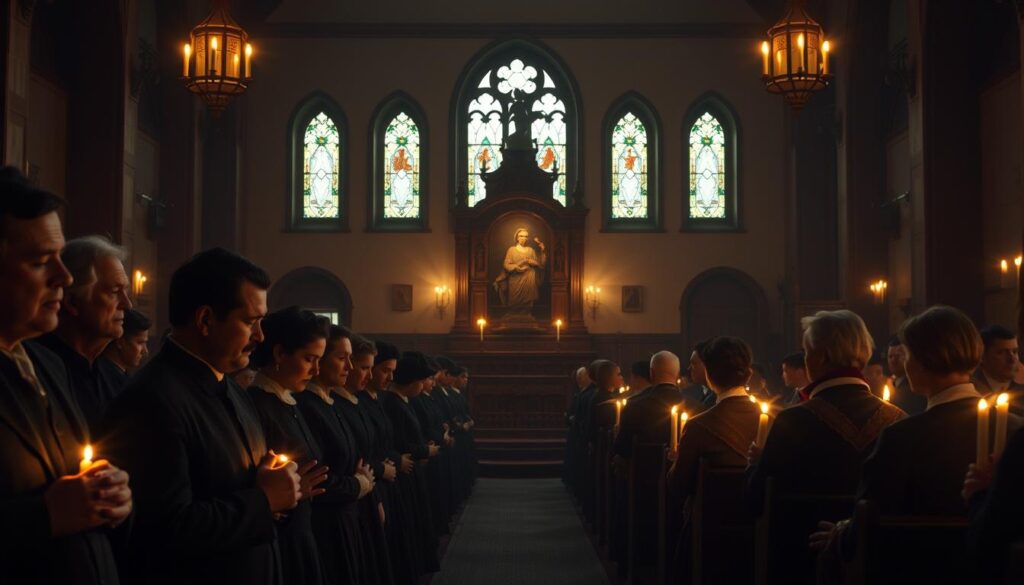
In 1838, over 600 German immigrants embarked on a daring voyage to America. Led by pastor Martin Stephan, they sought refuge from pressures to abandon their evangelical lutheran convictions. These settlers established Perry County, Missouri, as their spiritual headquarters after navigating Mississippi River challenges.
Frontier life demanded adaptability. Families preserved core theological principles while building schools and churches from scratch. “We carried our faith like precious cargo,” one settler wrote, “reshaping it for new soil without losing its essence.”
Missionary Work and German Heritage
Bavarian pastor Wilhelm Löhe became instrumental in strengthening communities. He dispatched 80 trained ministers to support German evangelical settlements across Ohio and Michigan. These missionaries didn’t just serve European immigrants—they also shared teachings with Native tribes.
The Perry County colony sparked a network of congregations valuing education and service. Their legacy lives through hymnbooks blending German lyrics with American folk melodies, and through food banks continuing traditions of communal support.
Founding and Growth of the LCMS
April 26, 1847, marked the birth of a faith movement that would shape generations. Twelve pastors representing fourteen congregations gathered at St. Paul’s in Chicago to establish the German Evangelical Lutheran Synod of Missouri, Ohio and Other States. This historic meeting united scattered communities under a shared vision for biblical teaching.
C.F.W. Walther, elected as the first president, built a framework emphasizing education and unity. His leadership helped the young denomination grow from 4,000 members to over 687,000 within fifty years. By 1854, rapid expansion required dividing the organization into four regional districts for better support.
Key Milestones in Formation
The group’s growth mirrored America’s westward expansion. Publishing houses produced hymnals and catechisms, while schools trained future leaders. A member recalled, “We planted roots wherever families settled—churches became community anchors.”
| Year | Event | Impact |
|---|---|---|
| 1847 | Founding convention | Created unified structure |
| 1854 | District formation | Improved local governance |
| 1897 | 50th anniversary | 687,000 members nationwide |
| 1947 | Name simplification | Reflected American identity |
In 1947, the evangelical lutheran synod adopted its shorter name, signaling its transition from immigrant fellowship to national institution. Today, its legacy continues through vibrant congregations upholding Walther’s original vision.
The Role of German Immigrants in Shaping the Synod
Visionary settlers from Europe laid the groundwork for a spiritual network that still thrives today. When German families arrived in America, they brought more than trunks filled with belongings—they carried a blueprint for building faith-centered communities. F.C.D. Wyneken, the denomination’s second president, understood their needs extended beyond Sunday sermons.
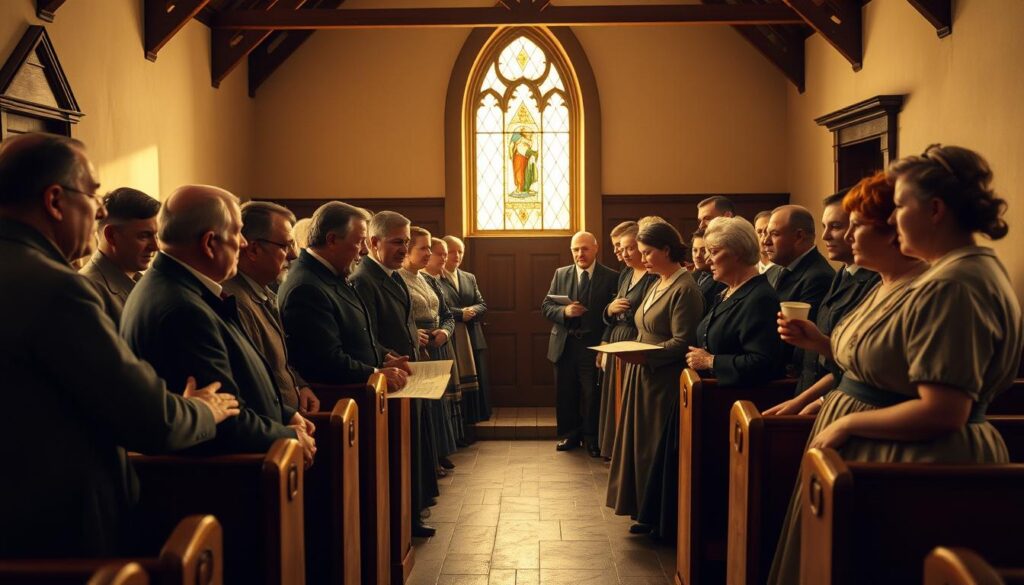
Wyneken’s leadership transformed scattered newcomers into connected congregations. His teams helped families secure housing, learn English, and preserve cultural traditions through bilingual schools. One immigrant journal noted: “Our churches became community centers—places where bread recipes and Bible verses shared equal importance.”
This practical approach fueled explosive growth. By 1888, the group had become the largest Lutheran body in the United States. European-trained pastors established rigorous theological programs, while local churches hosted job fairs and literacy classes. The strategy created self-sufficient neighborhoods where faith and daily life intertwined seamlessly.
Today’s congregations still reflect this heritage. Food pantries operate beside Sunday schools, echoing early immigrants’ belief that service strengthens belief. Through education and cultural preservation, these pioneers built a legacy that continues shaping communities nationwide.
Theological Foundations and Core Beliefs
At the heart of this faith tradition lies a commitment to timeless truths that shape daily living. Members find guidance through ancient texts and modern applications, creating a bridge between centuries-old wisdom and today’s challenges.
Scriptural Inerrancy and Lutheran Confessions
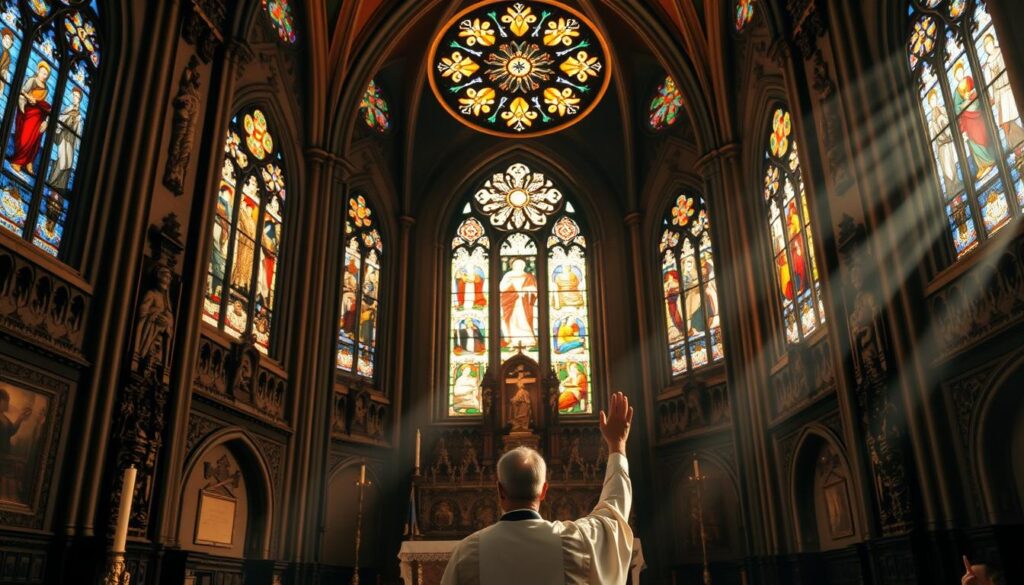
The Book of Concord serves as a spiritual compass, uniting communities under shared principles. This collection of 16th-century documents outlines core beliefs about salvation and divine grace. One pastor notes: “These writings help us navigate complex questions with clarity rooted in scripture.”
Every congregation affirms the Bible’s authority without exception. This approach fosters unity across generations while allowing personalized spiritual growth. Historical creeds like the Apostles’ and Nicene remain central to teaching programs.
Sacraments and Worship Practices
Two sacred rituals anchor weekly gatherings. Baptism marks spiritual rebirth, while communion reinforces connections to Christ’s sacrifice. Both acts emphasize God’s active role in strengthening faith through tangible experiences.
| Sacrament | Symbol | Purpose |
|---|---|---|
| Baptism | Water | Spiritual cleansing & renewal |
| Communion | Bread & Wine | Remembrance & divine connection |
Worship styles blend traditional hymns with contemporary music. Liturgical elements coexist with informal prayer circles, reflecting the community’s ability to honor heritage while embracing innovation. This balance helps members find relevance in ancient practices.
Confessional Lutheranism Explained
Understanding faith traditions requires exploring their core principles. Confessional Lutheranism centers on teachings preserved in the Book of Concord, a collection of historic documents outlining key beliefs. This approach emphasizes scripture as the ultimate authority in matters of faith and practice.
At its heart, this tradition upholds doctrines like justification by grace through faith alone. Followers maintain that salvation comes solely through Christ’s sacrifice, not human effort. These principles shape worship practices and community life within evangelical lutheran traditions.
The Bible book remains central to teachings, with congregations prioritizing its inerrant truth. Through the lutheran confessions, communities affirm shared values like the Trinity and Christ’s divine nature. The LCMS holds these timeless truths as essential for nurturing authentic faith connections in today’s changing world.
By grounding modern life in the Book of Concord, members build bridges between ancient wisdom and contemporary challenges. This balance helps evangelical lutheran groups maintain spiritual integrity while fostering meaningful dialogue across generations.
FAQ
What makes the LCMS distinct from other denominations?
The LCMS emphasizes confessional Lutheranism, upholding teachings like scriptural inerrancy and the authority of historic documents such as the Book of Concord. It maintains traditional worship practices and a structured approach to sacraments.
How did German heritage influence its development?
Early settlers from Germany brought their language, traditions, and theological rigor. This heritage shaped worship styles, educational institutions, and a commitment to preserving doctrinal purity within congregations.
What sacraments are central to its beliefs?
Baptism and Communion are viewed as sacred acts instituted by Christ. The body and blood of Jesus are believed to be truly present in the Lord’s Supper, offered for forgiveness and spiritual renewal.
Does the LCMS ordain women as pastors?
No, the denomination reserves the pastoral office for men based on its interpretation of Scripture. However, women actively serve in roles like teaching, music, and outreach within congregations.
Is it part of larger religious organizations?
The LCMS belongs to the International Lutheran Council, a global association of confessional Lutheran bodies. It maintains fellowship with groups sharing its doctrinal stance but operates independently.
How does it approach missionary work today?
Efforts focus on planting congregations, supporting global partners, and humanitarian aid. Missionaries emphasize both spiritual outreach and practical care, rooted in the teachings of the Augsburg Confession.
Are non-members allowed to take Communion?
Participation is typically reserved for those who share its doctrinal beliefs. This practice reflects a commitment to unity in faith and understanding of the sacrament’s significance.