For over 40 years, a private Christian high school in Houston’s Garden Oaks neighborhood shaped young minds through faith-based learning. Located at 1130 West 34th Street, this institution blended rigorous academics with spiritual growth until its closure in April 2024. Affiliated with the Lutheran Church-Missouri Synod, it stood as a pillar of values-driven education within the Texas Association of Private and Parochial Schools.
Families valued its commitment to small class sizes and personalized attention. Dedicated teachers fostered critical thinking while nurturing students’ moral compass. The curriculum balanced traditional subjects with hands-on learning, preparing graduates for college and careers alike.
Beyond textbooks, the school emphasized community service and leadership development. Annual events like mission trips and local outreach projects taught compassion in action. State-of-the-art facilities supported athletics, arts, and STEM programs, creating well-rounded learners ready to tackle real-world challenges.
Key Takeaways
- Operated from 1982 to 2024 under Lutheran Education Association of Houston (LEAH)
- Combined college-prep academics with faith-based character development
- Featured small class sizes and individualized student support
- Member of Texas Association of Private and Parochial Schools
- Closed in 2024 after four decades of community service
Exceptional Programs and Values
At the heart of its mission, the institution blended rigorous coursework with real-world applications. This approach created a dynamic environment where students mastered core subjects while developing critical thinking skills.
Academic Excellence and Innovative Learning
Small class sizes allowed teachers to tailor instruction to individual needs. Advanced courses in STEM and humanities challenged learners, while interactive projects bridged textbook concepts with practical scenarios. A dedicated faculty brought expertise to every lesson, ensuring academics remained both engaging and impactful.
| Program Focus | Key Features | Student Outcomes |
|---|---|---|
| STEM & Technology | Robotics labs, coding workshops | State competition winners |
| Creative Arts | Theater productions, music ensembles | College scholarship recipients |
| Leadership Development | Student Council, peer mentoring | 90% club participation rate |
Holistic Student Life and Extracurricular Opportunities
Beyond classrooms, activities like HOSA and theater fostered teamwork and creativity. Annual service projects taught compassion through action. The Ski Club and CommuniTEA gatherings built friendships while reinforcing community values.
Learners balanced academics with personal growth opportunities. Leadership roles in organizations like National Honor Society prepared them for college challenges. This well-rounded approach made education both meaningful and memorable.
Exploring Lutheran North Academy: Campus and Community
The physical space where learning happens shapes experiences as much as curriculum. At 1130 West 34th Street, students found both cutting-edge resources and a nurturing atmosphere. Thoughtful design merged security with flexibility, creating spaces that adapted to evolving educational needs.
Modern Facilities and Safety Improvements
Upgraded classrooms featured interactive technology while maintaining a warm, collaborative feel. Expanded cafeteria spaces doubled as gathering spots for study groups and club meetings. Outdoor athletic areas received enhanced lighting and updated equipment storage to prioritize student safety.
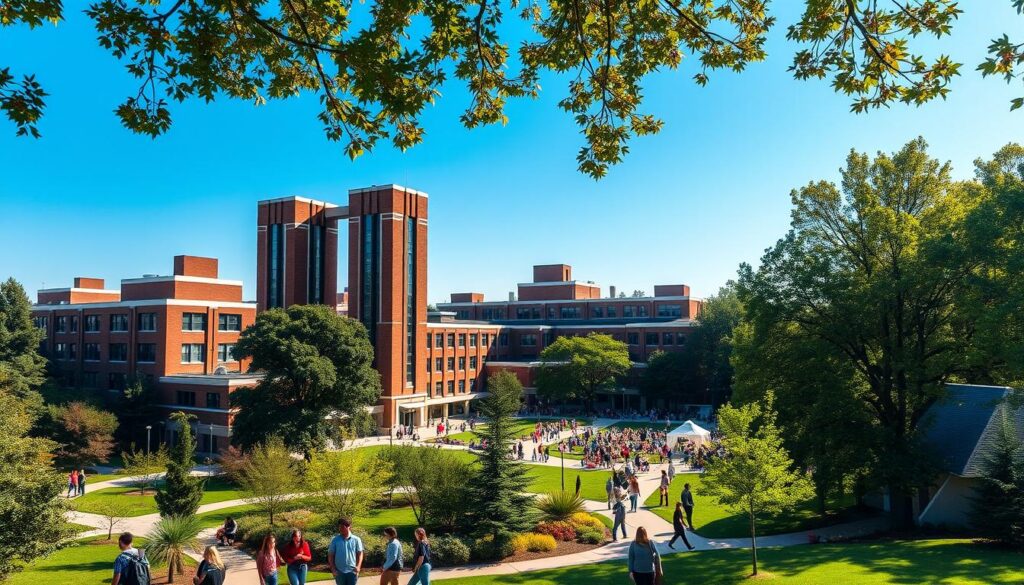
Families appreciated visible security upgrades like controlled access points and emergency alert systems. These changes let learners focus on growth rather than concerns about their surroundings. The campus became a blueprint for balancing innovation with peace of mind.
A Vibrant Environment for Sports and Student Activities
Mustangs teams thrived in redesigned facilities that supported multiple sports seasons. Fields and courts buzzed with energy as athletes practiced teamwork and strategic thinking. Non-competitive learners found their niche through intramural programs and spirit committees.
Prospective families could visit during game days or attend theater premieres to see the community in action. The “Mustang for a Day” program let guests experience classes alongside current students. This hands-on approach helped families view education as a lived experience rather than just a schedule.
From science labs to art studios, every corner encouraged exploration. Shared spaces naturally fostered friendships that often lasted beyond graduation years. The environment proved that great education extends far beyond textbook pages.
History, Legacy, and Future Growth
Educational institutions often become cornerstones of their communities, and this high school‘s journey reflects decades of dedication. From humble beginnings to bold innovations, its story remains woven into Houston’s educational tapestry.
A Proud Tradition and Evolving Campus Story
The roots trace back to 1949 when a local Lutheran congregation envisioned faith-based learning. December 1972 saw shovels break ground for what would become a beloved institution. When doors opened in 1980, freshmen and sophomores began shaping traditions that still echo today.
By spring 1983, the first graduates crossed the stage, marking a new chapter. Annual homecoming games became rallying points for community pride. Through changing times, families relied on the school’s steady commitment to character-building education.
Innovative Changes and Community Impact
Leaders constantly adapted to prepare students for the future. In 2022, they expanded to serve younger grades, renaming the institution to reflect broader goals. Updated labs and collaborative spaces kept pace with modern learning needs.
Though doors closed in 2024, the legacy lives through alumni making waves nationwide. Former teachers still share stories of leadership workshops that sparked careers. Community partnerships formed over decades continue nurturing Houston’s youth, proving some impacts outlast brick and mortar.
Conclusion
For families seeking a nurturing educational environment, this institution set a standard that continues to inspire. Through personalized attention and a family-like atmosphere, staff members helped every child discover their potential. Students thrived in spaces where learning blended seamlessly with character development.
Teachers became mentors who shaped more than academic skills. They cultivated curiosity and compassion that extended beyond the school day. Many graduates credit their success to lessons learned in classrooms and during community projects.
Though doors closed in 2024, the impact lives on through alumni making meaningful contributions nationwide. Families still share stories of summer programs that sparked lifelong passions and friendships. The academy’s profile remains a testament to balancing intellectual growth with heartfelt values.
Those seeking information about its legacy can explore reviews from former students and parents. The school’s approach proves education works best when children feel supported as whole individuals. Even today, its philosophy influences how communities view student-centered learning.
FAQ
What academic programs help prepare students for college?
The school offers advanced courses, hands-on projects, and personalized learning plans. These programs focus on critical thinking and real-world skills, ensuring graduates are ready for top universities and future careers.
Are there opportunities for involvement outside the classroom?
Yes! From championship-level athletics to arts clubs and service groups, students explore passions through 20+ activities. Leadership workshops and team-building events also foster growth beyond academics.
How does the campus ensure student safety?
Recent upgrades include secure entry systems, monitored common areas, and emergency response training. The community-focused environment encourages open communication between staff, families, and learners.
Can parents participate in school events?
Absolutely. Family nights, volunteer programs, and mentorship opportunities connect families with the community. Partnerships with local organizations also create shared experiences that benefit everyone.
What support exists for students adjusting to high school?
Freshman mentorship programs, peer tutoring, and advisory sessions help newcomers thrive. Teachers prioritize individual needs, ensuring each child feels valued and supported from day one.
How do sports programs build character?
Teams emphasize teamwork, discipline, and resilience alongside physical skills. Coaches integrate life lessons into training, helping athletes excel both on the field and in future endeavors.