Imagine a faith that blends deep theological roots with practical guidance for daily life. That’s what this historic Christian movement offers, shaping Protestant thought for over two centuries. Born from the Reformation’s fervor, it created a clear framework for understanding Scripture and living out spiritual truths.
This tradition emerged as a response to challenges from other Christian groups and debates within Protestant circles. Leaders focused on clarifying core teachings, ensuring believers could confidently practice their faith. Their work produced lasting confessional writings that still guide churches today.
At its heart, this approach values both scholarship and accessibility. It maintains rich worship practices while making complex ideas relatable. From baptism rituals to communion services, these traditions connect modern worshippers to centuries of spiritual heritage.
You’ll discover how this movement balances ancient wisdom with real-world application. Whether you’re exploring Christian history or seeking meaningful spiritual practices, its insights remain surprisingly relevant. Let’s unpack its key features in everyday language.
Key Takeaways
- Rooted in Reformation-era efforts to clarify Christian teachings
- Combines academic theology with practical faith applications
- Maintains distinctive worship styles and sacramental practices
- Addresses both external challenges and internal Protestant debates
- Uses confessional documents to preserve core beliefs
- Connects historical traditions to modern spiritual needs
Introduction to Lutheran Orthodoxy
After the Reformation’s initial surge, church leaders needed clear frameworks to protect core beliefs. This led to three distinct eras of theological refinement between 1580 and 1730. The movement balanced academic precision with practical faith applications, creating lasting doctrinal systems still valued today.
Scholars like Johann Gerhard crafted detailed defenses against competing views while making teachings accessible. Their work formed a bridge between Scripture and everyday spiritual life. One pastor noted: “Truth shines brightest when rooted in both study and service.”
| Period | Years | Key Focus |
|---|---|---|
| Early Orthodoxy | 1580–1600 | Foundational doctrinal agreements |
| High Orthodoxy | 1600–1685 | Intellectual defense & system building |
| Late Orthodoxy | 1685–1730 | Engaging new cultural challenges |
These phases show how the church adapted while keeping its doctrinal heart intact. The 1580 Formula of Concord united over 8,000 leaders, resolving disputes about grace and sacraments. This agreement became a cornerstone for future teachings.
Later thinkers like Abraham Calovius blended philosophy with biblical analysis, proving faith and reason could coexist. Their efforts ensured complex ideas stayed relevant for worshippers seeking deeper understanding.
Historical Roots and the Reformation Context
A single document changed Christianity forever in 1517. Martin Luther’s Ninety-five Theses sparked debates that reshaped religious life across Europe. His bold critique of indulgences challenged the church’s authority and ignited reforms rooted in biblical study.
The Emergence from 16th-Century Reforms
Luther’s ideas spread like wildfire through printed pamphlets and public debates. By 1521, the Edict of Worms declared his teachings illegal, forcing supporters to organize secretly. This pressure cooker environment birthed new ways to practice faith outside traditional structures.
| Event | Year | Impact |
|---|---|---|
| Ninety-five Theses Posted | 1517 | Began public Reformation debates |
| Edict of Worms | 1521 | Forced separation from Catholic Church |
| Formula of Concord | 1580 | United Lutheran churches doctrinally |
| Early Orthodoxy Period | 1580-1600 | Established formal church teachings |
Development of Early Orthodoxy
After Luther’s death in 1546, leaders faced two fronts: Catholic critics and Protestant rivals. Scholars crafted detailed defenses of key doctrines like salvation through faith alone. One theologian remarked: “Truth grows clearer when tested by fire.”
This period saw churches create schools to train pastors and laypeople. By 1580, over 8,000 clergy endorsed the Formula of Concord – a milestone in unifying church doctrine. These efforts preserved Luther’s vision while adapting to new cultural challenges.
Defining Key Doctrines and Beliefs
At the heart of this tradition lies a transformative understanding of divine mercy. These teachings answer life’s biggest questions through clear biblical principles that shape worship and daily living.
Justification by Grace and the Role of Faith
Salvation arrives as pure gift, not reward. This revolutionary idea changed how believers relate to God. “We contribute nothing but open hands,” observed 17th-century theologian Johann Arndt. Through Jesus Christ’s sacrifice, people receive forgiveness simply by trusting this promise.
Sacramental Union and Baptismal Regeneration
Water becomes more than symbol here. Baptism marks God’s active work – washing away sin and sparking new spiritual life. The Lord’s Supper follows similar logic. Bread and wine carry Christ’s real presence, nourishing faith like spiritual superfood.
Good works matter too, but differently. They don’t earn salvation. Instead, they bloom naturally from grateful hearts. This teaching keeps focus on grace while encouraging loving action.
Scripture remains the ultimate authority. Unlike groups blending tradition with the Bible, this approach lets God’s word speak directly. The result? A faith that comforts troubled souls and inspires changed lives.
The Authority of Scripture in Lutheran Thought
The Bible isn’t just another book here—it’s the ultimate roadmap. This approach treats God’s word as both compass and anchor, guiding believers through life’s storms while keeping them rooted in timeless truth.
Sola Scriptura and Biblical Foundation
Sola scriptura means Scripture stands alone as life’s instruction manual. As 17th-century theologian Johann Gerhard put it: “God’s voice in these pages drowns out all earthly whispers.” The church treats creeds and confessions like trusted trail markers—helpful but never replacing the map itself.
Four key documents earned special status through history. The Apostles’ Creed and Augsburg Confession became study guides that align with biblical teaching. They help explain core ideas like salvation through Christ, but always point back to the original text.
This approach empowers everyday readers. You don’t need special training to grasp God’s message—just an open heart and clear translation. The Holy Spirit becomes your personal tutor, helping apply ancient truth to modern dilemmas.
Scholars developed smart reading strategies too. They compare passages, study historical settings, and track themes across books. This keeps interpretations accurate while preserving the Bible’s central message about faith in Christ.
By making Scripture the final authority, believers gain unshakable confidence. Every worship practice, moral choice, and doctrine gets tested against these sacred pages. It’s like having direct access to heaven’s playbook—no middle managers required.
Lutheran Church Traditions and Liturgical Practices
What makes a centuries-old meal central to modern worship? For congregations following these traditions, the answer lies in practices that blend ancient rhythms with heartfelt meaning. Their approach to sacred rituals creates both continuity with the past and fresh relevance today.
Meaning and Celebration of the Lord’s Supper
At communion services, bread and wine become more than symbols. Believers experience what one pastor calls “God’s edible promise”—Christ’s real presence nourishing faith. This sacramental union forms the heartbeat of Sunday gatherings, celebrated weekly in many congregations.
The Divine Service follows patterns older than the Reformation itself. Traditional hymns mix with clear teaching, creating worship that feels both familiar and transformative. As one member shared: “It’s like time travel with a purpose—we touch history while meeting God here and now.”
Preparation matters deeply. Pastors carefully examine communion statements, and worshippers reflect privately beforehand. This reverence stems from believing the meal offers forgiveness and strength—not just reminders of grace, but its actual delivery system.
Communion also builds community. The shared cup and loaf visibly unite diverse people around one table. Yet each person receives personal assurance too—a divine “for you” that cuts through life’s noise.
Through these practices, ordinary moments become holy encounters. The church preserves this sacred rhythm not from habit, but because it continues to reshape lives century after century.
The Book of Concord and Confessional Heritage
Unity in belief emerged from pages of a historic compilation. The Book of Concord became Christianity’s ultimate doctrinal toolkit, settling debates that once divided communities. “This book doesn’t just gather dust—it gathers believers,” noted 17th-century scholar Martin Chemnitz.
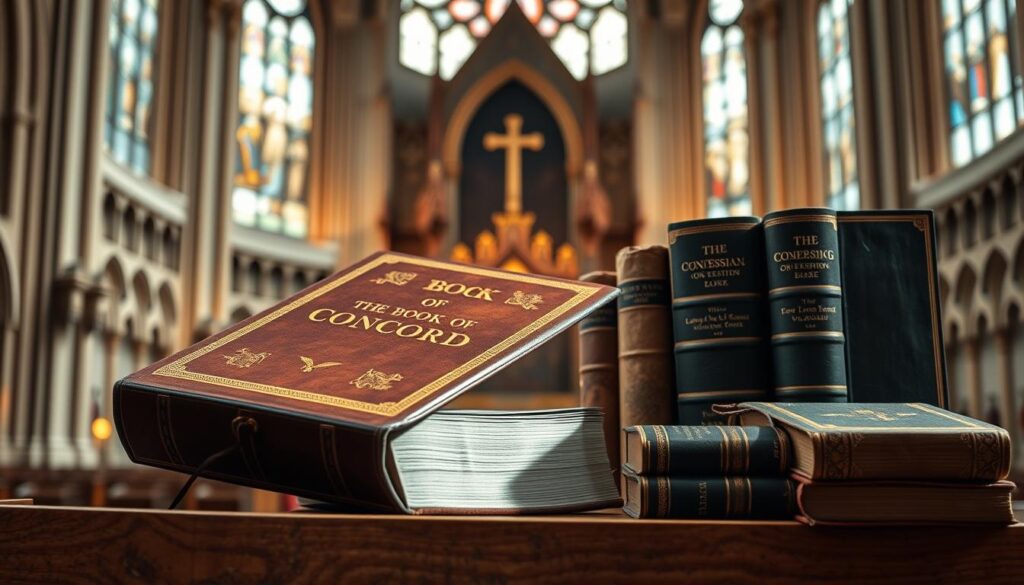
This 1580 collection stitches together essential texts like a theological quilt. It includes the Apostles’ Creed, Luther’s Catechisms, and the groundbreaking Formula of Concord. Over 8,000 leaders endorsed these documents, creating the first unified doctrine for German congregations.
Why does this matter today? Churches still use these confessions like GPS for biblical truth. Pastors reference its articles when teaching about baptism, communion, and God’s grace. Each section tackles specific questions—from free will to salvation—with clear scriptural backing.
The Formula of Concord alone resolved 30+ disputes after Luther’s death. It proved that faith thrives when grounded in shared understanding. Modern members discover ancestors’ wisdom through these pages, finding answers that still click with 21st-century lives.
More than a relic, this book shapes how congregations worship and serve. Its balanced approach—deep theology meets practical guidance—keeps the church anchored yet adaptable. As one modern believer put it: “Our roots grow from these confessions, but our branches reach new skies.”
Understanding Worship and the Liturgical Calendar
The church year turns like a kaleidoscope, revealing divine stories through seasonal colors and sounds. This ancient rhythm helps communities relive salvation history while anchoring modern faith journeys. Each season—Advent’s anticipation, Easter’s triumph—reshapes how believers experience time as sacred.
Communion Psalms and Seasonal Rites
At Emmaus Lutheran Church in St. Louis, leaders revived a 500-year-old practice between 2008-2017. They crafted Communion Psalms matching each church year period. Cantors sang verses from The Brotherhood Prayer Book, blending traditional chants with fresh relevance.
Advent featured Psalm 24’s triumphant gates, while Easter echoed Psalm 118’s resurrection joy. This project showed how Lutheran churches honor roots while solving modern needs. As one member noted: “The psalms make every Lord’s Supper feel like part of a bigger story.”
These practices do more than mark days—they train hearts to see the Holy Spirit working through time. Whether lighting candles or singing ancient texts, worshippers discover God’s promises renew every season.
FAQ
What are the core beliefs of this tradition?
Central teachings focus on salvation through grace alone, received by faith. This includes trust in Christ’s sacrifice and the transformative power of sacraments like baptism and communion, which unite believers with God’s promises.
How does Scripture guide worship and doctrine?
The Bible is viewed as the ultimate authority, shaping teachings and practices. Passages are interpreted through a lens of law and gospel, emphasizing Christ’s redemptive work and God’s unmerited love for humanity.
What is the Book of Concord?
This collection of doctrinal statements, written in the 16th century, unites churches around shared beliefs. It includes the Augsburg Confession and Luther’s catechisms, serving as a foundation for teaching and unity.
How do worship practices reflect theological values?
Services often follow a structured liturgy, blending ancient rituals with gospel-centered preaching. The Lord’s Supper is celebrated as a means of grace, where Christ’s presence is believed to be spiritually tangible for believers.
Why is the Reformation era significant?
The 16th-century reforms reshaped how grace and faith were understood, rejecting works-based salvation. Leaders like Martin Luther emphasized Scripture’s clarity and Christ’s role as the sole mediator between God and humanity.
What role do sacraments play in spiritual life?
Baptism and communion are seen as God’s active promises, not just symbols. Baptism marks entry into the covenant community, while communion renews believers’ connection to Christ’s sacrifice and forgiveness.
How does this tradition differ from other denominations?
Key distinctions include a strong emphasis on grace over human effort, Scripture’s supremacy over tradition, and the belief in Christ’s real presence in communion. These set it apart from Reformed or Roman Catholic teachings.
Are seasonal traditions part of worship?
Yes! The church calendar guides services, with seasons like Advent, Lent, and Easter highlighting specific aspects of Christ’s life. Psalms, hymns, and readings align with these themes to deepen spiritual reflection.