Have you ever wondered what it means to serve as a spiritual leader rooted in centuries of tradition? In Scandinavian countries like Norway and Sweden, clergy members have carried the title of “priest” since the 1500s. These faith leaders bridge historical Christian practices with modern community needs, offering guidance through worship, teaching, and compassionate care.
This article explores how these roles evolved uniquely during the Reformation. Unlike other Protestant movements, Scandinavian churches preserved bishops and traditional structures while adopting Lutheran teachings. Today’s spiritual guides continue this legacy, balancing ancient rituals with contemporary challenges.
You’ll learn how their daily work strengthens church communities through sermons, sacraments, and personal support. We’ll also clarify common misunderstandings about their training and purpose. Whether you’re curious about vocational paths or simply seeking insight, this guide illuminates the heart of sacred service.
Key Takeaways
- Scandinavian Lutheran traditions have used the title “priest” since the 16th century
- Spiritual leaders blend historical practices with modern pastoral care
- Roles include leading worship, teaching, and supporting congregations
- Unique Reformation history preserved bishops and church structures
- Ministry requires deep personal faith and commitment to community
Understanding the Role of a Lutheran Priest
The journey of Lutheran ministry began with royal decrees and theological evolution. In 1537, King Christian III forced Norway and Denmark to adopt Reformation principles. Meanwhile, Sweden’s shift unfolded gradually under Gustav Vasa, who severed ties with Rome in the 1520s. By 1593, the Church of Sweden cemented its Lutheran identity through the Uppsala Synod.
The Historical Roots and Tradition
Unlike other Protestant groups, Scandinavian churches kept bishops and ancient rituals. This created a unique blend – reformed theology within a Catholic-style structure. As one 17th-century text states: “We changed teachings, not the hands that bless.”
Today’s spiritual leaders still honor this unbroken tradition. They perform sacraments and lead worship much like pre-Reformation clergy, yet emphasize Scripture’s supreme authority.
Terminology: Priest versus Pastor
Here’s where things get interesting. In Scandinavia:
- “Priest” is the standard title (like sokneprest in Norway)
- “Pastor” specifically denotes a parish’s senior minister (kyrkoherde in Sweden)
This distinction reflects their view of ministry. As the Augsburg Confession notes: “The church and its servants remain, though purified.” Most global Lutheran bodies use “pastor,” but Scandinavian churches cherish “priest” to highlight historical continuity.
Daily Duties, Worship, and Ministry Responsibilities
Faith leaders wear many hats while guiding their communities. Their work blends sacred rituals with everyday acts of care, creating moments that shape lives. Let’s explore how these roles come alive through worship, teaching, and symbolic traditions.
Leading Worship and Sacramental Services
Central to their calling is guiding worship services that unite communities. Each week, they lead prayers, hymns, and sacraments like baptism and communion. For many, these rituals mark life’s milestones—from welcoming newborns to celebrating marriages.
Visiting homes and hospitals also matters. Bringing communion to those who can’t attend service shows deep compassion. One member shared: “When our pastor prayed with my sick mother, it felt like light entered the room.”
Preaching, Teaching, and Community Support
Messages from the gospel get practical twists during sermons. Leaders break down ancient texts into lessons for modern challenges. Bible studies and youth programs extend this teaching beyond Sunday mornings.
Personal connections matter too. From grief counseling to cheering at school events, clergy build trust. Their doors stay open for coffee chats or urgent calls—proving care isn’t confined to church walls.
The Significance of Clergy Vestments
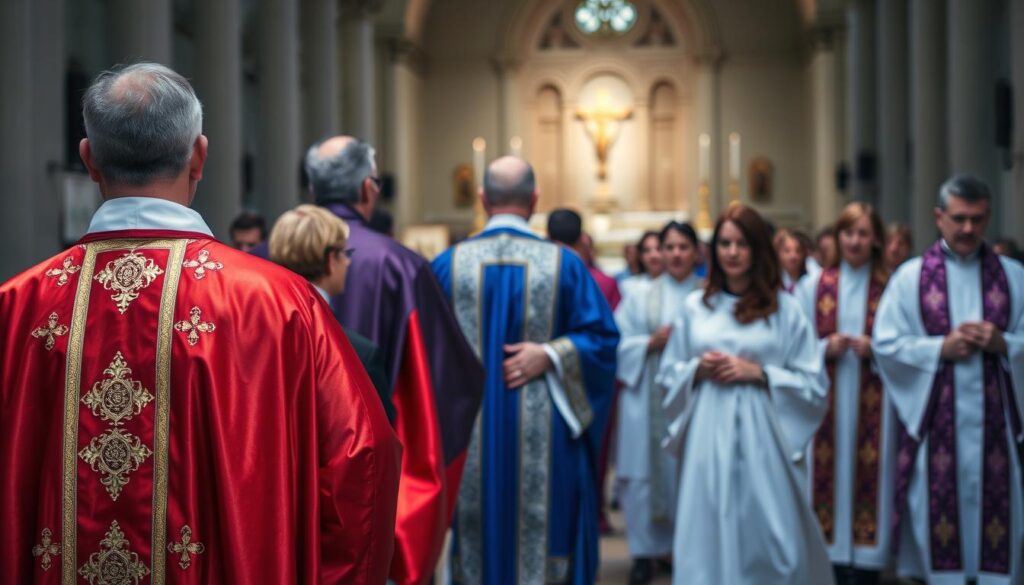
Robes and stoles aren’t just tradition—they tell stories. The white alb symbolizes purity, while colorful stoles reflect church seasons. These garments remind everyone of shared beliefs and timeless hopes.
| Vestment | Meaning | Seasonal Colors |
|---|---|---|
| Alb | Purity in Christ | White (year-round) |
| Stole | Divine calling | Purple (Advent/Lent), White (Christmas/Easter) |
| Chasuble | Service in communion | Red (Pentecost), Green (Ordinary Time) |
Through these visual cues, people connect faith’s past and present. As one leader noted: “Vestments aren’t costumes—they’re reminders of who we serve.”
The Calling of a Lutheran Priest
Choosing a life of service in the church is no ordinary career path. It begins with a deep sense of purpose—a conviction that Paul describes as being “sanctified by the Holy Spirit” (Romans 15:16). This divine invitation shapes every aspect of a minister’s journey, blending personal growth with community leadership.
Spiritual Significance and Personal Vocation
Becoming a spiritual leader demands rigorous preparation. Candidates typically spend 8-10 years in training:
| Stage | Duration | Focus |
|---|---|---|
| Undergraduate Studies | 4 years | Liberal arts & religious foundations |
| Theological College | 4 years | Scripture, liturgy, and pastoral care |
| Internship/Vicarage | 1 year | Hands-on ministry experience |
Michael Plekon’s Ministry Matters highlights how this process molds ministers into people of prayer and reconciliation. One pastor shared: “My internship taught me to listen before speaking—that’s where true ministry happens.”
Insights from Modern Ministry and Pastoral Experiences
Today’s spiritual leaders balance ancient traditions with modern challenges. They might host virtual Bible studies while maintaining centuries-old communion practices. Successful ministers often cultivate:
- Daily prayer routines that ground their work
- Skills to bridge cultural divides in congregations
- Flexibility to address evolving community needs
One innovative pastor started a faith-based coworking space, proving ministry thrives when it meets people where they are. As cultural shifts accelerate, these adaptable leaders keep timeless truths relevant through creative service.
Conclusion
In every community, there are those who bridge ancient wisdom with modern life through sacred service. These spiritual guides honor centuries of tradition while addressing today’s challenges—from leading vibrant worship to supporting families in crisis. Their work reminds us that timeless truths remain vital when carried by compassionate hands.
Whether called ministers or “pastors”, these leaders serve as living links between historic churches and contemporary needs. Many balance parish duties with innovative outreach, proving the gospel thrives in food pantries, youth programs, and virtual gatherings alike. Salaries typically range $45,000-$75,000 with benefits, reflecting both practical realities and spiritual rewards.
For those sensing a calling, this path demands years of study and deep faith. Yet it offers unmatched opportunities to walk alongside people during life’s sacred moments. From ordaining women since 1970 to adapting ministries for new generations, Lutheran communities continue evolving while rooted in enduring values.
Next time you see a minister serving communion or organizing aid drives, remember—they’re not just preserving rituals. They’re helping people find hope, purpose, and connection in an ever-changing world.
FAQ
What’s the difference between a pastor and a priest in the Lutheran tradition?
In Lutheran communities, the term “pastor” is commonly used instead of “priest.” Both roles focus on guiding congregations, teaching faith, and leading worship. The preference for “pastor” reflects the tradition’s emphasis on shepherding and community care.
Do Lutheran clergy wear special clothing during services?
Yes, many wear vestments like albs or stoles during worship. These garments symbolize their role in leading sacraments and connecting to historical Christian practices. Simplicity often guides their design, reflecting Lutheran values.
How does someone become a minister in the Lutheran Church?
It typically involves theological education, seminary training, and approval from a church body like the ELCA or LCMS. Candidates also undergo mentorship, exams, and a formal call from a congregation to begin their service.
What sacraments do Lutheran pastors oversee?
They administer Baptism and Holy Communion, seen as core sacraments. These practices emphasize grace and faith, central to Lutheran teachings. Worship services often revolve around these sacred moments.
How do modern ministers balance preaching and community work?
Many focus on both Sunday services and weekday outreach, like counseling or local partnerships. Flexibility is key—whether leading Bible studies, organizing charity drives, or advocating for social justice causes.
Has the role of clergy evolved in recent years?
While core duties remain, today’s ministers often address digital outreach, mental health, and interfaith collaboration. The focus on grace and service stays timeless, but methods adapt to meet changing community needs.