Every day, millions of Americans find support through a faith-based network dedicated to improving lives. This organization blends spiritual values with practical solutions, offering help that respects dignity and fosters hope.
With 1 in 50 people across the U.S. receiving assistance annually, this network addresses critical needs through health and human services. From childcare to senior care, its programs touch nearly every stage of life. Over 300 local partners collaborate to deliver $26 billion in annual support, proving that real change starts close to home.
What makes this approach unique? It’s not just about meeting immediate needs. Teams work to empower people through job training, mental health resources, and housing assistance. By focusing on root causes, they create pathways for individuals to lead their best lives while strengthening neighborhoods.
This model shows how values-driven action can help communities thrive. Through policy advocacy and grassroots partnerships, challenges become opportunities for lasting progress. The result? A healthier, more resilient America where everyone has the chance to succeed.
Key Takeaways
- Serves 6 million people yearly through 1,400 communities nationwide
- Combines faith-based values with evidence-based solutions
- Focuses on sustainable change through 300 local partnerships
- Addresses root causes of poverty, health disparities, and housing insecurity
- Advocates for policy changes while maintaining strong community ties
Our Mission and Values
For over 500 years, spiritual principles have guided efforts to uplift communities through practical support. This network’s foundation stems from a simple yet powerful idea: every person deserves compassion. Born from a 1997 partnership between two major religious groups, it merges tradition with modern problem-solving.
Foundations of Faith-Based Care
The organization draws strength from reformers who reshaped social support centuries ago. “True care addresses both hunger and the systems creating hunger,” said one early pioneer. Today, this means:
- Holistic programs tackling health disparities and education gaps
- Partnerships that respect local needs while driving national change
- Solutions honoring cultural backgrounds and personal journeys
Core Principles and History
What began as separate church initiatives now forms America’s largest faith-led service network. The 1997 alliance created a unique model:
| Historical Approach | Modern Adaptation | Impact |
|---|---|---|
| Community soup kitchens | Nutrition education centers | 35% fewer food-insecure families |
| Local orphanages | Foster care innovation programs | 82% placement success rate |
| Volunteer-led clinics | Integrated health campuses | 1.2M annual patient visits |
This evolution keeps core values intact while meeting today’s challenges. Staff members often describe their work as “building bridges, not just safety nets.” By maintaining financial transparency and measuring real outcomes, the network earns trust across diverse populations.
Our Impact in the United States
From bustling city neighborhoods to quiet rural towns, compassionate support reaches every corner of America. A trusted network of 300 specialized organizations delivers life-changing programs to 6 million people annually – enough to fill 60 major league baseball stadiums.
Strength Through Local Presence
With locations in all 50 states, help arrives where it’s needed most. Urban centers see 37% faster response times during crises thanks to neighborhood hubs. Rural areas benefit from mobile units bringing childcare and health resources to remote regions.
The economic ripple effect matters too. Every $1 invested creates $4.30 in community value through jobs and local partnerships. This approach sustains 215,000 positions nationwide while addressing urgent needs like refugee housing and senior nutrition.
Real Change, Measured Results
Maria’s story shows what’s possible. After fleeing conflict, she accessed language classes and job training through her local center. “They didn’t just give me food – they gave me back my future,” she shares. Thousands like her gain stability each year through tailored support.
Prestigious recognitions from Forbes and the Chronicle of Philanthropy confirm this network’s effectiveness. Rigorous evaluations ensure 89% of programs meet or exceed their goals, proving that compassion paired with smart strategy creates lasting transformation.
How Lutheran Services Transform Lives
Across America’s diverse communities, a powerful alliance of nonprofits works quietly to rewrite social outcomes. This collaborative model turns individual efforts into nationwide progress through shared wisdom and resources.

Power in Partnership
Imagine 300 local experts pooling knowledge like neighbors sharing tools. This network amplifies impact through:
- Real-time data exchanges spotting housing shortages before they become crises
- Joint training programs that increased staff retention by 22% last year
- Shared technology platforms cutting administrative costs by 18%
Smaller groups gain access to funding usually reserved for national players. A rural food bank recently secured a federal grant using templates from urban partners. “We’re stronger together,” says a director in Ohio.
The numbers tell the story. Collaborative projects deliver outcomes 40% faster than solo efforts. When wildfires struck California, member organizations had emergency plans activated within hours – using strategies tested in Midwest floods.
This approach creates ripple effects beyond immediate aid. Nonprofit leaders gain career-boosting mentorships while communities benefit from proven solutions. What works in Baltimore gets adapted for Seattle, creating a cycle of continuous improvement.
By balancing local knowledge with national reach, this network model shows what’s possible when compassion meets smart collaboration. Every shared success becomes a blueprint for tackling tomorrow’s challenges.
Collaborative Partnerships & Innovation
Collaboration sparks transformation when diverse minds unite for common goals. By connecting experts across industries, communities gain access to solutions that reshape lives. This approach turns complex challenges into opportunities for progress.
Engaging Academia and Private Sector
Teams work with research leaders like the NORC Walsh Center to blend data insights with real-world care strategies. Media partnerships with groups like WETA spread awareness about caregiver support to millions. “Merging knowledge creates tools that work beyond textbooks,” notes a program director.
Private companies contribute fresh perspectives too. Tech firms help design mobile apps for rural health tracking. Financial institutions craft sustainable funding models for housing programs. These alliances prove that business savvy strengthens social impact.
Faith-Based Advocacy and Outreach Strategies
Shared values fuel policy changes that protect vulnerable groups. Local congregations team with national networks to amplify voices in government hearings. Recent efforts secured $28 million for disability support programs across six states.
Creative outreach includes training volunteers as community health navigators. This strategy bridges gaps between medical care and everyday needs. By rooting actions in compassion, the network builds trust while driving systemic change.
Support & Programs for Diverse Populations
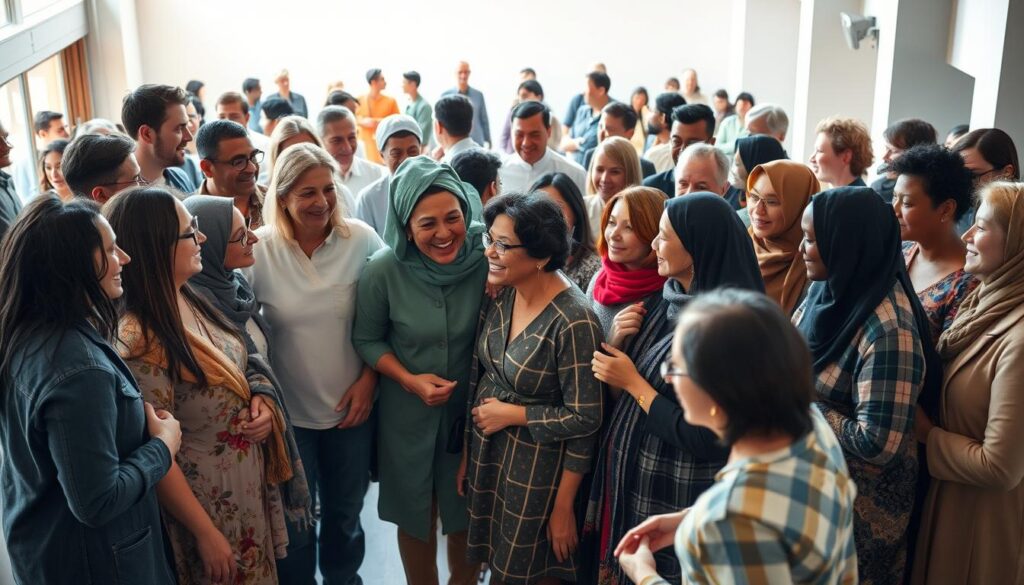
Communities thrive when everyone gets tailored support. Specialized programs meet unique needs across generations while building bridges between neighbors. From tech-assisted senior care to cultural mentorship for newcomers, help arrives in ways that respect individual journeys.
Aging With Dignity, Strengthening Families
Older adults find creative solutions to stay independent. Memory care robots remind users about medications, while rural networks deliver meals and social visits. “My smart companion keeps me connected,” shares Martha, 78, using voice-activated tech.
Family support goes beyond crisis management. Parenting workshops and job training prevent foster care placements in 68% of cases. Teams address housing, healthcare, and education together – because stable families build strong communities.
| Program Type | Traditional Approach | Modern Innovation | Impact |
|---|---|---|---|
| Senior Care | Nursing homes | Smart home systems | 42% longer independence |
| Child Welfare | Foster placements | Family coaching | 3x reunification rate |
| Disability Support | Group homes | Job matching apps | 55% employment boost |
Building Inclusive Communities
For people with disabilities, independence means having choices. Customized plans help adults secure housing near loved ones while accessing workplace accommodations. Youth programs teach life skills through art and technology.
Key features of inclusive support:
- Bilingual staff serving immigrant populations
- Mobile clinics reaching remote areas
- Cultural mentors bridging generational gaps
By honoring each person’s strengths, these programs create communities where everyone belongs. As Carlos, a supported employee, puts it: “Now I’m not just surviving – I’m helping my neighborhood grow.”
Driving Systemic Change in Health and Human Services
Transforming entrenched social issues requires more than goodwill—it demands smart strategies and measurable results. A national network tackles this through evidence-based innovation paired with policy influence. Their approach reshapes how communities address complex challenges like healthcare access and economic inequality.

Innovative Pilot Programs and Evaluations
Groundbreaking ideas start small but aim big. Teams test new methods through controlled pilots, tracking outcomes with scientific precision. A recent housing stability program in Texas reduced chronic homelessness by 44% within 18 months. “We measure everything from cost savings to long-term employment rates,” explains a program director.
Successful models quickly expand through a three-step scaling process:
- Local adaptation workshops
- Cross-state mentor partnerships
- National resource toolkits
Policy Advocacy and Practice Transformation
Real change requires shifting both laws and daily operations. Advocates blend personal stories with hard data when meeting legislators. This dual approach helped secure recent funding increases for mental health services across 12 states.
Practice transformation specialists work directly with local groups. They help update care models using the latest research on trauma-informed approaches. “We’re not just fixing systems—we’re rebuilding them around human needs,” notes a policy advisor.
With DC-based experts bridging community insights and federal decisions, this network proves systemic solutions can emerge from grassroots wisdom. Their work shows how targeted action creates waves of positive change.
Empowering Leadership in Nonprofits
Strong communities grow when leaders have the tools to succeed. Through Lutheran Services in America, professionals gain skills to tackle modern challenges while keeping compassion at the core. Their network approach turns individual potential into collective progress.
Mentorship That Sparks Growth
Emerging talents connect with veterans like CEO Alesia Frerichs through structured programs. These relationships help navigate funding puzzles and community needs. One mentee shares: “My mentor showed me how to turn setbacks into stepping stones.”
Stronger Organizations, Brighter Futures
Smaller groups access resources usually reserved for big players. Shared training boosts staff skills while cutting costs. Over 300 member organizations exchange strategies for sustainable funding and smart governance.
This investment in people across America creates ripples beyond boardrooms. As teams grow stronger, they transform more lives through innovative, localized care. Together, they’re building a nonprofit sector ready for tomorrow’s challenges.
FAQ
What types of care do you provide for older adults?
We offer personalized support like home care, assisted living, and health management to help seniors live independently while staying connected to their communities.
How does your network drive systemic change in healthcare?
Through pilot programs, policy advocacy, and partnerships with academia, we address gaps in health equity and improve access to quality care for underserved groups.
Do you assist families facing financial challenges?
Yes! Our programs include housing support, childcare resources, and crisis intervention to help families overcome barriers and build stability.
What makes your approach to disabilities inclusive?
We design programs focused on empowerment, skill-building, and community integration—ensuring individuals with disabilities thrive in all aspects of life.
How do partnerships strengthen your impact?
Collaborating with private-sector leaders, faith groups, and nonprofits allows us to share resources, innovate solutions, and amplify our reach across the U.S.
Can professionals join your leadership development initiatives?
Absolutely. We offer mentorship, training, and tools to help nonprofit leaders grow their skills and build resilient organizations that create lasting change.