Preparing leaders for today’s challenges requires institutions that blend spiritual depth with academic rigor. For over six decades, one such place has shaped visionaries ready to serve diverse communities. Founded in 1962 through the merger of four historic schools, this Chicago-based center offers a dynamic environment for students pursuing careers in ministry and service.
Located in the heart of Chicago, the campus provides direct access to urban ministry opportunities. Students engage with real-world issues while studying theology, leadership, and community development. The recent move to a shared space with another institution reflects its commitment to collaboration and innovation.
What sets this learning environment apart? It balances tradition with fresh approaches. Coursework connects ancient wisdom to modern social challenges, ensuring graduates can lead congregations through complex times. Practical training—like internships and outreach programs—complements classroom learning.
With a $48.5 million endowment and a focus on inclusivity, the school fosters relationships that last beyond graduation. Faculty and peers form a tight-knit network, supporting each other’s growth long after diplomas are earned. This emphasis on community prepares leaders to build bridges in an ever-changing world.
Key Takeaways
- Historic mergers created a robust institution focused on preparing skilled leaders for modern ministry
- Urban campus locations offer hands-on experience addressing contemporary community needs
- Programs blend academic excellence with practical training for holistic development
- Collaborative environments strengthen connections between students, faculty, and faith communities
- Education emphasizes adaptability to equip graduates for evolving church leadership roles
Discover the Legacy and Mission of the lutheran theological seminary
Educational excellence in religious leadership often emerges from merging diverse legacies. This institution’s story began in 1962 when four faith-based schools united, creating a collaborative hub for training future changemakers. Their shared goal? To equip individuals with both spiritual wisdom and practical tools for modern service.
Founding History and Church Heritage
The school’s foundation combines Scandinavian traditions with urban ministry expertise. Augustana brought Swedish perspectives, Grand View contributed Danish influences, while Chicago Lutheran focused on city outreach. Suomi added Finnish insights, forming a tapestry of cultural and theological approaches.
Expansions in 1967 and 1987 strengthened this network, integrating Central Seminary’s Midwest roots and Christ Seminary-Seminex’s innovative spirit. These mergers mirrored broader church unification efforts, particularly within the Evangelical Lutheran Church in America.
Visionary Leadership and Ministry Impact
“True leadership grows where ancient wisdom meets today’s struggles,” notes a faculty member. Students learn to address issues like housing insecurity and racial justice through coursework and neighborhood partnerships. This dual focus—deep faith grounding and real-world application—prepares graduates to lead congregations and community organizations.
Alumni serve as pastors, nonprofit directors, and advocates nationwide. Their work demonstrates how faith-based education can spark systemic change while honoring tradition.
Explore Academic Programs and Campus Features
Future faith leaders need training that connects classroom learning with real-world impact. This institution delivers through degree paths blending scholarly exploration with hands-on skill-building. Whether preparing for ordination or specialized service, students find programs tailored to their calling.
Diverse Degree Programs and Innovative Curriculum
The Master of Divinity forms the cornerstone for pastoral preparation, mixing scripture analysis with leadership workshops. Those seeking deeper study can pursue doctoral tracks or the Theological Education for Emerging Ministries program, designed for nontraditional ministry settings.
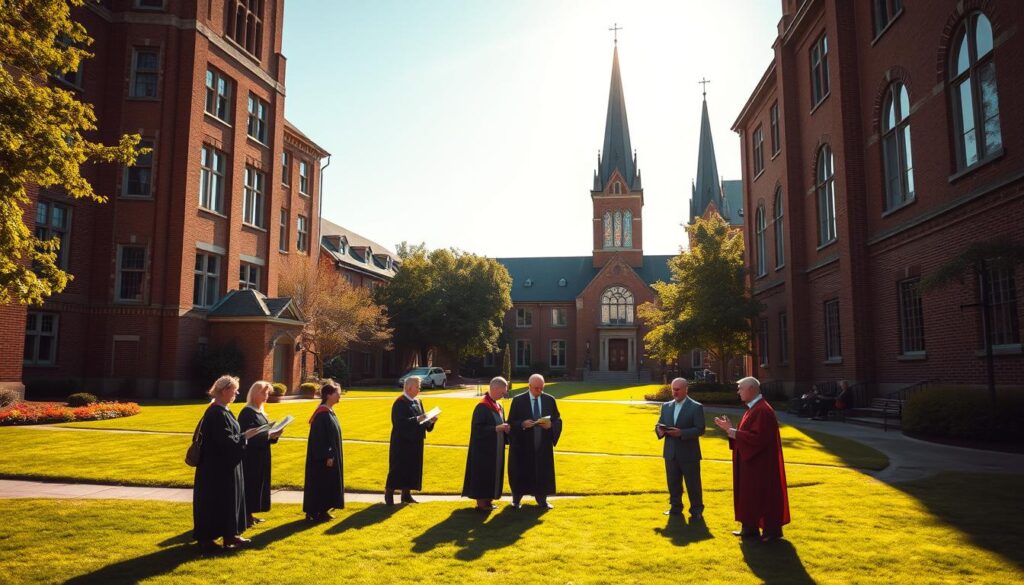
Standout courses tackle topics like urban poverty and interfaith collaboration. “Our Public Church framework trains students to address societal fractures through faith,” explains a professor. This approach equips graduates to lead congregations in tackling justice issues while honoring tradition.
Campus Locations, Facilities, and Interfaith Centers
Chicago’s vibrant neighborhoods serve as living labs for ministry practice. The campus itself features Zoom-enabled classrooms, quiet meditation spaces, and a sunlit café where students debate theology over coffee. A shared chapel hosts worship services from multiple traditions.
Partnerships with 11 seminaries let learners attend cross-denominational courses. Through the Association of Chicago Theological Schools, participants gain access to citywide interfaith events and joint community projects. These connections turn the Windy City into an extended classroom.
Navigating Admissions, Scholarships, and Student Life
Starting your journey toward faith-based leadership should feel welcoming. The admissions team guides applicants through each step, from initial inquiries to enrollment. Virtual info sessions and personalized campus tours help you explore facilities and meet future classmates.
Application Process and Campus Visits
Prospective students complete an online form with academic records and recommendation letters. Interviews focus on aligning personal goals with the school’s mission. Schedule visits to experience Chicago’s energy firsthand—attend a class or join a community service project.
Student Stories and Collaborative Culture
“The diverse perspectives here deepened my understanding of ministry,” shares a second-year candidate. Peer-led study groups and interfaith dialogues foster teamwork. Over 80% of learners participate in neighborhood initiatives, blending coursework with local impact.
Funding Your Education
Every admitted M.A. student receives full tuition coverage, removing financial barriers to study. Additional aid includes housing grants and part-time work opportunities. Alumni-sponsored scholarships reward innovative projects addressing social justice or congregational growth.
FAQ
What makes this institution’s church heritage unique?
Founded in 1869, the school has deep roots in the Evangelical Lutheran Church in America. Its mission combines academic rigor with a commitment to fostering inclusive, justice-centered leaders for modern ministry.
What degree programs are available for aspiring leaders?
Programs include Master of Divinity, Master of Arts, and Doctor of Ministry degrees. Courses blend theology, social ethics, and practical training to prepare graduates for diverse roles in faith communities and beyond.
How does financial aid support students?
Over 90% of enrolled learners receive scholarships, grants, or fellowships. Opportunities include merit-based awards, need-based aid, and denominational partnerships to reduce tuition costs.
Can I visit the campus before applying?
Yes! Prospective students can schedule tours, attend virtual info sessions, or join retreats to explore facilities, meet faculty, and experience the community firsthand.
How does the curriculum address contemporary issues?
Courses integrate topics like racial equity, interfaith dialogue, and climate justice. Students engage in hands-on projects, internships, and global partnerships to apply their learning in real-world settings.
What community resources are available on campus?
The school offers interfaith chapels, a global theology library, and cultural centers. These spaces encourage collaboration, spiritual growth, and dialogue among students from varied backgrounds.