Choosing the right educational environment for your child involves more than academics. Many families seek schools that align with their values while fostering personal growth. This decision often leads parents to explore different approaches within faith-based learning communities.
Some institutions prioritize inclusive environments where families from various backgrounds feel welcomed. These schools focus on nurturing character through compassion rather than strict adherence to doctrine. One parent shared, “Our family found a place where our child grows spiritually without pressure to conform.”
Key Takeaways
- Faith-based schools share Christian roots but differ in educational philosophy
- Inclusive environments welcome families from diverse belief systems
- Character development often emphasizes grace over rigid rules
- Open dialogue about spirituality occurs naturally in daily learning
- Both traditions adapt to modern families’ needs while maintaining core values
Educational communities rooted in faith traditions offer unique approaches to child development. While some emphasize structured religious practices, others create space for organic spiritual exploration. This balance allows young learners to develop confidence through both academic challenges and moral guidance.
Understanding these distinctions helps families make informed decisions. The right choice depends on how a school’s values align with your priorities for your child’s growth and daily life experiences.
Foundations of Faith: Historical Roots and Core Beliefs
Modern spiritual journeys often trace back to pivotal moments that reshaped religious thought. One such turning point began with a monk’s quest for truth in 16th-century Europe.
Origins and the Role of Martin Luther
In 1517, Martin Luther sparked change by questioning common practices of his time. His Ninety-Five Theses challenged ideas about spiritual authority, emphasizing direct connection through scripture. This historic event laid groundwork for new ways of understanding divine relationships.
Luther’s teachings highlighted personal faith over institutional rituals. “Scripture alone guides us,” he argued, creating a ripple effect across communities. His actions opened doors for diverse interpretations of sacred texts.
Doctrinal Differences and Theological Perspectives
Central distinctions emerge in views about salvation. Some traditions teach that grace through faith alone brings redemption, while others blend belief with compassionate actions. These perspectives shape how communities approach moral education.
Over centuries, lutherans catholics and catholics lutherans have maintained dialogue about these core ideas. While differences remain, shared values like service and integrity often bridge divides. Schools reflecting these traditions nurture curiosity about life’s bigger questions.
Today’s educational approaches still echo these historical conversations. Teachers might frame lessons around ethical choices rather than strict doctrine. This method helps students connect timeless wisdom to modern challenges.
lutheran church vs catholic: Traditions, Practices, and Sacraments
Shared rituals shape spiritual identity while revealing distinct approaches to sacred moments. At the heart of these traditions lies a deep respect for ancient customs adapted through time.
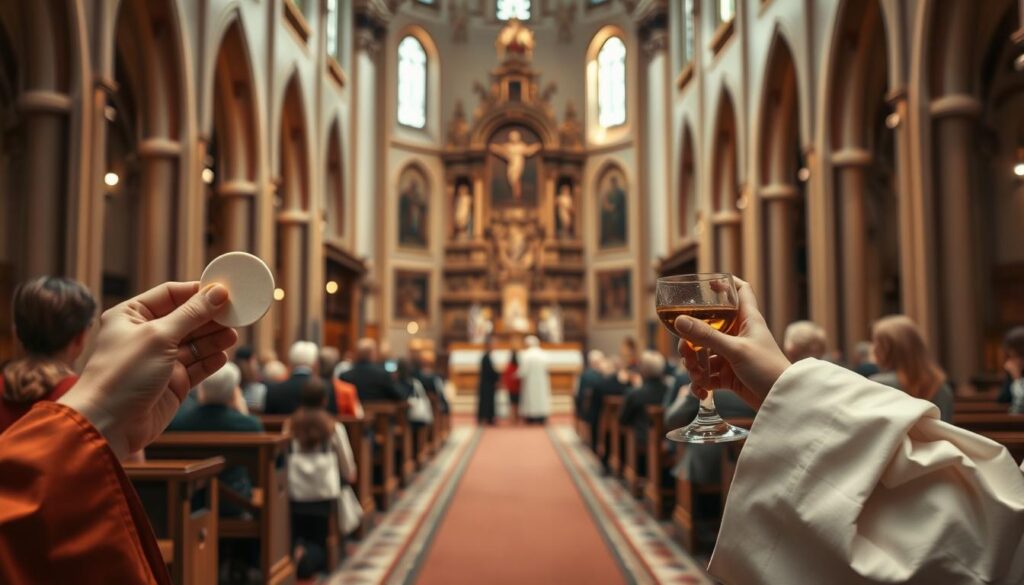
Sacred Meals: More Than Symbols
Both traditions celebrate communion as a central act of worship, yet interpret its nature differently. Catholics describe the bread and wine’s transformation as transubstantiation, while others speak of Christ’s presence existing alongside the elements. This distinction influences how communities approach the ritual.
After services, Catholic churches reserve consecrated bread in a special place for continued prayer. Many Protestant groups view the sacred moment as tied specifically to the worship gathering. “We experience Christ’s presence through the meal, not after it,” explains a lifelong member.
Patterns of Worship and Sacred Acts
Seven foundational sacraments guide Catholic spiritual life, from baptism to marriage. Other Christian groups focus on two primary rites, seeing them as direct commands from scripture. This difference shapes milestones and daily practices.
| Sacrament | Catholic Practice | Protestant Practice |
|---|---|---|
| Baptism | Infant baptism with confirmation later | Often includes adult believer’s baptism |
| Communion | Reserved for members in good standing | Open to all believers |
| Saints | Formal veneration through prayer | Respect without direct invocation |
These variations create unique worship rhythms. While some emphasize structured prayer to saints, others focus on spontaneous dialogue with the divine. Both approaches nurture spiritual growth through different paths.
Practical Implications: Community, Education, and Daily Faith
Faith traditions shape real-world environments where children learn and grow. Schools become living laboratories where values meet everyday choices, shaping young minds through both lessons and lived experiences.
Building Bridges Through Shared Values
Many learning environments prioritize community over conformity. One parent notes, “Our school celebrates each child’s unique story while grounding everyone in compassion.” This approach creates spaces where families from mixed backgrounds collaborate on service projects and holiday celebrations.
Service emerges naturally in these settings. Students might organize food drives after studying local needs, blending academic skills with empathy. Other institutions formalize outreach through required volunteer hours, creating structured opportunities for social responsibility.
Rhythms of Reflection and Action
Morning gatherings often set the tone for the day. Some communities begin with student-led dialogue about kindness challenges, while others follow traditional prayer formats. Both methods help children connect beliefs to actions.
| Practice | Flexible Approach | Structured Model |
|---|---|---|
| Spiritual Growth | Personal exploration encouraged | Guided by established teachings |
| Service Learning | Student-initiated projects | Curriculum-integrated requirements |
| Community Events | Interfaith potlucks | Sacrament-focused celebrations |
These differences create distinct atmospheres. Yet both models share a focus on nurturing integrity. As one educator explains, “We’re all planting seeds – some use different fertilizers, but the goal is similar.”
Conclusion
Families navigating faith-based education often discover multiple paths to nurturing compassionate learners. Both traditions prepare young people for lives of service, whether through emphasis on personal calling or structured spiritual formation. Their ongoing dialogue continues to enrich how communities approach character development.
Choosing between these educational models isn’t about right versus wrong. It’s finding where your child thrives through hands-on learning and shared values. Many schools blend timeless wisdom with modern approaches to grace and responsibility.
Visiting classrooms reveals how each community fosters understanding. Some prioritize collaborative projects addressing real-world needs, while others weave ancient rituals into daily life. Both create spaces where prayer and curiosity coexist naturally.
As lutherans catholics and catholics lutherans continue learning from each other, families benefit from this rich exchange. The goal remains constant: raising kind, capable individuals who contribute meaningfully to their world. Your perfect fit awaits where education feels less like instruction and more like coming home.
FAQ
What’s the biggest theological difference between these traditions?
A central distinction lies in salvation. Catholics emphasize faith combined with good works and sacraments, while Lutherans teach salvation through faith alone, rooted in God’s grace. This stems from Martin Luther’s rejection of practices like indulgences during the Reformation.
How does Martin Luther’s legacy impact modern practices?
Luther’s reforms reshaped worship, scripture access, and clergy roles. His focus on Scripture alone (sola scriptura) and grace alone (sola gratia) led Lutherans to prioritize congregational singing, vernacular services, and a less hierarchical structure compared to Catholic traditions.
Do both groups view communion the same way?
No. Catholics believe in transubstantiation—the bread and wine become Christ’s literal body and blood. Lutherans affirm Christ’s real presence but reject transubstantiation, calling it a sacramental union. Both, however, see the Eucharist as a vital act of faith.
Are worship styles similar?
Catholic services follow a strict liturgical structure, while Lutheran worship blends tradition with flexibility. Both use hymns and liturgy, but Lutherans often incorporate contemporary elements and emphasize congregational participation in preaching and prayer.
How do community values differ?
Lutherans stress inclusivity and communal interpretation of Scripture, while Catholics uphold centralized teachings under papal authority. Both prioritize service and education, but Lutheran schools often focus more on critical faith discussions alongside doctrine.
Can members participate in each other’s sacraments?
Catholics restrict communion to baptized members in good standing. Many Lutheran communities invite all baptized Christians to partake, reflecting their emphasis on grace and unity. Dialogue continues to bridge these practices.
How do they approach saints and Mary?
Catholics venerate Mary and saints as intercessors, celebrating feast days and seeking their prayers. Lutherans honor them as faith examples but reject intercession, focusing solely on Christ’s role in salvation.
Is confession required in both traditions?
Catholics practice sacramental confession with a priest for absolution. Lutherans view confession as a personal or communal practice, emphasizing God’s forgiveness directly through faith rather than priestly mediation.