For over 75 years, a remarkable faith-based network has united millions of believers across continents. This global communion connects 150 member churches in 99 countries, fostering shared values and collaborative action. Its roots trace back to 1947 in Lund, Sweden, where leaders sought unity after the fractures of World War II.
Headquartered in Geneva, Switzerland, the organization leverages its central location to coordinate international programs. From disaster relief to theological education, it supports churches through practical resources and advocacy. Members collaborate on pressing issues like climate justice and refugee support while nurturing interfaith dialogue.
What makes this alliance unique? It balances spiritual guidance with real-world impact. Through initiatives spanning six continents, it empowers local congregations to address community needs while maintaining a united global voice. This approach has helped shape modern Christian identity for generations.
Key Takeaways
- Connects 150 member churches across 99 countries
- Founded in 1947 to promote post-war unity
- Geneva hub enables global coordination
- Focuses on humanitarian aid and social justice
- Strengthens both local and international Lutheran ties
The Rich History of the Lutheran World Federation
In 1947, as nations rebuilt from war, church leaders chose neutral Sweden to launch a new era of cooperation. The historic city of Lund became the birthplace of a structured alliance replacing earlier informal partnerships. This shift allowed faith communities to address postwar challenges with united strength.
Founding in 1947 at Lund, Sweden
American pastor Sylvester Michelfelder became instrumental in the federation’s early success. His leadership secured $45 million—equivalent to $500 million today—to rebuild German worship spaces. By 1951, membership grew to 52 churches across 25 countries, proving the model worked.
Evolution of Global Church Collaboration
What began as crisis response became lasting partnership. The network now connects 150 member churches through shared spiritual life and joint action. Modern programs address climate issues and refugee support while honoring the founders’ vision.
Annual events continue fostering dialogue between different traditions. This growth reflects changing needs while maintaining core values—a balance making the alliance uniquely effective across generations.
Clarifying the Mission and Core Aims
Bridging theological principles with real-world impact defines this international alliance’s purpose. At its core lies a dual focus: nurturing spiritual connections while addressing humanity’s most pressing needs. The organization operates as both a faith community and a force for practical change, guided by centuries-old beliefs adapted for modern challenges.
Commitment to Diakonia and Christian Unity
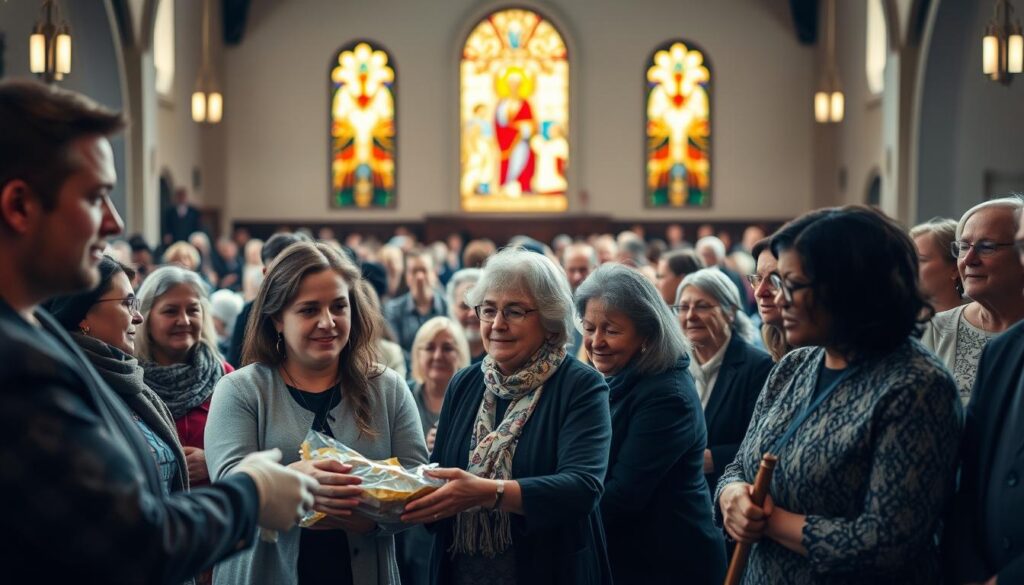
Diakonia – the practice of selfless service – shapes every initiative. This ancient concept drives modern programs supporting refugees, combating hunger, and protecting ecosystems. Members believe caring for creation demonstrates reverence for the divine, making environmental work as sacred as worship.
Unity emerges through shared resources and knowledge. Churches exchange disaster response strategies while collaborating on education projects. Theological dialogues help reconcile different interpretations of scripture, strengthening bonds across cultures. “When we combine our strengths, miracles happen in communities,” notes a program director in Kenya.
Economic justice efforts tackle root causes of poverty through microloans and job training. Peacebuilding workshops bring conflicting groups together, using faith as common ground. These actions show how spiritual values can transform social systems when paired with determined action.
By aligning local efforts with global priorities, the network amplifies its impact. A congregation’s food bank in Ohio connects to drought relief in Ethiopia through shared funding and expertise. This interconnected approach makes hope tangible for millions worldwide.
Understanding Global Membership and Lutheran Communion
Imagine a spiritual family stretching from Jakarta to Johannesburg. This diverse network unites believers through shared traditions while celebrating unique cultural expressions. At its heart lies a simple truth: faith thrives through connection.
Member Churches Across 99 Countries
The communion’s strength comes from its 150 member churches across six continents. Africa leads in growth, with Ethiopia’s 12-million-strong church showing how ancient traditions blend with modern vitality. Tanzania’s 8.5 million members prove community-focused ministries resonate deeply.
| Region | Largest Church | Members |
|---|---|---|
| Africa | Ethiopian Evangelical | 12 million |
| Asia | Batak Christian (Indonesia) | 6.3 million |
| Europe | Church of Sweden | 5.4 million |
European members like Denmark’s 4.2-million-strong church anchor historical roots. “Our diversity makes us stronger,” shares a Norwegian pastor. “When Indonesian hymns meet Swedish liturgy, we see God’s creativity.”
Since 1984, all members share full communion rights. Pastors exchange pulpits freely – a Tanzanian minister might lead Sunday service in Minnesota. This mutual trust turns theological unity into practical partnership.
Humanitarian Action: World Service in Action
When crisis strikes, hope arrives through practical action. The organization’s World Service operates in 27 countries, delivering life-changing support to over 2.5 million people annually. This initiative blends emergency response with lasting solutions, turning survival into stability.
Rights-Based Approaches to Relief and Development
Every intervention begins with dignity. Instead of temporary fixes, teams focus on empowering populations through three pillars:
- Creating sustainable income opportunities
- Improving access to healthcare and education
- Strengthening community safety nets
In South Sudan, farmers receive drought-resistant seeds alongside legal help to claim land rights. Syrian refugees in Jordan gain vocational training while accessing trauma counseling. This dual approach addresses both immediate needs and systemic barriers.
Responsive Strategies for Local and Global Needs
Flexibility defines their success. When cyclones hit Mozambique, mobile clinics arrived within 72 hours. In prolonged crises like Myanmar’s refugee exodus, they’ve maintained education programs for 12+ years. Local leaders co-design projects, ensuring cultural relevance.
As the UNHCR’s ninth-largest partner, the World Service bridges grassroots insights with global policy. “Our strength comes from listening,” explains a field coordinator in Guatemala. “Communities know their priorities better than anyone.”
Empowering Women and Promoting Social Justice
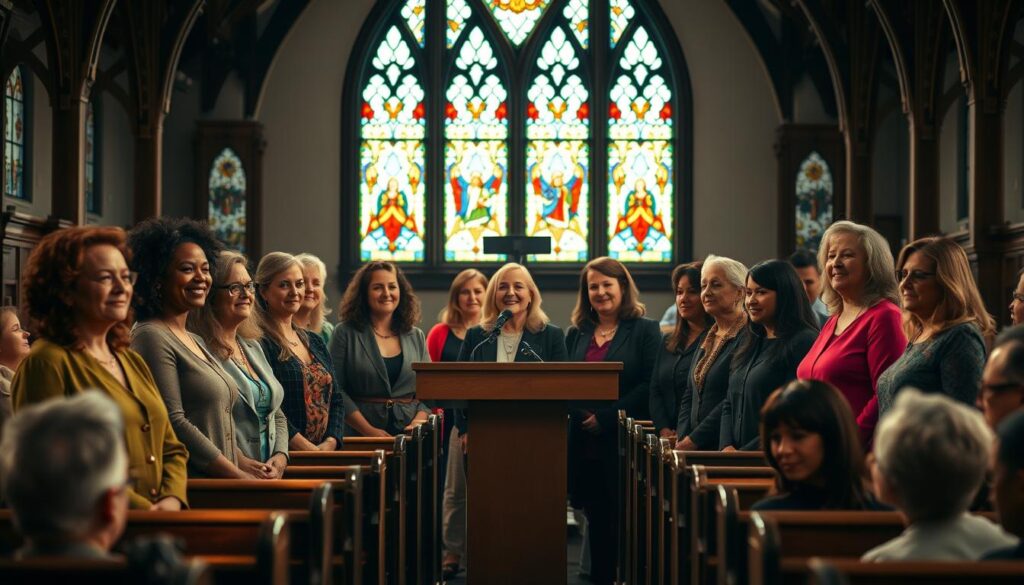
Religious institutions are rewriting leadership rules, and this global network leads the charge. Over 80% of its member churches now ordain women as ministers – a stark contrast to many faith groups. This shift reflects deep theological reflection paired with bold action for equality.
Breaking Barriers in Spiritual Leadership
Anne Burghardt’s 2021 election as General Secretary made history. The Estonian theologian became the first woman to hold this top role, guiding the organization’s 150-member network. Her seven-year term signals lasting change in religious power structures.
| Region | Churches Ordaining Women | Percentage |
|---|---|---|
| Africa | 42 | 78% |
| Asia | 28 | 82% |
| Europe | 39 | 91% |
| Americas | 10 | 67% |
Progress extends beyond ordination. Leadership programs help female clergy navigate cultural challenges. Theological schools now teach inclusive scriptural interpretations. “When women lead, entire communities thrive,” notes a seminary director in Namibia.
The focus on rights and status reaches beyond church walls. Economic justice projects target gender pay gaps. Safety initiatives protect women in conflict zones. By modeling equality internally, the network inspires broader social transformation.
Leveraging Global Partnerships & Peace Initiatives
Global challenges demand collaborative responses. This faith-based network holds Associated status with the UN Department of Global Communications, opening doors to high-level cooperation. Through 15+ partnerships with international bodies, it multiplies its ability to address hunger, displacement, and inequality.

Collaborations with United Nations Agencies
The organization teams up with specialized UN teams to boost its world service efforts. Working with the World Food Programme, it delivers meals to 800,000 people annually in crisis zones. Refugee support activities with UNHCR provide shelter kits and legal aid to displaced families.
Observer status at the International Organization for Migration helps protect migrant rights across borders. In Africa, partnerships with UN economic experts tackle poverty through farming innovations. Emergency responses with OCHA ensure rapid aid delivery during disasters.
These alliances create unique dialogue opportunities. Faith leaders share grassroots insights at UN policy forums, while secular experts advise on sustainable solutions. “Our joint work proves shared values transcend differences,” remarks a program coordinator in Geneva.
By bridging spiritual and secular networks, the initiative builds lasting peace. Training programs in conflict zones combine trauma counseling with job skills – addressing both emotional wounds and economic needs. This holistic approach transforms communities while modeling effective cross-sector cooperation.
Innovative Strategies of the Lutheran World Federation
True innovation shines when crisis meets smart planning. The organization’s approach weaves emergency aid with lasting solutions, creating a safety net that adapts as challenges evolve. Development isn’t an afterthought here—it’s built into every crisis response from day one.
Teams start by addressing urgent needs like food or shelter. This builds trust, opening doors for deeper work. A farmer in drought-stricken Kenya might first receive emergency seeds, then training in climate-smart agriculture. The same logic applies to education activities in refugee camps—basic schooling leads to vocational programs.
What makes these resources stand out? They operate on three levels at once:
- Equipping individuals with practical skills
- Strengthening community decision-making
- Partnering with governments on policy changes
This multi-layered method prevents the common gap between short-term aid and long-term growth. When floods hit Bangladesh last year, mobile health clinics arrived within days. Six months later, those same teams were installing flood-warning systems.
The strategy thrives on flexibility. Program managers constantly adjust to new data—like shifting funds from malaria nets to COVID vaccines during the pandemic. “Our plans have checkpoints, not finish lines,” explains a field coordinator in Guatemala.
Annual events like the Global Partners Forum help share these adaptable models across regions. This cycle of action, learning, and scaling turns local successes into worldwide impact.
Strengthening Human Rights and Protection Efforts
In regions torn by conflict or disaster, human dignity remains non-negotiable. The organization’s approach centers on empowering communities through rights-based solutions that address both immediate dangers and systemic challenges. Teams work closely with displaced families and host populations to create lasting safety nets.
Championing Safety Through Active Advocacy
Every intervention begins by listening. Refugee camps in Uganda see legal experts helping people reclaim land titles while trauma counselors heal invisible wounds. In Central America, migrant shelters provide medical care alongside human rights education – blending practical aid with systemic change.
Programs prioritize protection through innovative partnerships. Local leaders co-design early warning systems for flood zones. Women in conflict areas receive self-defense training and economic tools to rebuild lives. This dual focus on physical safety and personal agency transforms survival into stability.
By treating human rights as foundational rather than aspirational, the network helps vulnerable populations reclaim control. As one Syrian refugee in Jordan shared: “They didn’t just bring food – they brought hope we could build futures here.”
FAQ
How does the organization support communities during crises?
Through rights-based approaches, it prioritizes local needs while addressing systemic issues. Programs focus on long-term development alongside emergency aid, ensuring vulnerable groups receive protection and resources.
What role do member churches play in global initiatives?
Churches in 99 countries collaborate through shared values like justice and unity. They shape policies, share resources, and amplify grassroots voices within the communion’s decision-making processes.
Why is gender equality a focus for the organization?
Empowering women strengthens leadership diversity and ensures fair representation in religious and social spaces. Initiatives address barriers to equality, fostering inclusive communities where all voices are heard.
How does the group partner with international agencies?
Collaborations with groups like the UNHCR enhance disaster response and refugee protection. These partnerships combine expertise to advocate for human rights and sustainable peacebuilding worldwide.
What makes their humanitarian strategies unique?
By blending faith-driven values with practical solutions, they address root causes of poverty and conflict. Their work emphasizes dignity, ensuring aid recipients actively participate in shaping their futures.
How are refugees and displaced people supported?
Advocacy efforts secure legal protections, while on-the-ground services provide shelter, education, and healthcare. The focus remains on restoring stability and empowering displaced populations to rebuild their lives.