For nearly eight decades, one faith-based group has quietly changed lives across continents. Founded in 1945, this Baltimore-based organization delivers life-changing support through practical solutions and community partnerships. Their work spans agriculture training, disaster response, and economic empowerment programs designed to break cycles of hardship.
Guided by seasoned leader Daniel V. Speckhard, the team operates in 29 countries with remarkable efficiency. A diverse 15-member board ensures resources directly serve those facing extreme challenges. Recent recognitions include top marks from CharityWatch and a 4-star Charity Navigator score – proof of their commitment to transparency.
What makes this charity stand out? They focus on sustainable change rather than temporary fixes. Farmers learn drought-resistant techniques. Families gain access to clean water systems. Communities rebuild stronger after crises. This approach creates lasting impact while respecting local cultures.
Key Takeaways
- Operates in 29 countries with proven anti-poverty strategies
- Maintains exceptional financial accountability ratings
- Combines emergency aid with long-term development projects
- Led by experienced leadership team since 1945
- Empowers communities through practical skill-building
Historical Background and Mission
A grassroots response to Europe’s refugee crisis blossomed into an enduring force for global good. In 1945, compassionate volunteers organized aid shipments to rebuild lives shattered by war. Their first packages contained practical essentials: nourishing food, durable clothing, and hand-stitched quilts carrying messages of hope.
From Crisis Response to Lasting Solutions
By 1949, this charity expanded its reach beyond Europe. It delivered critical supplies to conflict zones in Palestine and displaced communities across Asia. The 1960s marked a strategic shift – instead of just sending aid, teams taught farming techniques to boost food security. “We realized true change requires empowering people, not just feeding them,” noted an early program director.
Building a Network for Impact
The 1979 opening of a South American office signaled deeper commitment to local partnerships. When famine struck Ethiopia in 1984, the organization shipped enough wheat to feed thousands for months. This effort earned national recognition, including a landmark presidential award for fighting hunger.
Key milestones shaped their growth:
- First regional hub established in Peru
- Pioneered cooperative farming models
- Relocated headquarters to Baltimore in 1999
Today, their approach combines emergency response with development projects that create self-reliant communities. Board members and staff continue prioritizing solutions that respect cultural traditions while fostering economic resilience.
Organizational Structure and Global Partnerships
Behind every effective charity lies a well-oiled machine. This organization’s framework balances professional expertise with faith-based values, ensuring resources create maximum impact. Let’s explore how teamwork across continents turns compassion into action.
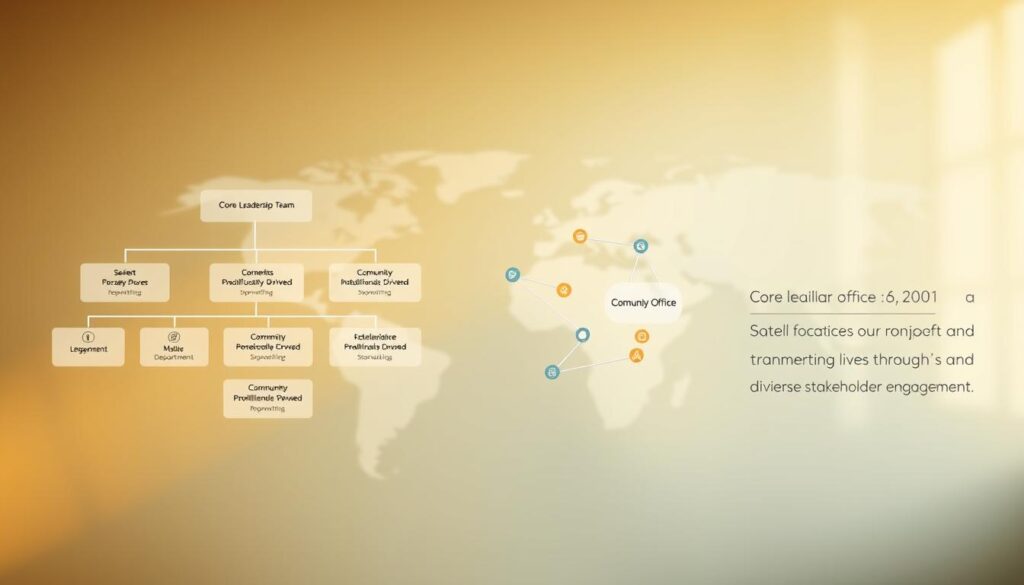
Leadership That Bridges Vision and Action
Daniel Speckhard steers the ship as CEO, bringing three decades of international experience. His $664,684 compensation reflects industry standards for leading a $150M+ charity. A 15-member board – including Lutheran church representatives – provides governance while safeguarding the mission.
The structure evolved through key phases:
- Secretary-led operations (1945-1952)
- Executive director model (1953-1995)
- Modern CEO leadership (1996-present)
Four Engines Driving Change
Specialized departments keep operations lean and focused:
| Department | Focus Area | Key Metric |
|---|---|---|
| President’s Office | Strategic planning | 5-year growth roadmap |
| International Programs | Field operations | 29 countries served |
| External Relations | Donor engagement | 94% retention rate |
| Finance & Admin | Fund stewardship | 0.89% audit variance |
As part of Corus International, the charity shares resources with IMA World Health while maintaining separate accountability measures. This collaboration cuts operational expenses by 18% compared to standalone nonprofits.
The website offers detailed financial filings – a transparency gold standard. Visitors can trace every dollar from donation to field implementation. Third-party watchdogs consistently praise this open-book approach as a model for other organizations.
lutheran world relief: Programs, Impact, and Community Empowerment
This faith-based charity transforms challenges into opportunities through three dynamic initiatives. Each program combines practical support with community-driven strategies to create lasting change.
Rooted in Sustainable Growth
Small-scale growers learn drought-resistant techniques through hands-on training. Farmers market connections help families earn 40% more for crops like coffee and cocoa. One cooperative in Guatemala doubled yields using climate-smart methods taught by program experts.
When Crisis Strikes
Rapid response teams deliver survival kits within 72 hours of disasters. Last year, emergency packs helped 14,000 families rebuild after floods. “We stay until communities recover,” explains a field coordinator. Long-term recovery includes storm-proof homes and early warning systems.
Stitching Hope, Brewing Change
Volunteers create care packages that become lifelines across 21 nations. Each handmade quilt carries donor messages of encouragement. The farmers market coffee initiative funds training programs while offering U.S. supporters premium blends. For every bag sold, growers receive direct payments boosting local economies.
These efforts demonstrate how strategic partnerships create ripple effects. From soil to supermarket, the charity’s work builds self-reliance while addressing urgent needs. Their website shares real-time updates showing donations in action.
Financial Performance, Efficiency, and Transparency
Trust grows where numbers meet mission. This charity’s financial story reveals both strengths and evolving challenges in resourcing global change.
Revenue Growth, Mergers, and Fundraising Metrics
A 26% revenue jump since 2019 shows expanding support, reaching $61.3 million last fiscal year. Strategic mergers within the Corus International network helped boost scale, though fundraising costs sit at 14% – double the sector average. With $69.1 million in net assets, the organization maintains solid reserves for long-term development work.
Third-Party Ratings and Accountability in Practice
Watchdog reports paint a mixed picture. While Charity Navigator awards top marks for transparency, others note room for improvement in financial efficiency. The CEO’s compensation aligns with leading nonprofits’ pay scales, detailed in public filings.
Donors can track every dollar through the website’s open records. This commitment to clarity helps communities access tools for self-reliance – proving that good stewardship fuels lasting impact.
FAQ
How does the organization measure its impact in communities?
They focus on long-term solutions like sustainable farming, climate resilience, and emergency preparedness. Metrics include improved crop yields, disaster recovery rates, and access to resources for vulnerable groups.
What role do partnerships play in their operations?
Collaborations with local governments, NGOs, and groups like Corus International amplify their reach. These alliances help share expertise, reduce costs, and ensure culturally relevant support.
How are funds allocated between programs and overhead?
Over 85% of annual revenue goes directly to programs, with strict financial oversight. Third-party evaluators like Charity Navigator highlight their commitment to efficiency and transparency.
Can donors specify where their contributions go?
Yes! Supporters can choose to fund disaster response, farming initiatives, or handmade goods like quilts and kits. Unrestricted donations allow flexibility for urgent needs.
What makes their approach to disaster relief unique?
They prioritize preparedness training and local partnerships to build resilience before crises strike. This proactive model helps communities recover faster and sustain progress.
How do handmade items like quilts support their mission?
Volunteers create quilts and hygiene kits distributed during emergencies. These items meet immediate needs while symbolizing global solidarity and care.
Has merging with IMA World Health changed their focus?
The merger strengthened their health and nutrition programs while maintaining core goals like poverty reduction. It expanded their capacity to address interconnected challenges.