What began as one man’s bold stand in 16th-century Germany grew into a movement that transformed Christianity. A German monk’s call for reform sparked changes that reshaped worship, theology, and daily faith practices. This movement, rooted in scripture and grace, spread rapidly across Europe—challenging traditions while building new communities.
By focusing on accessible teachings, reformers created a vibrant spiritual path that connected with everyday people. Over years, their ideas crossed oceans, establishing thriving churches worldwide. Today, these communities continue to honor their origins while adapting to modern life.
From its early days, this tradition emphasized education and music, leaving lasting marks on culture. Its influence even shaped social reforms, proving that church teachings could extend beyond Sunday services. Let’s explore how a single moment in Wittenberg became a global story of faith.
Key Takeaways
- A 16th-century reform movement started by Martin Luther reshaped Christian practices across Europe
- Core beliefs focus on scripture, grace, and accessible worship for all believers
- Early Lutheran communities prioritized education and cultural contributions like hymnody
- The tradition spread globally, establishing churches on every continent
- Modern Lutheran teachings balance historical roots with contemporary social engagement
- Key documents like the Book of Concord help maintain theological consistency
Introduction to Lutheranism and Its Significance
When a monk’s critique of church practices went viral, it birthed a global faith community. Today, the evangelical lutheran church unites over 60 million members through shared beliefs about grace and scripture. This tradition began as Martin Luther challenged the sale of indulgences in 1517, sparking reforms that redefined Christian worship.
Lutheran churches blend ancient rituals with fresh perspectives. They keep candlelit services and communion tables while emphasizing God’s free gift of grace. Every congregation celebrates two sacraments – baptism and the Eucharist – as visible expressions of divine love.
| Practice | Lutheran Churches | Other Protestant Churches |
|---|---|---|
| Sacraments | Baptism & Eucharist | Varies, often fewer |
| Core Document | Augsburg Confession | Denominational specifics |
| Scripture Focus | Sola Scriptura | Similar emphasis |
The Augsburg Confession, written in 1530, remains central to their identity. This document explains how churches can honor tradition while embracing reform. It shows why Lutheran teachings resonate across cultures – from Scandinavian chapels to American storefront churches.
Modern members find balance between ancient hymns and community service. Through food banks and youth programs, they live their faith beyond Sunday services. This active spirituality helps people connect centuries-old truths to daily life challenges.
Origins of the Reformation and the Birth of Lutheran Thought
The spark that lit the Reformation began with a list of concerns nailed to a church door. Martin Luther, a German monk, hoped to spark debate about Roman Catholic practices like selling indulgences. Instead, his Ninety-five Theses became the catalyst for a spiritual revolution that reshaped European Christianity, laying groundwork for the Lutheran Church.
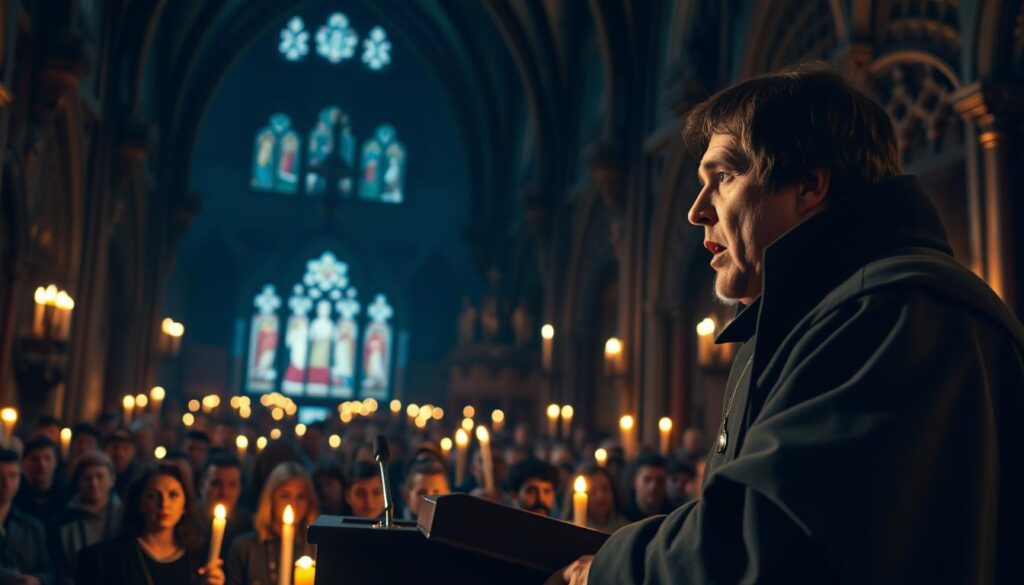
The Role of Martin Luther
Luther’s bold stance came at great personal risk. He faced excommunication and potential death for challenging church authority. His core belief—that salvation comes through faith alone, not deeds—directly contradicted established teachings. The printing press helped spread his writings faster than ever before.
The Context of the Pre-Reformation Church
Many Christians felt uneasy about corruption in 16th-century religious institutions. The sale of church positions and forgiveness certificates created widespread frustration. For example, indulgences were marketed as spiritual shortcuts rather than genuine repentance. Luther’s ideas offered a return to scriptural roots, resonating with churches and individuals seeking authentic faith experiences.
Key Figures and Their Impact on Lutheranism
While Martin Luther ignited the Reformation, his colleagues turned sparks into lasting flames. Visionary thinkers built frameworks for churches to thrive, blending bold ideas with practical faith practices.
Influential Theologians and Reformers
Philip Melanchthon, called “Luther’s other half,” crafted systematic theology even skeptics could grasp. His work became essential reading for pastors training new congregation members. Martin Chemnitz later defended these teachings, writing:
“Scripture alone lights our path, but wise guides keep us steady.”
Jakob Andreae tackled division within the church, negotiating the Formula of Concord. This 1577 document settled disputes about God’s role in salvation—a compromise strengthening Lutheran unity.
Contributions from the Book of Concord
Published in 1580, the Book of Concord became the Lutheran Church’s doctrinal foundation. It merged Luther’s catechisms with Melanchthon’s Augsburg Confession and Andreae’s Formula into one body of truth.
- Standardized teachings across German churches
- Clarified baptism’s purpose for doubting members
- Established training programs for clergy
These efforts ensured that whether in grand cathedrals or rural chapels, churches shared core beliefs. Through collaboration, reformers gave Luther’s ideas staying power—proving movements need both firestarters and builders.
Core Doctrines and Beliefs in Lutheran Theology
At the center of Lutheran churches lies a radical idea: God’s love isn’t earned—it’s freely given. These teachings transformed how millions experience faith, grounding spirituality in grace rather than rules.
Justification by Faith Alone
Imagine forgiveness as a gift, not a reward. That’s the heart of “faith alone”—the belief that trust in Christ, not good deeds, connects people to divine mercy. This idea reshaped worship, turning rituals into celebrations of God’s promise.
Sola Scriptura and Scriptural Authority
For evangelical Lutheran communities, the Bible lights the way. Sola Scriptura means every teaching passes one test: alignment with scripture. The Augsburg Confession cemented this principle, uniting churches under shared truths.
These doctrines live beyond Sunday sermons. They inspire food pantries, youth programs, and care for neighbors—proof that ancient beliefs still fuel modern service. Through the Holy Spirit’s guidance, these church communities keep grace at the center of daily life.
FAQ
How did the evangelical Lutheran church begin?
The movement traces its roots to Martin Luther’s 16th-century reforms. His critiques of Roman Catholic practices, like the sale of indulgences, sparked the Reformation. This led to new theological ideas and the establishment of communities centered on faith and scripture.
What role did the Augsburg Confession play?
Written in 1530, the Augsburg Confession outlined core beliefs of Lutheran thought. It became a foundational text for the Lutheran World Federation and other groups, clarifying teachings like justification by grace through faith.
Why is Sola Scriptura important in Lutheran theology?
Sola Scriptura emphasizes the Bible as the ultimate authority for Christian faith. This principle, central to Lutheran churches, contrasts with traditions that prioritize church hierarchy or additional teachings outside scripture.
How do Lutheran congregations approach worship today?
Many follow liturgies blending traditional hymns with modern practices. Services often focus on preaching, sacraments like baptism, and communal prayer, reflecting the evangelical Lutheran emphasis on grace and community.
What distinguishes the Lutheran view of salvation?
Lutherans teach that salvation comes through faith alone, not deeds. This idea, called justification by faith, reshaped Christian theology during the Reformation and remains a pillar of Lutheran doctrine worldwide.
How did the Book of Concord unify Lutheran thought?
Compiled in 1580, the Book of Concord gathered key texts like the Augsburg Confession and Luther’s catechisms. It provided clarity and unity for Lutheran churches amid theological debates, ensuring consistency in teachings.
What challenges did early reformers face?
Early leaders faced opposition from the Roman Catholic Church and political rulers. Figures like Philipp Melanchthon worked to defend Lutheran ideas while navigating persecution, leading to the spread of reforms across Europe.