What began as one man’s quest to improve his church ignited a spiritual revolution. In 16th-century Germany, a young scholar’s doubts about religious practices grew into ideas that reshaped Christianity. His journey started with personal struggles but led to changes still felt today.
Born in 1483, this thinker joined a monastery seeking answers about faith and salvation. As a teacher, he questioned traditions that seemed disconnected from scripture. His bold act of challenging authority in 1517 sparked debates across Europe—and marked the beginning of a new era.
What started as academic arguments soon became a full-fledged movement. Millions embraced fresh perspectives on worship and God’s grace. Though intended to reform existing structures, these ideas created lasting divisions—and opportunities—within Christian history.
Key Takeaways
- A German monk’s questions about church practices led to worldwide religious changes
- The 1517 publication of critical debates started a chain reaction across Europe
- Original goals focused on improvement rather than creating separate groups
- Core ideas about personal faith and scripture access defined the new approach
- Over five centuries, these beliefs grew into a major global tradition
- Modern impacts include worship styles and theological discussions still relevant today
The Roots of Lutheranism and the Reformation
A clash between tradition and new ideas set the stage for a spiritual upheaval. In early 16th-century Europe, the Roman Catholic Church controlled nearly every aspect of religious life. Ordinary people relied on its teachings for guidance, yet many felt disconnected from its increasingly political operations.
When Faith Became a Transaction
Salvation teachings at the time required both belief and actions like buying indulgences—documents claiming to reduce punishment for sins. This system created deep anxiety. As one critic noted, “Fear of divine judgment turned worship into a marketplace.”
Tools for Change
Two developments accelerated reform. First, educated leaders like Martin Luther began questioning practices using biblical analysis. Second, the printing press let these ideas spread faster than church authorities could contain them. By 1520, Luther’s writings reached half of Europe’s literate population.
This period marked the beginning of a seismic shift. Where medieval Christianity emphasized rituals, the Protestant Reformation championed personal connection with scripture. What started as theological debates soon reshaped the spiritual landscape of the Western world.
Early Life and Education of Martin Luther
Long before reshaping Christianity, a young German boy grew up under the weight of expectations. His journey from mining town to monastery reveals how personal battles forged a revolutionary thinker.

Childhood, Family, and Early Inspirations
Born to ambitious parents in rural Germany, Luther’s life began with strict discipline. His father Hans worked tirelessly in copper mines, dreaming his son would become a lawyer. “My schooling felt like hell and purgatory combined,” Luther later recalled about his harsh education.
At 17, he obeyed his family’s wishes by studying law. But a terrifying storm changed everything. When lightning nearly struck him in 1505, he vowed to become a monk—a decision that shocked his practical-minded father.
Experiences in Monastic Life and Scholarship
Monastic work brought new struggles. Luther obsessed over spiritual perfection, once confessing sins for six hours straight. “No matter how hard I tried,” he wrote, “I felt unworthy of God’s grace.”
His academic brilliance offered an escape. After earning a theology doctorate, he became Wittenberg University’s star professor. Students flocked to his lectures on biblical languages and ancient texts.
This scholarly way of life gave him tools to question traditions. As one colleague noted, “He didn’t just read scripture—he wrestled with it.” These battles would soon ripple across Europe, changing religious times forever.
Martin Luther’s Bold Challenge to the Roman Catholic Church
The act of questioning authority sparked an unexpected revolution. In autumn 1517, a theology professor took issue with how spiritual forgiveness was being sold like bread at market. His concerns would ripple across nations, turning a local debate into a continental firestorm.
The Ninety-Five Theses and Their Impact
What began as an invitation for scholarly discussion quickly escaped university walls. Originally written in Latin, the document gained explosive power when translated into everyday language. Within weeks, printers spread copies farther than anyone imagined. “When the Catholic Church sells salvation,” one critic observed, “it turns faith into a business transaction.”
The writings specifically targeted Johann Tetzel’s indulgence campaigns. Tetzel’s famous slogan—“When the coin in the coffer rings, the soul from purgatory springs”—clashed with biblical teachings about grace. Ordinary people suddenly had clear arguments against practices they’d long questioned.
| Aspect | Intention | Outcome |
|---|---|---|
| Language | Academic Latin debate | German translations for public use |
| Church Response | Expected private discussion | Public relations disaster |
| Spiritual Impact | Reform existing practices | Created new worship traditions |
This bold move required immense courage. Defying papal authority risked execution, yet the professor stood firm. His ideas gave voice to widespread frustrations about church corruption. By 1519, these arguments reached kitchens and workshops across Europe—not just lecture halls.
The Ninety-Five Theses did more than critique indulgences. They offered ordinary believers a roadmap for direct spiritual connection, bypassing traditional intermediaries. This shift would permanently alter how millions experienced their faith.
Understanding Justification by Faith Alone
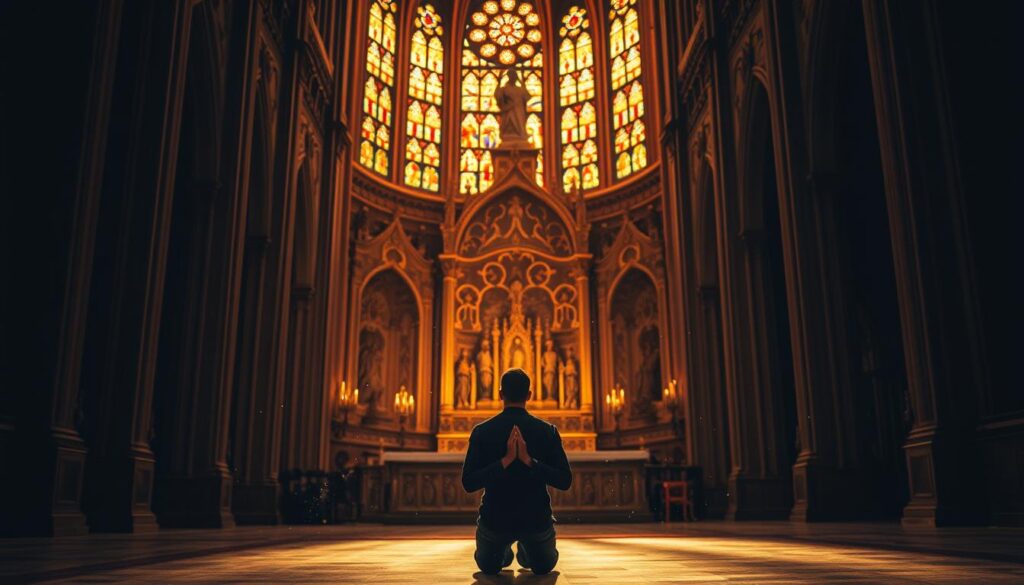
The search for spiritual peace led to a groundbreaking discovery. After years of wrestling with guilt, a German scholar found freedom in a simple truth: salvation comes not through human effort but divine generosity. This realization became the heartbeat of a theological revolution.
Theological Foundations and Scripture’s Role
Deep study of Romans and Galatians revealed a pattern. Passages like “The righteous shall live by faith” (Romans 1:17) showed salvation as God’s gift, not a reward. Ephesians 2:8-10 cemented this view—grace arrives through faith alone, making human works unnecessary for redemption.
Martin Luther compared this to wearing someone else’s coat. “Christ’s perfection covers our flaws,” he wrote, describing how believers receive righteousness externally through divine grace. This idea reshaped how people viewed their relationship with higher power.
Contrast With Catholic Teachings
Traditional views required both belief and actions like sacraments or charity. The new approach removed this dual requirement. Where church teachings emphasized earning favor, Luther’s doctrine declared favor already given.
A 16th-century priest summarized the conflict: “We argued about whether heaven’s door needs pushing or simply opens when approached.” This split birthed the Reformation solas—faith alone, grace alone, scripture alone—that still guide Protestant worship today.
Luther’s Role in the Protestant Reformation
A single act of defiance can reshape history’s course. When religious authority demanded silence, one man’s refusal to compromise ignited irreversible change across Europe.
Key Events: Diet of Worms and Excommunication
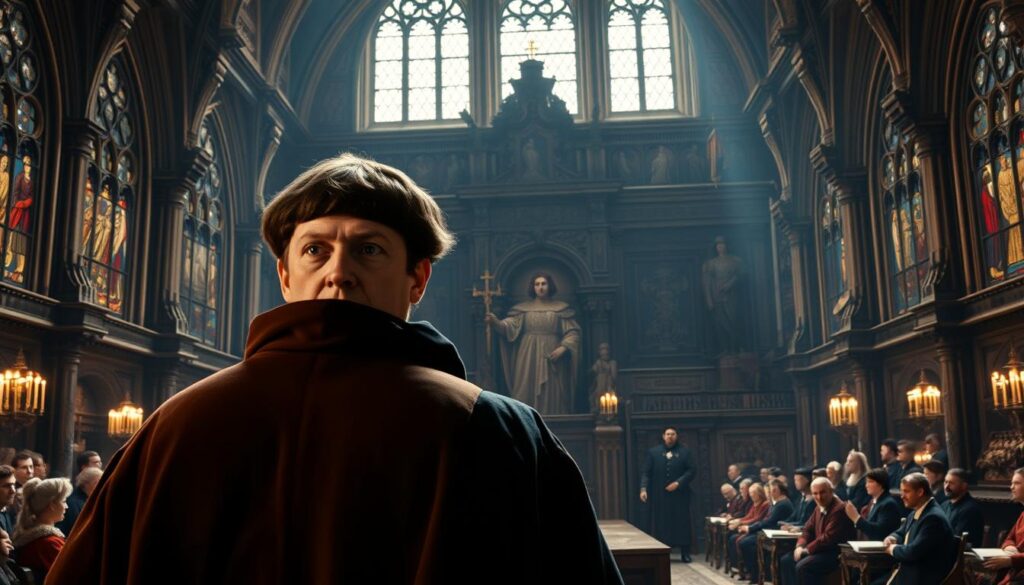
Pope Leo X’s 1520 ultimatum gave Martin Luther 60 days to retract his writings. Instead, the reformer burned the papal decree in a public bonfire—a symbolic rejection of Catholic Church control. By January 1521, his excommunication became official.
The showdown reached its peak at April’s Diet of Worms assembly. Facing Emperor Charles V, Luther stood by every word:
“My conscience is captive to the Word of God. To go against conscience is neither right nor safe.”
Defending Conscience and Scripture
This historic moment did more than challenge church leaders—it redefined spiritual authority. Ordinary people saw that scripture could outweigh tradition, and personal conviction might triumph over institutional power.
- The Reformation shifted from debate to action as new congregations formed
- Biblical literacy surged with translated texts replacing Latin-only materials
- Political allies protected Luther, allowing his ideas to spread safely
By risking his life for these principles, the reformer showed how individual courage could alter the way millions practiced faith. His stand at Worms remains a landmark day in religious freedom’s evolution.
lutheranism martin luther: Defining a Lasting Movement
A theological revolution born from questioning traditions grew into a global legacy. The movement’s foundation rested on three pillars: grace as divine gift, scripture as ultimate guide, and faith as humanity’s response. These ideas shaped communities that valued personal connection with sacred texts over rigid hierarchies.
Core Doctrines and Doctrinal Shifts
The Book of Concord (1580) became the movement’s compass, clarifying beliefs still followed today. Unlike other groups, followers emphasized God’s unconditional love rather than earned favor. This shift made worship more accessible—no special rituals required, just sincere trust.
The Spread of Lutheran Ideals Globally
From northern Europe to bustling cities worldwide, these teachings adapted without losing their core. By 2019, over 80 million people across six continents identified with the tradition. Rapid growth in Africa and Asia shows how ancient ideas still meet modern spiritual needs.
Today’s churches blend centuries-old practices with local cultures. Hymns might mix traditional harmonies with global instruments, proving that foundational truths can thrive in changing times. The movement’s endurance reminds us that bold questions often yield lasting answers.
FAQ
What sparked the Protestant Reformation?
The Reformation began when a German monk challenged certain practices of the Roman Catholic Church, particularly the sale of indulgences. His bold critique, outlined in the Ninety-Five Theses, ignited debates about theology, authority, and salvation.
How did the idea of "faith alone" differ from Catholic teachings?
The belief in justification by faith emphasized that salvation comes through trust in God’s grace, not human deeds. This contrasted with teachings that highlighted rituals and good works as pathways to spiritual redemption.
Why was the Diet of Worms significant?
At this 1521 assembly, church leaders demanded the monk recant his writings. His refusal to abandon his conscience or scriptural interpretations marked a turning point, deepening the divide between reformers and traditional authorities.
How did early worship services change under this movement?
Services shifted to focus on scripture, congregational singing, and preaching in local languages. These changes aimed to make worship more accessible and centered on the teachings of the Bible rather than elaborate rituals.
What role did the Bible play in spreading these ideas?
Translating scripture into everyday language allowed broader access to biblical texts. This empowered individuals to engage directly with teachings, fostering literacy and personal faith across communities.
How did monastic life shape the reformer’s views?
Years in a monastery deepened his study of theology but also led to spiritual struggles. These experiences fueled his critiques of rigid practices and his emphasis on divine grace over human effort.
What global impact did this movement have?
Its teachings spread rapidly through pamphlets, hymns, and universities. Today, millions worldwide identify with churches rooted in these doctrines, which continue to shape Christian thought and culture.