When Martin Luther challenged religious norms in 1517, he ignited a movement that reshaped Christianity. At its core, this Protestant tradition emphasizes direct engagement with sacred texts. Faith communities worldwide still follow his revolutionary approach to spiritual discovery.
The Lutheran Church prioritizes Scripture as its ultimate guide. Unlike other traditions, it teaches that divine truth flows solely from biblical teachings. This principle – called sola scriptura – empowers believers to interpret texts personally while maintaining historical roots.
Modern Lutheran practices reflect this balance. Worship services blend ancient rituals with active Bible discussions. Members often share insights during study groups, creating lively exchanges about faith’s role in daily life. These traditions trace back to Luther’s own translation work, which made Scripture accessible to everyday people.
Over five centuries, this focus on biblical literacy has shaped education and community-building. Churches host workshops helping members apply age-old wisdom to modern challenges. From Sunday schools to global outreach programs, the written word remains central to Lutheran identity.
Key Takeaways
- Martin Luther’s Reformation centered on making Scripture accessible to all believers
- The Lutheran Church upholds the Bible as its primary authority (sola scriptura)
- Modern practices combine traditional teachings with personal interpretation
- Bible study remains vital for worship and community engagement
- Luther’s translation work continues influencing Christian education worldwide
Introduction to Lutheranism and Biblical Foundations
What sets this tradition apart is its belief that Scripture holds ultimate authority. While many Christian groups value sacred texts, the Lutheran Church roots every practice and belief directly in biblical truth. This approach shapes how members live, worship, and grow in their faith.
What Makes Lutheranism Unique?
Three key features define this faith community:
- Scripture alone guides doctrine – no human-made rules override it
- Personal connection with texts through accessible translations
- Clear methods to interpret challenging passages
Unlike other denominations, Lutheran teaching rejects blending church customs with divine commands. A pastor from Minnesota explains: We don’t add layers to God’s word – we let it speak plainly.
| Denomination | Authority Source | Tradition’s Role |
|---|---|---|
| Lutheran Church | Bible only | Supports Scripture |
| Roman Catholic | Bible + Tradition | Equal to Scripture |
| Eastern Orthodox | Bible + Councils | Guides interpretation |
An Overview of the How-To Guide
This guide will help you:
- Understand the “Scripture interprets Scripture” method
- Compare Lutheran practices with other Christian traditions
- Apply biblical wisdom to modern relationships and work
You’ll discover why millions find freedom in this approach – no special training required to engage with divine messages. The focus stays on what’s written, not what’s added through tradition.
The Historical Emergence of Lutheranism
A single monk’s quest for truth sparked a religious revolution that changed Europe forever. This movement didn’t start with grand plans but grew from deep engagement with sacred writings. Its ripple effects still shape worship practices today.
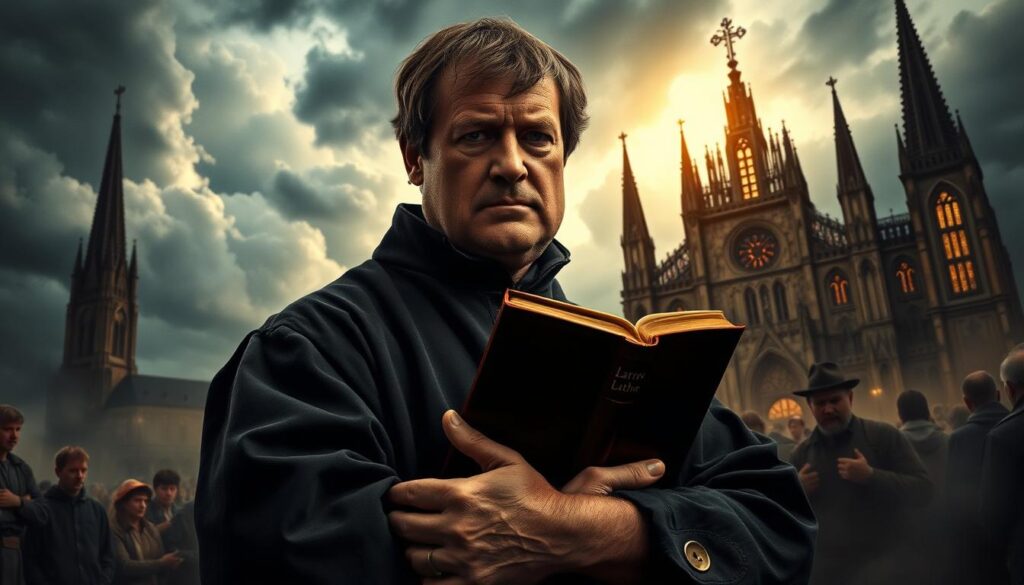
Martin Luther and the Reformation
As a devoted monk and scholar, Martin Luther noticed troubling gaps between early Christian teachings and 16th-century church customs. His role as a Scripture professor led him to question practices like indulgences. In 1517, he famously nailed 95 debate topics to a church door – sparking open discussions about faith’s true foundations.
When pressured to abandon his views at the 1521 Diet of Worms, Luther stood firm:
Here I stand. I can do no other.
This defiance marked a turning point, proving ordinary people could challenge powerful institutions through scriptural understanding.
From the Edict of Worms to Modern Times
The Edict of Worms that same year officially separated Lutheran church communities from Roman Catholic authority. What began as localized reforms soon spread across Germany and Scandinavia. Early congregations prioritized:
- Accessible worship services in common languages
- Education programs teaching members to interpret texts
- Leadership models based on scriptural guidance
| Year | Event | Significance |
|---|---|---|
| 1517 | 95 Theses Posted | Public challenge to church practices |
| 1521 | Diet of Worms | Formal split from Catholic authority |
| 1522-1600 | Northern Europe Expansion | Scripture-centered communities multiply |
Over the years, these principles helped shape democratic ideals and education systems. Modern church gatherings still reflect Luther’s vision – blending ancient wisdom with personal discovery through group studies and open dialogue.
Understanding the Role of Scripture in Lutheran Faith
At the heart of Lutheran belief lies an unwavering commitment to Scripture’s supreme authority. This conviction shapes how communities approach spiritual growth and doctrinal decisions. Every teaching, practice, and tradition must align with sacred texts to maintain authenticity.
The Authority of the Bible
The Lutheran Church stands firm on the principle that God’s word alone guides believers. As 2 Timothy 3:16-17 states:
All Scripture is breathed out by God… for training in righteousness.
This means human ideas or cultural trends never override divine messages. Pastors often remind congregations: If it conflicts with Scripture, it doesn’t belong in our faith.
Three key practices show this commitment:
- Weekly group studies focusing on original text meanings
- Sermons rooted in specific passages rather than general themes
- Leadership training emphasizing scriptural literacy
| Denomination | Source of Authority | Decision-Making Process |
|---|---|---|
| Lutheran | Word of God | Scripture alone |
| Methodist | Bible + Experience | Four-fold model |
| Anglican | Bible + Tradition | Three-legged stool |
Modern members apply this principle daily. A youth leader shares: We teach teens to ask ‘What does God’s word say?’ before making choices.
This approach builds confidence in navigating life’s complexities through ancient wisdom.
Exploring “lutheranism bible” in Lutheran Doctrine
Central to Lutheran teaching is the belief that Scripture and Christ form an unbreakable bond. This relationship shapes how communities engage with sacred texts, seeing Jesus as both their origin and ultimate message. Every chapter becomes a pathway to understanding divine grace through this lens.

Scripture is the swaddling clothes holding the treasure of Christ. Simple in form, yet rich in truth.
This perspective transforms how the Lutheran church approaches sacred writings. Members learn to look for Jesus in every passage – from Genesis prophecies to Revelation’s visions. Old Testament stories aren’t just history; they’re signposts pointing to redemption.
Three practical outcomes emerge from this christocentric focus:
- Study groups explore how texts reveal God’s salvation plan
- Sermons highlight connections between Scripture and Jesus’ work
- Personal reflection emphasizes grace over rule-keeping
Unlike traditions treating sacred texts as moral handbooks, Lutheran faith views them as living conversations. A Wisconsin pastor notes: We don’t just learn Bible stories – we meet Christ through them.
This approach helps believers see consistent truth across different biblical eras.
Modern applications abound. Youth programs teach teens to spot Christ’s presence in Psalms. Social justice initiatives draw inspiration from Jesus’ compassion in the Gospels. Through this lens, the Lutheran church keeps ancient words vibrantly relevant today.
Principles of Biblical Interpretation in Lutheranism
Interpreting sacred texts requires clear guidelines, and Lutherans have distinct methods rooted in centuries-old principles. These approaches ensure consistent understanding while honoring divine mysteries beyond human logic.

Formal and Material Principles
The Lutheran church uses two foundational concepts for scriptural analysis. The Material Principle declares God’s grace through faith as Scripture’s central message – like a lens focusing sunlight. As one theologian notes: Every passage ultimately points to Christ’s redeeming work.
Perspicuity and the Rule of Scripture over Reason
Three key ideas shape how believers engage with texts:
- Clear communication – God’s word speaks plainly to all
- Human reason assists understanding but doesn’t override truth
- Mysteries like communion remain accepted through trust
This balance prevents two extremes: cold intellectualism and vague mysticism. A Missouri pastor explains: We don’t dismiss questions, but we let Scripture have the final say.
When teachings about baptism or Christ’s presence challenge logic, faith guides acceptance.
Modern study groups use these principles to explore challenging passages. Members learn to ask: How does this text reveal God’s grace?
rather than demanding perfect reason-based answers. This approach keeps the Lutheran church anchored in timeless truth while navigating contemporary issues.
Martin Luther’s Influence on Bible Translation and Interpretation
Imagine holding divine wisdom in your hands – not locked in ancient languages, but speaking directly to your heart. This vision drove Martin Luther to reshape how communities interact with sacred texts. His work created pathways for ordinary people to explore spiritual truths without gatekeepers.
The Impact of His 95 Theses
Luther’s famous 1517 document did more than challenge church practices – it modeled how to test traditions against Scripture. He argued: We profit by nothing as much as by the Word… it should have free course among Christians.
This principle turned pew-sitters into active truth-seekers.
Three revolutionary changes emerged from his efforts:
- German translations replacing Latin-only access
- Study groups where farmers debated texts alongside scholars
- Clear methods to identify teachings conflicting with Scripture
The reformer compared Scripture engagement to nourishment: We need God’s Word daily, like bread.
This mindset birthed morning devotions and bedtime story traditions still practiced in Lutheran church families today.
By making sacred writings available in common language, Luther spread the good news beyond academic circles. Modern members honor this legacy through:
- Multi-generational Bible studies
- Leadership training in plain-language teaching
- Digital resources reaching global audiences
Five centuries later, Martin Luther’s translation principles still guide how the Lutheran church approaches ancient texts – with reverence for their power and commitment to making them relatable.
The Book of Concord and Lutheran Confessions
In 1580, a thick volume united German believers under shared spiritual foundations. The Book of Concord became Lutheranism’s definitive guide – not replacing Scripture but clarifying its core teachings. This collection settled debates about salvation and church practices through carefully crafted confessions rooted in biblical truth.
The Role of Creeds in Defining Faith
Lutheran faith values ancient creeds like the Apostles’ and Nicene as bridges to early Christianity. A Minnesota pastor explains: These statements don’t add to Scripture – they spotlight its unchanging heart.
The Lutheran church uses them to:
- Connect modern believers with historic Christian beliefs
- Provide clear answers to complex theological questions
- Guard against teachings that distort Scripture’s message
| Christian Document | Primary Purpose | Authority Source |
|---|---|---|
| Book of Concord | Clarify Lutheran doctrine | Scripture alone |
| Catholic Catechism | Teach church traditions | Bible + Magisterium |
| Westminster Confession | Guide Reformed theology | Scripture + Covenant |
Today’s Lutheran church communities study these confessions to deepen their understanding. The Book of Concord’s 10 documents – including Luther’s catechisms – help members apply biblical wisdom to modern challenges. As one study group leader notes: We’re not memorizing rules, but discovering God’s timeless promises.
By balancing historical roots with scriptural focus, these teachings keep congregations anchored in truth. They remind believers that while cultures change, divine grace remains constant – a message as vital now as in 1580.
Lutheran Worship Practices and Sacraments
Gathered in candlelit sanctuaries or modern auditoriums, Lutheran church communities share timeless rituals that bridge centuries. These practices honor historical roots while nurturing personal faith through tangible expressions of grace. Three sacred acts form their spiritual heartbeat, each offering unique ways to experience divine love.
Sacred Acts Connecting Believers to Grace
Baptism marks the start of a believer’s journey, seen as God’s promise rather than human effort. The Lutheran church teaches this water ritual washes away sin and welcomes individuals into Christ’s family. Parents often smile through tears as pastors declare: You’re reborn through grace alone.
Confession brings freedom through forgiveness. Unlike systems requiring penance, this practice focuses on Christ’s completed work. Members hear comforting words: Your sins are forgiven – go in peace.
This assurance strengthens faith, replacing guilt with renewed purpose.
The Lord’s Supper forms worship’s climax. As congregants receive bread and wine, they trust Christ’s presence nourishes their souls. A pastor explains: We don’t explain the mystery – we celebrate it.
This meal unites believers across generations, sustaining them through life’s challenges.
FAQ
How does Lutheranism view the authority of Scripture compared to other traditions?
Lutherans emphasize Sola Scriptura, meaning Scripture alone is the ultimate authority for faith and practice. Unlike traditions that elevate church teachings or papal decrees equally, Lutheran doctrine prioritizes the prophetic and apostolic writings as the sole infallible guide.
What role did Martin Luther play in shaping biblical accessibility?
Martin Luther translated the New Testament into German, making it accessible to everyday people. His work challenged Latin-only practices and emphasized that God’s Word should be understood by all, not just clergy. This democratized faith and fueled the Reformation.
How do Lutherans interpret controversial passages in the Bible?
Lutherans rely on the rule of faith, where clearer passages explain ambiguous ones. They also use Christ-centered interpretation, viewing Jesus as the lens through which all Scripture is understood. Reason supports but never overrules the text’s plain meaning.
Why is the Book of Concord important in Lutheran teaching?
The Book of Concord unites Lutheran confessions, like the Augsburg Confession and Small Catechism, clarifying how Scripture is applied to doctrine. It safeguards against misinterpretation while affirming core beliefs, such as justification by faith and the real presence in Communion.
How do sacraments like Baptism connect to Lutheran views of Scripture?
Sacraments are seen as “visible Word,” grounded in biblical promises. Baptism, for example, isn’t just symbolic—it’s God’s act of grace through water and the Word. Lutherans tie these practices directly to Jesus’ commands and New Testament accounts.
What distinguishes Lutheran biblical interpretation from Roman Catholic approaches?
While both value tradition, Lutherans reject teachings not rooted in Scripture. For instance, they deny papal infallibility and emphasize faith alone for salvation. The material principle (Christ’s grace) and formal principle (Scripture’s authority) guide their theology.
How did Luther’s 95 Theses influence how Lutherans engage with the Bible today?
The 95 Theses critiqued practices like indulgences, urging a return to biblical truth. This legacy encourages Lutherans to continually test traditions against Scripture, fostering a faith that’s both rooted in the Gospel and adaptable to cultural contexts.
Why is confession still practiced in Lutheran churches?
Confession reflects Luther’s emphasis on repentance and forgiveness as biblical mandates. While not requiring detailed listings of sins, it highlights God’s promise of mercy through Christ—a key theme in Lutheran teaching and the Small Catechism.
How does Lutheranism address modern ethical issues using Scripture?
Lutherans turn to biblical principles while considering context. For example, they uphold the sanctity of life but apply grace and wisdom in pastoral care. Scripture remains the norm, but interpretation involves prayer, community, and the Holy Spirit’s guidance.