Discover how a 16th-century religious movement grew into one of the largest Protestant traditions worldwide. With over 110 million followers across six continents, this faith unites diverse cultures through shared beliefs and practices. From snowy Scandinavian villages to bustling African cities, communities gather under the same theological framework while adding local flavors to their worship.
Europe remains home to nearly half of all followers, with Germany leading at 10.8 million members. Yet the most surprising growth comes from warmer climates. Ethiopia’s Evangelical Church Mekane Yesus alone counts 10.4 million members—more than Sweden’s entire population of adherents. Tanzania and Indonesia also host thriving communities that blend ancient traditions with Reformation teachings.
This guide explores how different regions shaped—and were shaped by—this global religious network. You’ll learn why some nations maintain historic state-affiliated churches while others develop grassroots movements. We’ll show how core doctrines stay consistent even as music, rituals, and community roles adapt to local needs.
Key Takeaways
- Present in over 148 member churches across seven global regions
- Ethiopia hosts the largest single Lutheran community worldwide
- European members account for 33% of the global total
- African churches demonstrate rapid membership growth
- Cultural adaptations create unique worship practices
- 74.2 million people belong to the Lutheran World Federation
Global Overview of Lutheranism Today
Modern demographics reveal striking changes in where and how people practice this faith. Over 77 million individuals now participate through congregations worldwide, with growth hotspots emerging far from Europe’s historic centers.
Current Membership Statistics and Regional Trends
Asia’s evangelical Lutheran communities grew fastest, adding 9% more members since 2017. This surge pushed regional membership to 12.4 million across 55 churches. Africa follows closely with 28.1 million adherents—a 7.6% jump—led by Ethiopia’s vibrant congregations.
Traditional European churches face challenges, shrinking 3.2% to 32.5 million members. North American numbers dipped slightly to 3.65 million, though these churches still lead global outreach programs. Latin America shows modest declines, while diverse worship styles emerge across 99 nations.
Growth Patterns and Global Shifts
Two-thirds of all members now live outside Europe, reshaping leadership and priorities. Indonesia’s creative youth programs and Tanzania’s community health initiatives exemplify this evolution. “Our growth comes from addressing real needs,” explains a Nairobi-based pastor, “not just preserving traditions.”
While European churches maintain historical influence, African and Asian regions drive theological innovation. This shift appears in seminary enrollments—over 60% of Lutheran theology students now study in Global South institutions.
Lutheranism by Country: Exploring Unique National Expressions
From cobblestone church squares to tropical worship centers, this faith takes root in surprising ways. Local customs merge with Reformation teachings, creating vibrant hybrids that honor both tradition and innovation.

European Lutheran Traditions and State Churches
Nordic nations blend faith with civic life through state-supported churches. Sweden’s 5.9 million members and Iceland’s tiny population share tax-funded religious institutions. Germany’s 10.8 million adherents worship through 20 regional bodies, each with distinct traditions.
North American Congregations and Mission Initiatives
The Evangelical Lutheran Church in America (ELCA) leads U.S. outreach with food banks and disaster relief. “Our mission starts at home,” says a Chicago pastor, “but stretches across continents.” Over 4,300 North American congregations maintain ties to Scandinavian roots while addressing modern social issues.
Presence in Africa, Asia, and Oceania
Indonesia’s Batak Christian Protestant Church thrives with 4.2 million members—singing hymns to gamelan rhythms. Namibia makes history as Africa’s first Lutheran-majority nation. Australia’s tight-knit communities preserve German heritage through bilingual services and sausage festivals.
These global expressions prove one truth: shared beliefs grow best when planted in local soil. Whether in Tanzanian clinics or Minnesota soup kitchens, the Lutheran church adapts while keeping its core intact.
Historical Roots and Theological Foundations
A fiery monk’s quill scratched across parchment in 1517, sparking ideas that would redefine Christianity. At the heart of this transformation lay four Latin phrases that still guide millions: sola fide, sola scriptura, sola gratia, and the priesthood of all believers.
The Reformation’s Impact on Lutheran Theology
Martin Luther’s radical claim—that faith alone connects people to God—tore through medieval religious structures. This theology made salvation personal, replacing complex rituals with direct spiritual relationships. Congregations began singing hymns in their native languages rather than Latin, a practice still central to worship today.
The Book of Concord, compiled in 1580, became the North Star for Lutheran teachings. Its pages hold Luther’s catechisms and the Augsburg Confession—documents that helped standardize practices across growing churches. As Luther’s colleague Philip Melanchthon noted, “True theology is practical, born from living conversation with God.”
Key Figures and Milestones in Lutheran History
From Wittenberg’s lecture halls to Nazi resistance cells, Lutheran leaders shaped history. Johannes Bugenhagen organized Europe’s first parish schools while translating the Bible. Centuries later, Dietrich Bonhoeffer’s writings from a Gestapo prison inspired modern Christian activism.
Major political changes followed theological ones. The 1648 Peace of Westphalia granted evangelical Lutheran churches legal standing alongside Catholic institutions. Swedish king Gustav II Adolf used military might to protect Reformation ideals during Europe’s religious wars, proving faith’s power to move nations.
These foundations explain why both German cathedrals and Tanzanian village chapels share core beliefs. As one modern pastor observes, “Our tradition isn’t about preserving the past—it’s about unleashing timeless truth for new challenges.”
Regional Diversity and Cultural Impact
From frozen fjords to tropical coastlines, Lutheran communities thrive through creative adaptations. This global network preserves core teachings while embracing local customs, creating a vibrant tapestry of faith expressions.
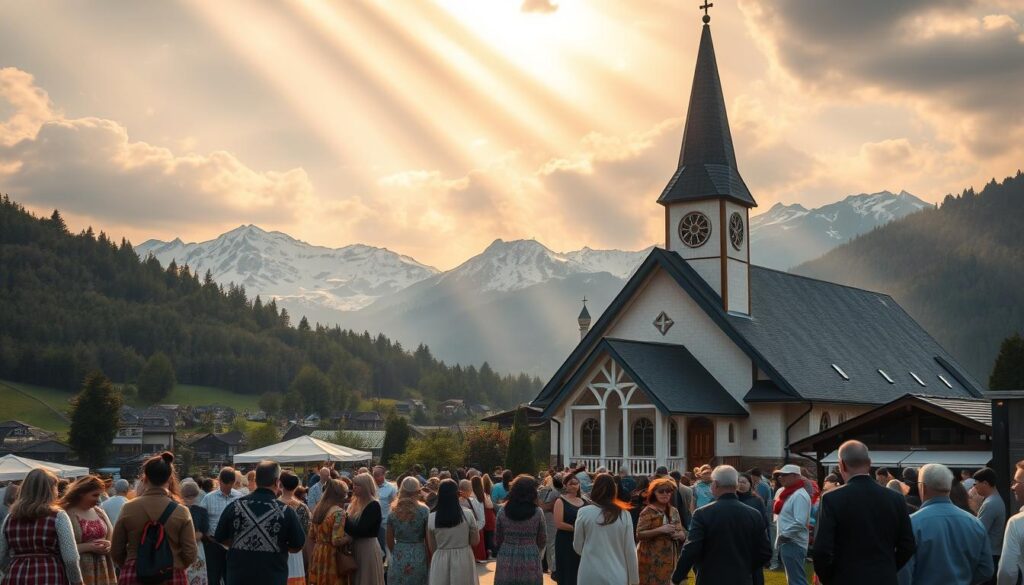
Nordic Traditions in Modern Society
Scandinavian churches still claim 18 million members—enough to fill Denmark 3 times over. Though 72% of Norwegians stay registered, Sunday pews grow quieter. “We’re becoming spiritual first responders,” says a Helsinki pastor. “People seek us during crises, not weekly routines.”
These institutions now host coding workshops beside confirmation classes. Oslo’s cathedral streams DJ-led vespers, while Swedish evangelical Lutheran groups organize climate action forums. Traditional hymns share playlists with Sami joik chants in northern Finland.
Europe’s Evolving Faith Landscape
German churches report 80% of members only attend weddings or funerals. To stay relevant, Berlin congregations offer pop-up soup kitchens with theology discussions. A Leipzig deacon notes, “Our baptism fonts stay busy—but we’re redefining what community means.”
Global South Energy Reshapes Priorities
19th-century mission societies planted seeds now blooming abroad. Tanzania’s 6.5 million Lutherans outnumber Norway’s population. Indonesian evangelical Lutheran youth groups mix Bible study with disaster relief training.
African churches send more missionaries to Europe than they receive. Malawi’s synod president declares, “We’re not recipients anymore—we’re partners shaping global theology.” This reversal stuns historians, given Leipzig’s 1836 mission origins.
Conclusion
Global Lutheran churches demonstrate resilience through service, innovation, and unity in diversity. Spanning 99 nations, these congregations maintain shared beliefs while addressing local needs—from Nordic state-linked parishes to African youth programs training future leaders.
The religion’s impact extends far beyond worship spaces. Over 10 million people benefit annually from Lutheran-run schools and clinics worldwide. Partnerships like the Porvoo Communion show how churches collaborate across denominations while preserving core teachings.
At the end of our exploration, one truth stands clear: this faith thrives by rooting itself in diverse parts of the world. The Global South now drives growth, with dynamic congregations shaping theology and outreach. Yet all members share a commitment to grace-centered communities that uplift neighbors.
As cultural landscapes evolve, Lutheran churches continue writing new chapters in their global story—proving ancient truths can flourish in modern soil.
FAQ
Which countries have the largest Lutheran populations today?
Germany, Ethiopia, Tanzania, Sweden, and the United States are among the nations with the most Lutheran adherents. The Evangelical Lutheran Church in America and the Church of Sweden remain influential, while regions like Africa see rapid growth through missionary work.
How do Lutheran practices differ between Europe and North America?
European traditions often emphasize historical state church ties, like Sweden’s national church. In contrast, North American congregations focus on community outreach and multicultural ministries, such as the ELCA’s social justice initiatives.
What role did the Reformation play in shaping Lutheran theology?
Martin Luther’s teachings on grace and scripture alone (sola fide, sola scriptura) became core principles. These ideas spread through writings like the Augsburg Confession, creating distinct worship styles and doctrinal standards still followed globally.
Are there still Lutheran state churches in Europe?
Yes, Norway, Denmark, Iceland, and Finland maintain official Lutheran churches, though membership is declining. Sweden separated its church from the state in 2000 but retains strong cultural ties to Lutheran traditions.
How is Lutheranism expanding in Africa and Asia?
Churches in Ethiopia and Madagascar report significant growth through local leadership training and healthcare missions. In India, the Andhra Evangelical Lutheran Church blends traditional customs with Lutheran teachings.
What challenges do Lutheran churches face in modern society?
Declining attendance in Europe contrasts with vibrant Global South communities. Many congregations now address climate justice, interfaith dialogue, and adapting worship styles to younger generations while preserving core theology.