Welcome to a journey through one of Christianity’s most enduring traditions. For over five centuries, this faith has shaped spiritual lives across continents, connecting people through shared values and practices. Today, its influence stretches far beyond its European roots, thriving in vibrant communities from Africa to Asia.
With 58 million followers worldwide, this tradition unites diverse cultures under a common framework. In the U.S., nearly 9 million members reflect America’s multicultural fabric, including African-American, Hispanic, and Indigenous communities. What keeps such a global community united? The answer lies in timeless principles centered on grace and personal connection with the divine.
This guide will walk you through the essentials in simple terms. You’ll discover how historical events shaped modern practices and why these teachings remain relevant. Whether you’re new to the topic or refreshing your knowledge, we’ll explore ideas that continue to inspire millions.
Key Takeaways
- 58 million followers make this one of the largest Protestant traditions globally
- Thriving communities exist across Africa, Asia, and the Americas
- Core principles emphasize divine grace and personal faith
- Historical roots dating to the 16th century shape modern practices
- Cultural diversity coexists with shared spiritual foundations
An Introduction to Lutheranism
Imagine stepping into a 16th-century debate that reshaped Christianity forever. A German monk named Martin Luther questioned common religious practices, sparking what we now call the Protestant Reformation. His goal? To help people rediscover the heart of the Christian message – that faith alone connects us to divine love.
Luther never planned to create a new church. He simply wanted to fix what he saw as misunderstandings in existing teachings. “Why call yourselves Lutherans?” he once argued. “The true teacher is Jesus Christ.” The name stuck anyway, becoming a badge of honor for those valuing scripture over tradition.
Today, this tradition thrives from Scandinavian villages to Tanzanian cities. What unites such a diverse community? A shared focus on grace as God’s free gift. Whether worshipping in Swahili or Spanish, congregations celebrate the same core idea: humans don’t earn divine favor – they receive it.
Modern followers blend ancient rituals with local customs. Kenyan choirs mix hymns with drum rhythms. Minnesotan potlucks serve lefse alongside hotdish. Through it all, the message remains clear – spiritual life grows from faith, not rules or rankings.
This approach transformed how millions relate to the sacred. By putting scripture in everyday language and music in congregants’ hands, Luther’s reforms made spiritual connection personal. The church became less about authority – more about community discovering grace together.
Historical Foundations and the Protestant Reformation
A monk’s quest for truth led to a seismic shift in Christianity’s landscape. At the dawn of the 16th century, Europe’s religious institutions faced growing scrutiny. The stage was set for change – and one scholar’s courage would rewrite history.
Martin Luther’s Role in Reformation
As an Augustinian monk teaching in Wittenberg, Martin Luther noticed something troubling. The Roman Catholic Church had begun selling forgiveness through indulgences – payments promising shorter stays in purgatory. “When coins in the coffer ring, souls from purgatory spring,” joked preachers collecting funds for St. Peter’s Basilica.
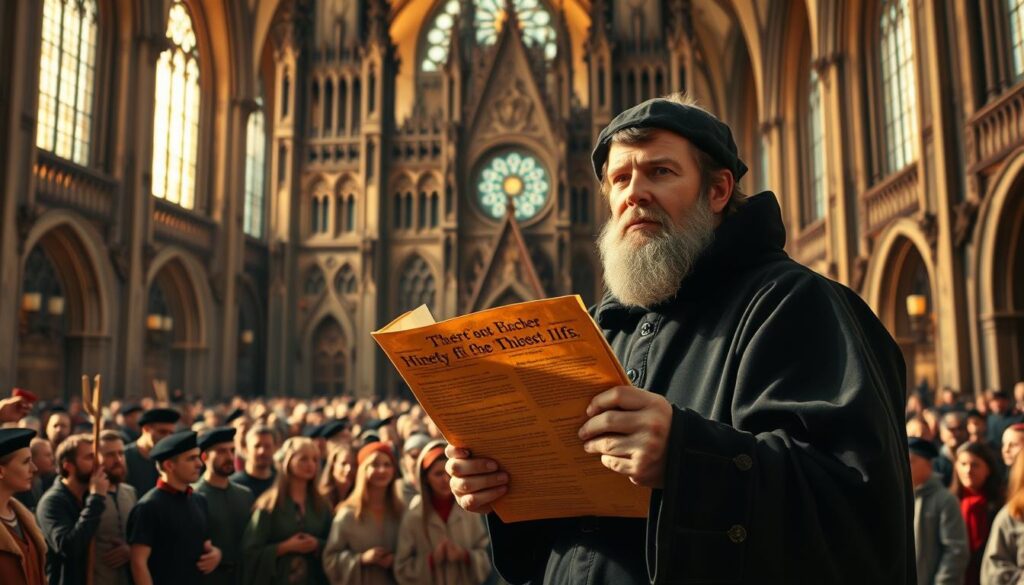
Luther’s famous Ninety-Five Theses, nailed to a church door in 1517, questioned this practice. Written in Latin for academic debate, his ideas went viral when translated into German. Printers spread them like wildfire – a 16th-century Twitter storm challenging church authority.
The Birth of a New Faith Identity
What began as reform efforts soon outgrew the Catholic Church. After Luther’s excommunication in 1521, followers organized independent congregations. Critics first used “Lutheran” as an insult, but the label stuck. By mid-century, over half of Germany identified with this growing movement.
The Protestant Reformation reshaped Europe’s spiritual map. From town squares to royal courts, people debated faith’s true meaning. Luther’s stand sparked more than doctrinal changes – it redefined how communities worshipped and governed themselves for centuries.
Understanding lutheranism main beliefs
At the heart of this tradition lies a radical idea: divine love isn’t something you earn – it’s a gift you receive. This truth reshapes everything from personal spirituality to community life, offering freedom from endless self-improvement cycles.
Trust Over Transactions
Picture a parent catching their child mid-fall. Faith alone works like that outstretched hand – not about perfect knowledge or feelings, but trusting someone else’s strength. “We’re justified through faith,” Lutherans believe, “because trust connects us to Christ’s forgiveness.”
Two Sides of Scripture
The Bible acts like both a mirror and medicine. God’s law reflects our sin like a bathroom mirror shows morning bedhead. It highlights our need for help. The gospel then offers healing – announcing what God’s grace already accomplished through Jesus.
Consider traffic laws. They keep order but can’t fix reckless drivers. Similarly, grace faith teaches that rules reveal our flaws, while divine mercy provides the fix. This approach transforms guilt into gratitude – motivation comes from being loved, not fearing punishment.
Sunday mornings showcase this balance. Services often pair confession (“We messed up”) with communion (“You’re forgiven”). It’s daily reality for millions: imperfect people relying on perfect grace, finding hope stronger than their struggles.
Core Doctrines and Theological Principles
What holds a global faith community together across centuries? For Lutherans, the answer lies in three foundational anchors: God’s triune nature, humanity’s need for grace, and scripture’s enduring truth. These principles form a spiritual compass guiding everything from Sunday worship to Monday decisions.
Central to their teaching stands the Trinity – one God as Father, Son (Jesus Christ), and Holy Spirit. Lutherans believe this divine relationship shapes human purpose: “We exist because God loves, redeems, and sustains.” The Bible, seen as God’s living word, reveals this truth through stories of ancient shepherds and modern seekers alike.
Three Latin phrases capture their distinct perspective:
- Sola Gratia (Grace Alone): Like sunlight reaching both roses and weeds, divine love comes undeserved
- Sola Fide (Faith Alone): Trusting Christ’s sacrifice bridges our imperfections
- Sola Scriptura (Scripture Alone): The Bible remains faith’s final authority
This framework acknowledges human struggles. Lutherans believe sin affects everyone, like static distorting a radio signal. Yet hope emerges through Jesus Christ’s resurrection – proof that death’s grip breaks. Eternal life becomes less about destination, more about walking with the Holy Spirit now.
These doctrines transform daily life. A nurse finds patience through grace. A student studies scripture as God’s word. Families argue less about being right, more about showing love. It’s faith made practical – ancient truths nurturing modern hearts.
Luther’s Impact on Worship and Liturgy
Picture a 16th-century congregation suddenly hearing scripture in their mother tongue. Martin Luther’s bold move to translate worship into everyday language turned Sunday services from mysterious rituals into heartfelt conversations. This shift empowered farmers and merchants alike to engage directly with sacred texts – no Latin degree required.
Translation of Scriptures and Liturgical Language
Gone were the days of mumbling unfamiliar phrases. Luther’s German Bible and hymns let people worship with understanding. Imagine the thrill of singing “A Mighty Fortress” in your own dialect! This accessibility became Lutheranism’s hallmark, blending ancient traditions with clear communication.
Modern Lutheran services retain this balance. The liturgy flows like a well-loved road – familiar turns guiding participants through confession, praise, and thanksgiving. Hymnals brim with centuries-old chorales and modern tunes, proving faith’s language evolves without losing its soul.
Sacramental Life in Lutheran Churches
At the communion rail, something extraordinary happens. Lutherans receive bread and wine believing Christ’s presence permeates the meal. “It’s not symbolic, nor magical,” explains Pastor Sarah Jensen. “Through ordinary elements, we touch divine love.”
The Lord’s Supper occurs weekly in many congregations, a tactile reminder of grace. Unlike some Protestant groups viewing communion as mere memorial, Lutherans see it as God’s kitchen table – where forgiveness gets served alongside rye bread and grape juice.
This sacramental rhythm shapes community life. Baptismal fonts anchor church entrances, water whispering promises. Altars become family reunion spots where heaven and earth share holy communion. Through these tangible acts, abstract theology becomes lived experience.
The Role of Confessional Documents
Imagine building a house without blueprints—how would it stand firm? Early Lutheran communities faced similar questions. Their answer came through confessional writings that unified diverse groups like architectural plans guide builders. These texts became the glue holding together a movement spanning continents and centuries.
In 1530, Philipp Melanchthon drafted the Augsburg Confession—a bold statement presented to Emperor Charles V. Picture nervous reformers handing their manifesto to Europe’s most powerful ruler. This document outlined core teachings, defending their reforms as truly Christian. It’s still recited in congregations worldwide, proving ideas outlast empires.
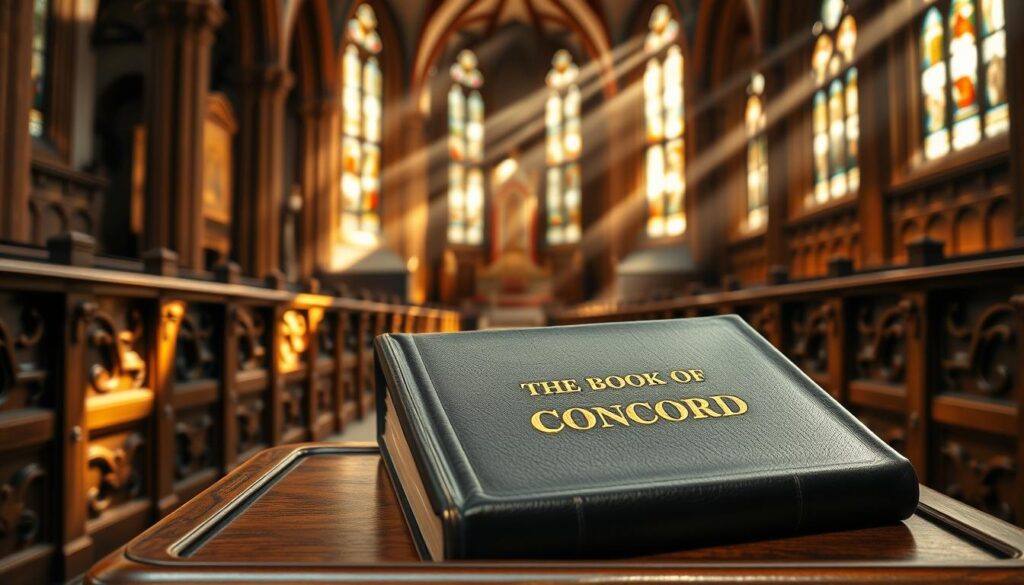
Fifty years later, leaders compiled The Book of Concord. This collection settled debates about baptism, communion, and scripture’s role. Over 80 regional authorities endorsed it—like signing a spiritual constitution. Today, pastors pledge to follow its guidance, ensuring church practices align with historic roots.
How do these ancient texts stay relevant? They act as guardrails, not cages. “Our confessions point to Christ,” explains theologian Maria Gomez. “They help us interpret the Bible faithfully without inventing new truths.” From Minneapolis to Jakarta, these writings remind communities they’re part of something bigger than local customs.
Sunday school teachers use simplified versions. Seminary students debate their nuances. Through every generation, the book concord remains a compass—steering believers toward grace-centered faith while honoring scripture’s supreme authority.
Lutheranism and Ecumenical Relationships
The path from conflict to collaboration reveals deep spiritual connections. After centuries of division, the Roman Catholic Church and Lutheran communities began historic talks in the 1960s. Like estranged family members rediscovering shared roots, these dialogues focused on common ground rather than old arguments.
A major breakthrough came in 1999. Both groups signed a Joint Declaration agreeing that divine grace – not human effort – forms faith’s foundation. This milestone healed wounds from the Reformation era. By 2017, joint events commemorated Luther’s reforms while celebrating Christian unity.
Unity Without Uniformity
Today, Lutherans and Catholic Church members often volunteer side-by-side in food banks. They study scripture together. Yet full merger remains unlikely – and unnecessary. “Our differences matter less than Christ’s love,” notes ecumenical advisor Rev. Michael Chen.
This relationship thrives because both groups prioritize core gospel truths. Lutherans maintain distinct worship styles and teachings while embracing cooperation. It’s like neighbors tending separate gardens but sharing tools. Through mutual respect, ancient divisions now nurture hope for all church communities.
FAQ
How does Lutheranism differ from the Roman Catholic Church?
Lutherans emphasize salvation through God’s grace alone, received by faith, rather than relying on good works or church traditions. Unlike the Roman Catholic Church, Lutheran teachings reject papal authority and prioritize Scripture as the ultimate guide. Practices like private confession are optional, not mandatory.
What role did Martin Luther play in shaping Lutheran beliefs?
Martin Luther, a 16th-century German monk, sparked the Protestant Reformation by challenging Catholic doctrines. His writings, like the 95 Theses, emphasized justification by faith, Scripture’s authority, and Christ’s centrality. His translation of the Bible into German made God’s Word accessible to everyday people.
Do Lutherans believe in sacraments like Holy Communion?
Yes, Lutherans recognize two sacraments: Baptism and the Lord’s Supper (Holy Communion). They teach that Christ is truly present “in, with, and under” the bread and wine, offering forgiveness and strengthening faith. This differs from symbolic views in some Protestant traditions.
What is the Book of Concord, and why is it important?
The Book of Concord contains key Lutheran confessional documents, including the Augsburg Confession. It unites churches around core teachings like grace, faith, and Scripture’s authority. Many Lutheran bodies, such as the Evangelical Lutheran Church in America, still use it today.
How do Lutheran worship services reflect their theology?
Worship centers on Scripture, preaching, and sacraments. Liturgies often blend traditional hymns with modern elements. Luther’s emphasis on vernacular language ensures services are accessible, fostering a personal relationship with God through Christ’s promises.
Are Lutherans open to dialogue with other Christian traditions?
Yes! Groups like the Lutheran World Federation engage in ecumenical talks, including with the Roman Catholic Church. Joint statements, like the 1999 Declaration on Justification, highlight shared beliefs while respecting differences in practice and structure.