Imagine living in a world where questioning religious authority could cost your life. This was the reality Martin Luther faced in 16th-century Europe. Born in 1483 to a copper miner in Germany, this unlikely revolutionary would spark changes that reshaped Christianity forever.
Luther’s journey began with personal spiritual struggles. As a monk, he grappled with feelings of unworthiness before God. These inner battles led him to develop groundbreaking ideas about faith and salvation that contradicted established church teachings.
In 1517, Luther took a bold stand by nailing his Ninety-Five Theses to a church door. This act didn’t just critique corrupt practices – it ignited the Protestant Reformation. His translation of the Bible into German made scripture accessible to ordinary people, democratizing religious knowledge.
Today, over 500 years later, Luther’s legacy lives on through congregations worldwide. His emphasis on personal conviction over institutional authority continues to influence modern faith practices. Let’s explore how one man’s courage created lasting change in religious history.
Key Takeaways
- Martin Luther’s 1517 protest launched the Protestant Reformation
- Personal spiritual struggles shaped his revolutionary ideas
- Translated the Bible to empower everyday believers
- Challenged church practices while maintaining core Christian beliefs
- Legacy continues through 80 million Lutherans worldwide today
Introduction to the Lutheranism Founder and His Impact
What if your personal beliefs could reshape an entire religion? Martin Luther answered this question through his bold theology that shook 16th-century Europe. He taught that divine grace – not human work – determines salvation, a radical idea that changed how millions relate to God.
The German reformer directly challenged the church‘s power structure. “Why should papal decrees outweigh Scripture?” he argued. This thinking empowered ordinary people to interpret the Bible themselves, breaking the clergy’s monopoly on religious truth.
Luther’s reforms sparked unexpected changes across society. His Bible translation didn’t just spread religious ideas – it standardized the German language. Schools multiplied as literacy became vital for understanding Scripture. Even political systems evolved as local rulers gained independence from Rome.
Today, over 80 million Christians follow traditions tracing back to Luther’s teachings. His emphasis on personal faith continues to inspire those seeking direct spiritual connections. From hymn lyrics to marriage practices, his influence echoes through modern worship worldwide.
Historical Background: Europe on the Eve of the Reformation
How did a perfect storm of events prepare Europe for radical change? The 15th century buzzed with energy as old systems cracked under new pressures. Plagues, power struggles, and fresh ideas collided to create fertile ground for transformation.
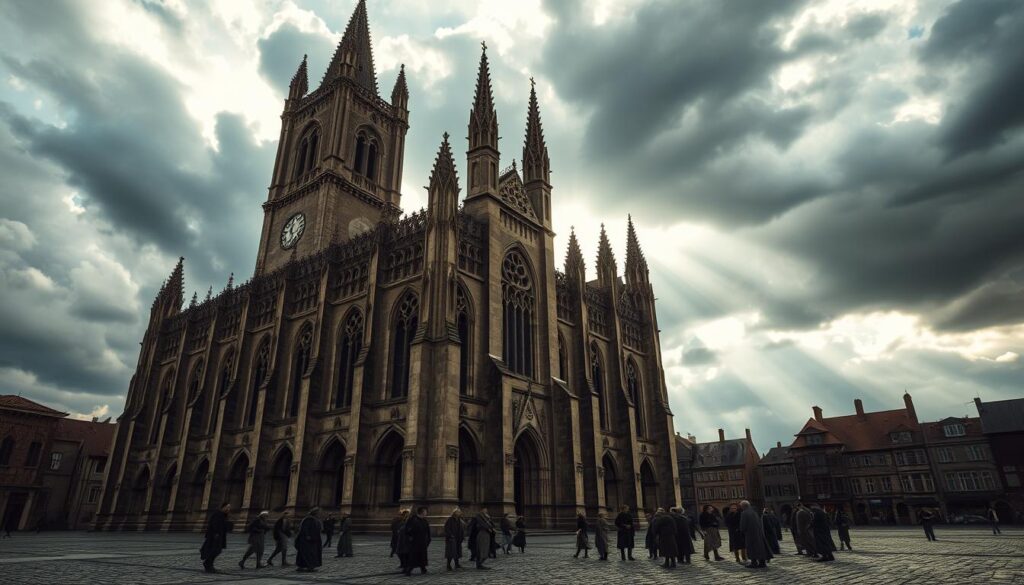
Societal Upheaval in the Medieval Era
The Black Death reshaped everything. By wiping out nearly half of Europe’s population in the 14th century, it accidentally boosted opportunities for survivors. Workers could demand better pay, and families climbed social ladders once sealed shut.
Traditional authority structures wobbled. As peasants gained economic power, they began questioning why church leaders lived in luxury while ordinary people struggled. This tension would later fuel demands for reform.
The Role of the Renaissance and the Spread of Literacy
New ideas traveled faster than ever. Johannes Gutenberg’s 1455 printing press turned books into affordable tools for learning. Suddenly, knowledge wasn’t just for priests – merchants and craftsmen could read too.
Universities became hotspots for debate. Scholars inspired by the Renaissance asked bold questions about human potential and divine work. As literacy spread, so did the appetite for challenging old truths. The stage was set for someone to light the match of change.
Early Life and Education of Martin Luther
Could a strict upbringing forge a world-changing thinker? Young Martin Luther’s childhood in Mansfeld laid the foundation for his revolutionary path. Born to ambitious parents in 1483, he grew up during a time when social mobility began reshaping European society.
Childhood in Mansfeld and Family Influences
Hans Luther, Martin’s determined father, rose from peasant roots to become a successful copper miner. The family lived comfortably, but Hans enforced strict discipline. He dreamed of his son becoming a lawyer – a prestigious career that would cement their middle-class status.
Martin shared close bonds with his siblings, particularly brother Jacob. Their home life blended affection with high expectations. This mix of support and pressure shaped Luther’s work ethic and deep sense of responsibility.
Academic Journey at Erfurt and Wittenberg
At 17, Luther entered the University of Erfurt – a hub for cutting-edge ideas. He mastered logic and rhetoric, skills that later helped him challenge powerful institutions. By 1505, he earned his master’s degree with top honors.
Though excelling in legal studies, Luther felt drawn to deeper questions about life‘s purpose. His academic success pleased his father, but seeds of spiritual curiosity were already sprouting. The university years sharpened his mind while quietly preparing him for an unexpected religious calling.
Family, Faith, and Early Influences
Behind every revolutionary thinker lies a childhood that shapes their destiny. Martin Luther entered the world in 1483, baptized the next morning on St. Martin of Tours’ feast day. His family moved to Mansfeld when he was one year old, where his father managed copper mines and served on the town council.
Luther’s parents ran a tight ship. Hans Luther demanded excellence, using harsh discipline to drive his son toward success. Margarethe, described by scholars as practical and devout, balanced household duties with strict religious observance. Their prayer-filled home life blended ambition with Catholic traditions.
The future reformer’s early years mixed opportunity with anxiety. Regular beatings for minor mistakes taught young Martin to fear authority – yet also question it. Family meals echoed with discussions about faith and social mobility, planting seeds for his later reforms.
| Parental Influence | Hans Luther | Margarethe Luther |
|---|---|---|
| Occupation | Mine operator | Homemaker |
| Discipline Style | Strict perfectionism | Practical correction |
| Religious Impact | Social ambition | Daily devotions |
This unique upbringing forged Luther’s dual focus on scholarship and spirituality. While he later challenged church leaders, his parents’ blend of faith and determination stayed with him. The boy who knelt for family prayers would grow into the man who reshaped Christian thought.
Spiritual Crisis and the Call to Monastic Life
What transforms a law student into a monk? For Martin Luther, this life-altering shift began with a violent summer storm in 1505. As rain lashed the countryside near Stotternheim, lightning nearly struck the 21-year-old traveler, sparking an existential crisis that reshaped religious history.

The Thunderstorm Conversion Experience
Terrified by what he saw as divine judgment, Luther shouted: “Saint Anna, I will become a monk!” This desperate prayer during the July 2 storm became an unbreakable vow. Within weeks, he abandoned his legal studies – shocking his father who’d invested heavily in his son’s career.
Vow and Entry into the Augustinian Order
On July 17, Luther entered Erfurt’s Augustinian monastery. The decision meant trading a promising future for strict routines of prayer and fasting. Though initially seeking relief from spiritual anxiety, this choice launched his deeper exploration of faith and scripture.
| Aspect | Before Storm | After Storm |
|---|---|---|
| Career Path | Law student | Monastic novice |
| Spiritual Focus | Academic study | Personal salvation |
| Daily Routine | University lectures | Prayer & manual labor |
This pivotal moment redirected Martin Luther‘s life toward confronting questions of sin and grace. While the monastery brought temporary peace, it ultimately became the starting point for his revolutionary theological journey.
The Publishing Revolution: Spreading Reform Ideas
How did ink and paper become tools of revolution in 16th-century Europe? Martin Luther harnessed Gutenberg’s printing press like no one before him. His words traveled faster than horseback riders, reaching common people and scholars alike.

The Ninety-Five Theses exploded across Germany in weeks. Printers worked overtime to meet demand, creating what we’d call “viral content” today. By 1518, Luther’s ideas reached France and England – faster than the church could contain them.
“Printing is the ultimate gift of God and the greatest one.”
Luther’s German Bible transformed spiritual life. For the first time, farmers could read Scripture without priestly interpretation. This shift weakened the church‘s control and sparked debates in taverns and town squares.
| Aspect | Pre-Printing Press | Post-Printing Press |
|---|---|---|
| Communication Speed | Months | Weeks |
| Access to Information | Clergy Only | All Literate People |
| Religious Authority | Centralized | Decentralized |
Martin Luther didn’t just write theology – he crafted hymns and picture books for the illiterate. Printers became his allies, turning complex ideas into affordable pamphlets. This media strategy made reform unstoppable.
The reformer’s work created a template for modern movements. Just as social media spreads ideas today, the printing press let ordinary citizens challenge power structures. Luther proved that accessible information could reshape civilizations.
The Ninety-Five Theses and the Challenge to Church Authority
A single document reshaped Christianity forever on October 31, 1517. Martin Luther nailed his Ninety-Five Theses to a church door in Wittenberg, sparking a firestorm that would redefine spiritual authority. This bold act questioned practices many saw as unfair, turning a local protest into a continental debate.
Protesting the Sale of Indulgences
Luther targeted a specific abuse: priests selling forgiveness like market goods. He raged against preacher Johann Tetzel’s catchy slogan about coins freeing souls from purgatory. “Salvation isn’t a question of wealth,” Luther argued, insisting God’s grace couldn’t be bought.
Impact on Papal Authority and Church Practices
The Ninety-Five Theses spread like wildfire thanks to new printing technology. Ordinary people began questioning why distant leaders controlled their faith. As copies reached Rome, the church faced its greatest crisis in centuries.
Martin Luther’s actions proved ideas could outpower institutions. His challenge didn’t just reform practices – it reshaped how millions related to spirituality. The door where he posted his arguments remains a symbol of courage to question power.
FAQ
What event sparked Martin Luther’s decision to challenge the Church?
A pivotal moment occurred during a violent thunderstorm in 1505, when Luther vowed to become a monk if spared. This led him to join the Augustinian Order, where his spiritual struggles and studies later fueled his critiques of Church practices.
How did the Renaissance influence Luther’s ideas?
The Renaissance emphasized critical thinking and access to classical texts. Combined with the printing press, this allowed Luther’s writings, like the Ninety-Five Theses, to spread rapidly, challenging traditional authority and encouraging public debate.
Why did Luther focus on opposing indulgences?
He saw the sale of indulgences—promising forgiveness for money—as exploiting believers and distorting the Bible’s teaching on repentance. His protests aimed to recenter faith on grace and personal relationship with God, not financial transactions.
What role did the Augsburg Confession play in Lutheran history?
Written in 1530, this document outlined core Lutheran beliefs, like salvation through faith alone. It became a foundation for Lutheran identity, distinguishing it from Roman Catholic teachings and shaping Protestant theology.
How did Luther’s upbringing shape his views?
Growing up in Mansfeld, his strict father pushed him toward law. However, his mother’s piety and his own spiritual anxiety led him to theology. These contrasts fueled his later emphasis on divine mercy over human effort.
Did Luther intend to create a new denomination?
Initially, he sought to reform the Roman Catholic Church, not split it. However, conflicts with papal authority and his excommunication in 1521 led followers to organize independently, forming what became the Lutheran Church.
How did the printing press aid the Reformation?
It enabled mass production of Luther’s works, like vernacular Bibles and pamphlets. This democratized access to Scripture and reform ideas, empowering ordinary people to engage with theology directly.