What shapes a religious movement that’s endured for five centuries? This guide explores the traditions rooted in the 16th-century Reformation, sparked by Martin Luther’s bold call for change. His ideas reshaped how millions connect with their faith, emphasizing grace and direct engagement with Scripture.
At its heart, this tradition values simplicity and accessibility. Core teachings are drawn from historic Christian creeds and the Book of Concord, a collection of doctrinal statements still used today. These texts guide worship styles, community rituals, and personal spiritual growth within local church communities.
While sharing roots with other Christian denominations, this branch stands out through its focus on salvation by faith alone. Worship often blends ancient rituals with modern relevance—hymns, sermons, and sacraments create a bridge between past and present.
From small German towns to vibrant global congregations, this movement has influenced education, social justice, and cultural identity. Its teachings continue to adapt while staying anchored in timeless principles, proving that ancient wisdom can thrive in today’s world.
Key Takeaways
- Martin Luther’s 1517 Reformation reshaped Christian theology and community life
- The Book of Concord remains central to doctrinal teachings
- Distinctive worship styles blend tradition with accessibility
- Global growth spans six continents, impacting education and culture
- Emphasis on grace and Scripture shapes personal spiritual journeys
Introduction to Lutheranism Practices and Traditions
Imagine a Sunday morning where hymns echo in Swahili, Swedish, and Spanish across three continents. This vibrant reality reflects how Lutheran traditions thrive globally while keeping core teachings intact. Nearly 15 million African Lutherans now outnumber Germany’s 13 million, showing how this church family grows beyond its European roots.
“Our shared liturgy feels like home, whether you’re in Nairobi or Nebraska.”
Communities blend local customs with centuries-old rituals. Tanzanian choirs mix traditional drums with Reformation-era hymns. Minnesota congregations host “lutefisk dinners” alongside immigrant-led Bible studies. These adaptations show how faith expressions evolve without losing their essence.
| Region | Lutheran Population | Cultural Adaptations |
|---|---|---|
| Africa | 15 million | Drum-led worship services |
| Asia/Middle East | 7.4 million | Local language liturgies |
| North America | 8.1 million | Multicultural youth programs |
| Germany | 13 million | Historic cathedral traditions |
This worldwide network maintains unity through key elements:
- Weekly communion services
- Emphasis on Scripture study
- Commitment to social outreach
From Finnish sauna baptisms to Bolivian harvest festivals, Lutherans prove traditions can be both ancient and alive. The church’s growth stems from balancing historical roots with fresh ways to share God’s grace.
Foundations of Lutheran Belief and Theology
What if the key to spiritual freedom lay in receiving rather than achieving? This question fuels Lutheran theology, built on two game-changing ideas that reshaped Christianity. At its core, this belief system offers both profound comfort and a call to action.
Justification by Grace and Faith
Martin Luther’s “aha moment” changed everything. He realized salvation comes through God’s unconditional gift, not human effort. The Augsburg Confession puts it plainly: “We receive forgiveness through faith alone.”

This doctrine of justification flips religious anxiety upside down. As one modern pastor explains: “You don’t climb to heaven – heaven reaches down to you.” It’s why Lutherans emphasize weekly communion – a tangible reminder of grace served freely.
The Priesthood of All Believers
Here’s where faith gets hands-on. Every Christian becomes a minister through baptism. “This isn’t about personal hotlines to God,” clarifies theologian Maria Thompson. “It’s mutual care – we all carry each other’s prayers.”
This belief sparks remarkable outcomes. Lay leaders teach Sunday school. Factory workers bless coworkers. Retirees visit hospitals. Through this shared priesthood, the gospel moves beyond church walls into daily life.
“A farmer milking cows serves God as truly as a pastor preaching sermons.” – 16th-century Lutheran proverb
Together, these theology pillars create dynamic communities. They comfort strugglers with divine love while mobilizing everyone to spread kindness. It’s a faith that fits both pews and parking lots.
Historical Roots: From Reformation to Modernity
A single monk’s pen sparked a wildfire of change across 16th-century Europe. Martin Luther’s critiques of the Western church weren’t meant to start a revolution – but his ideas spread faster than medieval gossip. By 1521, printed copies of his works reached Paris, Rome, and London, reshaping how millions understood faith.
The Reformation and Early Doctrinal Debates
Those famous Ninety-five Theses? Originally just discussion starters for university classrooms. But when common folks read Luther’s plain-language arguments, something unexpected happened. Farmers debated salvation at marketplaces. Nobles argued about indulgences over dinner. This grassroots movement forced leaders to pick sides, fracturing European Christianity.
Key conflicts shaped the new tradition:
| Year | Event | Impact |
|---|---|---|
| 1517 | Ninety-five Theses posted | Spark for reform |
| 1530 | Augsburg Confession presented | First unified statement |
| 1580 | Book of Concord published | Doctrinal standard |
The Role of the Book of Concord
Imagine trying to unify a movement spanning kingdoms and cultures. That’s what 86 leaders achieved in 1580 by signing the Book of Concord. This collection of confessions became the theological glue holding Lutheran communities together – from Swedish fishing villages to German city-states.
Why does this 444-year-old document still matter? It settled fiery debates about:
- Christ’s presence in communion
- Human free will
- Church authority
Today, over 70 million Lutherans worldwide trace their spiritual roots to these Reformation-era decisions. The church’s ability to honor its history while engaging modern challenges proves ancient wisdom still speaks clearly.
Martin Luther’s Role in Shaping the Reform Movement
A restless monk’s midnight ink stains changed Christianity forever. Martin Luther never sought fame, yet his work ignited a spiritual revolution. His personal struggles with divine justice led to groundbreaking insights about grace – ideas that still shape millions of lives today.
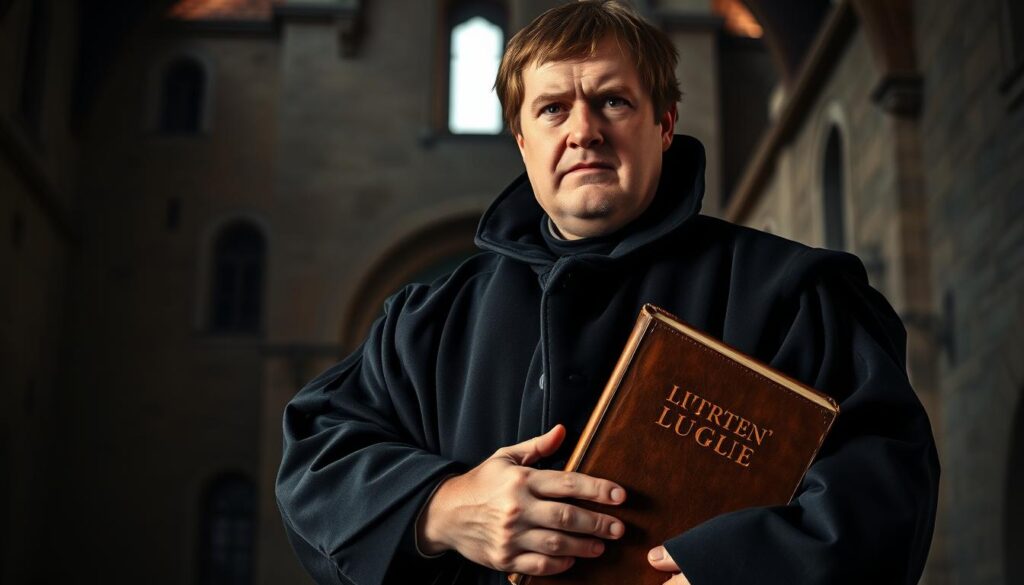
Luther rejected the label “Lutheran,” preferring “evangelical” – from the Greek word for good news. “I simply taught God’s Word,” he insisted. “The Gospel did everything.” This humility defined his approach: Scripture, not human effort, transforms hearts.
“The true treasure of the church is the Holy Gospel of God’s glory and grace.”
His German Bible translation broke religious authority barriers. For the first time, farmers read Scripture while milking cows. Shopkeepers debated Paul’s letters. This work empowered ordinary people to engage faith directly, without mediators.
Luther’s Law-Gospel framework became vital for teaching. He showed how God’s commands reveal human flaws, while Christ’s sacrifice offers healing. This balance keeps Lutheran preaching both challenging and hopeful.
Though he criticized corrupt church leaders, Luther valued the church’s role in sharing grace. His reforms sought renewal, not destruction – a delicate dance between challenging authority and preserving community.
Essential Documents: Augsburg Confession and Book of Concord
How do 16th-century writings remain vital for modern believers? The answer lies in two landmark texts that defined a movement while leaving room for growth. These documents serve as both anchor and compass for communities worldwide.
Insights from the Augsburg Confession
Philipp Melanchthon’s 1530 Augsburg Confession revolutionized religious diplomacy. Crafted during political tensions, this 28-article statement presented Lutheran teachings as firmly rooted in Christian tradition. “We dissent in no article from the Church Catholic,” Melanchthon insisted, seeking reconciliation without compromising truth.
Seven princes and two city councils risked their lives by signing it. Their bold act created a template for faith communities – clear convictions expressed with respect. The document’s Article IV on justification remains central to Lutheran identity today.
Confessional Subscription and Doctrinal Clarity
Modern leaders still pledge allegiance to these texts through confessional subscription. This promise ensures sermons and teachings align with historic confessions while addressing contemporary issues. As one seminary professor notes: “We’re not signing museum plaques – we’re joining a living conversation.”
The 1580 Book of Concord collects these foundational writings. It provides guardrails for complex theological debates, yet allows flexibility in local customs. This balance keeps global Lutherans united in essentials while diverse in cultural expressions – from Zambian village churches to Chicago storefront congregations.
Role of Scripture and the Reformation Ethos
What happens when ancient texts become everyone’s handbook for life? The Reformation answered this by placing God’s Word at the center of faith. This shift redefined religious authority, empowering ordinary people to engage directly with divine truth.
Sola Scriptura and Its Impact
Martin Luther’s “Scripture alone” principle broke chains of institutional control. His German Bible translation turned kitchen tables into theology classrooms. Farmers debated Psalms while shepherds shared Gospel stories – faith became a living conversation, not a priestly lecture.
This democratization of knowledge sparked lasting changes:
- Church teaching required biblical backing
- Personal Bible study became a spiritual priority
- Hymns and sermons focused on scriptural messages
Interpreting the Bible in Lutheran Theology
Lutherans approach Scripture like skilled chefs – honoring the recipe while adapting to modern tastes.
“We let the text speak first, then ask how it feeds God’s people today,” explains Pastor Emma Gonzalez.
Key principles guide this balance:
- Law passages reveal human need
- Gospel texts announce divine grace
- Historical context informs teaching
While valuing tradition’s wisdom, the Word remains supreme. This approach keeps communities anchored in truth yet responsive to contemporary challenges – proving ancient Scripture still writes new stories.
Liturgical Practices: Worship, Baptism, and the Lord’s Supper
Step into a Lutheran sanctuary, and you’ll find ancient rhythms meeting modern hearts. These gatherings blend medieval chants with electric guitars, formal prayers with spontaneous hugs – all centered on God’s tangible gifts. At their core, these rituals celebrate grace through physical elements like water, words, and shared meals.
The Significance of the Eucharist
Communion tables become wonder-filled spaces in Lutheran worship. The sacrament of the Lord’s Supper isn’t symbolic theater – it’s where believers taste forgiveness. As one pastor describes: “The bread and wine don’t change, but we do.” This meal connects participants to Christ’s sacrifice and each other through what’s called sacramental union.
| Denomination | View on Eucharist | Key Emphasis |
|---|---|---|
| Lutheran | Real presence in elements | Christ’s promise in bread wine |
| Reformed | Spiritual presence | Memorial aspect |
| Roman Catholic | Transubstantiation | Priestly consecration |
Baptism and Confession in Worship
Water splashes mark new beginnings in Lutheran communities. Baptism isn’t human dedication but divine action – “God’s wet signature on our lives,” as a theologian quips. This sacrament launches lifelong renewal through the Spirit’s power.
Weekly services often include corporate confession. Members voice failures together, then hear freeing words: “Your sins are forgiven.” This rhythm mirrors the Law-Gospel dynamic – naming brokenness before embracing mercy.
“We leave worship carrying grace in our ears and on our tongues.”
From ornate cathedrals to storefront chapels, these worship patterns create unity. The Lord’s Supper remains central, baptismal fonts stay filled, and absolution echoes – proving old rituals still spark fresh hope.
Cultural and Educational Influence of the Lutheran Church
How does a 500-year-old faith tradition shape modern classrooms and concert halls? Lutheran churches have quietly transformed societies through education and artistic expression. Their work in these fields stems from a simple Reformation-era truth: knowledge empowers people to serve others.
Martin Luther championed literacy so everyone could read Scripture. Today, over 2,300 schools across 70 countries continue this mission. From Tanzanian preschools to American universities like St. Olaf College, these institutions blend academic rigor with ethical formation.
| Region | Institution Type | Impact |
|---|---|---|
| Africa | Healthcare Centers | 1.2 million annual patients served |
| North America | Universities | 85% graduate placement rate |
| Europe | Music Academies | 600+ classical works preserved |
| Asia | Vocational Schools | 40,000 skilled workers trained yearly |
Hymnody became a teaching tool in churches. Bach’s cantatas and modern worship bands both trace their roots to Lutheran musical traditions. “When schools flourish, all flourishes,” Luther wrote, linking education to societal health.
“Teach the children well – their voices will carry the Gospel further than our own.”
Healthcare initiatives complete this holistic approach. Lutheran-affiliated hospitals in 30 countries treat patients regardless of faith. This blend of learning, artistry, and service shows how churches can nurture both minds and communities.
Comparative Overview: Lutheran vs. Catholic Church Practices
The formal split between the Catholic Church and Lutheran communities crystallized in 1555 with the Peace of Augsburg. This agreement let German states choose their religious alignment, creating distinct approaches to spiritual leadership and community life.
Differences in Authority and Tradition
Catholic teaching centers on the Pope’s supreme authority as Christ’s earthly representative. Lutherans instead emphasize congregational leadership and shared responsibility among believers. This contrast shapes how each group interprets Scripture and makes decisions.
Traditions also diverge significantly. The Catholic Church maintains centuries-old rituals like Latin Mass and priestly celibacy. Lutheran communities often adapt worship styles to local cultures while preserving core sacraments.
Both value ancient roots but apply them differently in modern contexts. Their ongoing dialogue enriches global Christianity through respectful differences in tradition and church governance.
FAQ
What is the core belief behind "justification by grace through faith"?
Lutherans teach that salvation comes solely through God’s grace, received by faith in Jesus Christ. Good works matter but don’t earn salvation—they’re a response to God’s gift.
How did the Reformation shape Lutheran identity?
The Reformation, led by Martin Luther, challenged Catholic doctrines like indulgences. It emphasized Scripture’s authority, leading to key Lutheran teachings like sola fide (faith alone) and sola scriptura (Scripture alone).
Why is the Augsburg Confession important?
Written in 1530, it outlined Lutheran beliefs to resolve disputes with the Catholic Church. It remains a foundational text, clarifying teachings on sacraments, sin, and the role of the Church.
How do Lutheran and Catholic views on Communion differ?
Lutherans believe Christ is truly present “in, with, and under” the bread and wine (sacramental union). Catholics teach transubstantiation, where the elements become Christ’s body and blood.
What role does the Book of Concord play today?
It’s a collection of Lutheran doctrinal statements, including the Augsburg Confession. Churches use it to maintain theological consistency and teach core beliefs.
How does "sola scriptura" influence Lutheran practices?
Scripture is the ultimate authority, shaping worship, teaching, and ethics. Traditions are valued but must align with the Bible’s message.
What is the "priesthood of all believers"?
This teaching emphasizes that all Christians have direct access to God through Christ. It rejects hierarchical mediation, empowering laypeople in worship and ministry.
How has Lutheranism impacted education?
Early Lutherans prioritized literacy to read Scripture, leading to public schools and universities. Many Lutheran institutions still blend faith with academic rigor.
Do Lutherans recognize Catholic sacraments?
Lutherans affirm baptism and the Lord’s Supper as sacraments but view Catholic practices through a doctrinal lens, focusing on differences like papal authority.
Why is baptism central in Lutheran worship?
Baptism marks entry into the Christian community and God’s promise of forgiveness. It’s seen as a lifelong covenant, not just a ritual.