Discover the vibrant traditions of a Protestant movement that reshaped Christianity over five centuries. With roots tracing back to 16th-century reforms, this faith community now serves over 77 million believers worldwide. Its practices blend ancient customs with fresh perspectives, creating worship experiences that resonate across generations.
At the heart of this tradition stands Martin Luther, whose bold reforms during the Reformation redefined how communities connect with the divine. Rather than abandoning centuries of Christian heritage, his approach reimagined sacraments and scripture interpretation. This balance between continuity and innovation remains central to its identity today.
Sunday services showcase this unique blend through music, prayer, and shared participation. Congregants don’t just observe – they actively shape worship through hymns and responsive readings. This collaborative spirit reflects the movement’s core belief in accessible spirituality for all.
Our guide will unpack these traditions step by step. You’ll explore historical foundations, understand modern adaptations, and discover what makes this denomination’s practices stand out. Whether you’re new to Protestant traditions or deepening your faith journey, we’ll make complex ideas easy to grasp.
Key Takeaways
- Originated from 16th-century reforms that transformed Christian practices
- Combines historical traditions with innovative theological perspectives
- Emphasizes active congregational participation during services
- Maintains global influence with 77+ million adherents worldwide
- Features distinctive approaches to sacraments and scripture
- Musical heritage plays vital role in worship experiences
Understanding the Historical Roots of Lutheran Worship
How did a single document nailed to a church door reshape centuries of Christian tradition? Martin Luther’s 95 Theses sparked a spiritual revolution that redefined relationships with the divine. His reforms preserved core Christian elements while challenging practices he saw as disconnected from biblical foundations.
Martin Luther and the Reformation Impact
The German monk’s theological breakthroughs centered on direct access to God through scripture. Luther argued that only baptism and communion met Christ’s sacramental criteria, rejecting five Catholic rites. “Christ’s sacrifice needs no repetition,” he declared, transforming communion from ritual re-enactment to grateful remembrance.
Evolution From Catholic Traditions
While maintaining ancient liturgical structures, Luther’s reforms introduced radical changes. Latin services became German gatherings where farmers could sing alongside nobles. Altars turned toward congregations, and priests became pastors who explained scripture in everyday language.
This shift created worship experiences emphasizing shared understanding over mysterious rituals. By blending Catholic heritage with Protestant insights, Luther built a bridge between medieval faith and modern spiritual practice that still supports 77 million believers today.
Exploring Core Sacraments in Lutheran Rituals
What transforms ordinary water and bread into sacred moments of divine connection? For Lutherans, sacraments bridge heaven and earth through physical elements charged with spiritual power. These practices anchor believers in God’s grace while uniting communities through shared sacred acts.
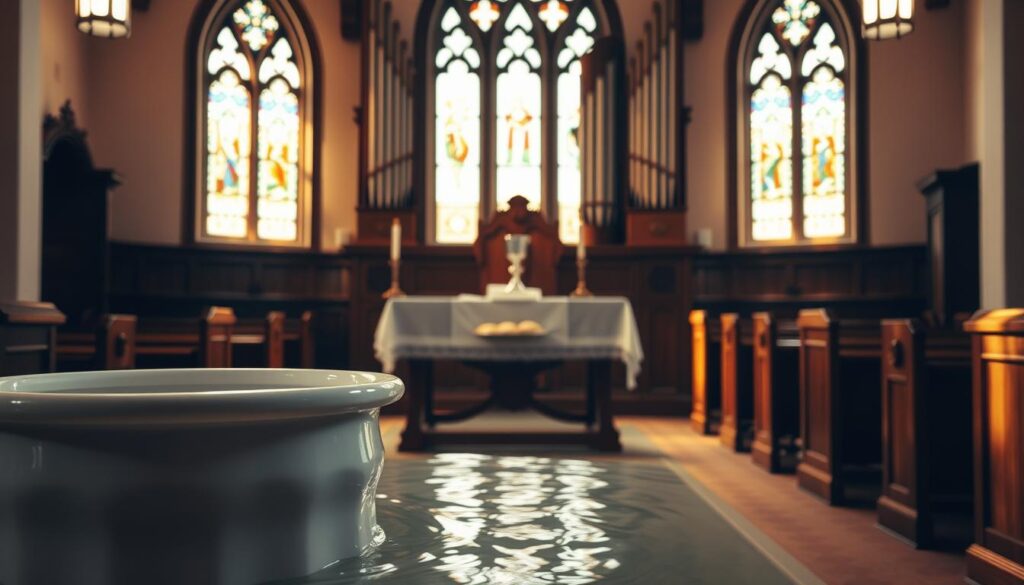
Baptism: Gateway to God’s Grace
Lutherans view baptism as God’s active work, not human effort. This sacrament washes away sin and sparks faith through water combined with God’s promise. Infants receive baptism because grace comes first – divine love activates belief before understanding develops.
Three key gifts flow from baptism:
- Complete forgiveness of past and future mistakes
- Victory over spiritual death through resurrection hope
- Ongoing guidance from the Holy Spirit
The Lord’s Supper: Communion and Community
Communion tables become holy meeting places where Christ’s presence transforms basic elements. Unlike other traditions, Lutherans affirm Jesus is “in, with, and under” bread and wine without changing their substance. This mysterious union nourishes faith while binding believers together.
| Sacrament | Lutheran View | Catholic View | Reformed View |
|---|---|---|---|
| Baptism | God initiates faith | Removes original sin | Symbol of commitment |
| Communion | Christ’s real presence | Transubstantiation | Memorial meal |
| Purpose | Means of grace | Channel of merit | Spiritual reminder |
Preparation for communion often includes confession and absolution. Many congregations share the cup and loaf weekly, seeing this meal as essential spiritual nourishment rather than occasional ritual.
Liturgy, Music, and Community in Worship
How does ancient liturgy meet modern faith communities? The Divine Service connects centuries-old patterns with today’s spiritual needs through four movements: gathering, hearing scripture, sharing sacraments, and going forth renewed. This rhythm turns Sunday services into transformative journeys rather than passive observances.
Sacred Music’s Teaching Power
Martin Luther called music “a living, breathing sermon.” His hymns taught theology to farmers and kings alike through memorable melodies. Today, Lutheran churches maintain this legacy with:
- Chorales blending 16th-century poetry with modern instrumentation
- Hymn texts that unpack complex doctrines in singable verses
- Choirs leading congregations rather than performing separately
Everyone Plays a Part
Sunday mornings buzz with collective energy as members share responses, prayers, and songs. This active involvement stems from Luther’s radical idea: all believers form a spiritual priesthood. Unlike spectator-style services, Lutheran worship expects voices to unite in declaration and praise.
| Traditional Elements | Modern Adaptations | Community Impact |
|---|---|---|
| Liturgical responses | Projected lyrics | Shared memory creation |
| Organ accompaniment | Multicultural hymns | Cross-generational bonds |
| Chanted psalms | Small group worship | Neighborhood outreach |
This balance preserves historical roots while nurturing fresh expressions. Whether through a grandmother’s favorite hymn or a teen’s guitar-led chorus, the congregation’s collective voice keeps the faith alive across generations.
Theological Insights and Sermons in Lutheran Worship
Three Latin phrases revolutionized Christian thought and still shape spiritual life today. Sola Scriptura, Sola Fide, and Sola Gratia form the bedrock of Lutheran theology, guiding how communities encounter divine truth. These principles transform Sunday services into dynamic conversations between heaven and earth.
Scripture, Proclamation, and the Word of God
Sola Scriptura places the Bible at Christianity’s center. Pastors spend hours wrestling with Greek texts to craft messages that bridge ancient wisdom and modern struggles. One minister notes: “Our sermons aren’t lectures – they’re lifelines connecting people to God’s living words.”
This scriptural focus shapes every worship element:
| Sola Principle | Key Emphasis | Worship Impact | Theological Significance |
|---|---|---|---|
| Scriptura | Bible as ultimate authority | Verse-by-verse preaching | God speaks through scripture |
| Fide | Faith as gift | Interactive prayers | Trust precedes understanding |
| Gratia | Unmerited favor | Communion frequency | Grace fuels transformation |
The doctrine of justification pulses through hymns and sacraments. Believers sing about being “clothed in Christ’s righteousness” while holding bread that embodies divine mercy. This theology of gift permeates liturgical responses and personal devotions alike.
Modern preachers balance academic rigor with relatability. A seminary professor explains: “We mine scripture’s depths but deliver nuggets everyone can grasp.” Projected lyrics and discussion groups help new generations engage with timeless truths.
Through the Spirit’s power, spoken words become transformative encounters. As voices join in creedal declarations, Lutheran understanding comes alive – not just in minds, but in hearts and hands serving neighbors.
Modern Interpretations: Cultural and Contextual Worship Practices
Global diversity meets ancient tradition in modern faith communities. The Lutheran World Federation unites 124 churches across 69 nations, guiding 57 million believers through cultural shifts. Their Nairobi Statement offers a compass for worship that honors heritage while embracing local flavors.
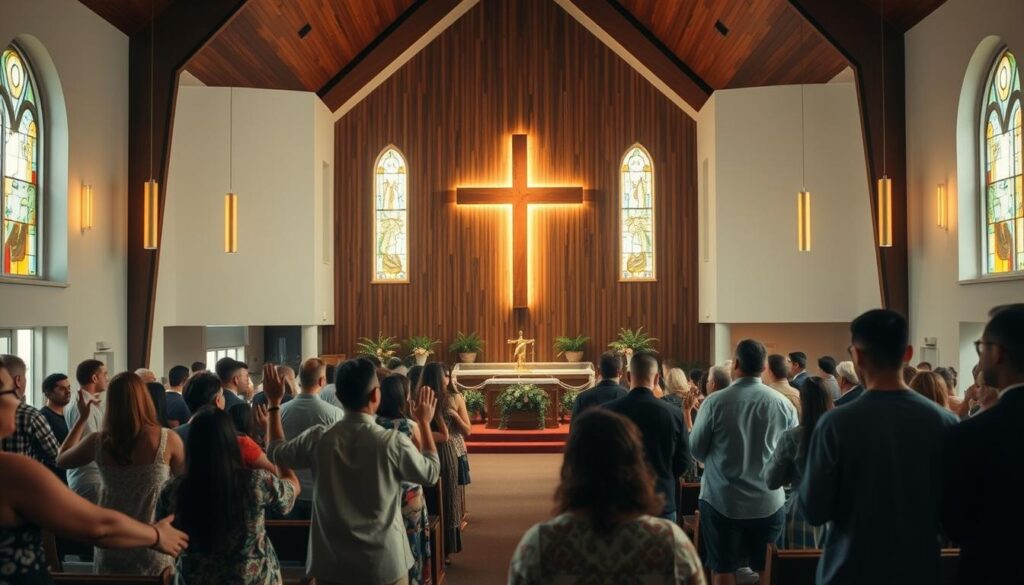
“The core of worship is the people gathering together so that they can talk to God all together.”
Four Dimensions of Faithful Adaptation
Churches navigate cultural engagement through four lenses:
| Dimension | Focus | Modern Example |
|---|---|---|
| Transcultural | Universal truths | Apostles’ Creed in 100+ languages |
| Contextual | Local relevance | Djembe drums in Kenyan services |
| Countercultural | Gospel challenges | Anti-racism liturgies |
| Cross-cultural | Global exchange | Swedish/Mexican hymn swaps |
Urban congregations might project Psalms onto brick walls while rural groups sing under mango trees. Bilingual services blend Spanish guitar with German chorales. One pastor notes: “Our Zambian liturgy feels both new and ancient – like rediscovering family recipes.”
Technology bridges distances without losing connection. Livestreamed services reach homebound members, while apps share prayer requests across time zones. Yet the heart remains unchanged – bread broken among friends, water poured over newborns, voices united in hope.
Deep Dive: lutheranism rituals and worship
How do ordinary moments become sacred encounters? For believers, daily life brims with chances to reconnect with divine promises. Simple acts like rinsing dishes or showering transform into spiritual touchpoints through intentional reflection.
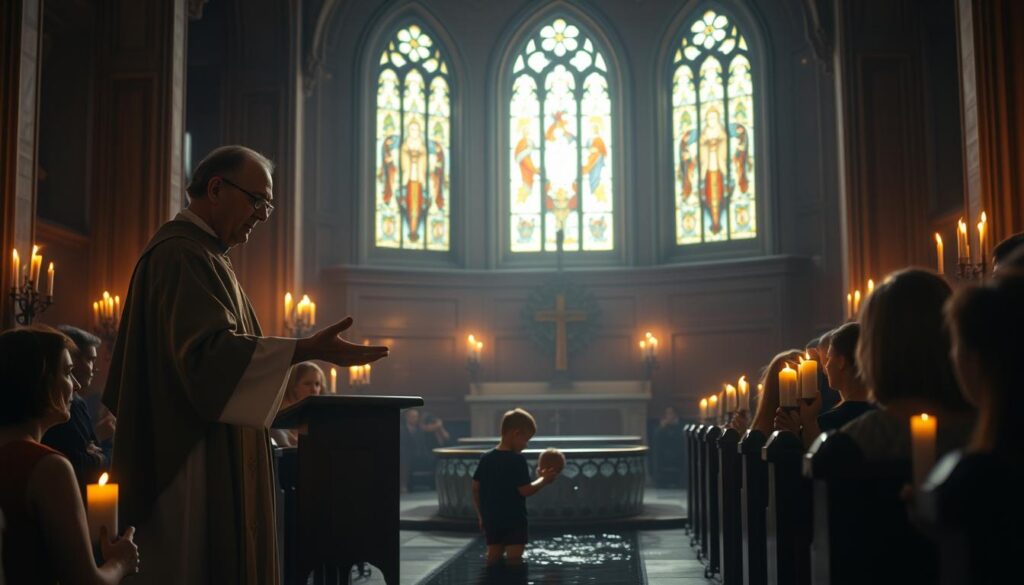
Daily Remembrance and Spiritual Renewal
Martin Luther taught that every splash of water could recall baptism’s grace. This practice turns routine hygiene into:
- Moments to reaffirm identity in Christ
- Opportunities to release burdens through forgiveness
- Chances to realign with spiritual priorities
Practical Applications in Worship Service
Sunday gatherings feature structured pathways for renewal. Public confession unites congregations in acknowledging shared humanity. A typical service includes:
- Corporate admission of shortcomings
- Pastoral assurance of pardon
- Silent personal reflection
Private confession offers individualized care. Ministers maintain strict confidentiality, creating safe spaces for deep spiritual work. One member shares: “Speaking my struggles aloud lifted weights I didn’t know I carried.”
These practices bridge Sunday worship with Monday challenges. Whether through liturgical responses or home devotions, believers find consistent rhythms to nurture their journey.
Balancing Tradition with Contemporary Practice
Tradition and innovation aren’t opposites but partners in Lutheran spiritual life. Communities honor centuries-old patterns while embracing fresh expressions that speak to modern hearts. This dynamic balance keeps faith vibrant across generations.
Innovative Liturgical Elements and Community Reflection
Many Lutheran churches now blend projected lyrics with hymnals, letting digital tools enhance ancient creeds. Global musical styles mingle with pipe organ classics, creating soundscapes where grandparents and teens sway together. Creative adaptations often emerge from local needs – urban congregations might host art walks between services, while rural groups organize farm-to-table communion meals.
Interactive prayer walls and app-based devotionals complement traditional liturgies. One Missouri congregation reports: “Our youth designed a Spotify playlist linking hymns to current worship songs.” These innovations always orbit around core practices like baptism and shared scripture reading.
Service projects have become living extensions of Sunday gatherings. Food drives morph into community gardens, and Bible studies spark job-training programs. By weaving timeless truths into today’s challenges, Lutheran communities prove that faithful relevance requires both roots and wings.
FAQ
How does Lutheran worship differ from Catholic traditions?
Lutheran worship retains elements like sacraments and liturgy but emphasizes justification by grace through faith. While both use Scripture, Lutherans reject concepts like purgatory and prioritize congregational singing. The Lutheran World Federation highlights this balance of tradition and reform.
What role do sacraments like Baptism play in Lutheran practice?
Baptism is seen as a gift of God’s grace, marking entry into the Christian community. It’s paired with the Lord’s Supper, where bread and wine symbolize Christ’s presence. These sacraments nurture faith and unity, central to Lutheran theology.
Why is music integral to Lutheran services?
Martin Luther championed hymns to engage congregations. Classics like A Mighty Fortress blend theology with melody, fostering participation. Music reinforces teachings and connects modern worshippers to historical roots, a hallmark of Lutheran hymnody.
How do congregations balance tradition with modern practices?
Many churches, like Savior Lutheran Church, blend traditional liturgy with contemporary music or multimedia. This approach keeps services relevant while honoring core beliefs like Scripture alone and sacramental reverence.
What’s the significance of the Lord’s Supper in Lutheran worship?
The Supper embodies Christ’s promise of forgiveness. Lutherans believe in real presence—Christ’s body and blood are “in, with, and under” the elements. This ritual renews faith and strengthens communal bonds, reflecting Lutheran sacramental theology.
How does the Lutheran Church address social justice today?
Rooted in grace, many congregations advocate for equity and service. The Evangelical Lutheran Church in America, for example, partners with global initiatives, linking faith to action. This reflects Luther’s view of faith active in love.
How do sermons integrate Scripture into Lutheran worship?
Sermons focus on interpreting the Bible’s teachings, emphasizing Christ’s redemption. Pastors connect ancient texts to daily life, encouraging reflection. This aligns with Luther’s belief in the power of God’s Word to transform hearts and minds.
What does "justification by grace through faith" mean practically?
It underscores that salvation is God’s gift, not earned by works. This doctrine shapes Lutheran identity, fostering humility and gratitude. Worship practices, like confession and absolution, visibly express this theology of unmerited grace.