For centuries, Christian communities have celebrated individuals whose lives reflect God’s grace in action. Within one major tradition, these role models aren’t seen as flawless heroes but as ordinary people transformed by their faith. Their stories offer hope, showing how divine love works through human imperfection.
This perspective traces back to biblical teachings like Hebrews 12:1, which encourages believers to learn from those who walked before them. Historical documents reveal a threefold purpose: giving thanks, building trust in God, and finding practical ways to live out values. Unlike some traditions, this approach avoids idealization—focusing instead on relatable struggles and triumphs.
You might be surprised by the sheer number of recognized figures, ranging from early church leaders to modern-day servants of faith. Their diversity proves holiness isn’t about perfection but perseverance. Whether facing personal doubts or societal challenges, their journeys mirror our own.
By studying these lives, we discover timeless wisdom for navigating today’s complex world. Their examples teach us to embrace grace in daily life, bridging ancient truths with contemporary questions. Let’s explore how their legacies continue shaping spiritual growth across generations.
Key Takeaways
- Discover how historical figures inspire modern faith without requiring perfection
- Learn the three core purposes behind honoring spiritual role models
- Explore a tradition recognizing thousands of everyday believers as examples
- Understand the balance between human flaws and divine grace in spiritual growth
- Find connections between ancient Christian practices and current life challenges
Historical Foundations and Reformation Roots
When church reformers reshaped Christian practices, they kept a surprising treasure—a rich collection of faith examples spanning centuries. Martin Luther and his colleagues carefully preserved over 200 commemorations while clarifying their purpose. This balance honored tradition while emphasizing Christ-centered faith.
Three Pillars of Faithful Remembrance
The Apology of the Augsburg Confession became the playbook for this approach. It teaches that remembering spiritual ancestors should:
- Spark gratitude to God for His work through people
- Build trust in divine promises
- Inspire practical Christ-like living
Early martyrs like Lawrence, who served the poor, stayed on calendars alongside biblical heroes. Even Mary’s Assumption found space, showing respect for longstanding traditions.
From Ancient Roots to Modern Practice
Reformation leaders created this framework for honoring role models:
| Period | Focus | Key Figures |
|---|---|---|
| Early Church | Martyrs’ witness | Lawrence, Perpetua |
| Medieval Era | Miracles & intercession | Removed examples |
| Reformation | Faith in action | Martin of Tours |
| Modern Updates | Diverse servants | Bonhoeffer, King Jr. |
Twentieth-century expansions added both restored and new names. This living calendar now includes peacemakers and theologians, proving God’s grace works across time. The Augsburg Confession principles keep these commemorations focused on Christ’s supremacy while celebrating human faithfulness.
Lutheranism Saints in Modern Christianity
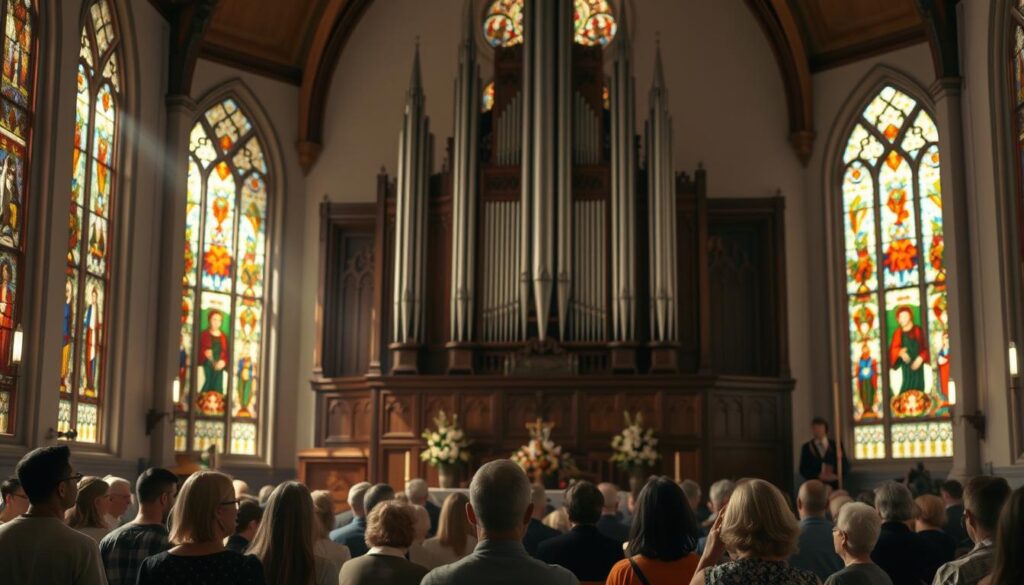
Today’s Lutheran communities keep ancient traditions alive through creative practices that honor spiritual role models. These observances blend historical reverence with practical applications for 21st-century believers.
Faith Builders Through Action
Pastors often highlight figures like Elizabeth of Hungary during sermons. Her work feeding the poor inspires food drives and community kitchens. One church member shared: “Learning about her sacrifices changed how I view my weekly volunteer shift.”
Thomas the Apostle’s story helps congregations embrace doubt as part of spiritual growth. Bible studies explore his journey from skepticism to bold declaration of faith. These discussions create safe spaces for honest questions.
Living Traditions Across Generations
Four key celebrations show how Lutheran churches connect past and present:
| Event | Date | Modern Practice | Purpose |
|---|---|---|---|
| Francis of Assisi Day | Oct. 4 | Pet blessings | Celebrate creation care |
| Elizabeth of Hungary | Nov. 17 | Clothing drives | Continue service legacy |
| All Saints Sunday | Nov. 1 | Candle lighting | Unite generations |
| Luke the Evangelist | Oct. 18 | Health fairs | Honor healing ministry |
Animal blessings draw families with pets into church courtyards each October. Laughter mixes with prayer as dogs, cats, and even hamsters receive blessings. These joyful events often become newcomers’ first church experience.
All Saints services feature stories of local heroes alongside biblical figures. A pastor in Minnesota explains: “We remember Sunday school teachers and food bank volunteers – modern examples of grace in action.”
Personal Reflections on the Dual Nature of Saints and Sinners
What if holiness wasn’t about eliminating flaws but embracing growth? This question lies at the heart of a transformative spiritual truth that reshapes how we view ourselves and others.
The Theological Concept: Simultaneously Saint and Sinner
Martin Luther’s phrase “Simul Iustus et Peccator” captures a radical idea: believers live as both redeemed and broken. As Luther explained, “The saints are sinners, too, but forgiven and absolved.” This dual identity frees us from pretending we’ve got it all figured out.
Three key insights emerge from this teaching:
- Our worth comes from Christ’s righteousness, not personal perfection
- Struggles with selfishness reveal our need for daily grace
- Growth happens through honest confession, not hiding failures
Finding Inspiration Through Imperfection and Grace
Historical figures show this truth in action. A 16th-century reformer might rage at opponents one day and write tender hymns the next. A modern volunteer serves the homeless while battling private doubts.
These stories teach us:
- God uses imperfect people to do extraordinary things
- Our worst moments don’t define our eternal identity
- Gratitude grows when we stop comparing ourselves to others
As we acknowledge our mixed nature, we discover deeper trust in divine love. The pressure to perform fades, replaced by joyful thanks for unearned mercy. This balance fuels authentic faith that endures life’s complexities.
Conclusion
Everyday heroes of faith walk beside us through history’s pages. Their stories aren’t polished legends but raw accounts of people who loved fiercely despite flaws. When we give thanks for figures like Elizabeth of Hungary, we celebrate God’s power working through ordinary hands feeding the hungry and healing the broken.
Churches mark these journeys throughout the year—not to worship the people, but to spotlight grace in action. Pastors often use these commemorations to spark conversations about serving neighbors today. As one minister shared: “Our food pantry volunteers stand in Elizabeth’s shoes now.”
This tradition keeps hearts focused on Christ while drawing strength from those who ran the race before us. Their imperfect lives remind us holiness grows through daily acts of love, not grand gestures. When we stumble, their witness whispers: Keep going. Grace meets you here.
Across time, these spiritual ancestors become traveling companions. They show how divine light shines brightest through cracked jars of clay—encouraging us to live boldly, serve humbly, and trust completely.
FAQ
Do Lutherans pray to saints like other Christian traditions?
Lutherans honor saints as faithful witnesses to God’s grace but do not pray to them. The Augsburg Confession emphasizes Christ as the sole mediator. Saints inspire through their lives of service, not as intercessors.
How does the idea of "simultaneously saint and sinner" shape Lutheran beliefs?
Martin Luther taught that believers are justified by faith alone, yet remain imperfect. This duality encourages humility and reliance on God’s grace, recognizing that even revered figures like Elizabeth of Hungary were human.
Are there specific days to celebrate saints in Lutheran churches?
Yes! Many Lutheran congregations observe feast days, such as Reformation Day or remembrances for biblical figures. These celebrations highlight how saints’ stories strengthen community and deepen faith through shared history.
Why do Lutherans retain saints if they reject saintly intercession?
Saints serve as role models of faithfulness, not objects of worship. The Apology of the Augsburg Confession clarifies that their lives point to Christ’s work, inspiring believers to live with courage and service.
Can someone be a saint while still struggling with sin?
Absolutely. Lutheran theology teaches that all believers are “saints” through Christ’s forgiveness, even amid daily struggles. This reflects the balance of grace and human imperfection, as seen in figures like Martin Luther himself.
How do modern Lutherans connect with saints historically?
Through sermons, hymns, and education, Lutherans learn from saints’ resilience and devotion. For example, stories of pastors and laypeople during crises remind communities to trust God’s faithfulness in uncertain times.