What does it mean to follow this faith tradition that started in 16th-century Germany? While many associate it with European heritage, Lutheran communities now thrive globally. From bustling cities in Africa to rural villages in Asia, millions embrace its message of grace and community.
You might be surprised to learn Africa has more members of this church than Germany. Over 15 million people across the continent gather in congregations weekly. This growth shows how spiritual ideas can transcend borders and cultures.
At its heart, this tradition focuses on personal connection rather than rules. It teaches that everyone matters and that hope comes through faith, not deeds. These principles continue to shape lives in our modern world.
Key Takeaways
- This faith tradition has grown into a global movement with 80 million members worldwide
- Africa now has more followers than Germany, its country of origin
- Core beliefs center on grace and personal spiritual relationships
- Cultural traditions differ, but shared values unite diverse communities
- Modern applications make these ideas relevant to 21st-century life
Historical Roots and Development of Lutheranism
In 1517, a German professor named Martin Luther sparked changes that transformed religious life. As an Augustinian monk, he questioned common practices of the Roman Catholic Church like selling forgiveness certificates. His bold questions grew into a movement that redefined Christian thought across Europe.
Martin Luther and the Reformation
Luther’s famous “Ninety-Five Theses” started as academic debate points nailed to a church door. These arguments against corruption spread like wildfire through new printing technology. Though he wanted to fix the existing church, his ideas unintentionally created new Christian communities.
The name “Lutheran” actually began as a joke during heated debates. Opponents used it to mock those who agreed with Luther’s views. Ironically, the label stuck and became a badge of honor for millions.
The Book of Concord and Confessional Subscription
After Luther’s death, leaders compiled key statements into The Book of Concord in 1580. This collection became the foundation for unified beliefs across regions. Rulers and city councils signed it, creating the first standardized guide for churches.
This practice of signing faith statements—called confessional subscription—still matters today. Pastors worldwide promise to follow these historic documents, connecting modern communities to their 16th-century roots. As one leader noted: “Our shared confessions create bridges across centuries.”
Core Beliefs and Theological Foundations
At the heart of this Christian tradition lies a revolutionary idea: God’s love isn’t earned. Instead, it’s freely given through grace—a concept that reshaped religious thought centuries ago and continues to inspire millions today.

Justification by Grace Through Faith
Imagine receiving a priceless gift you didn’t work for. That’s how Luther described salvation. His groundbreaking view stated people become right with God (righteousness) through trust in Jesus Christ, not personal achievements. This became Christianity’s “central article” in the Augsburg Confession.
Unlike some traditions that mix human effort with divine mercy, this approach sees faith as open-handed acceptance. As one pastor explains: “It’s not about how strongly you believe, but Who you’re clinging to.”
Understanding Law and Gospel
Luther saw God’s word working in two ways. The law acts like a spotlight, showing our imperfections and need for help. The gospel, however, shines as hope—announcing what Jesus Christ already accomplished through his life and resurrection.
Here’s the key difference:
- Law: Shows what’s broken (like a doctor’s diagnosis)
- Gospel: Provides the cure (through forgiveness and renewal)
“The law demands, the gospel gives,” Luther wrote. This balance helps believers face life’s challenges without guilt or fear.
lutheranism teachings: Key Doctrines and Practices
How do ancient rituals meet modern life in a 500-year-old faith? The answer lies in tangible practices that shape both community gatherings and personal spirituality. These traditions act as spiritual anchors, connecting believers across generations through shared experiences of divine grace.
Sacramental Life and Worship Service
Sunday mornings reveal something special. Unlike some Christian groups, this tradition maintains structured worship services filled with ancient prayers and hymns. Why? Because liturgy acts like a shared language, helping members participate actively rather than just watch.
The heart beats in two sacraments: baptism and communion. When water touches a baby’s head or bread wine passes through hands, Lutherans see God’s promises made visible. As the Augsburg Confession states, these aren’t symbols but “means of grace” – actual moments where heaven touches earth.
The Concept of Vocation and the Priesthood of All Believers
Martin Luther flipped medieval thinking upside down. He taught that service matters more than job titles – farmers and parents serve God as fully as pastors. “God doesn’t need your good works,” he wrote, “but your neighbor does.”
This “priesthood of all believers” means everyone helps others encounter divine love. A teacher grading papers or nurse changing bandages fulfills holy callings when done in faith alone.
Contextual Theology for Everyday Life
Ancient ideas stay fresh through practical application. The holy spirit works through ordinary moments – family dinners, work challenges, neighborhood conflicts. Theology becomes real when it answers “What does this mean for my life today?”
This approach keeps teachings grounded. As one modern person explained: “My faith isn’t about escaping the world – it’s about engaging it with Christ’s compassion.”
Lutheran Worship Style and Liturgical Tradition
Imagine walking into a gathering where everyone understands every prayer and song. That revolutionary idea became reality when worship moved from ancient Latin to everyday speech. This shift didn’t just change services – it transformed how communities experienced faith.
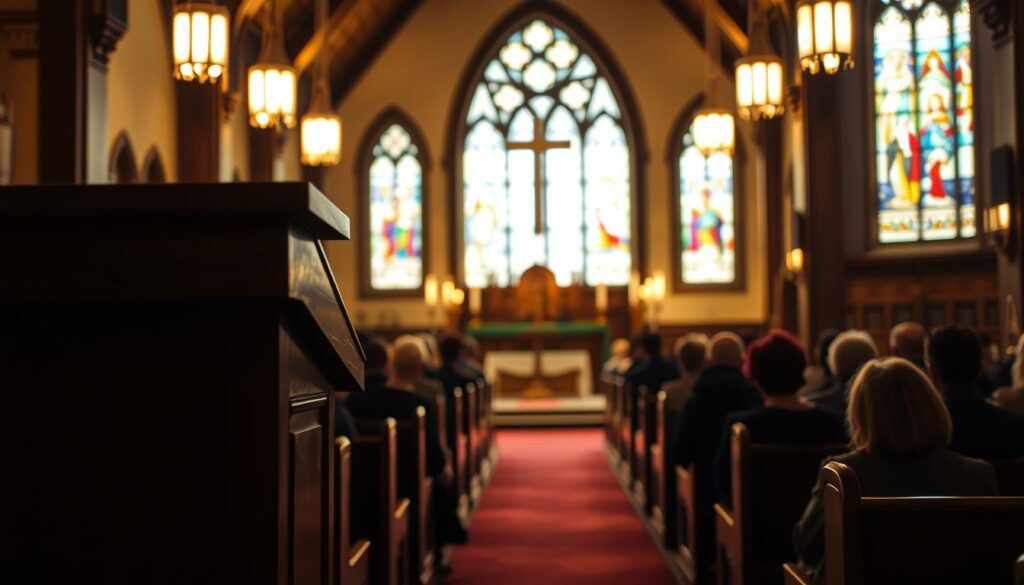
Translating the Word: From Latin to the People’s Language
Martin Luther’s team worked like modern localization experts. They translated Scripture and services into German so farmers and shopkeepers could grasp the good news directly. Luther wrote academic works in Latin but chose common German for hymns and catechisms.
The impact spread faster than a wildfire. By 1540, Scandinavian Lutheran churches had worship materials in Swedish, Danish, and Finnish. Churches doubled as literacy centers – learning to read became part of spiritual growth. A Danish bishop noted: “Our people now sing God’s word in their mother tongue while kneading bread or mending nets.”
| Aspect | Latin Practice | Vernacular Innovation |
|---|---|---|
| Language | Priestly Latin | Local dialects |
| Participation | Observers | Active singers |
| Education | Elite focus | Community schools |
| Music | Chant choirs | Congregational hymns |
| Global Reach | European focus | Multilingual worship |
Luther’s love for music shaped worship ways we still see today. Over 30 hymns flowed from his pen, blending theology with folk melodies. Modern churches maintain this tradition with pipe organs, choirs, and congregational singing that turns services into communal concerts.
This language revolution continues shaping people’s spiritual lives. From Tanzanian Swahili liturgies to Navajo-language catechisms, the commitment to understandable worship remains central. As one Minnesota pastor says: “We don’t just preserve tradition – we make it breathe in new languages every day.”
Lutheran Influence on Culture and Global Church Identity
The story of Lutheran churches isn’t confined to European cathedrals. From Midwestern barns to Tanzanian villages, these communities shape local cultures while building a shared spiritual identity. This global tapestry reveals how ancient beliefs adapt to new worlds.
Adaptations in American Lutheran Churches
Early Lutheran churches in America faced a puzzle. European state-supported models clashed with America’s religious free market. Immigrants from Germany and Scandinavia built ethnic enclaves, creating Norwegian-language hymnals and German schools. Over time, these groups merged into the Evangelical Lutheran Church in America (ELCA), focusing on the Augsburg Confession’s core principles.
Membership peaked in the 1950s but faces slow decline today. A pastor from Minnesota notes: “We’re learning to share our message in a multicultural society, not just preserve ancestral traditions.”
Global Growth in Asia, Africa, and Beyond
While American numbers dip, Tanzania’s churches overflow. Africa’s Lutheran population grew 400% since 1970. Why? Communities present the gospel through local customs instead of European cultural packaging. Ethiopian Lutherans blend ancient Christian traditions with vibrant worship music.
| Aspect | American Growth | Global Expansion |
|---|---|---|
| Growth Driver | 19th-century immigration | Cultural adaptation |
| Membership Trend | Gradual decline | Rapid increase |
| Cultural Approach | Ethnic preservation | Local integration |
| Key Regions | Midwest USA | Tanzania, Ethiopia |
This shift reshapes global religious news. As one Nairobi leader explains: “We’re not importing German culture – we’re living out timeless truths in our context.” From Asian megacities to South American towns, these communities prove ancient ideas still transform people’s lives worldwide.
Conclusion
The heart of this Christian tradition beats in three simple statements from Martin Luther. First, that God cares for daily needs “without any merit in me.” Second, that Jesus Christ paid humanity’s debt through his sacrifice. Third, that the Holy Spirit guides believers when human strength fails.
These ideas shape lives across continents. A farmer in Tanzania and teacher in Minnesota both find grace in shared confessions. They discover forgiveness isn’t earned but given freely—like rain on parched soil.
Modern challenges make these teachings vital. When guilt whispers “you’re not enough,” the good news replies: “Christ already is.” The church becomes a place where brokenness meets healing, not judgment.
As Luther wrote, divine love transforms ordinary people into vessels of hope. Whether serving meals or sharing faith, every act done in trust becomes sacred. That’s the quiet revolution still changing lives five centuries later.
FAQ
How did Martin Luther’s ideas challenge the Roman Catholic Church?
Martin Luther emphasized salvation through faith alone, not works. His 95 Theses critiqued practices like selling indulgences, sparking the Reformation. This reshaped how people viewed grace, scripture, and the church’s authority.
What role does the Book of Concord play in Lutheran churches?
The Book of Concord unites Lutherans globally with shared confessions, like the Augsburg Confession. It clarifies teachings on grace, sacraments, and Christ’s role, ensuring theological consistency across congregations.
Why is “Law and Gospel” central to Lutheran theology?
The Law reveals human sinfulness, while the Gospel offers forgiveness through Jesus. This balance helps believers understand their need for grace and the promise of salvation—a cornerstone of Lutheran preaching.
How do Lutheran worship services reflect their beliefs?
Services focus on scripture, sacraments, and hymns. Communion (with bread and wine) symbolizes Christ’s presence. Worship in local languages, a Reformation innovation, makes faith accessible and participatory for all.
What does “priesthood of all believers” mean for daily life?
Luther taught that every vocation—parent, teacher, worker—serves God. This empowers members to live out their faith actively, seeing their roles as ways to love neighbors and glorify God beyond church walls.
How have American Lutheran churches adapted over time?
They blend traditional liturgy with modern contexts, like contemporary music or community outreach. Groups like the ELCA and LCMS vary in social stances but share core teachings on grace and scripture.
Why is Lutheranism growing rapidly in Africa and Asia?
Mission work and translating texts into local languages play key roles. Churches address issues like poverty or justice, showing how Christ’s message meets real needs, fostering vibrant, culturally rooted communities.