What began as a 16th-century monk’s quest for spiritual clarity reshaped Christian faith across continents. This movement started in Germany but quickly spread like wildfire through Europe, fueled by debates about religious practices and personal conviction.
Today, over 72 million people identify with churches born from this revolutionary shift. While many associate it with Nordic countries like Sweden and Norway – where it remains the state religion – vibrant communities now thrive from Namibia to Indonesia.
The story of this tradition isn’t just about ancient history. Modern Lutheran churches balance deep-rooted theology with contemporary challenges. In Africa and Asia, membership grows steadily, while European congregations explore new ways to stay relevant.
At its core, this branch of Christianity emphasizes grace through faith – principles that still guide worship and community life. Its global journey shows how ideas can transcend borders, adapting to different cultures while keeping foundational beliefs intact.
Key Takeaways
- Emerging from 16th-century reforms, this faith tradition now spans 72+ million members worldwide
- Nordic nations maintain it as their official state religion, while growth surges in Global South regions
- Core principles focus on scripture-based worship and personal connection to divine grace
- Modern communities balance historical practices with evolving social needs
- Cultural adaptation explains its enduring presence across six continents
Historical Backdrop of the Reformation Era
Europe’s 15th-century transformations set the stage for radical religious change. A mix of social shifts, intellectual curiosity, and church controversies created perfect conditions for reform. Let’s explore how these elements intertwined to reshape Christianity.
European Societal Upheavals and the Renaissance Influence
The Black Death’s aftermath reshaped society dramatically. With fewer workers, peasants gained bargaining power, and families like the Luthers climbed from poverty to prosperity. Hans Luther’s rise from miner to business owner showed this new social mobility.
Renaissance thinkers challenged old ideas about authority. Humanist scholars studied ancient texts, questioning the Roman Catholic Church’s interpretations. This intellectual freedom paved the way for new forms of religious debate.
Early Movements and Precursors to Lutheranism
Long before Martin Luther, groups like the Hussites demanded church reforms. These movements shared key ideas:
| Movement | Key Figure | Core Idea | Influence |
|---|---|---|---|
| Hussites | Jan Hus | Scripture over tradition | Inspired vernacular worship |
| Waldensians | Peter Waldo | Poverty of clergy | Critiqued church wealth |
| Savonarola’s Followers | Girolamo Savonarola | Moral reform | Challenged corrupt leadership |
Meanwhile, the Roman Catholic Church faced internal crises. The Western Schism’s resolution and controversial popes weakened public trust. Ottoman Empire expansions added external pressures, making many Europeans seek spiritual renewal.
Exploring the lutheranism origin and Its Early Sparks
Three powerful forces converged to ignite religious transformation: innovative technology, shifting economies, and savvy political alliances. These elements created fertile ground for new ideas about faith to take root and spread.

The Role of Economic and Political Change
New mining techniques and trade networks reshaped 16th-century Europe. As silver production boomed, towns like Wittenberg grew wealthy. This prosperity funded universities where thinkers like Martin Luther could challenge traditional church teachings.
The printing press changed everything. Before 1455, only monasteries had Bibles. After Gutenberg’s invention, scripture became accessible:
| Year | Bible Availability | Impact |
|---|---|---|
| 1450 | ~30,000 handwritten copies | Limited to clergy |
| 1500 | ~20 million printed works | Public debates possible |
| 1522 | Luther’s German New Testament | Mass religious education |
Political leaders saw opportunity. Princes in the Holy Roman Empire used reform ideas to gain independence from Rome. Their support helped turn academic theology into organized churches.
Urban craftsmen and merchants became key supporters. They appreciated teachings about personal understanding of faith that matched their growing economic freedom. This partnership between thinkers and doers reshaped European spirituality forever.
Martin Luther: Catalyst of Change
A single document changed the course of religious history forever. When Martin Luther nailed his Ninety-five Theses to a church door in 1517, he sparked debates that would redefine Christianity. This act began as an academic challenge but became a rallying cry for reform.
The Ninety-Five Theses and Challenge to the Catholic Church
Luther’s theses targeted the sale of indulgences – payments believed to reduce punishment for sins. He criticized Johann Tetzel’s famous sales pitch:
“As soon as the coin in the coffer rings, the soul from purgatory springs.”
The Catholic Church saw these payments as spiritual favors. Luther argued forgiveness came through faith, not cash. His ideas spread faster than wildfire thanks to Gutenberg’s printing press.
| Timeframe | Reach | Impact |
|---|---|---|
| 2 weeks | All Germany | Public debates ignited |
| 2 months | Across Europe | Church authority questioned |
| 1 year | Global awareness | New religious movements formed |
Luther’s Personal Transformation and Bold Actions
Once a devoted monk, Luther’s studies led him to reject church teachings on salvation. He wrote to Archbishop Albrecht: “Those who preach indulgences are in error.” His courage inspired ordinary people to demand transparency.
This humble scholar’s stand created unexpected consequences. By challenging papal authority, he empowered believers to interpret scripture personally. Luther’s journey shows how one person’s convictions can alter the world’s spiritual landscape.
Formation of Lutheran Churches and Confessional Identity
Building a lasting religious movement required more than bold ideas—it needed clear rules everyone could follow. By the late 1500s, leaders worked to create shared beliefs that would unite growing communities across regions.
The Emergence of the Book of Concord
Jakob Andreae and Martin Chemnitz became peacemakers among arguing Lutheran theologians. Their 1577 Formula of Concord settled heated debates about doctrine, like whether good deeds affected salvation. This document became the glue holding scattered groups together.
In 1580, leaders combined seven key texts into the Book of Concord. This definitive compilation included:
| Document | Year | Purpose |
|---|---|---|
| Augsburg Confession | 1530 | Core belief statement |
| Luther’s Catechisms | 1529 | Teaching basics of faith |
| Formula of Concord | 1577 | Settled internal disputes |
Key Confessions: Augsburg and Beyond
The Augsburg Confession remained central—its 28 articles still define Lutheran identity. Prince-elector Augustus of Saxony reportedly said:
“This confession shows we’re not rebels, but reformers.”
Political leaders helped enforce these standards. By blending ancient creeds with new forms of governance, churches gained stability. This balance allowed expansion into Scandinavia and later America, carrying the Book of Concord as their guide.
Today, over 85% of global Lutheran communities still use these 16th-century documents. They prove how shared beliefs can create enduring institutions across cultures and centuries.
Theological Developments and Doctrinal Shifts
Martin Luther’s decade-long study of biblical texts sparked a seismic shift in Christian thought. Between 1510 and 1520, his lectures on Psalms, Romans, and Galatians revealed startling insights about sin and salvation. These discoveries would redefine how millions understood their relationship with the divine.
Justification by Faith Alone and Sola Scriptura
Luther’s revolutionary doctrine emerged from Paul’s letters. He argued that “the righteous shall live by faith“ meant complete reliance on God’s grace. This contradicted church teachings that mixed human effort with divine mercy.
The reformer’s understanding of righteousness turned tradition upside down. He taught that Christ’s perfection covers believers like a cloak – imputed, not earned. This concept offered comfort to those weary of trying to merit salvation through rituals.
| Catholic Teaching | Lutheran View | Biblical Basis |
|---|---|---|
| Faith + Good Works | Faith Alone | Romans 3:28 |
| Church Tradition | Scripture Alone | 2 Timothy 3:16 |
| Gradual Infusion | Instant Imputation | Galatians 2:16 |
Sola scriptura became Luther’s battle cry against church authority. He translated the Bible into German, letting ordinary people engage directly with sacred texts. This empowerment reshaped Christian theology and worship practices across Europe.
These doctrinal changes didn’t just alter church policies – they transformed personal spirituality. Believers found freedom in trusting Christ’s completed work rather than their own religious performance.
Political and Social Impacts on Church Life
Religious reforms reshaped power structures far beyond Sunday services. Local rulers saw opportunities in challenging Rome’s authority. German princes adopted new teachings to gain political independence, using faith communities as allies in regional power struggles.
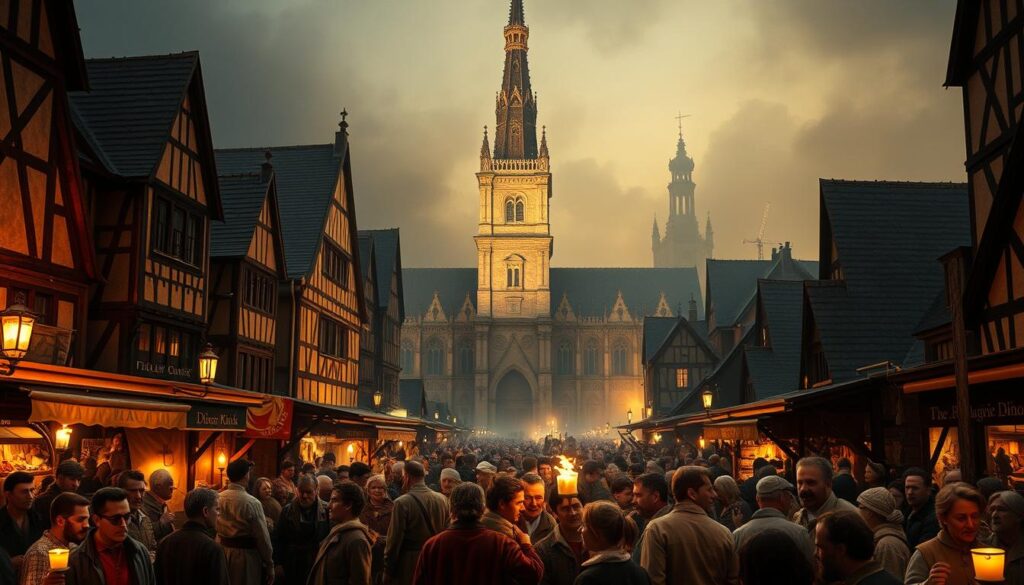
Gutenberg’s press didn’t just spread ideas—it created informed citizens. Translated Bibles sparked literacy booms, letting ordinary people debate theology. Town councils began overseeing church funds, mixing spiritual and civic leadership.
Communities found fresh purpose through social programs. Early Lutheran churches ran schools, hospitals, and poor relief systems. This practical approach helped teachings take root in daily life while addressing real needs.
Modern echoes of this blend remain. Many American congregations still balance worship with food banks and advocacy work. The Reformation’s legacy shows how faith traditions adapt to serve societies while staying true to their core values.
FAQ
How did Martin Luther’s Ninety-Five Theses challenge the Catholic Church?
In 1517, Martin Luther publicly criticized practices like selling indulgences, arguing salvation came through faith—not payments. His bold stance questioned church authority and sparked debates that led to the Protestant Reformation.
What role did the Augsburg Confession play in shaping Lutheran identity?
Presented in 1530, the Augsburg Confession outlined core Lutheran beliefs, like justification by faith. It became a unifying document, distinguishing Lutheran teachings from Roman Catholic doctrine and strengthening their presence in the Holy Roman Empire.
Why is the Book of Concord important to Lutheran churches?
Published in 1580, the Book of Concord compiled key Lutheran texts, including the Augsburg Confession. It standardized doctrine across regions, ensuring theological consistency and defending against competing ideas during the Reformation’s turbulent years.
How did political changes in the Holy Roman Empire affect Lutheranism?
Rulers often supported Lutheran reforms to gain independence from the Pope. The Peace of Augsburg (1555) later allowed regions to choose their faith, legally protecting Lutheran communities and enabling their growth.
What distinguishes Lutheran views on communion from other Christian traditions?
Lutherans believe Christ is truly present “in, with, and under” the bread and wine. This differs from Catholic transubstantiation and Reformed symbolic interpretations, emphasizing God’s promise in the sacrament.
How did sola scriptura reshape Christian theology during the Reformation?
Luther’s emphasis on scripture alone challenged traditions not rooted in the Bible. This shifted authority to the text, encouraging vernacular translations and personal engagement with the Bible over church hierarchy.
What societal factors contributed to the spread of Lutheran ideas?
Renaissance humanism’s focus on education, rising nationalism, and frustration with corruption created fertile ground. Printing presses then rapidly disseminated Luther’s writings, accelerating reform across Europe.