The Maronite Catholic Church stands as an ancient yet living community that links early Christian monastic roots with active parish life today.
Their heritage traces to Saint Maron and the Monastery of Saint Maron, shaped by the Antiochene Syriac rites and the Peshitta. This community is a self-governing, sui iuris body in full communion with the pope, with its patriarchal seat at Bkerké near Beirut.
Over centuries this faith preserved unique liturgy, language, and monastic spirituality while engaging major councils and reforms. Key moments include the affirmation of communion with Rome, the Synod of Mount Lebanon, Vatican II participation, and modern liturgical revisions.
Readers in the United States will find how the church’s identity and global diaspora connect tradition with contemporary life. Expect concise facts, clear names, and dates as we explore origins, liturgy, governance, and the worldwide presence of this resilient community.
Key Takeaways
- The Maronite Catholic Church blends ancient Antiochene roots with modern practice.
- It is a self-governing Eastern church in full communion with the pope.
- Saint Maron and monastic life shaped its liturgy and identity.
- Historical milestones include the Synod of Mount Lebanon and Vatican II involvement.
- Strong ties to Lebanon and a wide global diaspora keep the tradition alive today.
What Is the Maronite Catholic Church?
This tradition is rooted in the West Syriac Antiochene heritage and keeps much of its early hymnody and prayer life. As an eastern catholic body, it is fully in communion with the pope while keeping distinct liturgy and spirituality.
The Antiochene Syriac Maronite Church is a sui iuris particular church governed by its Holy Synod under the Code of Canons of the Eastern Churches. It uses the Peshitta and preserves Classical Syriac (Aramaic) alongside Arabic in worship.
Its patriarchal seat is at Bkerké in Lebanon, led today by Patriarch Bechara Boutros al-Rahi, who holds the title patriarch antioch. This governance lets the faithful keep ancient rites while sharing the same sacraments and creed as other catholic churches.
An Eastern tradition in full communion with the Holy See
- Sui iuris: self-governing hierarchy and law.
- West Syriac Rite: liturgy shaped by Syriac Christian practice.
- Unity in diversity: distinct rites within one global faith shared by many churches.
Next we trace the historical roots in Antioch and the monastic legacy that shaped this identity.
Roots in the East: St. Maron, Antioch, and the Birth of a Tradition
A desert ascetic from the fourth century sparked a monastic movement that later shaped a distinct Antiochene tradition.
Saint Maron drew disciples, monks, and priests by example of prayer, simplicity, and service. After his death (c. 410) followers gathered at the Monastery of Saint Maron near Apamea. That settlement became a vibrant spiritual hub.
The monastery grew after the Council Chalcedon (451), and imperial support under Marcian helped it expand. Hundreds of hermitages formed, and the monastic ethos guided local leadership and worship.
In the late seventh century, bishops from the monastery chose John Maron as patriarch (circa 685). This move allowed the community to organize amid Byzantine and Arab pressures.
As conflict shifted the balance of power, many followers retreated into the mountains, especially the Qadisha Valley in Lebanon. There they preserved Antiochene rites and a disciplined, communal life.
These early disciples and st. maron’s legacy set patterns — spiritual leadership, hermitage, and firm belief in Christ’s two natures — that shaped the maronite identity across the region.
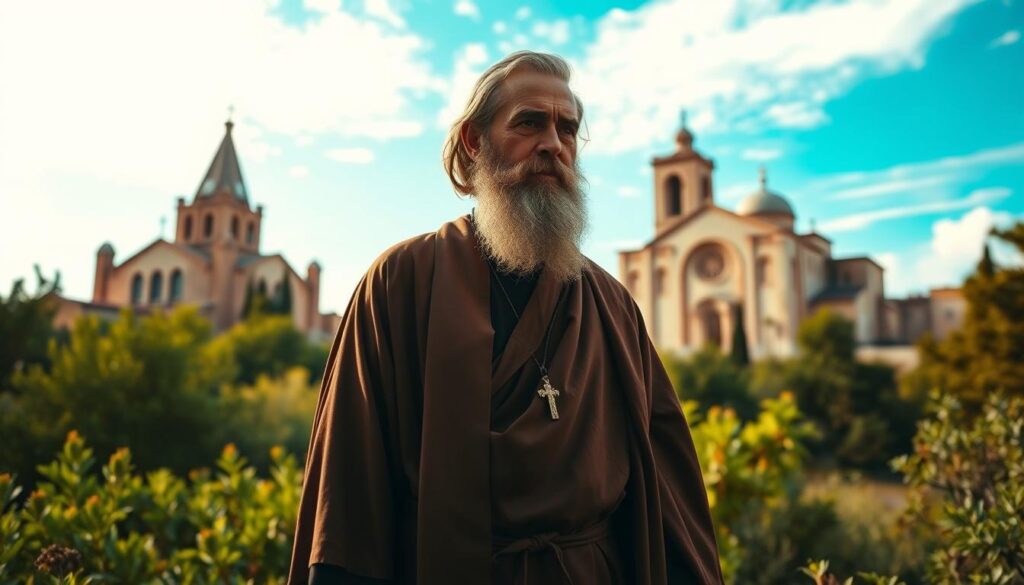
Maronite Identity: Five Distinguishing Marks
Leaders at the Patriarchal Assembly summarized a distinct identity in five clear marks. These marks shape how faith, worship, and community life remain linked across time.
Antiochene and Syriac heritage
Language and hymnody preserve an ancient worldview. Syriac poetry and chant keep mystery and devotion alive in worship.
Chalcedonian faith
The teaching that Christ is true God and true man guides theology and mission. It balances deep contemplation with pastoral care.
Patriarchal and monastic character
Monastic spirituality shaped leadership and parish life. A strong patriarchal tradition, tied to the title patriarch antioch, anchors governance and prayer.
Communion with Rome
Steadfast communion and a lived devotion to the See of Peter unite East and West. This bond shows the role of unity without losing rite-specific identity.
Tied to Lebanon
Lebanon serves as homeland and heartland for this community. Even as the faithful spread, the land remains a source of spiritual identity for the maronite community.
| Mark | Core element | Liturgical sign | Geographic tie |
|---|---|---|---|
| Antiochene/Syriac | Language & hymnody | Syriac chants, Peshitta texts | Antioch tradition, Lebanon |
| Chalcedonian | Christological faith | Creedal emphasis in liturgy | Ecumenical councils |
| Patriarchal/Monastic | Leadership & ascetic life | Monastic rites, feast rhythms | Qadisha Valley, Bkerké |
These five marks form a cohesive identity within the broader eastern catholic tradition and explain how this part of the global faith lives its history and mission. Next, we turn to liturgy and language to see how this identity is sung and spoken.
Liturgy and Language: West Syriac Rite, Peshitta, and Aramaic Prayer
The liturgy is a living bridge between ancient Syriac patterns and the spoken language of each generation. The Eucharist follows the West Syriac family, centered on a Syriac form of the Liturgy of St. James.
The Syriac liturgy of St. James with Arabic vernacular today
Key prayers remain in Syriac/Aramaic, especially at consecration and in hymnody. Arabic serves as the main vernacular since the Arab conquests, so congregational parts, preaching, and catechesis flow in the local tongue.
From Latinization to renewal: Synod of Mount Lebanon (1736) and modern reforms
The Synod of Mount Lebanon (1736) set diocesan structure and canonical norms and introduced some Latin practices while protecting Antiochene forms.
“Liturgical renewal sought to restore the ancient Antiochene core and enrich pastoral life.”
- The Peshitta anchors Scripture proclamation and liturgical reading.
- Six anaphoras are used in present worship, revived in recent reforms.
- Clergy, choirs, and catechists guide participation in fasts, feasts, and devotions.
| Element | Historical Role | Modern Practice |
|---|---|---|
| Liturgy | Liturgy of St. James, Syriac rites | Syriac prayers + Arabic vernacular |
| Scripture | Peshitta as standard Syriac Bible | Sermons and readings in Arabic, Syriac for key texts |
| Reform | 1736 Synod, Latin influences | 1992 Missal, recovery of Antiochene rite |
The liturgical tradition connects worship with governance and with long memory—from council chalcedon through recent time—preparing readers for leadership and structure ahead. These patterns also shaped saint maron devotion and maronite catholic identity over the centuries.
Leadership and Structure: Patriarch, Eparchies, and the Holy Synod
Central leadership combines a patriarch’s pastoral role with a synod’s collective oversight.
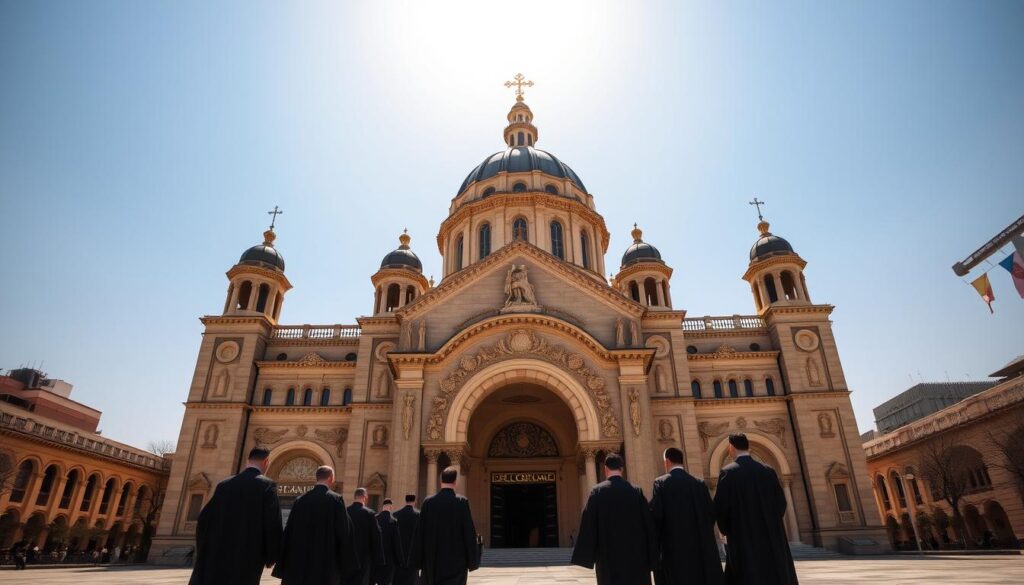
The patriarch serves as father and head, presiding with the Holy Synod over eparchies and global pastoral coordination. Today that role is held by Patriarch Bechara Boutros al-Rahi, elected in 2011 and seated at Bkerké northeast of Beirut.
The patriarchal residence at Bkerké has been a living center of leadership and prayer since the late 18th century. Mount Lebanon remains the spiritual anchor that connects local life with broader pastoral strategy.
Governance and canonical order
Governance follows the Code of Canons of the Eastern Churches, which balances ancient discipline with contemporary pastoral needs. The Holy Synod meets with bishops to set pastoral policies and coordinate eparchial work across Lebanon, the Middle East, and the diaspora.
Historically, this patriarchal line traces back to John Maron, recognized in tradition as the first patriarch of Antioch and all the East (circa 685). That continuity undergirds present structures and global outreach.
| Office | Role | Territory |
|---|---|---|
| Patriarch | Chief pastor; presides with Holy Synod | Seat at Bkerké; global oversight |
| Holy Synod | Collective governance; canonical decisions | National and diaspora eparchies |
| Bishops / Eparchs | Local governance; pastoral care | Lebanon, Middle East, Americas, Europe |
The relationship with the Holy See ensures unity with other catholic churches while respecting distinct rites and disciplines. Together, patriarchal leadership and synodal practice guide a global community through both worship and pastoral service.
The Maronite Catholic Church in History: Trials, Alliances, and Resilience
Encounters during the Crusades renewed ties to Latin Christians and led to a formal affirmation of communion in 1182. That moment strengthened links between the maronite church and Rome and shaped later diplomacy.
Under Mamluk and Ottoman rule, the community faced hardship and persecution. The patriarchal seat at Our Lady of Qannubin in the Qadisha Valley served as a steady refuge for centuries. French protection and the founding of the Maronite College in Rome (1584) created vital bridges to the West.
The 1736 Synod began long-term reform of structure and discipline. In the 20th century, leaders joined Vatican II reforms. Pope John Paul II wrote an Apostolic Letter on Lebanon in 1989 and visited in 1997, giving moral support during hard times.
The Lebanese Civil War (1975–1990) shattered communities and sped emigration. The Patriarchal Assembly (2003–2006) then sought renewal and better global coordination, helping the faithful adapt and maintain identity.
| Period | Key Event | Impact |
|---|---|---|
| 12th century | 1182 affirmation of communion | Strengthened ties with Rome |
| Ottoman era | Qannubin refuge; French protection | Survival and Western links |
| 20th century | Vatican II; Pope John Paul II | Renewal and international support |
| Late 20th century | Lebanese Civil War | Displacement and diaspora growth |
Global Presence and Diaspora: From Mount Lebanon to the World
From the cedar slopes and mountains of Lebanon, the community spread across the middle east and beyond. Today many families live far from the old valleys, yet they keep rites, language, and social ties alive.
Communities across the Middle East and the Lebanese diaspora
Major communities remain in Syria, Israel/Palestine, Cyprus, and Jordan. Eparchies support life in those regions and help coordinate pastoral care.
Key milestones and worldwide eparchies
The Maronite College in Rome (1584) helped train clergy for service across nations. Bkerké has been the patriarchal center since 1790 and remains a coordinating hub for the maronite patriarch and global leaders.
- Footprint: Middle East base with parishes in the Americas, Europe, Africa, and Oceania.
- Migration: Twentieth-century movement made diaspora communities an essential part of pastoral planning.
- Local life: Parishes, cultural groups, and social services keep heritage alive and link to the local catholic church.
By 2017 about two-thirds of roughly 3.5 million faithful lived outside traditional Antiochian range. This global network sets the stage for the community in the united states and other national centers of life abroad.
Maronites in the United States: Eparchies, Parishes, and Community Life
Across the United States, communities from Lebanon have built parishes that blend ancient rites, language, and active local outreach.
St. Maron of Brooklyn: New York roots and national outreach
The Eparchy of St. Maron of Brooklyn is rooted in New York but serves families nationwide. The pastoral center at 109 Remsen Street, Brooklyn, NY coordinates parishes, missions, and media ministries that keep Syriac hymnody alive.
Our Lady of Lebanon of Los Angeles: coast-to-coast pastoral care
The Eparchy of Our Lady of Lebanon of Los Angeles was founded in 1994. Its chancery (1021 S. 10th St., St. Louis, MO) manages coast-to-coast pastoral formation and parish support.
Cultural identity today: language, devotions, and youth engagement
About 60 parishes and 99 priests serve roughly 75,000 faithful in the united states. Parishes celebrate the West Syriac liturgy, use Syriac and Arabic hymns, and maintain devotions like the rosary and Stations of the Cross.
Clergy and priests lead catechesis, youth ministry, language classes, and social outreach. National conventions, festivals, and youth gatherings keep identity strong and invite new generations to belong.
Practical touchpoints: eparchial websites, parish directories, and community centers help newcomers find a home and connect American life with Lebanon’s heritage and the wider catholic church.
Conclusion
Maronite roots in Saint Maron and his disciples continue to shape worship, leadership, and daily life. The line from the Council of Chalcedon through John Maron and the Synod of Mount Lebanon shows a steady path of faith and reform.
Monks, priests, and followers carried this tradition into the mountains of Mount Lebanon and across the world. Guided by a patriarchal center at Bkerké and in communion with the Holy See, the community balances Antiochene heritage with life today.
Facing empires, civil war, and wide emigration, this living tradition endures. Discover the liturgy, language, and service that keep this identity vibrant in the Middle East and the wider world.
FAQ
What is this Eastern Catholic community and where did it begin?
This ancient community traces its roots to St. Maron and the monastic movement around Antioch. Over centuries, followers formed a distinct West Syriac Antiochene tradition, preserving Syriac liturgy and monastic spirituality while remaining united with the Holy See.
How does this tradition relate to Rome while governing itself?
The community is in full communion with the Pope yet is self-governing (sui iuris). It follows its own patriarchal leadership, synod, and liturgical customs while recognizing the primacy of the See of Peter.
What role did Mount Lebanon play in shaping identity?
After turbulent centuries, many members retreated to the mountains of Mount Lebanon. That landscape fostered monastic life, local leadership, and a strong connection to Lebanon as homeland and spiritual heart.
What are the key spiritual and cultural marks that distinguish this tradition?
Distinctive traits include Antiochene and Syriac heritage in language and hymnody, adherence to Chalcedonian Christology, a strong monastic and patriarchal character, enduring devotion to Rome, and deep ties to Lebanon.
Which languages and liturgical rites are used in worship today?
Worship centers on the Syriac liturgy of St. James, with Aramaic elements and the Peshitta Bible. Arabic and local vernaculars are also widely used, reflecting pastoral needs across the Middle East and the diaspora.
Who leads the community and how is it organized?
Leadership rests with a patriarch based in Bkerké, supported by eparchies (dioceses) and the Holy Synod. Governance follows the Code of Canons of the Eastern Churches alongside local customs.
How did historical events shape modern life and relations with the wider world?
Contact with Western Christianity during the Crusades affirmed communion with Rome. Later periods under Mamluk and Ottoman rule, French protection, Vatican II reforms, and the Lebanese Civil War influenced resilience, reform, and global outreach.
Where can communities be found outside the Middle East?
Large communities exist across the Lebanese diaspora, including established eparchies and parishes in North and South America, Europe, and Australia. Institutions like the Maronite College in Rome helped foster international ties.
What is the presence and organization in the United States?
In the U.S., there are eparchies centered in places like Brooklyn and Los Angeles, with parishes serving immigrant and multi-generation families. These communities balance liturgical tradition, cultural identity, and youth engagement.
How does the community preserve tradition while adapting to modern life?
Renewal efforts—from synods to pastoral programs—seek to revive Syriac language, liturgical music, and monastic spirituality while meeting contemporary needs in education, social services, and diaspora ministry.