When two people commit to a lifelong partnership through the Catholic Church, they’re embracing more than a ceremony. This sacred union represents a faith-based covenant rooted in centuries of spiritual practice. Unlike civil unions, Catholic matrimony is viewed as a sacramental bond blessed by Christ—a promise that extends beyond legal agreements.
The Church teaches that this partnership serves two purposes: supporting each other’s growth and nurturing children in the faith. Even when one spouse isn’t Catholic, the sacrament remains valid with proper preparation. Many couples find comfort in knowing their vows are woven into a larger spiritual tapestry.
Preparation often includes guidance from clergy and discussions about shared values. These steps ensure both partners understand the depth of their commitment. By focusing on mutual respect and divine purpose, the tradition creates a foundation built to last.
Key Takeaways
- Catholic matrimony is a sacrament, emphasizing spiritual unity over legal formalities.
- The Church recognizes unions between Catholics and non-Catholics with proper approvals.
- Preparation involves faith-based counseling to strengthen the couple’s bond.
- Marriage serves dual roles: supporting spouses and raising children in the faith.
- Vows are seen as lifelong commitments blessed by Christ.
Foundational Beliefs and Historical Background
Early Christian communities navigated complex views about partnerships. While Jewish traditions honored unions as vital to adult life, new debates emerged. Some groups like Gnostics rejected physical bonds entirely, prompting church leaders to defend the sacredness of husband-wife commitments.
Early Christian Perspectives and Practices
Saint Paul’s letters reveal fascinating tensions. He praised celibacy but acknowledged practical realities: “It is better to marry than to burn with passion.” For centuries, couples exchanged vows anywhere—no priests or churches required. Mutual consent formed the core of these bonds.
Church Fathers like Augustine later shaped theology. They affirmed unions as good yet elevated celibacy for those called to it. This duality influenced teachings for generations, balancing spiritual ideals with human needs.
The Evolution of Church Matrimonial Traditions
By medieval times, structured ceremonies began replacing informal agreements. Communities sought clearer guidelines to protect sacred promises. Over 1,000 years, simple verbal contracts grew into liturgical celebrations witnessed by clergy and congregations.
This shift reflected deeper values. Public ceremonies emphasized accountability, while preparation programs emerged to strengthen couples’ faith foundations. Today’s traditions honor this legacy—blending ancient wisdom with modern support systems.
Exploring marriage in catholicism: Sacrament and Sacred Practices
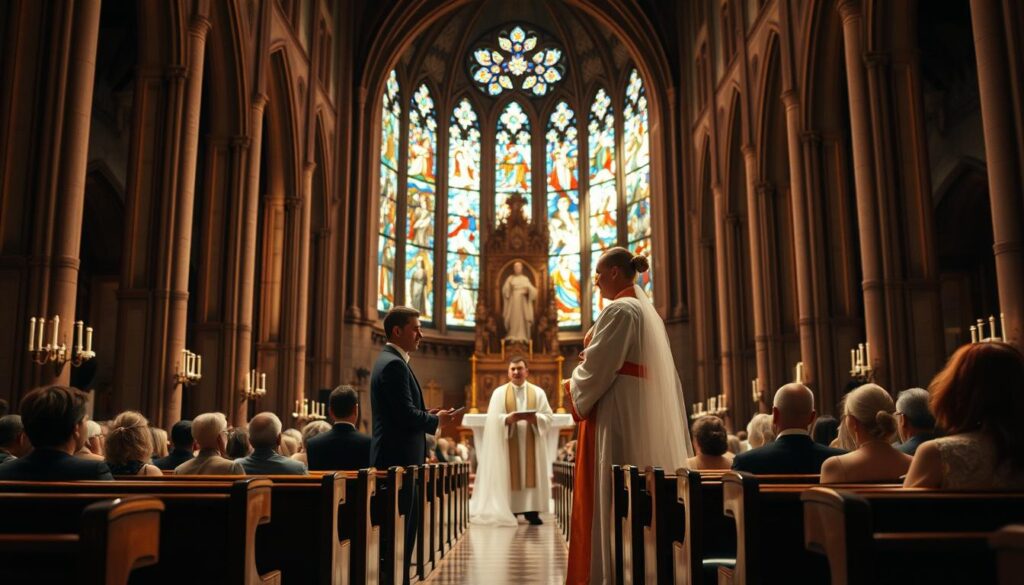
At the heart of Catholic unions lies a sacred act that transforms vows into something eternal. This sacrament isn’t just a ritual—it’s a divine bond recognized as one of the Church’s seven pillars of faith. Unlike ordinary events, these ceremonies weave spiritual meaning into every gesture and word.
The Significance of the Sacrament in Catholic Wedding Ceremonies
A sacramental marriage reflects Christ’s unwavering love for His followers. It’s a covenant, not a contract—a promise upheld by faith rather than legal terms. Contracts expire; covenants endure.
This distinction shapes how couples prepare. They explore shared spiritual goals with clergy, ensuring their partnership aligns with Church teachings. The ceremony itself includes ancient prayers and blessings, linking modern pairs to generations past.
| Aspect | Covenant | Contract |
|---|---|---|
| Basis | Divine promise | Legal agreement |
| Duration | Lifelong | Time-bound |
| Focus | Spiritual unity | Material obligations |
Understanding Sacred Spaces and Ritual Requirements
Every Catholic wedding must take place in a consecrated location—usually a parish church. These spaces symbolize God’s active role in the union. Beach weddings or backyard vows aren’t permitted without special approvals.
If one partner isn’t Catholic, bishops may allow the ceremony in another Christian church. But the site must still honor worship traditions. This rule preserves the sacrament’s sacred nature while respecting mixed-faith families.
By gathering in these holy settings, couples invite their community to witness and support their journey. The Church’s strict guidelines ensure every detail points toward eternity, not just the present moment.
Scriptural Foundations and Theological Insights
The Bible paints a vivid picture of sacred unions, starting with Adam and Eve’s partnership in Genesis and ending with Revelation’s celestial wedding imagery. This narrative arc reveals God’s design for lifelong bonds—a theme echoed across prophets, psalms, and Christ’s teachings.
Biblical Basis of Marriage and Nuptial Blessings
Genesis describes the first union as two becoming “one flesh,” while Ephesians 5 compares husband-wife love to Christ’s devotion to His followers. The Catechism reinforces this: “God himself is the author of marriage,” crafting it as a divine blueprint for human connection.
Jesus elevated these bonds during the Wedding at Cana, performing His first miracle to honor a couple’s celebration. His presence there underscores the sacredness of family life. For two baptized partners, their vows mirror Christ’s eternal promise to the Church.
| Biblical Event | Symbolic Meaning | Modern Application |
|---|---|---|
| Creation of Eve | Unity in diversity | Spouses complementing each other |
| Wedding at Cana | Divine blessing | Grace for daily challenges |
| Ephesians 5 | Sacrificial love | Putting family needs first |
Roles of Jesus and the Church in Defining Marriage
Through His teachings, Jesus transformed simple partnerships into sacramental covenants. The Church upholds this vision by guiding couples through preparation programs. These sessions often explore how to raise children in faith while nurturing mutual spiritual growth.
Nuptial blessings during ceremonies remind everyone present: “This union symbolizes Christ’s bond with the Church.” By living out this calling, families become living testimonies of God’s love—a truth as relevant today as in biblical times.
Navigating Practical Steps for a Catholic Wedding
Planning a Catholic wedding involves both spiritual preparation and practical steps. Understanding these requirements early helps couples create meaningful celebrations while honoring church traditions.
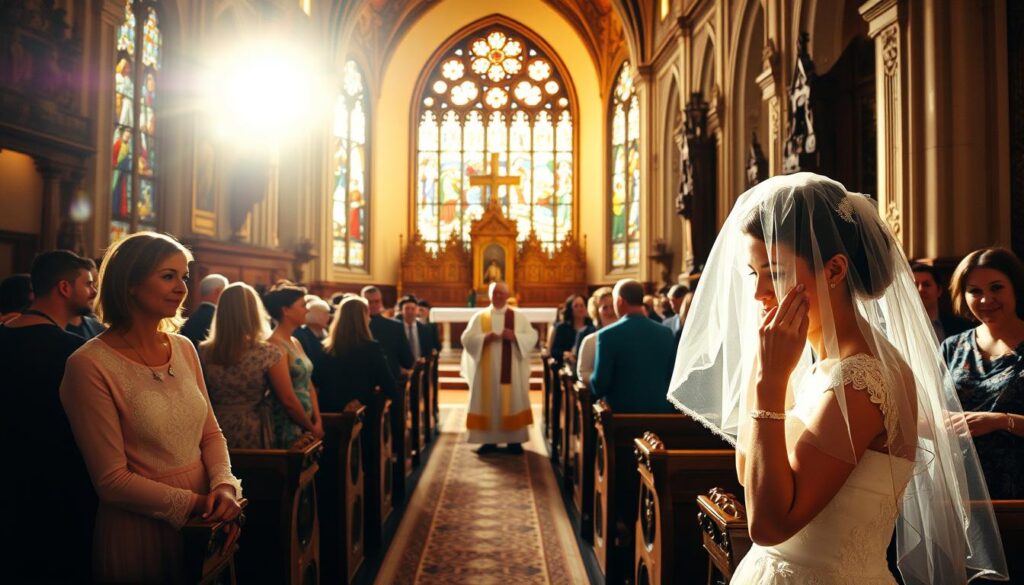
Initial Church Contact and Wedding Planning
The first step for those who want to get married is contacting their parish immediately after engagement. Many churches require at least six months of preparation—so reach out before booking venues or setting dates. This timeline allows time for paperwork, counseling, and spiritual growth.
Flexibility exists in where you complete marriage preparation. Students often finish requirements at their college parish but get married in their hometown church. This approach works well for couples managing transitions or long-distance planning.
Marriage Preparation and Documentation Requirements
Preparation goes beyond administrative tasks. Programs typically include mentorship from priests or deacons, discussions about faith roles, and tools for conflict resolution. Couples explore how to maintain spiritual unity, especially with a non-Catholic spouse.
Key promises include raising children in the Catholic faith. While conversion isn’t required, both partners must respect this commitment. In the U.S., the sacramental ceremony also serves as the legal union—no separate civil marriage needed.
By following these steps, many couples find the process strengthens their relationship. It transforms wedding planning from a checklist into a journey of shared purpose.
Conclusion
Building a life together through the Church’s sacramental vision transforms daily love into sacred purpose. This journey invites couples to grow not just as partners but as witnesses to divine grace in ordinary moments.
The Church’s preparation process—from mentorship to promises about raising children—creates guardrails, not barriers. These steps help pairs build resilience, whether navigating interfaith dynamics or family planning decisions.
While Confirmation isn’t mandatory, embracing sacraments like it unlocks deeper spiritual tools. Grace flows freely when hearts remain open to growth, both during the ceremony and beyond.
Every vow taken in a Catholic faith community ripples outward. By nurturing their bond, spouses strengthen families and inspire others. What begins at the altar becomes a lifelong call to reflect Christ’s love through service and joy.
For those considering this path: the traditions aren’t about rules. They’re about writing your story into the Church’s eternal narrative—one rooted in hope, purpose, and belonging.
FAQ
Why is a Catholic wedding considered a sacrament?
The Church views matrimony as a sacred covenant reflecting Christ’s bond with His followers. This sacramental union invites couples to grow in faith together while receiving divine grace to strengthen their lifelong commitment.
Can a Catholic marry someone who isn’t baptized?
Yes, but it requires permission from the local bishop. The Catholic partner must promise to uphold their faith and strive to raise children within the Church. Open communication with clergy early in planning is key.
What’s involved in marriage preparation programs?
Often called “Pre-Cana,” these sessions address communication, conflict resolution, and spiritual growth. Many parishes also require assessments like FOCCUS to help couples explore shared values and goals before their big day.
Are outdoor ceremonies allowed in the Catholic faith?
Typically, weddings must occur inside a consecrated space like a parish church. However, some dioceses grant exceptions for outdoor settings with prior approval from the bishop. Always consult your priest first.
How does annulment differ from divorce?
An annulment examines whether essential elements for a valid sacramental union were present at the time of the wedding. It’s a Church process, not a legal one, and doesn’t affect civil divorce status.
What if one spouse isn’t Catholic?
Interfaith unions are possible with a dispensation. The non-Catholic partner doesn’t need to convert, but both must respect each other’s beliefs. Many parishes offer resources to help navigate spiritual differences.
How long does planning a church wedding usually take?
Most dioceses recommend starting 6–12 months ahead. This allows time for preparation courses, completing paperwork like baptismal certificates, and coordinating with the parish’s event calendar.