In the heart of 16th-century Europe, a single document sparked a spiritual revolution. A German monk’s bold critique of church practices would ripple across continents, challenging centuries-old traditions. This movement didn’t just reshape faith—it rewrote the rules of power, education, and personal belief.
At the center stood a scholar who questioned what others accepted. His 1517 publication of debate topics—later known as the 95 Theses—became a rallying cry for change. What began as local religious discussions soon grew into a continent-wide call for renewal.
The effects reached far beyond church walls. New ideas about individual interpretation of sacred texts emerged. Political leaders saw opportunities to assert independence from distant authorities. Even ordinary people gained access to translated scriptures, shifting how communities practiced their faith.
Key Takeaways
- A 16th-century religious shift created lasting changes in Christian traditions
- Central debates focused on scripture interpretation and church authority
- Written challenges to established practices spread rapidly across Europe
- New forms of worship emerged alongside political transformations
- Educational advances followed increased access to religious texts
- Cultures worldwide still feel the effects of these historical changes
The Historical Landscape of the Protestant Reformation
Europe’s spiritual fabric changed forever when a monk’s questions shook established norms. Religious practices once accepted without hesitation now faced scrutiny from scholars and commoners alike. This era saw power dynamics shift as thinkers challenged traditional structures.
Origins and Early Debates
In 1517 Wittenberg, a list of discussion points went viral through new printing technology. The document questioned financial practices tied to spiritual forgiveness. Humanist ideas and growing literacy helped these critiques spread like wildfire across German states.
Three key factors fueled early reforms:
- Public frustration with paid forgiveness certificates
- Renaissance emphasis on personal inquiry
- Political leaders seeking local control
Challenges to the Catholic Church Doctrine
Reformers proposed radical changes to centuries-old traditions. Some leaders reimagined communion rituals, while others rejected infant baptism entirely. These ideas threatened the church’s role as sole interpreter of divine truth.
| Traditional Practice | Reformist View | Impact |
|---|---|---|
| Priest-led forgiveness | Personal accountability | Empowered individuals |
| Latin scriptures | Vernacular translations | Increased accessibility |
| Central authority | Local governance | Political shifts |
New denominations emerged, each with distinct approaches to worship. These groups shared a common belief: faith should connect people directly to the divine, not through intermediaries. Their legacy continues shaping spiritual practices worldwide.
The Life and Legacy of Martin Luther
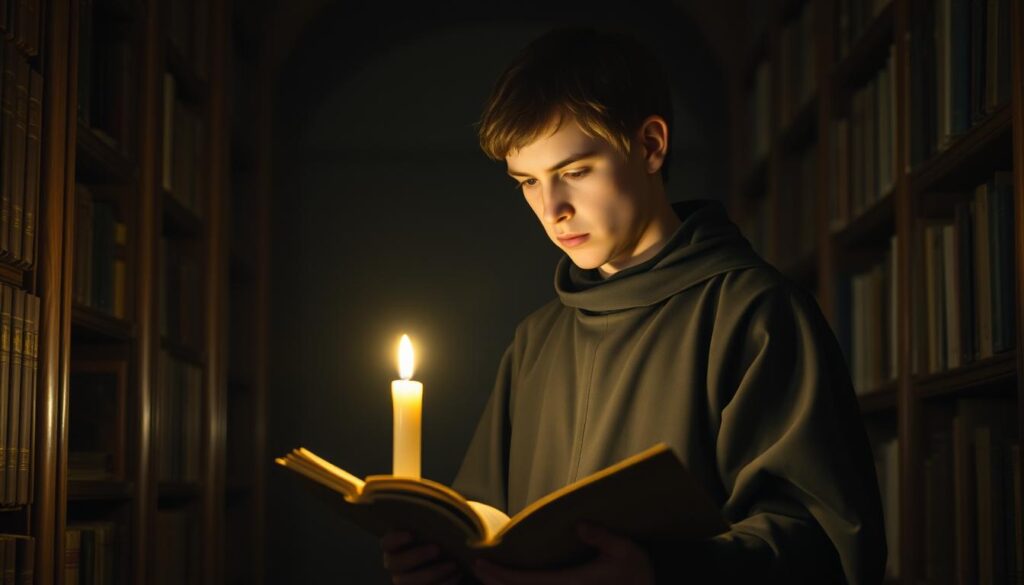
A miner’s son from rural Germany became Christianity’s most unexpected revolutionary. Born in 1483, young Martin followed an unlikely path from copper country to theological fame. His journey reveals how personal struggles and academic brilliance can reshape history.
Early Life, Education, and Monastic Calling
Martin’s childhood in Mansfeld shaped his resilient character. His father’s rise from miner to councilman taught him social mobility firsthand. At Erfurt University, he mastered law before a life-altering storm changed everything.
Lightning struck literally and metaphorically in 1505. Terrified by a thunderstorm, the 21-year-old vowed to become a monk. He entered Erfurt’s Augustinian monastery, trading legal texts for prayer books.
Academic Pursuits and Rise as a Reformer
The monastery became Luther’s laboratory for spiritual discovery. Ordained in 1507, he wrestled with questions of divine forgiveness. His academic star kept rising—doctorate earned by 29, Wittenberg professorship secured.
| Year | Milestone | Significance |
|---|---|---|
| 1483 | Birth in Eisleben | Humble beginnings |
| 1505 | Monastic vow | Spiritual awakening |
| 1512 | Theology doctorate | Academic authority |
| 1517 | Wittenberg post | Reform platform |
Late-night Bible studies sparked revolutionary ideas. Paul’s letters convinced him faith alone brought salvation—not church rituals. This insight would later shake Europe’s religious foundations.
By his early 30s, Luther blended monk’s devotion with scholar’s precision. Students flocked to his lively lectures. Unknown to them, their professor was brewing ideas that would redefine Christianity.
Understanding protestant reformation luther and Its Impact
A single parchment page reshaped Christianity’s future. In 1517, a bold document questioning spiritual transactions appeared on a church door. This list of debate topics—later called the 95 Theses—became history’s most influential complaint letter.
The 95 Theses and the Spark of Change
The monk’s series of arguments targeted paid forgiveness certificates. He claimed salvation came through faith, not coins. “Why does the pope’s wealth grow while poor believers suffer?” the text demanded.
Printing presses multiplied these ideas across Germany. Common people read translated versions, realizing they could connect directly with divine grace. Local rulers saw chances to break from distant religious authorities.
Spread of Lutheran Teachings Across Europe
New theological concepts traveled faster than horse riders. The idea of a “believers’ priesthood” empowered ordinary worshippers. Vernacular Bibles replaced Latin texts, making scriptures personal rather than priestly.
Northern European kingdoms embraced these teachings, creating alternative worship styles. The movement’s core message resonated: spiritual freedom couldn’t be bought or controlled. This shift laid groundwork for modern religious diversity.
Transforming Society: The Reformation’s Wider Influence
England’s royal drama reshaped spiritual landscapes across oceans. When Henry VIII clashed with Rome over marriage matters in 1534, he unwittingly launched a religious revolution. The new Church of England blended traditional rituals with reformist ideas, creating a unique system that pleased neither Rome nor radical reformers.
Impact on Church Authority and Religious Freedom
Monarchs now controlled religious authority, diminishing the pope’s influence. This shift sparked decades of turmoil—Queen Mary’s violent Catholic restoration gave way to Elizabeth’s compromise. Many citizens believed Queen Elizabeth’s reforms kept too much Roman tradition.

The Birth of New Denominations and American Ideals
Religious dissenters split into two camps:
- Separatists who formed independent congregations
- Puritans seeking to purify existing churches
These groups shaped America’s spiritual DNA. The Pilgrims’ 1620 Plymouth settlement and Puritans’ 1630 Massachusetts colony became laboratories for new beliefs. Their experiments laid groundwork for constitutional protections:
| Group | Approach | Legacy |
|---|---|---|
| Separatists | Complete church separation | Mayflower Compact |
| Puritans | Church purification | Public education systems |
By 1791, these struggles bore fruit in the First Amendment—ensuring no official church could dominate while protecting all faiths. This radical concept transformed how people worldwide view religion’s role in society.
Conclusion
Centuries after a monk’s bold stand, his ideas still shape modern freedoms. What began as theological debates in small German towns became a gift of God to countless seekers of truth. This transformative period reshaped how societies view personal choice and collective power.
The movement’s ripple effects reached far beyond its time. Concepts like individual interpretation of sacred texts changed education systems forever. Political leaders found new ways to balance spiritual authority with civic responsibility, planting seeds for democratic ideals.
America’s founding principles carry echoes of these reforms. Our First Amendment protections trace back to reformers who valued conscience over coercion. Their belief in direct divine connection evolved into cherished freedoms we often take for granted today.
True change rarely happens overnight. The reform process unfolded through generations of courageous thinkers and doers. Their legacy reminds us that questioning old systems can lead to brighter futures—a lesson as vital now as in the 1500s.
FAQ
How did Martin Luther’s actions challenge the Catholic Church?
Luther questioned practices like selling indulgences, arguing salvation came through faith alone—not payments. His critiques, especially in the 95 Theses, ignited debates about church authority and sparked broader calls for reform.
What role did the 95 Theses play in the Reformation?
Posted in 1517, Luther’s document criticized church corruption and emphasized Scripture over tradition. Its rapid spread via the printing press turned theological debate into a movement reshaping Europe’s religious landscape.
How did Lutheran teachings influence other denominations?
Ideas like “priesthood of all believers” and faith-based salvation inspired groups like Calvinists and Anglicans. These beliefs later shaped American ideals of individualism and religious freedom through groups like the English Separatists.
Why did the Reformation lead to political changes?
As rulers adopted reformist views, they often clashed with the Pope, leading to wars and new state churches. This shift weakened the Vatican’s power and strengthened national identities across Europe.
How did the Reformation affect everyday people?
Translations of the Bible into local languages let individuals interpret faith personally. This empowerment challenged clergy authority and encouraged literacy, education, and personal spiritual growth.
What lasting impacts did the Reformation have globally?
Beyond Europe, reformed theology influenced colonization, education systems, and democratic values. Concepts like accountability and individual conscience remain embedded in modern Western societies.