For centuries, the relationship between organized spiritual communities has sparked intense discussion. The Catholic Church maintains a clear position on one such debate: membership in groups promoting alternative belief systems directly conflicts with its teachings.
Why does this tension exist? At its core lies differing views on religion itself. Some organizations create structured practices resembling traditional worship – complete with moral codes, symbolic rituals, and concepts of an afterlife. These parallels raise critical questions about spiritual alignment.
The Church emphasizes that faith requires exclusive commitment. When groups promote the idea that all belief systems equally satisfy spiritual needs, it challenges this principle. This “religious indifferentism,” as described by theologians, forms a key part of the disagreement.
This section examines historical precedents, doctrinal conflicts, and modern implications. We’ll explore how specific practices and philosophies create irreconcilable differences, using documented examples from authoritative sources. Our goal? To provide clear answers rooted in factual analysis rather than speculation.
Key Takeaways
- The Catholic Church explicitly prohibits membership in organizations conflicting with its doctrines
- Philosophical differences center on concepts of religious truth and exclusivity
- Structural similarities between groups create perceived competition in spiritual matters
- Indifferentism – the belief that all religions are equal – contradicts core Catholic teachings
- Historical documents reveal consistent opposition spanning multiple centuries
Historical Context of masonry and catholicism
Understanding the Church’s stance requires examining pivotal moments in history. Two key papal documents shaped centuries of dialogue and doctrine. Let’s explore how official teachings evolved in response to shifting cultural landscapes.
Early Church Proclamations and Papal Bulls
In 1738, Pope Clement XII issued In Eminenti, the first formal prohibition against secret societies. The decree banned membership in groups requiring hidden oaths, citing risks to both society and spiritual life. Concerns grew as lodges spread across Europe, challenging religious authority through private rituals.
Evolution of Church Teachings Through the Centuries
Over 150 years later, Pope Leo XIII deepened this stance in Humanum Genus. His 1884 encyclical argued that Masonic principles promoted naturalism – the idea that nature alone explains existence. This clashed with Catholic beliefs in divine revelation and sacramental grace.
| Papal Document | Year | Key Focus | Impact |
|---|---|---|---|
| In Eminenti | 1738 | Secret oaths & loyalty conflicts | Initial membership ban |
| Humanum Genus | 1884 | Religious indifferentism | Theological opposition solidified |
Political tensions amplified these religious disputes. As nations embraced secular governance, Church leaders saw lodges as rivals shaping cultural values. This historical friction reveals why reconciliation remains challenging even today.
Church Teachings and Canon Law on Freemasonry
The Vatican’s legal framework addresses membership conflicts directly through canon law. Two pivotal revisions – the 1917 and 1983 Codes – reveal evolving approaches to maintaining doctrinal integrity.
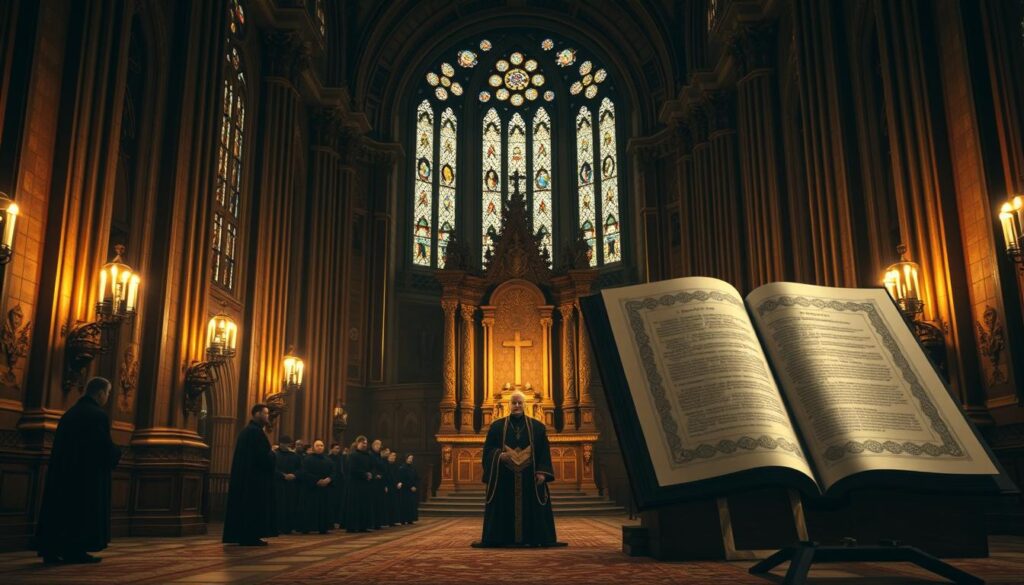
Insights from the 1917 and 1983 Code of Canon Law
The 1917 code canon law left no room for doubt. Canon 2335 imposed automatic excommunication on Catholics joining Masonic groups. This penalty required papal intervention to reverse, emphasizing the gravity of the issue.
| Code Version | Key Canon | Membership Consequence | Authority to Lift Penalty |
|---|---|---|---|
| 1917 | 2335 | Excommunication | Holy See Only |
| 1983 | 1374 | “Just Penalty” | Local Bishops |
The 1983 revision removed direct references but kept core prohibitions. Canon 1374 now applies broadly to groups opposing Church teachings. Despite this change, the doctrine faith office clarified in 1983: Masonic membership still bars Catholics from Communion.
Secret Rituals, Oaths, and Their Impact on Faith
Masonic ceremonies often involve binding oaths and symbolic gestures. The Church views these as incompatible with sacramental practices. Hidden rituals create loyalty conflicts, while naturalistic philosophies in lodges promote indifferentism – the idea that all religions hold equal value.
This clashes with Catholic teachings about Christ’s unique role in salvation. As canon law expert Dr. Edward Peters notes: “The Church can’t coexist with systems undermining its sacramental worldview.” This reason explains why prohibitions persist despite modern social changes.
Contemporary Implications for Catholics and Masons
Modern believers face complex choices when spiritual commitments clash with community ties. Recent Vatican guidance clarifies how these tensions play out in daily life.
Excommunication, Membership Concerns, and Religious Identity
The 2023 statement from the Dicastery for the Doctrine of the Faith left no room for doubt. Cardinal Fernández emphasized:
“Active membership in Freemasonry by a member of the faithful is forbidden.”
This response to Bishop Cortes’ inquiry affects many Filipino Catholics. Over 500,000 men in the Philippines belong to lodges, often unaware of doctrinal conflicts. The Church requires former Masons to:
- Leave their group permanently
- Seek confession for reconciliation
- Join approved organizations like the Knights of Columbus
| Aspect | Masonic Membership | Catholic Alternative |
|---|---|---|
| Doctrinal Alignment | Naturalist philosophy | Christ-centered teachings |
| Required Oaths | Secret rituals | Public sacraments |
| Charitable Focus | Community projects | Church-led ministries |
| View of Salvation | Multiple paths | Through Jesus Christ |
Dialogue, Social Implications, and Future Perspectives
Some bishops advocate for open conversations with lodge members. However, the Church maintains that indifferentism in Masonic teachings contradicts core beliefs. As one priest notes: “You can’t serve two masters when their truth claims collide.”
For families navigating this issue, experts suggest:
- Focusing on shared values like charity
- Explaining Church teachings with patience
- Recommending faith-based alternatives
While dialogue continues, the 1917 and 1983 canon laws remain firm. This stance preserves the Church’s vision of spiritual unity amid changing social landscapes.
Conclusion
Navigating spiritual commitments requires clarity about core principles. The Church’s position remains unchanged because it protects the truth of Christ’s unique role in salvation. This stance isn’t about rivalry – it safeguards faith from systems promoting religious indifferentism.
For current members of conflicting groups, reconciliation involves two steps. First, formally leave the organization. Second, seek sacramental healing through confession. These actions restore full communion with the Church.
Alternative fraternal groups like the Knights of Columbus offer community without compromising beliefs. They combine charitable service with Christ-centered teachings, aligning with Church law and tradition.
Understanding this issue through theological reason fosters compassionate dialogue. While respecting individuals, the Church maintains its role as guardian of divine revelation. This balance preserves both truth and unity in spiritual journeys.
FAQ
What is the Catholic Church’s current stance on Freemasonry?
The Church maintains that membership in Masonic groups is incompatible with its teachings. The Dicastery for the Doctrine of the Faith reaffirmed this in 1983, citing concerns over conflicting principles like religious indifferentism.
Does joining a Masonic lodge result in automatic excommunication?
While the 1983 Code of Canon Law removed explicit penalties, the Church still prohibits participation. Earlier editions, like the 1917 Code, imposed automatic excommunication, but today, formal penalties are rare unless defiance persists.
Can Catholics attend events hosted by Masonic organizations?
The Church advises against involvement in activities promoting ideals contrary to its doctrines. Engaging in rituals or oaths that compromise faith could strain one’s religious identity and spiritual commitments.
Why does the Church oppose secret societies like Freemasonry?
Teachings emphasize that such groups often promote relativism or naturalism, undermining the centrality of Jesus Christ and sacramental life. Secrecy and exclusive loyalty to non-religious principles conflict with Catholic truth.
Are Catholic groups like the Knights of Columbus similar to Masonic lodges?
No. Organizations like the Knights of Columbus are explicitly Catholic, support Church teachings, and prioritize charitable work aligned with faith. They lack the secretive rituals or conflicting ideologies found in Masonic groups.
How can a Catholic reconcile if they were once a Freemason?
Seeking guidance through the sacrament of Reconciliation is encouraged. Open dialogue with a priest or bishop can help address concerns and reaffirm commitment to Church teachings.