Many spiritual seekers find peace through quiet reflection, but Catholic meditation offers a unique path rooted in sacred tradition. Unlike methods focused on self-improvement, this practice centers on cultivating a living dialogue with the Divine. Saint Augustine’s timeless words—“Our heart is restless until it rests in You”—capture its essence perfectly.
This ancient approach blends structured prayer with spontaneous moments of connection. Through Scripture or spiritual writings, believers engage both mind and heart to nurture their relationship with God. It’s less about achieving inner silence and more about discovering grace in everyday life.
What makes this practice stand out? It transforms ordinary moments into opportunities for growth. Whether during morning devotions or while washing dishes, followers learn to recognize God’s presence in all things. This dual focus—formal and informal—helps strengthen faith through consistent, intentional awareness.
Saints like Teresa of Ávila and Ignatius of Loyola developed practical frameworks for this journey. Their teachings emphasize how sustained connection with the Divine reshapes perspectives, priorities, and actions. The result? A deeper understanding of one’s purpose and a renewed capacity to serve others.
Key Takeaways
- Focuses on building a personal relationship with God rather than self-focused techniques
- Combines structured prayer with spontaneous spiritual awareness throughout daily life
- Uses sacred texts and contemplative practices to deepen understanding of divine love
- Encourages recognizing God’s presence in both quiet reflection and ordinary activities
- Draws from centuries of wisdom developed by Catholic mystics and theologians
Understanding the Roots of Catholic Meditation
Centuries of spiritual pioneers shaped this sacred practice into what it is today. Their insights reveal how divine connection thrives through both structure and surrender.
The Role of Prayer and Spiritual Tradition
St. Teresa of Avila compared deep prayer to friendship – “frequently taking time alone with Him who loves us.” This relational approach transforms rituals into living conversations. Unlike self-focused techniques, these traditions anchor seekers in external truth found in Scripture and Church teachings.
St. Thomas Aquinas called contemplation a “simple gaze on truth.” His words remind us that authentic spiritual growth comes not from effort alone, but through grace. Even seasoned practitioners like St. Teresa relied on books for years, proving structured learning fuels rather than hinders divine connection.
Historical Insights from Saints and Mystics
Each saint brought unique gifts to this tradition. St. Ignatius of Loyola’s Spiritual Exercises taught believers to engage all five senses when reflecting on Gospel stories. Meanwhile, St. John of the Cross explored the soul’s journey toward mystical union with God.
These diverse methods share one core truth: genuine transformation overflows into service. As St. Teresa discovered, sustained relationship with God naturally bears fruit in compassion and virtue. Their collective wisdom remains a roadmap for modern seekers craving depth beyond quick-fix spirituality.
Foundations of the Catholic Interior Life
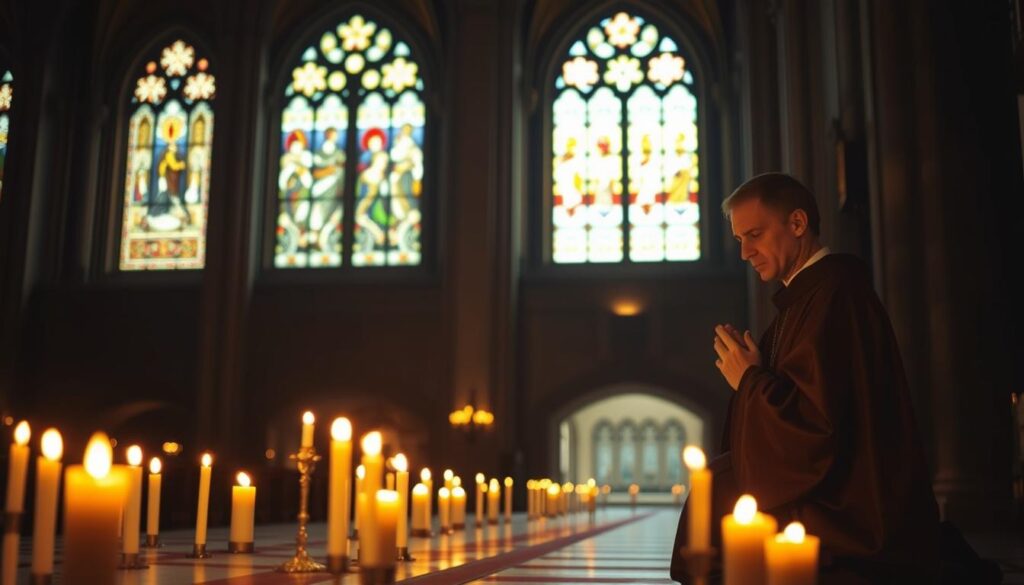
Transforming everyday thoughts into sacred conversations marks the journey of faith. Fr. Reginald Garrigou-LaGrange described this shift as moving from self-talk to divine dialogue: “Instead of seeking himself in everything…man tends to seek God in everything.” This inner revolution turns ordinary moments into encounters with grace.
Exploring Mental Prayer and Contemplation
Mental prayer blends active reflection with receptive stillness. It starts by engaging the mind and heart with Scripture or spiritual truths, like studying a loved one’s letters. Over time, this effort gives way to contemplation—a gift where words fade into silent communion.
Think of it as learning a language: first you memorize phrases, then fluency emerges naturally. Saints compare this progression to friendship deepening into marriage—a relationship with God that transforms how we see ourselves and others.
Building a Relationship with God
True connection thrives on balance. God’s presence fills both cosmic wonders and coffee cups. By seeking Him in both, we discover our soul’s purpose: not self-improvement, but becoming who we’re made to be.
This journey isn’t about forcing spiritual highs. As one mystic wrote, “Contemplation is God’s kiss—given when He chooses.” Our role? Show up daily, trust the process, and let divine love reshape our mind and heart from within.
Meditation in Catholicism: Techniques for Beginners
Starting a spiritual journey can feel overwhelming, but structured methods make divine connection accessible. Begin by clearing obstacles: seek sacramental reconciliation if needed and gather resources like a Bible or trusted spiritual book. Schedule an uninterrupted hour—preferably during Eucharistic Adoration—to immerse yourself fully.
Step-by-Step Guide to Starting Your Practice
| Stage | Action | Time |
|---|---|---|
| Preparation | Begin with a prayer for openness | 5 minutes |
| Reading | Slowly absorb 1-2 Scripture verses | 15 minutes |
| Reflection | Ponder how the text speaks to your life | 20 minutes |
| Response | Speak to God about insights gained | 10 minutes |
| Closing | Thank God and set one actionable resolution | 10 minutes |
Integrating Scripture and Spiritual Reading
Choose passages that spark curiosity or comfort. Fr. Jacques Philippe advises: “Don’t rush—let words sink in like rain softening soil.” When a phrase resonates:
- Pause and reread it aloud
- Ask: “What is God revealing here?”
- Journal thoughts or prayers that arise
Classic resources like The Imitation of Christ provide timeless wisdom. Pair these with Gospel stories about Jesus Christ’s teachings to create a balanced practice. Over time, this guide helps transform rushed moments into sacred time.
Integrating Meditation and Contemplation in Daily Life
Merging intentional focus with open-hearted stillness transforms daily routines into sacred encounters. These complementary practices work like spiritual breathing—active reflection inhales truth, while contemplative silence exhales divine connection.

Understanding the Differences Between Meditation and Contemplation
Meditation engages the mind actively, like studying a love letter word by word. You might explore a Gospel scene—the loaves and fishes miracle—pondering the disciples’ worries or Christ’s compassion. St. John of the Cross calls contemplation “God’s secret embrace,” where thoughts settle like dust in sunlight, leaving only awe.
| Practice | Focus | Outcome |
|---|---|---|
| Meditation | Analyzing Scripture, applying truths | Clearer understanding |
| Contemplation | Resting in God’s presence | Deeper communion |
Experiencing Divine Presence in Silence
Silence isn’t empty—it’s where love speaks loudest. Start with five minutes daily, perhaps after reading Scripture. Let a phrase like “Be still and know” (Psalm 46:10) anchor your focus. When distractions arise, gently return to that sacred word.
This way of prayer flows naturally. As one Carmelite nun shared: “It’s like sitting with a dear friend—words fade, but the bond grows.” Try pairing morning meditation on Christ’s teachings with evening moments of silent gratitude. Over time, you’ll spot divine fingerprints in laundry piles and traffic jams alike.
Tools and Steps for Organized Catholic Meditation
Building a sustainable spiritual rhythm requires both intention and practical tools. Structured approaches help transform fleeting inspiration into lasting habits of grace. Like training for a marathon, consistency in prayer grows through small, daily choices that honor sacred time.
Practical Preparations and Spiritual Checklists
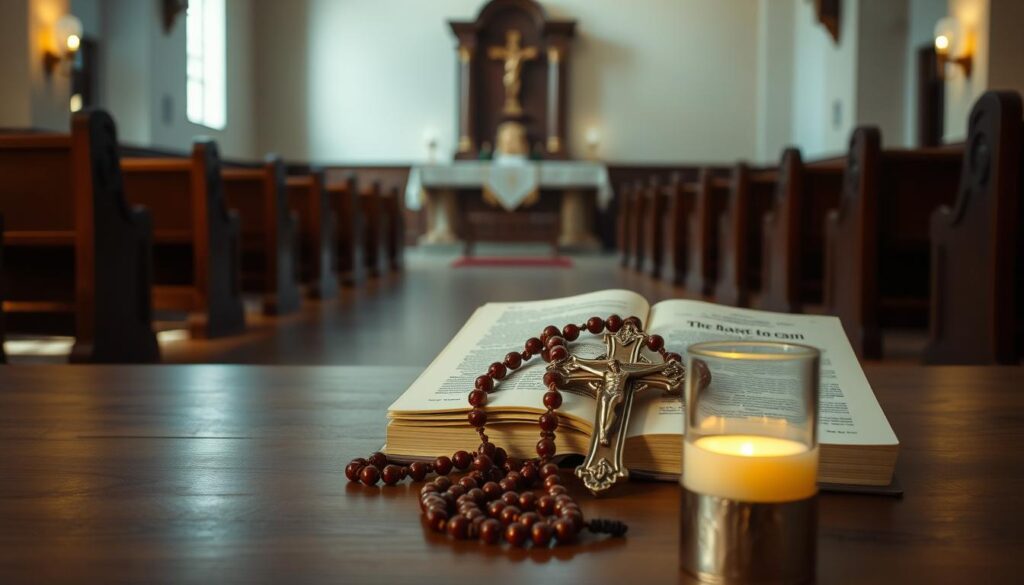
Creating sacred space starts with simplicity. Choose a corner free from distractions—a chair, a small table for your Bible, and perhaps a candle. Slow, deliberate actions signal to your heart: “This time matters.” Fr. Henri Caffarel wisely noted how “calm movements break life’s hurried rhythm,” preparing both body and soul.
| Preparation Step | Key Action |
|---|---|
| Environment | Select quiet location (church preferred) |
| Materials | Gather Bible, journal, spiritual book |
| Spiritual Readiness | Examine conscience; seek reconciliation if needed |
| Time Block | Protect 30-60 minutes daily |
Establishing a Consistent Prayer Routine
Commitment outweighs motivation. Whether mornings before work or evenings after dinner, fixed schedules create holy anchors. Follow this seven-step guide to maintain order while leaving room for spontaneity:
| Step | Action | Prayer Example |
|---|---|---|
| 1. Preparation | Light candle; slow breaths | “All glory to You, my God” |
| 2. Invitation | Read Scripture passage twice | “Speak, Lord—I’m listening” |
| 3. Reflection | Journal striking phrases | “What are You showing me?” |
| 4. Response | Conversation with God | “Help me love others better” |
Remember: structure serves relationship. As one monk shared, “Routines aren’t chains—they’re bridges to freedom.” Stay faithful to the practice, and let divine love handle the rest.
Conclusion
Walking the path of spiritual growth requires more than good intentions—it demands faithful persistence. Saints like Teresa of Avila and John of the Cross remind us that divine friendship grows through daily attention, not dramatic experiences. Their writings teach us to value consistency over intensity, trusting that every moment spent in God’s presence shapes our souls.
This sacred practice differs from secular methods by focusing on relationship rather than self-mastery. While feelings may come and go, the truth remains: we’re called to show up authentically, whether in structured prayer or quiet contemplation. Frustration often arises when we mistake this journey for a destination rather than a lifelong conversation.
For those seeking depth, Carmelite spirituality offers timeless wisdom. Books by these spiritual masters and connections with monastic communities provide practical guidance. Remember—the goal isn’t perfection but patient openness to grace. As we walk this path, ordinary moments become windows into eternal love, transforming how we live and serve others.
FAQ
How is Catholic meditation different from secular mindfulness practices?
Unlike secular mindfulness, Catholic meditation focuses on deepening a relationship with God through prayer, scripture, and reflection. It emphasizes inviting divine grace into the heart rather than just achieving personal calm. Figures like St. Teresa of Avila highlight its goal: union with Christ through love and surrender.
What role do saints like St. John of the Cross play in guiding this practice?
Saints provide timeless wisdom on navigating the spiritual journey. St. John of the Cross, for example, taught how to embrace “dark nights” of the soul as paths to purification. Their writings, such as The Interior Castle, remain practical guides for balancing mental prayer and trust in God’s mercy.
Can beginners integrate scripture effectively into their routine?
Absolutely! Start with short passages, like the Gospels or Psalms. Reflect on a scene from Jesus’ life—imagine His compassion or teachings. This “Ignatian method” helps make scripture a living dialogue. Pair this with moments of silence to listen for God’s voice in your heart.
How does contemplation differ from active prayer forms?
Contemplation is less about words and more about resting in God’s presence. While meditation might involve thinking about a parable, contemplation is a quiet openness to His love. St. Teresa described it as “nothing else than a close sharing between friends”—a gift that deepens over time.
What practical steps help maintain consistency in prayer routines?
Set a specific time each day, even just 10 minutes, and create a sacred space—a corner with a crucifix or candle. Use resources like the Rosary or devotional books to structure your focus. Most importantly, approach it with humility, trusting that God honors your effort, not perfection.
How can families incorporate these practices into daily life?
Simple habits like morning offerings, grace before meals, or evening examen prayers foster shared spirituality. Discussing a Bible story with children or pausing for silent gratitude together builds a foundation of faith. Remember, small acts of love become pathways to divine connection.