For over a thousand years, two ancient branches of Christianity have shaped spiritual lives across continents. Though united in their early history, a major split in 1054 created lasting divisions. This separation wasn’t just about politics—it grew from deep disagreements over leadership and beliefs.
The divide centered on questions like: Who leads the global church? How should core doctrines be defined? These debates led to distinct identities. The Western branch developed a centralized structure, while Eastern communities emphasized collective decision-making.
Despite differences, both traditions share foundational practices. Weekly worship, sacraments like baptism, and reverence for saints remain vital. Yet their approaches reflect unique cultural influences. From art to prayer styles, each has preserved ancient customs while adapting to local needs.
Key Takeaways
- A historic 11th-century split divided Christianity into Eastern and Western branches
- Leadership models differ significantly between the two traditions
- Shared rituals coexist with distinct theological viewpoints
- Cultural influences shaped unique worship styles and traditions
- Ongoing dialogues seek common ground while honoring differences
Introduction: Understanding Orthodox Christian vs Catholic Traditions
Centuries-old traditions in Eastern and Western churches reveal both unity and division. Both groups trace their roots to early Christianity’s first seven councils, which defined core beliefs like Jesus’ dual nature. They maintain apostolic succession, ensuring clergy authority stretches back to original apostles.
Seven sacraments form spiritual foundations in both traditions. Baptism, communion, and confession hold equal importance. The Eucharist stands central, with each group affirming Christ’s real presence. Mary’s role as God-bearer (Theotokos) receives deep reverence across these faith communities.
Liturgical similarities surprise many. Icons adorn worship spaces, while priests hear confessions in private. Yet differences emerged as history unfolded. Eastern roman catholic practices developed distinct flavors, while Western eastern orthodox approaches refined their structures.
Recognizing shared foundations makes modern contrasts clearer. Though divided by authority questions and theological nuances, both branches grew from the same ancient soil. This understanding helps explain why their split didn’t erase common spiritual DNA.
Historical Roots and Early Developments
The story of Christianity’s early centuries reveals a complex tapestry of unity and divergence. For nearly 1,000 years, believers across Europe and the Mediterranean shared a common spiritual framework. Councils of bishops from East and West worked together to shape core teachings through debate and consensus.
Foundations of the Early Church
Seven major councils between 325-787 CE defined beliefs still held by both traditions. Leaders spoke Greek in Constantinople and Latin in Rome, yet maintained mutual recognition. This shared foundation allowed regional practices to flourish while preserving doctrinal unity.
Initial Schisms and Apostolic Succession
Communication breakdowns began as linguistic differences deepened. The East’s Greek-speaking theologians developed distinct philosophical approaches, while Western Latin thinkers refined legal structures. When Byzantine forces left Rome in 751, it severed political ties that had masked growing theological divides.
Both branches upheld apostolic succession, believing their leaders inherited authority from Christ’s original followers. However, interpretations diverged sharply. Western leaders emphasized centralized papal power, while Eastern communities valued collective decision-making among bishops.
These contrasting views of authority created friction long before the 11th-century split. Cultural misunderstandings grew as scholars stopped translating works between Greek and Latin. What began as regional variations became entrenched positions, setting the stage for lasting division.
The Great Schism and Its Lasting Impact
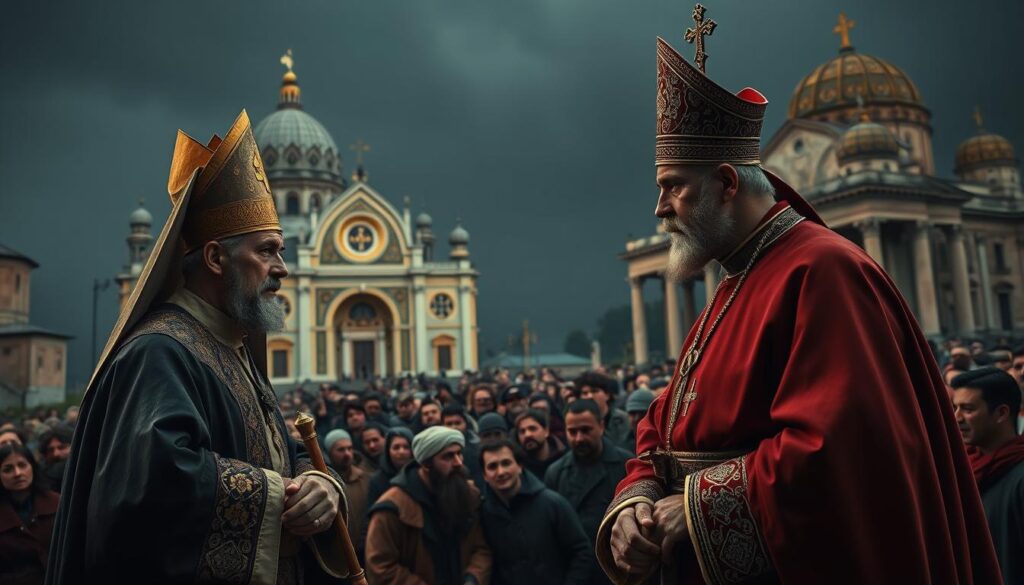
The year 1054 marked a turning point in religious history, when a single event crystallized centuries of growing tensions. Though often called the “final straw,” the mutual excommunications between Rome and Constantinople reflected deeper fractures. Political shifts and doctrinal disagreements had been simmering long before messengers arrived with sealed letters.
Key Events Leading to the Divide
Three main issues fueled the rupture. First, Rome’s claim to universal authority clashed with Eastern views of shared leadership. Second, the filioque addition to the Nicene Creed – stating the Holy Spirit proceeds from both Father and Son – became a lightning rod. Eastern theologians saw this as unauthorized doctrinal changes.
Third, practical differences like clerical marriage rules caused friction. While Western priests embraced celibacy, Eastern clergy could marry before ordination. These disagreements weren’t just theological – they symbolized competing visions of spiritual authority.
Cultural and Linguistic Influences
Language barriers deepened misunderstandings. Greek-speaking scholars interpreted Latin terms differently, leading to accidental heresy accusations. As one historian notes: “Words became weapons when mistranslated.”
The Byzantine Empire’s shrinking power also played a role. With Constantinople losing territory, Rome’s papacy filled the vacuum. This shift created rival centers of influence – one fading, one rising – that couldn’t reconcile their visions for global church leadership.
Today, both churches maintain distinct identities shaped by these historical forces. Recent dialogues have healed some wounds, but the great schism remains Christianity’s most enduring divide.
Doctrinal Core Differences
At the heart of ancient faith traditions lie shared truths that both unite and distinguish them. For centuries, leaders from East and West worked side by side to shape doctrine through collaborative councils. This cooperation created lasting foundations still honored today.
Agreements From the Ecumenical Councils
The first seven councils cemented beliefs both groups uphold. From Nicaea’s declaration of Christ’s divinity to Constantinople’s Trinity definitions, these meetings built a shared understanding of sacred truths. Both traditions affirm Jesus’ dual nature as fully human and divine – a cornerstone of early church teaching.
Seven sacraments and apostolic succession remain vital in worship practices. Mary’s title as God-bearer receives equal reverence, showing deep roots in common ground. As one scholar notes: “Their agreements outnumber their disputes when measured against history’s yardstick.”
Divergent Developments in Theology
Over time, philosophical approaches split. Western thinkers adopted structured scholastic methods, while Eastern scholars focused on mystical experiences. The Nicene Creed became a flashpoint when Latin churches added the filioque clause without Eastern consent.
Catholic orthodox traditions developed new teachings under papal authority, like the Immaculate Conception. Meanwhile, eastern orthodox communities preserved ancient formulations unchanged. These paths reflect different visions of how faith evolves while honoring its origins.
Papal Supremacy and Ecclesiastical Authority
Leadership structures reveal core contrasts between ancient faith communities. At the heart lies a centuries-old debate: does ultimate authority rest with one leader or a council of equals? This question shaped how two major traditions govern their followers.
The Role of the Pope Versus Local Bishops
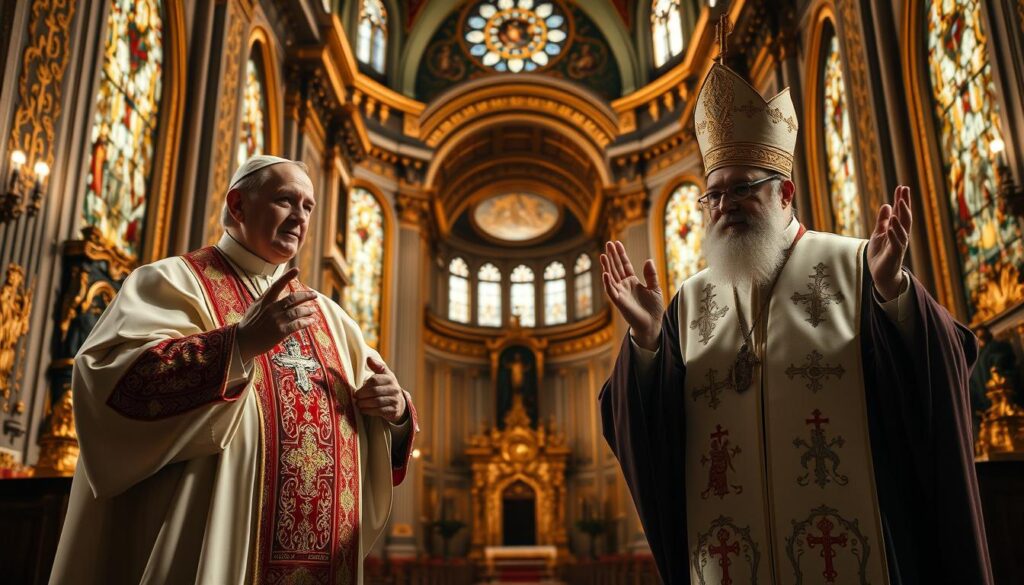
The Catholic Church teaches that Christ gave Peter special leadership, passed down to Rome’s bishops. As one priest explains: “We see the Pope as Christ’s earthly representative – a unifying voice for all believers.” This belief grants the Pope power to make final decisions on doctrine and discipline.
Eastern traditions take a different approach. Orthodox Church leaders emphasize shared responsibility among bishops. While respecting Rome’s historical significance, they view the Pope as primus inter pares – first among equals without unilateral control.
A 2007 ecumenical document highlighted progress: “Both sides now agree the Bishop of Rome held a special role in early Christianity.” Yet differences remain about how much authority that position should carry today. Western churches stress centralized leadership, while Eastern communities prioritize regional decision-making.
These governance models affect daily practices. Catholic bishops answer directly to the Pope, creating a clear chain of command. In contrast, Orthodox bishops work through consensus during synods. Both systems aim to preserve unity but reflect distinct interpretations of early church traditions.
The Filioque Controversy: A Theological Rift
A single Latin word reshaped Christian theology for centuries. The filioque controversy began when Western churches added “and the Son” to their version of the Nicene Creed. This phrase changed how believers described the holy spirit‘s origin, sparking one of history’s longest religious disputes.
Eastern churches fiercely opposed the addition. They argued the holy spirit proceeds from the Father alone, maintaining the Trinity’s balance. “Changing creeds without consensus broke our shared tradition,” one theologian noted. Western leaders saw it as clarifying Christ’s role in spiritual life.
Modern scholars discovered language played a hidden role. Greek terms for “procession” implied the Father as sole source, while Latin translations suggested shared origins. The 1995 Pontifical Council observed: “Different words framed identical truths.”
Recent dialogues focus on common ground. Both sides agree the father son relationship matters deeply. Yet the debate remains unresolved – a reminder that words can unite or divide, even when intentions align.
Sacramental Practices: Eucharist, Holy Orders, and More
Sacred rituals reveal both unity and diversity in ancient faith traditions. While Eastern and Western churches share core beliefs about sacraments, their practices highlight unique spiritual perspectives. These distinctions appear most vividly in communion rituals and clergy roles.
Communion’s Sacred Elements
Both traditions affirm the body blood of Christ in the Eucharist, but explain it differently. Eastern liturgies emphasize the Holy Spirit’s role during the epiclesis prayer. As one deacon notes: “The Spirit breathes life into the bread wine, making them holy.” Western rites traditionally focus on the priest’s recitation of Jesus’ Last Supper words.
A visible difference lies in the bread used. Eastern churches bake leavened loaves symbolizing resurrection joy. Roman Catholics use unleavened wafers recalling Passover’s haste. This contrast reflects distinct theological emphases – one celebrating victory over death, the other honoring ancient purity laws.
Paths to Priesthood
Marriage policies for clergy show another divergence. Eastern churches permit priests to marry before ordination, though widowers can’t remarry. Bishops always come from monastic ranks, maintaining celibacy traditions. In the catholic church, Latin Rite priests commit to lifelong celibacy, while Eastern Catholic branches allow married clergy.
| Practice | Eastern Tradition | Western Tradition |
|---|---|---|
| Marriage Policy | Married men can become priests | Celibacy required (Latin Rite) |
| Bread Type | Leavened | Unleavened |
| Episcopal Selection | From monastic clergy | From celibate clergy |
These sacramental variations grew from centuries of cultural development. They remind us that shared faith can blossom in diverse forms while keeping essential truths intact. Next, we’ll explore how worship styles further distinguish these traditions.
Liturgical Practices and the Use of Icons
Sacred imagery bridges earthly worship and heavenly realms in both traditions. While religious artwork appears in each, its purpose and application reveal distinct spiritual priorities. These differences show how communities express shared beliefs through visual language.
Iconography and Symbolism in Worship
Eastern traditions treat icons as vital channels for divine connection. Following ancient guidelines, artists create these images as “windows” to sacred realities. Every brushstroke aligns with teachings from the Seventh Ecumenical Council, preserving theological accuracy across generations.
Western practices display more flexibility in religious art. Realistic statues and modern styles coexist with traditional forms. This variety reflects regional customs and historical developments within different rites. Yet all imagery aims to inspire devotion and teach spiritual truths.
The Eastern approach integrates icons into every aspect of life. Worship spaces surround believers with holy figures, creating a sense of heavenly participation. Many describe these images as “made without hands” – sacramental tools rather than mere decorations.
Both groups defend imagery against iconoclastic challenges. They agree material objects can manifest spiritual nature through sacred context. This shared principle unites them, even as their artistic expressions continue evolving along separate paths.
FAQ
What caused the split between the Eastern and Western churches in 1054?
The Great Schism resulted from disputes over papal authority, cultural differences, and theological disagreements like the Filioque clause. Political tensions between Rome and Constantinople also deepened the divide.
How does leadership differ between the two traditions?
The Roman Catholic Church teaches the Pope has universal jurisdiction. In contrast, the Eastern tradition emphasizes collective leadership among bishops, with no single figure holding supreme authority.
Why is the Nicene Creed a point of contention?
The Western Church added the phrase “and the Son” (Filioque) to the Creed, altering the original wording about the Holy Spirit’s origin. This change remains a key theological disagreement.
Are there differences in how sacraments are practiced?
Both share seven sacraments, but practices vary. For example, leavened bread is used in the Eastern Eucharist, while unleavened bread is common in the West. Clergy marriage is permitted for Eastern priests but not Roman Catholic priests.
What role do icons play in worship?
Icons hold central importance in Eastern liturgy as windows to the divine. While Roman Catholicism also uses religious art, it historically emphasized statues and imagery differently, especially before Vatican II.
Do both traditions recognize the same saints?
Many early saints are shared, but some later figures differ. For instance, the Roman Catholic Church teaches the Immaculate Conception of Mary, a doctrine not accepted in the East.
How do views on salvation compare?
The Eastern tradition focuses on theosis (union with God’s energies), while the West emphasizes concepts like original sin and atonement, reflecting distinct theological emphases over centuries.