The Presbyterian Church in America (PCA) and the Presbyterian Church (USA) (PCUSA) are two distinct denominations with different histories and theological perspectives.
The PCA was formed in 1973 by congregations that separated from the PCUS due to disputes over doctrinal standards.
In contrast, the PCUSA was established in 1983 through a merger, resulting in differing theological directions and practices between the two denominations.
Key Takeaways
- PCA and PCUSA have distinct historical origins.
- Theological perspectives differ between the two denominations.
- Organizational structures vary between PCA and PCUSA.
- The PCA was formed due to doctrinal disputes.
- The PCUSA resulted from a merger in 1983.
Overview of the Presbyterian Church USA and PCA
The PCA and PCUSA, though both Presbyterian, have developed distinct identities shaped by their histories and doctrines. To understand their differences, it’s essential to explore their historical backgrounds.
Brief History of PCA
The Presbyterian Church in America was founded in 1973, emerging from conservative theological movements within the Presbyterian Church in the United States. The PCA was established by churches that sought to maintain traditional Presbyterian doctrines and practices. Since its inception, the PCA has grown significantly, becoming a major Presbyterian denomination in the United States.
Brief History of PCUSA
The Presbyterian Church USA was formed in 1983 through a merger of the United Presbyterian Church in the USA and the Presbyterian Church in the United States. This merger brought together two Presbyterian bodies with different historical roots, resulting in a denomination that encompasses a broad theological spectrum. The PCUSA has been characterized by its efforts to engage with contemporary social issues and its diverse worship practices.
The historical contexts of the PCA and PCUSA have significantly influenced their theological orientations and practices. Understanding these histories is crucial for grasping the nuances of their differences.
Core Beliefs and Doctrines
The PCA and PCUSA, despite their shared Presbyterian heritage, diverge on key theological issues, particularly regarding the authority of Scripture and views on salvation. These differences significantly impact their practices, member interactions, and overall theological orientations.
Differences in Authority of Scripture
A fundamental distinction between the PCA and PCUSA lies in their views on the authority and inerrancy of Scripture. The PCA affirms the inerrancy of Scripture, holding that the Bible is entirely trustworthy and without error in its original manuscripts. This stance is rooted in a conservative theological orientation that emphasizes the literal interpretation of the Bible.
In contrast, the PCUSA does not have a unified stance on the inerrancy of Scripture. This denomination encompasses a broader theological spectrum, allowing for more diverse interpretations of biblical authority. As noted by a PCUSA moderator, “We affirm the authority of Scripture in matters of faith and practice, but we also recognize the complexity of interpreting its teachings in contemporary contexts.”
| Denomination | View on Scripture Inerrancy | Theological Orientation |
|---|---|---|
| PCA | Affirms inerrancy | Conservative |
| PCUSA | No unified stance | Diverse |
Views on Salvation
The PCA adheres to Reformed soteriology, emphasizing the doctrines of total depravity, unconditional election, limited atonement, irresistible grace, and perseverance of the saints, commonly referred to as the “TULIP” doctrines. This theological framework underscores the sovereignty of God in salvation.
“The doctrines of grace, as summarized in the TULIP acrostic, provide a robust framework for understanding God’s sovereign work in salvation.” – A PCA theological statement.
The PCUSA, while also rooted in Reformed theology, exhibits a broader range of views on salvation. Some congregations and members may adhere closely to the TULIP doctrines, while others may interpret salvation in a more liberal or nuanced manner.
Understanding these differences is crucial for individuals considering membership or affiliation with either denomination. The distinctions in core beliefs and doctrines between the PCA and PCUSA reflect deeper theological commitments that shape their respective identities and practices.
Governance Structures
The Presbyterian Church in America and the Presbyterian Church USA share a presbyterian form of government, but with distinct approaches.
Both denominations are governed by a presbyterian polity, where authority is vested in elders. However, the extent of this authority and the organizational structures differ between the PCA and PCUSA.
Session and Presbytery in PCA
In the PCA, the session is the governing body of a local church, composed of elders elected by the congregation. The PCA gives significant autonomy to local congregations, allowing them to manage their internal affairs with considerable independence.
The PCA’s presbytery is a regional governing body that oversees several local churches. It is responsible for the ordination of ministers, examination of church officers, and resolving issues that cannot be addressed at the local level.
Session and Presbytery in PCUSA
Similarly, in the PCUSA, the session is the governing body of a local church. However, the PCUSA has a more centralized governance structure compared to the PCA. The PCUSA’s General Assembly has the authority to make decisions that affect the entire denomination.
The PCUSA’s presbytery also oversees local churches and has the power to approve or reject the ordination of ministers. The presbytery in PCUSA plays a crucial role in the administration of the denomination, with a more pronounced role in matters such as church mergers and mission initiatives.
Role of Elders in Both Denominations
In both the PCA and PCUSA, elders play a vital role in the governance of the church. They are responsible for spiritual leadership, teaching, and governance. However, the PCA tends to emphasize the role of elders in a more conservative and traditional context.
The table below summarizes the key differences in governance structures between the PCA and PCUSA:
| Governance Aspect | PCA | PCUSA |
|---|---|---|
| Autonomy of Local Churches | High autonomy | Moderate autonomy, with more centralized authority |
| Role of Presbytery | Oversees local churches, ordination of ministers | Oversees local churches, ordination, and broader administrative roles |
| Role of Elders | Spiritual leadership, governance, conservative approach | Spiritual leadership, governance, with varying approaches to contemporary issues |
Understanding these governance structures is essential for appreciating the operational and theological differences between the PCA and PCUSA. While both denominations share a presbyterian form of government, their approaches to governance reflect their unique commitments and values.
Worship Styles and Practices
Worship practices in the PCA and PCUSA reveal underlying theological emphases and cultural influences. While both denominations share a common Presbyterian heritage, their approaches to worship have evolved differently.
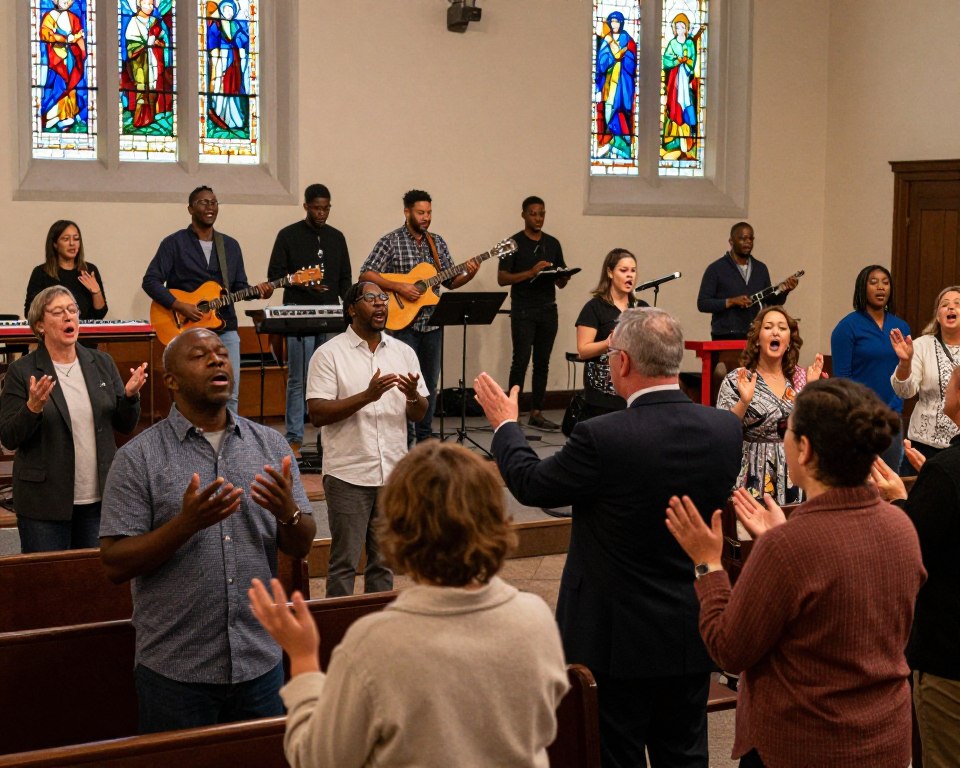
The PCA tends to maintain a more traditional approach to worship, often adhering to the Regulative Principle, which guides the elements of worship based on biblical commands and examples. In contrast, the PCUSA has embraced a broader range of worship styles, from traditional to contemporary, reflecting its more diverse congregational makeup.
Traditional vs. Contemporary Worship
The PCA generally favors traditional worship styles, characterized by the use of hymns, liturgical prayers, and a structured service. This approach is rooted in the denomination’s commitment to preserving historical Christian practices and Reformed theology.
In contrast, the PCUSA allows for a wide variety of worship styles, incorporating contemporary music, drama, and other elements that resonate with diverse cultural contexts. This flexibility reflects the PCUSA’s emphasis on contextualizing worship to reach a broader audience.
Key differences in worship styles between the two denominations include:
- Music: PCA churches often use traditional hymns, while PCUSA churches may incorporate contemporary Christian music.
- Liturgy: PCA services tend to follow more traditional liturgical structures, whereas PCUSA services can vary significantly in their liturgical content.
- Cultural Adaptability: PCUSA worship services are often designed to be more culturally adaptable, incorporating elements that resonate with local communities.
Sacraments: Baptism and Communion
Both the PCA and PCUSA recognize baptism and the Lord’s Supper as sacraments, essential elements of Christian worship and practice. However, there are nuances in how these sacraments are understood and practiced within each denomination.
In terms of baptism, both denominations practice infant baptism as a covenantal act, symbolizing the inclusion of children in the covenant community. The Lord’s Supper is also observed in both denominations, with a focus on the real presence of Christ, though the PCA tends to emphasize the spiritual presence of Christ in the sacrament.
The main similarities and differences in sacramental practices are:
| Sacrament | PCA Practice | PCUSA Practice |
|---|---|---|
| Baptism | Infant baptism, emphasizing covenant theology | Infant baptism, with some churches also practicing believer’s baptism |
| Lord’s Supper | Emphasizes the spiritual presence of Christ | Also emphasizes the real presence, with varying interpretations |
Understanding these differences in worship styles and sacramental practices can help individuals choose a church that aligns with their theological beliefs and personal preferences.
Social Issues and Stances
In addressing contemporary social issues, the PCA and PCUSA exhibit differing stances, shaped by their respective doctrines and values. This divergence is particularly evident in their approaches to LGBTQ+ issues and diversity initiatives.
LGBTQ+ Policy Differences
The PCA and PCUSA have adopted contrasting policies regarding LGBTQ+ inclusion. The PCA maintains a traditional view, adhering to a conservative interpretation of biblical teachings on sexuality. In contrast, the PCUSA has embraced a more inclusive stance, ordaining LGBTQ+ clergy and allowing same-sex marriages within the church.
This difference in approach is rooted in their theological understandings and has significant implications for their members and the broader community.
Diversity and Inclusion Efforts
Both denominations have made efforts to enhance diversity and inclusion within their structures. However, their strategies and emphases vary, reflecting their distinct theological and cultural orientations.
| Diversity Initiative | PCA Approach | PCUSA Approach |
|---|---|---|
| LGBTQ+ Inclusion | Conservative, based on traditional biblical interpretation | Inclusive, with active support for LGBTQ+ rights |
| Racial Diversity | Focus on theological unity, with efforts to increase diversity | Active programs to enhance racial diversity and reconciliation |
The table highlights the differing approaches to diversity and inclusion between the PCA and PCUSA, showcasing their unique stances on LGBTQ+ issues and racial diversity.
Membership and Growth Trends
The PCA and PCUSA exhibit different membership trajectories, shaped by their beliefs, practices, and engagement with culture. Understanding these trends requires a closer look at their current membership statistics and the strategies they employ to grow their congregations.
Current Membership Statistics
The PCUSA has faced challenges in maintaining its membership numbers, experiencing a decline over the years. In contrast, the PCA has seen significant growth since its formation, attracting members who are drawn to its conservative theological stance and active evangelism efforts.
Membership numbers for both denominations reflect broader trends within American Christianity, with the PCA’s growth mirroring a preference for more theologically conservative churches. The PCUSA’s decline, on the other hand, is part of a larger narrative of mainline Protestant denominations facing challenges in retaining members.

Growth Strategies in PCA vs. PCUSA
The PCA’s growth can be attributed to its strong emphasis on evangelism and church planting, initiatives that have enabled it to expand its reach. Additionally, the PCA’s focus on theological education and its network of affiliated seminaries have contributed to its growth by ensuring a well-trained clergy and a robust theological foundation for its members.
In contrast, the PCUSA has faced challenges in its growth due to internal debates over social issues, including its stance on LGBTQ+ policies, which have led to divisions within the denomination. Despite these challenges, the PCUSA continues to engage in outreach efforts and has implemented various initiatives aimed at promoting diversity and inclusion.
Both denominations are navigating the complexities of maintaining and growing their membership in a changing cultural landscape. Their approaches reflect their unique theological perspectives and priorities, shaping their paths forward.
Theological Education and Seminaries
The Presbyterian Church in America and the Presbyterian Church USA have different seminary affiliations that underscore their unique theological perspectives. Theological education is a cornerstone for both denominations, shaping the future of Presbyterian ministry.
Seminaries Affiliated with PCA
The PCA is closely associated with Covenant Theological Seminary, which is known for its commitment to Reformed theology and conservative Presbyterian values. Covenant Seminary provides a comprehensive theological education that aligns with the PCA’s doctrinal stance.
Seminaries Affiliated with PCUSA
In contrast, the PCUSA has affiliations with multiple seminaries, including Princeton Theological Seminary and Austin Presbyterian Theological Seminary. These institutions offer a diverse range of theological perspectives, reflecting the PCUSA’s broader theological spectrum.
The differences in seminary affiliations between the PCA and PCUSA highlight their distinct approaches to theological education and ministerial training. While the PCA focuses on a more conservative theological education through Covenant Seminary, the PCUSA’s diverse seminary affiliations allow for a wider range of theological viewpoints.
The implications of these differences are significant, as they influence the theological outlook and practices of future Presbyterian ministers. Understanding these distinctions is crucial for those considering a career in ministry within either denomination.
Missions and Outreach Programs
Both the PCA and PCUSA are actively engaged in mission work, albeit with different emphases in their approaches to evangelism, church planting, and social initiatives. The Presbyterian Church in America (PCA) and the Presbyterian Church USA (PCUSA) have distinct strategies for their mission and outreach programs, reflecting their theological convictions and priorities.
PCA Mission Initiatives
The PCA focuses on evangelism and church planting as core components of its mission initiatives. This includes supporting missionaries both domestically and internationally, with an emphasis on spreading the Gospel and establishing new churches.
Key PCA Mission Initiatives:
- Church planting in North America and globally
- Support for PCA missionaries
- Evangelism efforts through various channels
PCUSA Mission Initiatives
In contrast, the PCUSA adopts a broader approach to missions, encompassing not only evangelism and church planting but also a wide range of social and humanitarian initiatives. The PCUSA is involved in various global and local mission programs, focusing on issues such as poverty, justice, and environmental stewardship.
Key PCUSA Mission Initiatives:
- Global mission initiatives addressing poverty and justice
- Environmental stewardship programs
- Support for refugees and immigrant communities
The differing emphases in the mission and outreach programs of the PCA and PCUSA reflect their unique theological perspectives and ecclesiastical structures. Understanding these differences is crucial for appreciating the diverse ways in which Presbyterian churches engage in mission work.
Regional Differences in Congregations
The PCA and PCUSA exhibit varied regional presences that shape their congregational identities. This variation is rooted in historical, cultural, and theological factors that have influenced the development of these denominations.
The Presbyterian Church in America (PCA) has a strong presence in the Southern United States, where it has historically been more prevalent. This regional concentration has contributed to the PCA’s conservative theological stance and traditional worship practices.
PCA Churches in the South
PCA churches in the South are often characterized by their:
- Conservative theological orientation
- Traditional worship styles
- Strong community involvement
This regional identity is reflected in the PCA’s emphasis on evangelism and mission work within the Southern United States.
PCUSA Churches in Urban Areas
In contrast, the PCUSA has a more diverse geographical distribution, with a significant presence in urban areas across the United States. PCUSA churches in these regions often:
- Emphasize social justice and community outreach
- Feature contemporary worship styles
- Engage in progressive theological discussions
This urban presence has contributed to the PCUSA’s more liberal theological stance and its focus on addressing contemporary social issues.
| Characteristics | PCA Churches in the South | PCUSA Churches in Urban Areas |
|---|---|---|
| Theological Orientation | Conservative | Liberal/Progressive |
| Worship Style | Traditional | Contemporary |
| Community Engagement | Strong local community involvement | Emphasis on social justice and outreach |
The regional differences between PCA and PCUSA congregations highlight the diverse ways in which Presbyterian churches engage with their local contexts. Understanding these differences is crucial for appreciating the broader landscape of Presbyterian denominations in the United States.
Conclusion: Finding Your Place in the Presbyterian Family
Understanding the differences between the Presbyterian Church in America (PCA) and the Presbyterian Church USA (PCUSA) is crucial for individuals seeking a denomination that aligns with their theological beliefs and values. The pca vs usa comparison highlights distinct approaches to authority of scripture, governance, worship styles, and social issues.
The differences between Presbyterian Church PCA and USA are evident in their views on salvation, LGBTQ+ policies, and mission initiatives. By examining these differences, individuals can make informed decisions about which denomination best suits their spiritual needs.
Ultimately, the PCA and PCUSA offer unique opportunities for worship, community, and service. By understanding the key differences between these denominations, individuals can find their place within the Presbyterian family and engage in meaningful spiritual growth.
FAQ
What are the main differences between the PCA and PCUSA?
The PCA and PCUSA differ significantly in their views on the authority of Scripture, salvation, governance structures, worship styles, and social issues, reflecting their distinct theological and cultural orientations.
What is the history behind the formation of the PCA?
The PCA was formed in 1973 by congregations that separated from the PCUS due to disputes over doctrinal standards and theological direction.
How does the PCUSA view the authority of Scripture?
The PCUSA has a more nuanced view of the authority of Scripture, whereas the PCA is committed to the inerrancy of Scripture, reflecting its conservative theological orientation.
What are the differences in governance structures between the PCA and PCUSA?
The governance structures of the PCA and PCUSA reflect their differing theological and ecclesiastical commitments, with the PCA having a more centralized authority.
How do the PCA and PCUSA differ on social issues like LGBTQ+ policies?
The PCA and PCUSA diverge on LGBTQ+ policies, with the PCA generally holding a more conservative stance and the PCUSA being more inclusive.
What are the membership trends in the PCA and PCUSA?
The membership trends in the PCA and PCUSA reveal different trajectories, influenced by their theological stances, evangelistic efforts, and cultural engagement.
What kind of seminaries are affiliated with the PCA and PCUSA?
The PCA is affiliated with conservative seminaries like Reformed Theological Seminary and Covenant Theological Seminary, while the PCUSA is affiliated with seminaries like Princeton Theological Seminary and Louisville Presbyterian Theological Seminary.
How do the PCA and PCUSA approach mission and outreach programs?
The PCA and PCUSA have different emphases in their mission and outreach programs, reflecting their distinct theological and cultural orientations.
Are there regional differences in congregations within the PCA and PCUSA?
Yes, regional differences in congregations reflect the historical and cultural contexts of the PCA and PCUSA, influencing their theological and practical orientations.
What are the key differences in worship styles between the PCA and PCUSA?
The PCA tends to have more traditional worship styles, while the PCUSA has a mix of traditional and contemporary worship styles.