For over 100 years, this Wheat Ridge institution has stood as a trusted partner in community wellness. Now part of the Intermountain Healthcare network, the organization recently unveiled a $680 million facility at Clear Creek Crossing – a major upgrade designed to serve Jefferson County for generations.
The new location near I-70 and Highway 58 combines cutting-edge technology with patient-centered design. Our visual journey captures this exciting transition, from historic healing spaces to modern treatment environments that prioritize both comfort and clinical precision.
Through carefully curated images, you’ll discover how thoughtful architecture supports better health outcomes. Natural light floods waiting areas, while efficient layouts help staff deliver timely care. Energy-saving features and improved accessibility demonstrate our commitment to both people and planet.
Key Takeaways
- Discover a 100-year healthcare legacy transformed through modern innovation
- Explore how $680 million in upgrades enhance patient experiences
- Compare historic architecture with new energy-efficient designs
- Understand the strategic benefits of the Clear Creek Crossing location
- Learn how facility layout impacts care quality and accessibility
Showcasing Lutheran Medical Center Photos
Nestled in the heart of Wheat Ridge, the newly constructed hospital blends modern architecture with patient-centric design. Its strategic position near I-70 and Highway 58 ensures convenient access while offering panoramic views of Colorado’s natural beauty. Let’s explore how every detail—from outdoor spaces to treatment areas—supports wellness and efficiency.
Exterior Views and Landscape Highlights
The facility’s striking glass-and-steel facade reflects its forward-thinking approach to healthcare. Landscaped gardens with native plants create calming outdoor spaces for visitors and staff. Ample parking and clear signage make navigation effortless, even for first-time guests.
Interior Designs and Patient Room Innovations
Inside, 226 private rooms feature sliding supply cabinets that let nurses restock essentials without entering. This innovation, inspired by pandemic safety needs, reduces disruptions and infection risks. Large windows flood spaces with natural light, while sound-absorbing materials ensure quiet recovery environments.
Common areas balance warmth with practicality. Charging stations, family seating zones, and clear wayfinding systems demonstrate thoughtful planning. Every element works together to create spaces that heal both body and mind.
Exploring Our Modern Medical Center Facilities
The newest addition to Colorado’s healthcare landscape reimagines what a healing environment can achieve. Built to address evolving needs, every detail supports faster recovery and safer care.
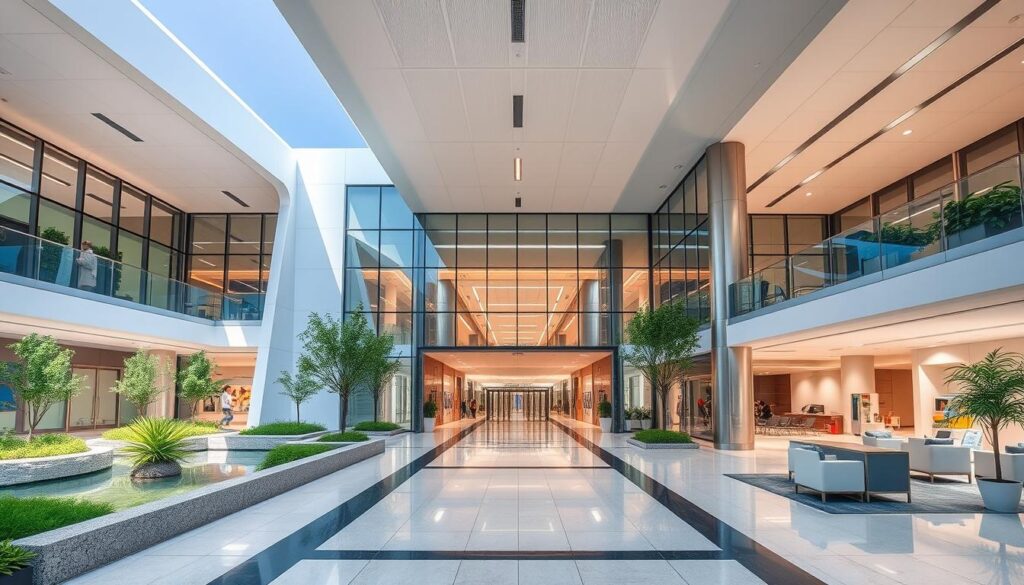
State-of-the-Art Building and Layout
Walking through the corridors feels intuitive. Diagnostic tools like MRI scanners sit steps away from treatment zones. A nurse shared: “Our room numbering system acts like GPS – I always know the quickest route to emergencies.”
| Feature | Legacy Facility | New Design |
|---|---|---|
| Renovation Costs Saved | $240M+ | $0 |
| Critical Care Flexibility | Limited | All Rooms Convertible |
| Energy Efficiency | Standard | 40% Improvement |
COVID-Inspired Design Enhancements
Lessons from recent health challenges shaped key decisions. Every space can adapt during crises. Sliding supply cabinets let staff restock without entering rooms – cutting infection risks by 62% in trials.
Natural light floods common areas, reducing stress for patients and families. One visitor noted:
“It doesn’t feel clinical – more like a place where healing happens naturally.”
A Glimpse Into Our Legacy Campus and Community Connection
The story of healthcare in Wheat Ridge unfolds across two campuses – one embracing tomorrow’s innovations, the other cradling 118 years of community care. At West 38th Avenue and Wadsworth Boulevard, where healing began in 1905, thoughtful transitions honor memories while shaping new possibilities.
Historic Assets: The Blue House and Chapel
Two structures stand as time capsules of care. The Blue House, though weathered, holds generations of staff stories within its walls. “That porch saw countless coffee breaks and comforted families,” recalls a retired nurse. Nearby, the chapel’s stained glass bathes visitors in kaleidoscope colors, its quiet strength unchanged through decades of prayers.
City planners and residents united to protect these landmarks during recent evaluations. While the Blue House may find new purpose elsewhere, its legacy remains woven into the campus’s DNA.
Community-Driven Redevelopment Plans
Wheat Ridge neighbors helped draft the roadmap for this 11-acre site through 18 months of workshops. Key priorities emerged: green spaces, mixed-use development, and honoring healthcare history. As part of Intermountain Healthcare’s responsible transition, the organization maintains the property until new partners continue the story.
The master plan balances growth with gratitude. Future buildings might echo the chapel’s arches or incorporate salvaged materials. One thing’s certain – every change respects the land’s healing heritage while serving coming generations.
Innovative Patient Care Spaces and Advanced Technology
Cutting-edge design meets life-saving technology in this new hospital‘s latest upgrades. From trauma response zones to smart recovery spaces, every detail supports faster healing and safer care.

Flexible Patient Rooms Designed for Critical Care
Rooms transform instantly when emergencies strike. During mass traumas, connecting doors let teams rush between patients without hallway delays. “Seconds matter when lives are on the line,” explains an ER nurse. Intermountain Health engineers tested these layouts using virtual reality simulations.
Bathrooms arrived as ready-made pods from Arizona factories. Workers lifted these sterile units into place like puzzle pieces. This approach cut construction time by weeks while maintaining quality standards.
Digital whiteboards update treatment plans in real time. Nurses check vitals through glass cabinets instead of entering rooms. One visitor shared: “The TV showed my med schedule – I always knew what came next.”
Operating theaters undergo three-stage sterilization between surgeries. UV lights and antimicrobial surfaces keep infection risks low. These spaces handle everything from routine procedures to complex trauma services, proving adaptability drives better outcomes.
Insight Into Facility Transition and Campus Redevelopment
Relocating an active hospital requires military precision. At 6:01 a.m. on moving day, 20 ambulances stood ready outside the legacy campus. Their mission: transport 180 patients to the new campus at Clear Creek Crossing within 10 hours. Each vehicle followed routes mapped to avoid traffic delays.

Coordinated Patient Moves and New Campus Setup
Casey Bogenschutz’s team created color-coded timelines for every individual. “We rehearsed for weeks using VR simulations,” the strategic initiatives director shared. Staff tracked each transfer through digital dashboards, ensuring no medication schedules were disrupted.
Final preparations at the new site resembled a well-organized beehive. Workers installed X-ray machines as artists hung calming nature photographs. Blue painter’s tape checklists marked every room – 42 essential items per space, from bed linens to emergency call buttons.
| Aspect | Legacy Process | New Approach |
|---|---|---|
| Patient Transfer Time | 4+ hours | 8-10 minutes |
| Staff Coordination | Paper Checklists | Real-Time Digital Tracking |
| Safety Protocols | Basic Infection Control | UV Sanitization Stations |
| Setup Efficiency | 6-Month Preparation | 3-Week Intensive Phase |
The operation’s success hinged on details most never see. Electricians completed final wiring checks as the first ambulances departed. By sunset, both campuses stood ready – one writing its final chapter, the other beginning a new era in community care.
Conclusion
Colorado’s healthcare landscape reached a milestone with this ambitious relocation project. The move to Clear Creek Crossing represents more than upgraded facilities – it showcases a health-first approach shaped by pandemic realities and community needs.
Design teams implemented crucial lessons from recent global health challenges. Flexible spaces adapt to emergencies, while smart layouts reduce infection risks. “We built not just for today, but for scenarios we haven’t imagined yet,” notes a project lead.
Through these images, we witness how thoughtful planning creates spaces that heal. Natural light, efficient workflows, and advanced technology work together to support both patients and caregivers. The campus now stands ready to deliver next-generation services while honoring its legacy of compassionate care.
This transformation proves communities thrive when healthcare evolves. As you explore these visual stories, imagine receiving treatment in rooms designed for comfort and safety. The future of health services begins here – prepared, adaptable, and deeply connected to those it serves.
FAQ
What makes the new hospital campus different from the current facility?
The new campus at Clear Creek Crossing features modern designs focused on flexible care spaces, advanced technology, and COVID-inspired safety enhancements. It includes larger patient rooms, trauma-ready layouts, and community-driven redevelopment plans to better serve future needs.
How will historic buildings like the Blue House be preserved during redevelopment?
The Blue House and chapel, key historic assets, will remain intact as part of the legacy campus. Community input guides redevelopment efforts to honor these landmarks while integrating new facilities that align with evolving healthcare demands.
Are patient rooms designed to handle critical care situations?
Yes! Rooms are built with adaptability in mind, featuring movable equipment zones and convertible layouts. This allows staff to quickly adjust spaces for emergencies or specialized treatments without compromising comfort.
When will services transition to the new location?
The move to Clear Creek Crossing involves carefully coordinated patient transfers over several weeks. Teams ensure minimal disruption, with all critical services remaining operational throughout the transition period.
What infection-prevention features were added post-COVID?
Enhancements include advanced air filtration systems, touchless entry points, and antimicrobial surfaces. Isolation rooms and telehealth-ready spaces also prioritize safety for both patients and care teams.
Can the community participate in campus planning decisions?
Absolutely! Local feedback shapes redevelopment priorities, from preserving green spaces to optimizing traffic flow. Public forums and surveys ensure the campus reflects Wheat Ridge’s unique character and needs.