Planning a Christian wedding in a United Methodist Church is a significant decision, filled with joy and anticipation. As you embark on this journey, understanding the basics of the ceremony and the church’s traditions is essential.
Carefully reading the guidelines provided will help you navigate the process smoothly. A UMC wedding ceremony is not just a union between two individuals but a celebration of love and faith in the presence of God and the community.
Key Takeaways
- Understand the significance of a Christian wedding ceremony.
- Familiarize yourself with United Methodist Church traditions.
- Plan the ceremony details with your partner and officiant.
- Ensure you meet the church’s requirements for the wedding.
- Prepare for the sacred vows you will exchange.
Understanding the United Methodist Church Wedding Ceremony
Understanding the nuances of a United Methodist Church wedding ceremony can help couples plan their special day. A Christian wedding is a unique celebration that combines faith and love, setting it apart from both civil and non-Christian ceremonies.
“The wedding ceremony is a sacred ritual that unites two people in marriage, surrounded by their community and guided by their faith,” as emphasized in United Methodist traditions.
What to Expect During the Ceremony
During a Methodist wedding ceremony, couples can expect a beautiful blend of scripture, prayer, and ritual. The ceremony typically begins with a processional, followed by an opening prayer and welcome by the officiant.
The core of the ceremony involves the exchange of vows and rings, symbolizing the couple’s commitment to each other. This is often accompanied by the reading of scripture, which provides a spiritual context for the marriage.
Key Components of a United Methodist Wedding
Several key components make up a United Methodist wedding. These include:
- The processional, where the wedding party enters the sanctuary.
- The opening prayer and welcome, setting the tone for the ceremony.
- The reading of scripture, which provides a spiritual foundation for the marriage.
- The exchange of vows and rings, a pivotal moment in the ceremony.
- The pronouncement and kiss, sealing the couple’s union.
- The recessional, where the wedding party exits the sanctuary.
The Role of Scripture and Prayer
Scripture and prayer play a vital role in a United Methodist wedding ceremony. The reading of scripture helps to contextualize the marriage within the couple’s faith, while prayer invokes God’s blessing upon the union.
As one officiant noted, “Prayer is essential in a wedding ceremony, as it seeks God’s guidance and blessing for the couple’s future together.”
Preparing for Your Wedding
Planning a United Methodist wedding involves several key steps, starting with a personal conference with the Pastor. This initial meeting is crucial as it sets the foundation for your wedding planning process.
During this conference, you will discuss your intentions, and the Pastor will guide you through the necessary steps and requirements for having a wedding at the church. It’s an opportunity for you to ask questions and understand the church’s policies and traditions.
Steps to Begin Your Wedding Planning
The first step in planning your wedding is to arrange a meeting with the Pastor of your chosen church, such as Mafair. This meeting is essential for understanding the church’s wedding policies and the role of the Pastor in the ceremony.
- Schedule a personal conference with the Pastor.
- Discuss your wedding intentions and expectations.
- Understand the church’s wedding policies and traditions.
Choosing the Right Date and Time
Choosing the right date and time for your wedding is a critical decision. It’s essential to consider the availability of the church and the Pastor, as well as your own preferences and schedules.
As noted by wedding planning experts, “The date and time of your wedding can significantly impact the overall atmosphere and guest attendance.”
“The right date and time can make your wedding day truly unforgettable.”
| Factors to Consider | Importance |
|---|---|
| Church Availability | High |
| Pastor’s Schedule | High |
| Guest Convenience | Medium |
| Personal Preference | High |
Booking the Church Venue
Once you have decided on a date and time, the next step is to formally book the church venue. This involves working with the church administration to reserve the date and making the necessary arrangements.
Ensure that you have a clear understanding of the church’s booking policies and any associated fees.
By following these steps, you can ensure a smooth and well-planned wedding at a United Methodist church. Remember, the key to a successful wedding is thorough preparation and clear communication with your Pastor and church staff.
Meeting with the Officiant
One of the most crucial steps in planning your United Methodist Church wedding is meeting with the officiant. This meeting is not just a formality; it’s an opportunity to discuss the details of your ceremony, understand the requirements of a United Methodist Church wedding, and prepare for your life together.
Importance of Pre-Marital Counseling
Pre-marital counseling is a significant aspect of preparing for your wedding in a United Methodist Church. It’s a chance to explore the foundations of your relationship, discuss your expectations, and gain insights into building a strong marriage. This counseling is typically required by the church and is conducted by the officiant.
- Understanding the commitment you’re making to each other
- Discussing financial planning and management
- Exploring your values and how they align
As noted by marriage counselors, “A strong marriage is built on mutual respect, trust, and communication.” Pre-marital counseling lays the groundwork for a healthy and fulfilling relationship.
Discussing Ceremony Details and Preferences
During your meeting with the officiant, you’ll also discuss the specifics of your wedding ceremony. This includes the order of events, the inclusion of certain rituals or traditions, and how to personalize your ceremony to reflect your personalities and commitment to each other.
It’s essential to come prepared with ideas and questions. Consider what elements are most important to you both, such as special music selections or the unity candle ceremony. Your officiant can guide you on how to incorporate these elements seamlessly into your church wedding ceremony.
“The wedding ceremony is a celebration of love and commitment. It’s a moment where two people come together in the presence of their community to promise their love and support for one another.”
By the end of your meeting, you’ll have a clear understanding of what to expect on your wedding day and how to make your church wedding ceremony truly special.
Incorporating Traditions and Rituals
Incorporating meaningful traditions and rituals into your United Methodist Church wedding ceremony can make the event even more special and memorable. The United Methodist Church offers a rich liturgical tradition that provides a beautiful backdrop for your wedding celebration.
When planning your ceremony, you may want to consider including some of the traditional elements that are characteristic of a United Methodist wedding. These elements not only add depth and meaning to your ceremony but also serve as a connection to the broader faith community.
Unity Candle Ceremony
One popular tradition in United Methodist weddings is the Unity Candle Ceremony. This ritual symbolizes the union of the couple, as they light a single candle together, representing their commitment to one another. The Unity Candle Ceremony is a powerful visual representation of the couple’s decision to merge their lives.
To incorporate the Unity Candle Ceremony into your wedding, you will need to discuss the details with your officiant. This includes deciding who will light the candles (typically the bride and groom, but sometimes their parents or children from a previous marriage) and what the candles represent in the context of your ceremony.
“The unity candle is a beautiful symbol of the union between two people. It represents the coming together of two individuals in marriage, creating a new family unit.”
The Importance of Vows
Another crucial element of a United Methodist wedding ceremony is the exchange of vows. Vows are promises that the bride and groom make to one another, committing to their relationship and to their faith. In a United Methodist wedding, the vows are typically guided by the church’s liturgy, but couples may also have the opportunity to personalize their vows.
Personalizing your vows can make the ceremony even more meaningful. Couples are encouraged to discuss their vows with their officiant, ensuring that they align with the church’s teachings while also reflecting their personal commitment to one another.
| Traditional Vow Elements | Personalized Vow Elements |
|---|---|
| Promises of love and commitment | Specific memories or promises |
| Commitment to faith and community | Personal anecdotes or hopes for the future |
Special Music Selections
Music plays a vital role in a United Methodist wedding ceremony, setting the tone for the celebration and enhancing the worship experience. Couples have the opportunity to select special music for various parts of the ceremony, including the processional, recessional, and communion (if included).
When choosing music for your ceremony, consider selecting hymns or songs that are meaningful to your faith journey or that reflect your personal taste. It’s essential to discuss your music selections with your officiant and the church’s music director to ensure that your choices are appropriate for the ceremony.

By incorporating these traditions and rituals into your United Methodist Church wedding ceremony, you can create a meaningful and memorable celebration that reflects your faith and commitment to one another.
Selecting Your Wedding Party
The wedding party is a vital component of your religious ceremony, playing a significant role in the overall experience of your special day. Choosing the right members for your wedding party is crucial, as they will be integral to the proceedings and help create lasting memories.
When selecting your wedding party, consider the individuals who are closest to you and your partner. This group typically includes bridesmaids and groomsmen, but may also involve other roles such as flower girls, ring bearers, and ushers.
Choosing Bridesmaids and Groomsmen
Bridesmaids and groomsmen are chosen for their importance in your lives. They provide support and participate actively in the ceremony and often in pre-wedding festivities. When deciding on your bridesmaids and groomsmen, consider their ability to fulfill their roles and their relationship with you.
It’s also essential to communicate clearly with your chosen attendants about their responsibilities and what will be expected of them on your wedding day. This includes understanding the layout of the church and any specific rules or restrictions, such as protecting decorations and furnishings in areas they may use.
| Role | Responsibilities | Pre-Wedding Tasks |
|---|---|---|
| Bridesmaids | Support the bride, participate in the ceremony | Attend bridal showers, help with wedding dress fittings |
| Groomsmen | Support the groom, participate in the ceremony | Attend bachelor party, help with seating arrangements |
The Role of Parents in the Ceremony
Parents play a significant role in the church ceremony, often participating in key moments such as giving the bride away or offering a blessing. Understanding their roles and how they fit into the overall structure of the ceremony is important.
In many United Methodist Church weddings, parents are also involved in the processional, seating arrangements, and sometimes in readings or prayers during the service. Discussing their participation with your officiant can help ensure their roles are integrated smoothly into the ceremony.
By carefully selecting your wedding party and understanding their roles, you can create a meaningful and memorable experience for everyone involved. Remember to communicate clearly with your attendants and involve your parents appropriately to make your religious ceremony as special as possible.
Personalizing Your Ceremony
Your wedding day is a unique opportunity to express your faith and love for each other in a way that feels personal and meaningful. A Christian wedding is not just about following traditions; it’s also about making the ceremony your own.
In a traditional wedding, certain elements are considered standard, such as the exchange of vows and rings. However, there are many ways to personalize these elements to reflect your personalities and love story.
Writing Your Own Vows
Writing your own vows can be a powerful way to express your commitment to each other. When crafting your vows, consider the promises you want to make to one another and how you can incorporate your faith into these promises.
It’s essential to keep in mind that all elements, including music and readings, should be appropriate for a service of worship and consistent with Christian values.
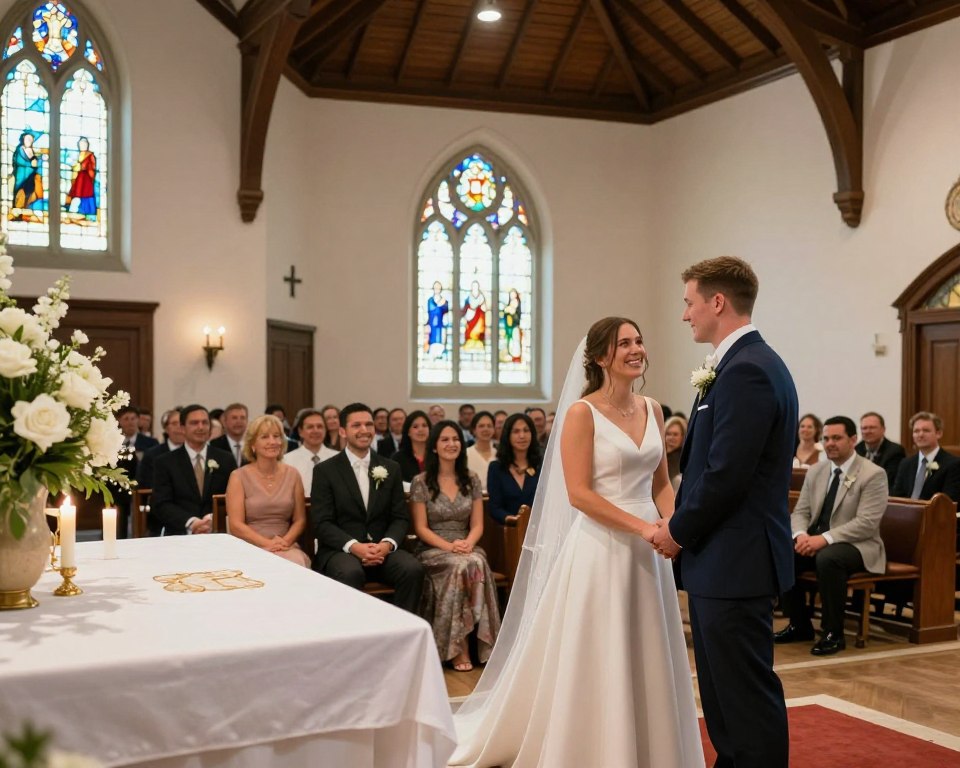
Including Personal Touches and Symbolism
Incorporating personal touches and symbolism into your ceremony can make it even more meaningful. This could include special music selections, unity candle ceremonies, or other rituals that hold significance for you as a couple.
Consider what symbols or rituals are meaningful to you both, and how you can incorporate them into the ceremony in a way that respects the traditions of a Christian wedding.
By thoughtfully personalizing your ceremony, you can create a memorable and meaningful experience that reflects your love and commitment to each other.
Planning the Rehearsal
A well-planned rehearsal is key to a stress-free United Methodist wedding ceremony, allowing you and your wedding party to feel confident and prepared. The rehearsal is typically scheduled the day before the wedding and is crucial for understanding the sequence of events during the ceremony.
Setting Up the Rehearsal Schedule
Wedding rehearsals usually take about one hour, and it’s recommended that the doors are opened approximately 15 minutes before your scheduled rehearsal time. This allows everyone to be in their places and for the officiant to brief the wedding party on the proceedings.
When planning the rehearsal schedule, consider the following:
- Confirm the date and time with your officiant and wedding party.
- Ensure that all members of the wedding party are aware of their roles and responsibilities.
- Plan for enough time to rehearse the ceremony without feeling rushed.
Roles and Responsibilities for Attendees
Understanding the roles and responsibilities of the wedding party and other attendees is vital for a smooth rehearsal. The officiant will typically guide everyone through their parts in the ceremony.
| Role | Responsibilities |
|---|---|
| Officiant | Leads the rehearsal, explains the ceremony proceedings, and ensures everyone knows their role. |
| Bride and Groom | Participate in the rehearsal, understand the cue for their vows, and know where to stand during the ceremony. |
| Bridesmaids and Groomsmen | Stand in their designated places, participate in any special rituals, and follow the instructions given by the officiant. |
As “The wedding ceremony is a sacred ritual that unites two people in marriage, witnessed by their friends and family.” – This quote highlights the significance of the wedding ceremony and the importance of a well-coordinated rehearsal.
Navigating UMC Policies and Regulations
Planning a wedding in a United Methodist Church requires a thorough understanding of its policies and regulations. The United Methodist Church has specific guidelines to ensure that the wedding ceremony is conducted with reverence and respect.
Understanding Church Policies
The United Methodist Church has established policies to govern various aspects of the wedding ceremony. These policies are designed to maintain the sanctity and integrity of the ceremony. For instance, the church has rules regarding the use of its facilities, including restrictions on decorations, music, and other elements that may be part of the ceremony.
One of the key policies to understand is that no alcoholic beverages are allowed at any time on church premises. Additionally, couples are required to ensure that no food is left in the refrigerator after the reception. These rules are in place to maintain the cleanliness and sanctity of the church facilities.
| Policy | Description |
|---|---|
| Alcoholic Beverages | Not allowed on church premises |
| Food in Refrigerator | Must be removed after the reception |
| Decorations | Must be approved by church authorities |
Securing Necessary Permissions
To ensure a smooth wedding ceremony, couples must secure the necessary permissions from the church authorities. This involves meeting with the officiant and discussing the details of the ceremony, including the order of service, music selections, and other elements.
Couples are also required to provide certain documentation, such as their marriage license, to the church. It’s essential to complete these steps well in advance to avoid any last-minute complications.
By understanding and adhering to the United Methodist Church’s policies and regulations, couples can ensure a beautiful and stress-free religious ceremony. It’s about creating a meaningful experience that honors the couple’s commitment to each other, within the context of their faith community.
Frequently Asked Questions
As you prepare for your Christian wedding at a United Methodist Church, you may have questions about the ceremony and its traditions. A United Methodist Church wedding ceremony is a meaningful and worshipful experience, filled with scripture, prayer, and community.
Common Concerns About UMC Weddings
Couples often ask about the requirements and procedures for a United Methodist Church wedding. Understanding the United Methodist Church wedding ceremony and its components can help alleviate concerns and make the planning process smoother.
Tips for a Stress-Free Wedding Day
To ensure a stress-free wedding day, it’s essential to communicate with your officiant and church staff. Pre-marital counseling is also a valuable step in preparing for your Christian wedding. By following these steps, you can have a beautiful and meaningful United Methodist Church wedding ceremony.
We hope that your marriage ceremony will be a worshipful and meaningful one, celebrating your love and commitment to each other within the context of a Christian wedding.
FAQ
What are the requirements for getting married in a United Methodist Church?
To get married in a United Methodist Church, couples typically need to meet with the pastor, attend pre-marital counseling, and provide necessary documentation, such as baptismal certificates and identification.
Can we personalize our United Methodist Church wedding ceremony?
Yes, couples can personalize their ceremony by writing their own vows, incorporating meaningful symbols and touches, and selecting special music.
How do we book the United Methodist Church for our wedding?
To book the church, couples should contact the church office or pastor to inquire about availability and scheduling, and then follow the church’s booking procedures.
What is the significance of the unity candle ceremony in a United Methodist Church wedding?
The unity candle ceremony symbolizes the union of the couple, representing the joining of two individuals into one marriage.
Can non-members get married in a United Methodist Church?
Yes, non-members can get married in a United Methodist Church, but they will still need to meet with the pastor and follow the church’s wedding policies and procedures.
How far in advance should we start planning our United Methodist Church wedding?
Couples should start planning their wedding at least 6-12 months in advance to ensure availability of the church and to complete necessary pre-marital counseling.
What is the role of the pastor in a United Methodist Church wedding?
The pastor serves as the officiant, guiding the couple through the ceremony and providing pre-marital counseling and support.
Can we have a non-traditional wedding ceremony in a United Methodist Church?
While the United Methodist Church has traditional wedding ceremony guidelines, couples can work with their pastor to incorporate non-traditional elements that still align with the church’s values and policies.