The Presbyterian Church has a rich history and diverse denominations, particularly in the United States. With roots tracing back to the Protestant Reformation, the Presbyterian faith is known for its governance by elders and its emphasis on the authority of the Bible.
The Presbyterian community is primarily divided into two major subgroups, each with its own distinct beliefs and practices. Understanding these differences is crucial for grasping the broader landscape of the Presbyterian Church in the USA.
This guide will explore the origins, core beliefs, and typical Sunday service experiences within these denominations, providing a comprehensive overview for those seeking to understand the Presbyterian faith more deeply.
Key Takeaways
- Overview of the main Presbyterian denominations in the USA.
- Historical context and origins of the Presbyterian faith.
- Core beliefs and practices that define Presbyterian churches.
- Insights into what to expect during a typical Sunday service.
- Comparison of the two major Presbyterian subgroups.
Overview of Presbyterian Church Denominations
With roots in the Protestant Reformation, Presbyterian Church denominations have evolved over time, influenced by key figures such as John Calvin and John Knox. This section provides an overview of the definition, key beliefs, and historical background of Presbyterian denominations.
Definition and Key Beliefs
Presbyterian Church denominations are characterized by their governance structure and theological beliefs. They adhere to the principles of the Reformed tradition, emphasizing the authority of Scripture and the sovereignty of God.
Historical Background
The history of Presbyterianism dates back to the 16th century, emerging from the Protestant Reformation in Europe. Key figures like John Calvin and John Knox played significant roles in shaping Presbyterian theology and governance.
| Denomination | Governance | Key Theological Emphasis |
|---|---|---|
| PC(USA) | Presbyterian | Emphasizes social justice and inclusivity |
| PCA | Presbyterian | Focuses on traditional Reformed theology |
| EPC | Presbyterian | Balances evangelicalism with Presbyterian governance |
Major Presbyterian Denominations in the United States
The Presbyterian community in America is represented by several major denominations that differ in their interpretations of Christian theology and practice. These denominations have evolved over time, reflecting various theological, social, and historical factors.
The Presbyterian Church (USA), or PCUSA, is the largest Presbyterian denomination in the United States. It is known for its progressive stance on social issues and its commitment to ecumenical dialogue and mission work.
Presbyterian Church (USA)
The PCUSA has a strong emphasis on social justice, advocating for issues such as environmental stewardship, human rights, and racial reconciliation. The denomination is also known for its relatively liberal theological stance, allowing for a wide range of interpretations on certain doctrines.
Theological Orientation: The PCUSA is characterized by its moderate to liberal theological orientation, embracing a broad spectrum of beliefs within the Presbyterian tradition.
Presbyterian Church in America (PCA)
The Presbyterian Church in America (PCA) is another significant Presbyterian denomination in the United States. It is known for its conservative theological stance and commitment to orthodox Christian theology. The PCA emerged in the 1970s, primarily due to theological disagreements within the PCUS (Presbyterian Church in the United States), which later merged with the UPCUSA to form the PCUSA.
Theological Orientation: The PCA is recognized for its conservative theological stance, adhering closely to the Westminster Confession of Faith.
The PCA is also active in mission work, both domestically and internationally, and places a strong emphasis on church planting and evangelism.
Evangelical Presbyterian Church (EPC)
The Evangelical Presbyterian Church (EPC) represents another major Presbyterian denomination, known for its evangelical theology and moderate stance on certain social issues. The EPC was formed in 1981, primarily by churches that broke away from the PCUSA due to theological differences.
Theological Orientation: The EPC is characterized by its evangelical theology, emphasizing personal conversion, the authority of Scripture, and the importance of evangelism.
| Denomination | Theological Orientation | Key Characteristics |
|---|---|---|
| Presbyterian Church (USA) | Moderate to Liberal | Emphasis on social justice, ecumenical dialogue |
| Presbyterian Church in America (PCA) | Conservative | Commitment to orthodox theology, church planting |
| Evangelical Presbyterian Church (EPC) | Evangelical | Emphasis on personal conversion, evangelism |
The Cumberland Presbyterian Church, another notable denomination, has its roots in the early 19th-century revival movements. It is known for its emphasis on evangelism and its relatively more inclusive stance on certain theological issues.
Historical Development of Presbyterianism
The historical development of Presbyterianism is a story that starts in 16th-century Europe, influenced by key figures and events of the Reformation. This period was marked by significant theological debates and the emergence of Protestantism, laying the groundwork for Presbyterianism.
Early Origins in Europe
Presbyterianism originated in Europe, heavily influenced by the Protestant Reformation. Key figures such as John Calvin and John Knox played crucial roles in shaping the theological and governance structures of the Presbyterian Church. The Reformation not only influenced the theology but also the governance of the church, with a focus on elders and presbyteries.
The spread of Presbyterianism in Europe was facilitated by the writings and teachings of these reformers. For instance, John Knox, who was influenced by Calvin’s teachings, helped establish Presbyterianism in Scotland. The church’s governance structure, based on the presbytery system, was a significant departure from the hierarchical structure of the Catholic Church.
Growth in America
Presbyterianism was brought to America by Scottish and Irish immigrants, who established the first Presbyterian churches in the early 18th century. The Synod of Philadelphia, established in 1717, was one of the first governing bodies of the Presbyterian Church in America.
The growth of Presbyterianism in America was marked by significant events, including the Great Awakening, which had a profound impact on the church’s development. The denomination continued to evolve, with various splits and mergers occurring over the centuries, resulting in the diverse range of Presbyterian denominations seen today.
| Event | Date | Significance |
|---|---|---|
| Establishment of the Synod of Philadelphia | 1717 | First governing body of the Presbyterian Church in America |
| The Great Awakening | Early 18th Century | Revival movement that significantly impacted Presbyterianism in America |
| Formation of the Presbyterian Church in the USA (PCUSA) | 1789 | Major Presbyterian denomination in the United States |
The historical development of Presbyterianism is a complex narrative influenced by theological debates, immigration, and significant religious movements. Understanding this history is crucial for grasping the nuances of Presbyterian denominations today.
Theological Differences Among Denominations
The Presbyterian tradition is characterized by a rich theological diversity, evident in the differing views on salvation, church governance, and worship practices among its denominations. This diversity stems from historical, cultural, and theological factors that have shaped the various Presbyterian denominations over time.
Views on Salvation
One of the significant theological differences among Presbyterian denominations lies in their views on salvation. Some denominations adhere to Calvinism, emphasizing predestination and the sovereignty of God in salvation. Others lean towards Arminianism, stressing free will and the role of human decision in the salvation process.
The Calvinist perspective is prominent in denominations like the Presbyterian Church in America (PCA), which affirms the Westminster Confession of Faith as a doctrinal standard. In contrast, some more theologically liberal Presbyterian denominations may adopt a more Arminian or synergistic view of salvation.
| Denomination | View on Salvation | Key Doctrinal Standards |
|---|---|---|
| Presbyterian Church (USA) | Varied, with both Calvinist and Arminian influences | Westminster Confession, Book of Confessions |
| Presbyterian Church in America (PCA) | Calvinist | Westminster Confession of Faith |
| Evangelical Presbyterian Church (EPC) | Generally Calvinist, with some flexibility | Westminster Confession, Book of Confessions |
Governance Structures
Presbyterian denominations also differ in their governance structures. While all Presbyterians adhere to a presbyterian form of government, involving elders and a hierarchy of church courts, the specifics can vary. For instance, the role and authority of elders, the composition of church courts, and the degree of congregational autonomy versus denominational authority can differ significantly.
Some denominations, like the Presbyterian Church (USA), have a more complex and layered governance structure, with a strong emphasis on the role of the General Assembly. Others may have a simpler structure with more localized decision-making.
Worship Practices
Worship practices are another area where Presbyterian denominations exhibit diversity. The liturgical vs. contemporary worship debate is a significant aspect of this. Some denominations and churches prefer a more traditional and liturgical approach to worship, drawing on historical Presbyterian worship practices. Others have adopted more contemporary styles, incorporating modern music and less formal elements.
The use of sacraments, particularly baptism and the Lord’s Supper, also varies among Presbyterian denominations, with differences in frequency, mode, and theological interpretation.
Key Figures in Presbyterian History
Understanding the history of Presbyterianism requires examining the lives of its foundational leaders. Two figures stand out prominently in shaping the theology and governance of Presbyterian churches: John Calvin and John Knox.
John Calvin
John Calvin was a French theologian and pastor who played a crucial role in the Protestant Reformation. His writings on Reformed theology significantly influenced Presbyterian doctrine. Calvin’s emphasis on the sovereignty of God, the authority of Scripture, and the importance of church governance by elders resonated with many reformers.
Calvin’s most famous work, Institutes of the Christian Religion, systematically presented Reformed theology and became a foundational text for Presbyterian churches. His ideas on predestination and the role of the church in society continue to shape Presbyterian thought.
John Knox
John Knox, a Scottish theologian and minister, was instrumental in establishing Presbyterianism in Scotland. Knox’s interactions with Calvin and other reformers influenced his views on church governance and theology. He advocated for a church governed by elders rather than a hierarchical clergy.
Knox’s leadership in the Scottish Reformation led to the establishment of the Church of Scotland, which became a model for Presbyterian churches worldwide. His commitment to Reformed theology and Presbyterian governance structures has had a lasting impact on the denomination.
| Figure | Contribution | Influence on Presbyterianism |
|---|---|---|
| John Calvin | Reformed Theology, Institutes | Doctrine, Governance |
| John Knox | Establishment of Presbyterianism in Scotland | Governance, Reformed Theology |
The contributions of Calvin and Knox to Presbyterian history are undeniable. Their influence on theology, governance, and the practice of Presbyterianism continues to be felt today, shaping the identity of denominations like the PC(USA).
Governance and Structure of Presbyterian Churches
Understanding the governance and structure of Presbyterian churches requires an examination of their ecclesiastical framework and leadership roles. Presbyterian churches are governed by elders, with varying degrees of congregational and denominational authority.
Role of Elders and Deacons
In Presbyterian churches, elders play a crucial role in governance. They are responsible for spiritual leadership and decision-making within the church. Deacons, on the other hand, are typically involved in the care of the congregation and the community, focusing on acts of service and compassion.
The Presbyterian Church (USA) and the Presbyterian Church in America (PCA) are two major denominations with distinct approaches to the roles of elders and deacons. The PCA, for instance, emphasizes the importance of elders in church governance, aligning with its presbyterian church beliefs.
| Denomination | Role of Elders | Role of Deacons |
|---|---|---|
| Presbyterian Church (USA) | Spiritual leadership and governance | Care for the congregation and community |
| Presbyterian Church in America (PCA) | Governance and spiritual oversight | Service and care for the needy |
Congregational vs. Denominational Authority
The balance between congregational and denominational authority varies among Presbyterian denominations. Some churches lean towards a more congregational governance model, where decision-making is localized, while others adhere to a more centralized, denominational authority.
The PCA Presbyterian denomination, for example, operates under a presbyterian governance model that balances congregational autonomy with denominational oversight. This balance is crucial for maintaining unity and consistency within the denomination.
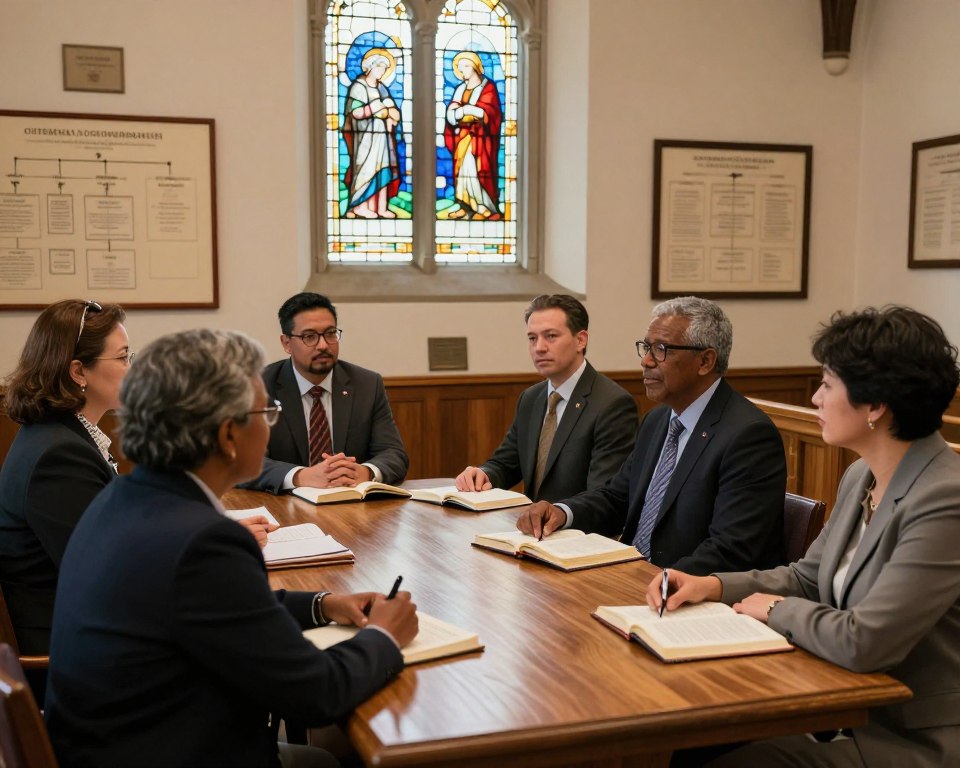
In conclusion, the governance and structure of Presbyterian churches are characterized by the significant role of elders and deacons, as well as a balance between congregational and denominational authority. Understanding these elements is essential for grasping the operational dynamics of Presbyterian denominations.
Worship Styles in Different Denominations
The worship practices within Presbyterian denominations vary significantly, from traditional liturgical services to contemporary worship styles. This diversity reflects the unique histories, theological perspectives, and cultural contexts of different Presbyterian churches.
Liturgical vs. Contemporary Services
Presbyterian denominations, such as the Presbyterian Church (USA) and the Evangelical Presbyterian Church (EPC), exhibit a range of worship styles. Some churches adhere to traditional liturgical services, which are characterized by a structured order of worship, often including elements like the sacraments, prayers, and hymns. In contrast, contemporary services are more flexible and may incorporate modern music, multimedia presentations, and a less formal atmosphere.
The choice between liturgical and contemporary worship styles often depends on the theological and cultural orientation of the denomination. For instance, the Cumberland Presbyterian Church is known for its blend of traditional and contemporary elements in worship.
Music and Worship Elements
Music plays a crucial role in Presbyterian worship, with different denominations favoring various styles and genres. Traditional hymns and psalm singing are common in more liturgical services, while contemporary worship often features modern Christian music and praise bands.
Other worship elements, such as the sacraments, prayers, and scripture readings, are also integral to Presbyterian worship practices. The balance and emphasis on these elements can vary significantly between denominations, reflecting their distinct theological emphases and worship traditions.
In conclusion, the worship styles in Presbyterian denominations are diverse, reflecting a wide range of theological, historical, and cultural influences. Understanding these differences can provide insight into the rich tapestry of Presbyterian worship practices.
Social and Political Engagement
With roots in Reformed theology, Presbyterian denominations have a rich history of engaging with social and political issues. This engagement has been shaped by their beliefs and governance structures, influencing their stances on various matters.
Historical Activism
Historically, Presbyterian churches have been at the forefront of social justice movements. For instance, during the abolitionist movement, many Presbyterian ministers and congregants were vocal about ending slavery, reflecting their commitment to equality and justice. The ARP Presbyterian denomination, in particular, has a history of advocating for social causes, often aligning with broader evangelical movements.
The involvement of Presbyterian denominations in social activism is not limited to historical events. Their commitment to social justice has continued through the centuries, adapting to new challenges and issues as they arise.
Contemporary Issues
Today, Presbyterian denominations continue to engage with contemporary social and political issues. These include debates over LGBTQ+ rights, abortion, and social justice. Different Presbyterian denominations hold varying views on these issues, reflecting the diversity within Presbyterianism.
For example, the Presbyterian Church (USA) has taken progressive stances on LGBTQ+ issues, including the ordination of LGBTQ+ clergy and the blessing of same-sex marriages. In contrast, more conservative denominations like the ARP Presbyterian have maintained traditional views on these matters, highlighting the spectrum of beliefs within Presbyterianism.
The diversity of perspectives within Presbyterian denominations on social and political issues underscores the complexity of their engagement. While some denominations push for progressive change, others maintain more conservative stances, together contributing to a rich tapestry of thought and action within the broader Presbyterian community.
Global Influence of Presbyterian Denominations
The global presence of Presbyterian denominations is a testament to their commitment to evangelism and social responsibility. With roots tracing back to Europe and significant growth in America, Presbyterian churches have spread their influence across the globe.

Mission Work and Outreach
Presbyterian denominations, including the PC(USA) and PCA Presbyterian, are actively engaged in mission work and outreach programs worldwide. These efforts are aimed at spreading the Gospel, providing humanitarian aid, and supporting local communities.
- Establishing new churches and congregations in underserved areas
- Providing aid and support to marginalized communities
- Promoting education and healthcare through various initiatives
These mission efforts not only reflect the denominations’ commitment to their faith but also contribute to the social and economic development of the regions they serve.
Partnerships with Foreign Churches
Another significant aspect of the global influence of Presbyterian denominations is their partnerships with foreign churches. These partnerships facilitate the exchange of ideas, resources, and expertise, strengthening the global Presbyterian community.
Key aspects of these partnerships include:
- Collaborative mission projects
- Theological education and training programs
- Exchange programs for pastors and church leaders
Through these partnerships, Presbyterian denominations are able to support and learn from each other, fostering a more unified and effective global witness.
In conclusion, the global influence of Presbyterian denominations is a multifaceted phenomenon that encompasses mission work, outreach, and strategic partnerships. As these denominations continue to grow and adapt, their impact on global communities is likely to endure.
Education and Training in Presbyterianism
Education is a cornerstone of Presbyterianism, with a rich history of theological institutions and continuing education programs for church leaders. The Presbyterian Church has long recognized the importance of educating its clergy and laity to fulfill its mission effectively.
Theological Education Institutions
Presbyterian denominations have established numerous seminaries and theological institutions to provide comprehensive theological education. These institutions offer various programs, including Master of Divinity degrees, which are crucial for those pursuing ordained ministry. For instance, the Presbyterian Church (USA) supports several seminaries across the United States, such as Princeton Theological Seminary and Louisville Presbyterian Theological Seminary.
The curriculum in these institutions typically includes courses on Presbyterian church beliefs, biblical studies, church history, and practical theology. This robust educational foundation prepares students for a wide range of ministries within the church.
Continuing Education for Church Leaders
Beyond formal theological education, Presbyterian denominations emphasize continuing education for church leaders. This includes workshops, conferences, and online courses designed to enhance the skills and knowledge of ministers and elders. The ECO Presbyterian church, for example, encourages its leaders to participate in ongoing training to stay updated on contemporary issues and best practices in ministry.
Continuing education programs cover a variety of topics, from pastoral care and worship leadership to community outreach and social justice. By investing in the ongoing development of their leaders, Presbyterian denominations aim to maintain a vibrant and effective church community.
Overall, the commitment to education and training in Presbyterianism reflects its value on informed faith and practice, ensuring that church leaders are well-equipped to serve their congregations and communities.
Challenges Facing Presbyterian Denominations Today
In recent years, Presbyterian denominations have encountered numerous obstacles, including dwindling membership and internal conflicts. These challenges are multifaceted, requiring a comprehensive approach to address the underlying causes and implement effective solutions.
Declining Membership
One of the most pressing issues facing Presbyterian denominations is the decline in membership. The Presbyterian Church (USA), for instance, has experienced a significant decrease in its membership rolls over the past few decades. This trend is attributed to various factors, including changing societal values, increased mobility, and a decline in traditional religious affiliation.
To combat declining membership, Presbyterian denominations are exploring innovative strategies to attract and retain members. These include leveraging digital platforms for outreach, enhancing community engagement, and developing more inclusive worship services. For example, some churches are incorporating contemporary worship elements to appeal to a broader audience.
Divisions and Splits
Internal divisions and splits represent another significant challenge for Presbyterian denominations. Differences in theological interpretation, worship practices, and social issues have led to fractures within denominations. The ARP Presbyterian and Cumberland Presbyterian Church have also grappled with these issues, as they navigate the complexities of maintaining unity while respecting diverse perspectives.
Addressing these divisions requires a commitment to dialogue and reconciliation. Presbyterian denominations are engaging in efforts to foster greater understanding and cooperation among their members. This includes promoting theological education, encouraging open discussion forums, and developing policies that balance unity with diversity.
By acknowledging and addressing these challenges, Presbyterian denominations can work towards revitalizing their communities and ensuring a vibrant future.
Future Trends in Presbyterian Churches
As Presbyterian church denominations continue to evolve, they are adapting to changing contexts by embracing diversity and innovating in worship and community engagement. This shift is positioning them for future growth and relevance.
Diversity and Inclusion
Presbyterian churches, including the PCA presbyterian and ECO presbyterian denominations, are making a concerted effort to become more inclusive. This involves embracing diverse cultures, backgrounds, and perspectives within their congregations.
Innovative Worship and Community Engagement
Innovations in worship styles and community engagement are also on the rise. Many Presbyterian churches are adopting contemporary worship services and leveraging technology to enhance their outreach and community programs.
By embracing these trends, Presbyterian church denominations are poised to remain vibrant and relevant in an ever-changing world. Their commitment to diversity, innovation, and community will be key to their future success.
FAQ
What are the main differences between Presbyterian denominations?
The main differences between Presbyterian denominations lie in their theological orientations, governance structures, and worship practices. For example, the PC(USA) is generally considered more liberal, while the PCA is more conservative. The EPC is also conservative but has a more nuanced stance on certain issues.
What is the Presbyterian Church (USA), and what are its key characteristics?
The Presbyterian Church (USA) is the largest Presbyterian denomination in the United States. It is known for its relatively liberal theology and its emphasis on social justice. The PC(USA) has a diverse membership and is actively engaged in various social and political issues.
What is the history of Presbyterianism, and how did it develop in America?
Presbyterianism originated in Europe during the Protestant Reformation, influenced by theologians such as John Calvin and John Knox. It was brought to America by Scottish and Irish immigrants and developed into distinct denominations over time.
What are the key beliefs of Presbyterian churches, and how do they vary across denominations?
Presbyterian churches generally believe in the authority of the Bible, the sovereignty of God, and the importance of faith in Jesus Christ. However, different denominations may have varying interpretations of these beliefs, particularly regarding salvation and the role of sacraments.
How do Presbyterian churches govern themselves, and what is the role of elders and deacons?
Presbyterian churches are governed by a system of elders and deacons, with elders typically responsible for spiritual leadership and deacons for service and care. The balance between congregational and denominational authority varies across denominations.
What is the significance of John Calvin and John Knox in Presbyterian history?
John Calvin and John Knox were influential theologians who shaped Presbyterian theology and governance. Calvin’s writings on Reformed theology and Knox’s leadership in the Scottish Reformation had a lasting impact on Presbyterianism.
How do Presbyterian denominations engage in social and political issues?
Presbyterian denominations have a history of social activism, with some being more engaged in contemporary issues than others. The PC(USA), for example, is known for its advocacy on issues like racial justice and climate change.
What is the role of education and training in Presbyterianism?
Education and training are highly valued in Presbyterianism, with many denominations having seminaries and theological institutions to train clergy and laity. Continuing education is also emphasized for church leaders.
What are some of the challenges facing Presbyterian denominations today?
Presbyterian denominations face challenges such as declining membership, internal divisions, and adapting to changing cultural contexts. Some denominations are also grappling with issues related to diversity and inclusion.
How are Presbyterian denominations innovating in worship and community engagement?
Some Presbyterian denominations are embracing diversity and innovating in worship and community engagement, incorporating new styles of worship and outreach efforts to connect with their communities.
What is the global influence of Presbyterian denominations, and how do they engage in mission work?
Presbyterian denominations have a significant global presence, with many engaging in mission work, outreach efforts, and partnerships with foreign churches. This global influence shapes Presbyterian identity and mission.
What are the differences between the PCA, EPC, and Cumberland Presbyterian Church?
The PCA, EPC, and Cumberland Presbyterian Church are all conservative Presbyterian denominations, but they have distinctives in their theology, governance, and worship practices. The PCA is known for its strong Reformed theology, while the EPC has a more nuanced stance on certain issues. The Cumberland Presbyterian Church has a distinct history and theological orientation.
What is the ARP Presbyterian Church, and how does it differ from other denominations?
The ARP Presbyterian Church is a conservative Presbyterian denomination with roots in the Reformed tradition. It has a distinct governance structure and theological orientation that sets it apart from other denominations.
How do Presbyterian denominations approach worship, and what are the differences in worship styles?
Presbyterian denominations approach worship in various ways, ranging from liturgical to contemporary services. The role of music and other worship elements also varies across denominations, reflecting their theological orientations and cultural contexts.