The Presbyterian Church (USA) is a significant Christian denomination in the United States, known for its Reformed theology and governance structure. Established in 1983 through the merger of two Presbyterian bodies, it has a rich history and distinct doctrine.
Understanding the core beliefs of the Presbyterian Church USA is essential for those interested in Christian denominations. This denomination is characterized by its commitment to scriptural authority and a presbyterian polity, which emphasizes governance by elders.
Key Takeaways
- The Presbyterian Church USA is a mainline Protestant denomination.
- It is known for its Reformed theology and presbyterian governance.
- The denomination was established in 1983 through a merger.
- Its core beliefs include a commitment to scriptural authority.
- The church governance is characterized by presbyterian polity.
Overview of the Presbyterian Church USA
With roots tracing back to the Scottish Reformation, the Presbyterian Church USA has evolved significantly over the centuries. The church’s history is deeply intertwined with the Protestant Reformation, particularly through the influence of John Knox, a key figure in the Scottish Reformation.
Historical Background
The Presbyterian Church USA has its roots in the 16th-century Protestant Reformation. The church’s governance and theology were significantly influenced by John Knox, who brought Reformation principles to Scotland. Over time, Presbyterianism spread to other parts of the world, including North America, where it played a significant role in the colonial era and beyond.
The church’s historical development is marked by significant events, including the adoption of the Westminster Confession of Faith, which has played a crucial role in shaping Presbyterian theology.
Denominational Structure
The Presbyterian Church USA is governed by a presbyterian polity, characterized by a system of councils or governing bodies. These include:
- Session: The governing body of a local church.
- Presbytery: A regional governing body that oversees a group of local churches.
- Synod: A broader regional governing body that encompasses multiple presbyteries.
- General Assembly: The highest governing body of the Presbyterian Church USA, meeting biennially to make decisions for the denomination.
| Governing Body | Description |
|---|---|
| Session | Local church governance |
| Presbytery | Regional governance |
| Synod | Broader regional governance |
| General Assembly | Denominational governance |
Core Values
The Presbyterian Church USA is guided by several core values, including:
- Commitment to Scripture: The church affirms the authority of the Bible in matters of faith and practice.
- Emphasis on Education: Presbyterians value education and theological inquiry.
- Social Justice: The church is committed to social justice and serving the marginalized.
- Community: Presbyterians emphasize the importance of community and fellowship.
These core values shape the church’s mission and activities, both within its congregations and in the broader community.
Key Beliefs of the Presbyterian Church USA
The Presbyterian Church USA’s theology is rooted in several fundamental principles that inform its practices and teachings. These core beliefs are essential to understanding the denomination’s approach to faith and its role in the lives of its adherents.
The Authority of Scripture
The Presbyterian Church USA affirms the authority of Scripture in matters of faith and practice. This belief is central to the church’s theology and guides its interpretation of Christian doctrine. The church views the Bible as a source of guidance, wisdom, and instruction for Christian living.
The Role of Scripture in the Presbyterian Church USA is not limited to liturgical practices but extends to daily life, ethical decisions, and community engagement. The church encourages its members to engage with Scripture through personal study, communal worship, and theological reflection.
The Role of Jesus Christ
The Presbyterian Church USA places a significant emphasis on the role of Jesus Christ as Savior and Lord. This Christ-centered approach is foundational to the church’s understanding of salvation and its expression of Christian faith. Jesus is seen as the fulfillment of Old Testament prophecies and the embodiment of God’s love and redemption.
The church’s understanding of Jesus Christ is deeply rooted in its Reformed theology, emphasizing the importance of faith in Jesus for salvation. This belief is reflected in its worship practices, sacraments, and community life.
Understanding Salvation
The Presbyterian Church USA’s understanding of salvation is grounded in its Reformed theology, emphasizing the sovereignty of God in the salvation process. The church believes that salvation is a gift from God, received through faith in Jesus Christ.
| Aspect of Salvation | Description |
|---|---|
| Gift from God | Salvation is considered a divine gift, underscoring God’s initiative in the salvation process. |
| Faith in Jesus Christ | The church emphasizes the importance of faith in Jesus Christ as the means of receiving salvation. |
| Reformed Theology | The PCUSA’s understanding of salvation is shaped by Reformed theological principles. |
This structured understanding of salvation reflects the church’s commitment to its theological roots while engaging with contemporary issues and challenges.
The Presbyterian Understanding of God
The Presbyterian Church USA affirms a distinct view of God, rooted in Reformed theology. This understanding is foundational to its beliefs and practices, shaping how Presbyterians worship, interpret Scripture, and engage with the world.
The Nature of God
The Presbyterian Church USA views God as a singular entity characterized by sovereignty, holiness, and love. The church’s understanding of God’s nature is derived from Scripture and the Reformed tradition. Key attributes of God include:
- Sovereignty: God is seen as the creator and sustainer of all things, with authority over all that exists.
- Holiness: God is considered holy, separate from sin, and the standard of righteousness.
- Love: God’s love is a central attribute, demonstrated through the gift of Jesus Christ for the salvation of humanity.
This understanding of God’s nature influences how Presbyterians approach worship, ethics, and community life. It emphasizes a relationship with a God who is both transcendent and immanent.
The Doctrine of the Trinity
The Presbyterian Church USA affirms the doctrine of the Trinity, believing in one God in three persons: Father, Son, and Holy Spirit. This doctrine is central to Christian theology and is seen as a mystery that is fundamental to understanding God’s nature and actions.
The Trinity is significant because it:
- Reveals God’s Complexity: The Trinity shows that God’s nature is complex, involving multiple persons within one essence.
- Informs Salvation: The roles of the Father, Son, and Holy Spirit are integral to the Presbyterian understanding of salvation.
- Shapes Worship and Practice: The Trinity influences how Presbyterians worship and understand their relationship with God.
The doctrine of the Trinity is a cornerstone of Presbyterian theology, underscoring the church’s commitment to traditional Christian doctrine while interpreting it within the Reformed tradition.
Sacraments in the Presbyterian Faith
At the heart of Presbyterian worship are the sacraments, which are seen as a means of experiencing God’s grace. The Presbyterian Church USA recognizes two sacraments: Baptism and the Lord’s Supper. These sacraments are not just rituals but are deeply significant practices that connect the faithful with God and with each other.
Baptism
Baptism is considered a sign of initiation into the Christian faith. It symbolizes the washing away of sin and the beginning of a new life in Christ. In the Presbyterian Church, baptism is typically performed with water, either through sprinkling or immersion, signifying purification and renewal.
The Presbyterian Church practices infant baptism, believing that it is a sign of God’s covenant with the child and their family. However, they also recognize and respect the practice of believer’s baptism, where an individual makes a conscious decision to be baptized as a sign of their faith.
The Lord’s Supper
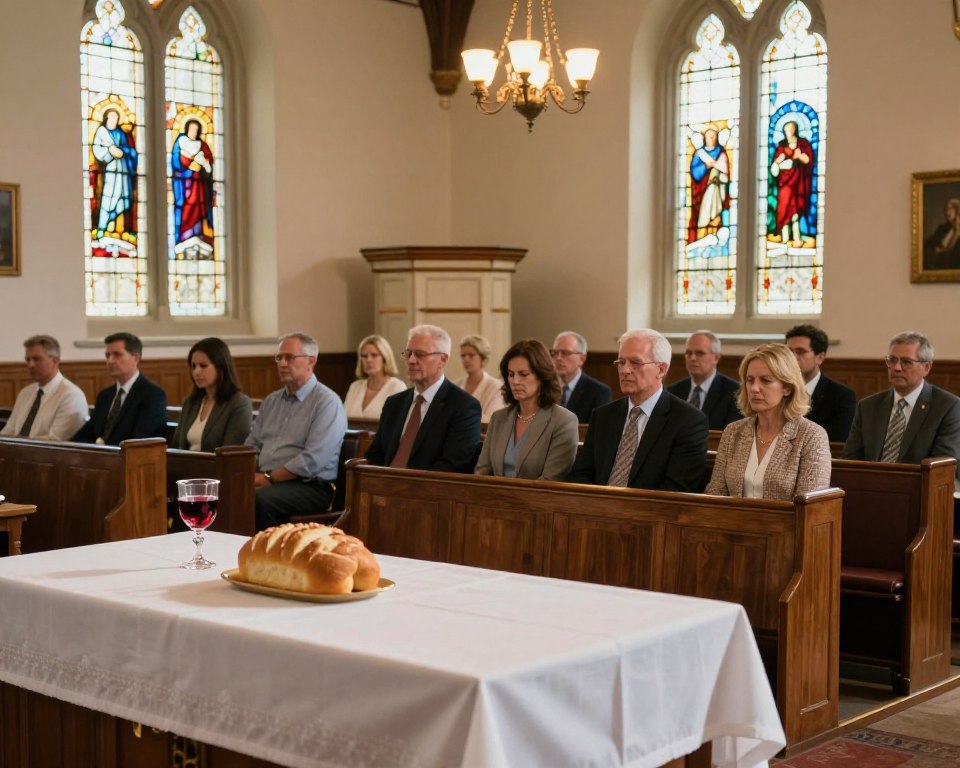
The Lord’s Supper, also known as Communion, is a celebration of Christ’s presence among his people. It is a sacrament where believers partake in bread and wine (or grape juice), symbolizing the body and blood of Christ. The Presbyterian Church views the Lord’s Supper as a means of grace, where participants are nourished spiritually by Christ’s presence.
The frequency of celebrating the Lord’s Supper can vary among Presbyterian churches, but it is generally considered an essential part of worship, often observed on a regular basis.
Significance of Sacraments
The sacraments are significant in the Presbyterian faith because they are seen as a means of experiencing God’s grace and love. They are not just symbolic acts but are believed to be a way through which God’s presence is made real to the believers.
Through the sacraments, the Presbyterian Church emphasizes the importance of community and shared faith. The sacraments are communal acts that bring the congregation together, reinforcing their faith and their connection with each other.
Worship Practices in Presbyterian Churches
The worship practices within the Presbyterian Church USA are a blend of tradition, scripture, and community engagement. This blend is reflected in the various elements that constitute a Presbyterian worship service.
Service Structure
A typical Presbyterian worship service is structured around several key elements, including prayer, scripture reading, sermon, and sacraments. The service usually begins with a call to worship, followed by hymns or psalms, and includes a time for confession and assurance of pardon.
Key Components of a Presbyterian Worship Service:
- Prayer and praise
- Scripture reading and sermon
- Sacraments (Baptism and the Lord’s Supper)
- Offering and community concerns
Contemporary vs. Traditional Worship
Presbyterian churches exhibit a range of worship styles, from traditional to contemporary. Traditional services often feature classic hymns and liturgical elements, while contemporary services may incorporate modern music and multimedia elements.
| Aspect | Traditional Worship | Contemporary Worship |
|---|---|---|
| Music | Classic hymns, traditional choir | Modern worship songs, contemporary band |
| Liturgical Elements | Formal liturgy, traditional prayers | Informal, flexible liturgy |
| Multimedia Use | Limited or no multimedia | Projected lyrics, videos, multimedia presentations |
The Importance of Music
Music plays a vital role in Presbyterian worship, serving as a means of expressing faith, fostering community, and enhancing the worship experience. Hymns and psalms are integral parts of the service, with many churches maintaining a rich musical tradition.
The diversity in worship practices within the Presbyterian Church USA reflects the denomination’s commitment to both tradition and innovation, ensuring that worship remains a vibrant and meaningful experience for its members.
The Role of Faith in Daily Life
The Presbyterian Church USA emphasizes the importance of integrating faith into everyday life, fostering spiritual growth and community engagement. This integration is reflected in various aspects of Presbyterian beliefs and practices.
Spiritual Growth and Discipleship
Spiritual growth is a fundamental aspect of the Presbyterian faith, encouraging individuals to deepen their understanding of God’s will and to live according to their beliefs. Discipleship programs within the church provide guidance and support for believers as they navigate their spiritual journeys.
The church offers various resources, including Bible studies, prayer groups, and mentorship programs, to facilitate spiritual growth. These initiatives help Presbyterians develop a stronger faith and apply their beliefs in practical ways.
Community Involvement
Community involvement is another critical dimension of Presbyterian faith in daily life. The church encourages its members to engage with their local communities, promoting social cohesion and addressing community needs.
Through outreach programs, volunteer opportunities, and community service projects, Presbyterians are actively involved in making a positive impact in their neighborhoods and beyond.
Social Justice Initiatives
The Presbyterian Church USA is committed to social justice, advocating for policies and practices that promote equality, justice, and compassion. This commitment is reflected in the church’s stance on various social issues, from racial justice to environmental stewardship.
| Social Justice Area | Presbyterian Church USA’s Stance |
|---|---|
| Racial Justice | Advocates for racial equality and challenges systemic racism |
| Environmental Stewardship | Promotes sustainable practices and care for creation |
| Economic Justice | Supports policies that address economic inequality and promote fair labor practices |
By living out their faith in these ways, Presbyterians embody their core beliefs and contribute to creating a more just and compassionate society.
Presbyterians and the Bible
Scripture plays a pivotal role in the Presbyterian Church USA, influencing its doctrine and daily life. The church’s approach to the Bible is rooted in a deep respect for its authority and a commitment to understanding its teachings in the context of contemporary life.
Interpretation of Scripture
The Presbyterian Church USA encourages a thoughtful and nuanced interpretation of Scripture. This involves understanding the historical context in which the Bible was written, as well as its application to modern-day issues. As stated in the church’s Confession of Faith, “The Holy Spirit speaks through the Scriptures in a way that is both relevant and challenging to our lives today.”
“The Bible is not just a historical document, but a living word that guides us in our faith and practice.”
The interpretation process is guided by the church’s theological principles, which emphasize the importance of understanding Scripture within the community of faith.
Importance of Study and Fellowship
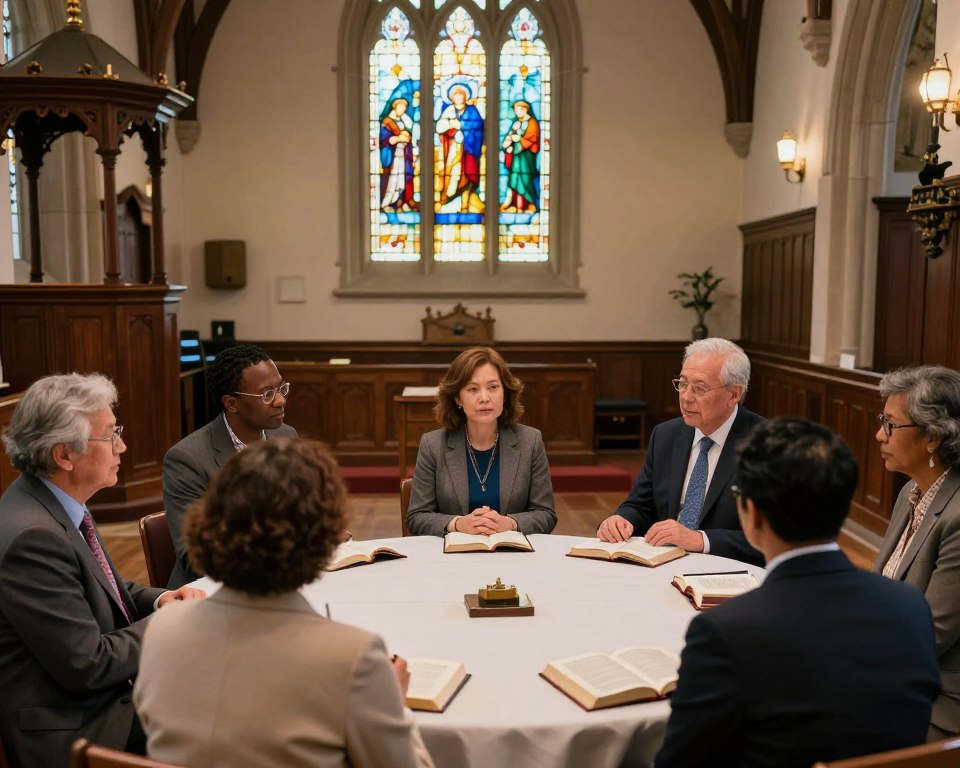
Studying Scripture is not just an individual activity but is deeply enriched by fellowship within the community. The Presbyterian Church USA promotes Bible study groups and educational programs that foster a deeper understanding of Scripture and its application to daily life.
Through these communal efforts, members gain insights into the Bible’s teachings and are encouraged to live out their faith in practical ways. As the Apostle Paul wrote, “faith comes from hearing, and hearing through the word of Christ” (Romans 10:17).
The church also recognizes the value of theological education and the role of pastors and educators in guiding the interpretation of Scripture.
Differences Within the Presbyterian Church USA
Within the Presbyterian Church USA, a wide range of worship styles and theological perspectives coexist. This diversity is a reflection of the church’s commitment to inclusivity and its recognition of the complexity of faith experiences.
Varieties of Worship Styles
The Presbyterian Church USA is known for its diverse worship practices, ranging from traditional to contemporary styles. Traditional worship often features hymns, liturgies, and a more formal structure, appealing to those who appreciate the historical roots of the church’s worship practices.
In contrast, contemporary worship services incorporate modern music, technology, and a more relaxed atmosphere, attracting individuals who seek a fresh and vibrant expression of their faith. This blend of worship styles within the PCUSA allows congregations to choose the approach that best suits their community’s needs and preferences.
Diverse Theological Perspectives
The Presbyterian Church USA also encompasses a range of theological perspectives, reflecting the denomination’s emphasis on individual interpretation of scripture and the role of reason in faith. Theological diversity is seen in the various ways Presbyterians understand and interpret key doctrines, such as salvation and the nature of God.
This diversity is not seen as a weakness but as a strength, fostering a rich dialogue and deeper understanding among Presbyterians. It allows the church to engage with a broad spectrum of theological thought, from more conservative to progressive viewpoints, enriching the faith community.
By embracing both diverse worship styles and theological perspectives, the Presbyterian Church USA demonstrates its commitment to being a welcoming and inclusive community of faith.
The Presbyterian Church and Social Issues
The Presbyterian Church USA’s involvement in social issues reflects its dedication to creating a more equitable society. This commitment is evident in its stances on various critical matters that affect communities across the nation.
Stances on Marriage and Family
The Presbyterian Church USA has taken progressive stances on issues related to marriage and family. It has supported the rights of LGBTQ+ individuals, including the right to marry. This stance is part of a broader commitment to inclusivity and equality within the church and society.
The church also emphasizes the importance of family and the need for supportive family structures. It advocates for policies that strengthen families and provide support to those in need.
Engagement with Racial Justice
Racial justice is another critical area where the Presbyterian Church USA has been actively engaged. The church has acknowledged the historical and ongoing impacts of racism and has taken steps to address these issues within its own structures and in the wider community.
Efforts include promoting diversity and inclusion within church leadership, supporting anti-racism initiatives, and advocating for policies that address racial disparities. The church also provides resources for congregations to engage in conversations about race and racism.
Environmental Stewardship
The Presbyterian Church USA has also been a vocal advocate for environmental stewardship. Recognizing the biblical mandate to care for creation, the church promotes practices that reduce environmental impact and advocates for policies that protect the planet.
Initiatives include encouraging the use of renewable energy sources, reducing waste, and promoting sustainable living practices among its members. The church also participates in broader advocacy efforts to address climate change and protect natural resources.
| Social Issue | PCUSA Stance | Key Actions |
|---|---|---|
| Marriage and Family | Supportive of LGBTQ+ rights, emphasizes family support | Advocacy for LGBTQ+ rights, family support policies |
| Racial Justice | Active engagement against racism | Promoting diversity, anti-racism initiatives, policy advocacy |
| Environmental Stewardship | Advocates for environmental care | Promoting renewable energy, reducing waste, sustainable living |
Conclusion: What It Means to Be a Presbyterian
The Presbyterian Church USA is a denomination that values its Reformed heritage while being open to diverse perspectives and experiences. At its core, being a Presbyterian means embracing a faith that is deeply rooted in the authority of Scripture and the sovereignty of God.
Core of the Faith
Embracing the faith is a personal journey that involves understanding and living out the presbyterian church usa beliefs. It is about cultivating a deep relationship with God through Jesus Christ and being guided by the principles of the Reformed tradition. This journey is not taken alone but is supported by a community that shares a commitment to the presbyterian church core beliefs.
A Community of Inclusion
The Presbyterian Church USA is characterized by its commitment to being a welcoming community. It strives to be inclusive, embracing diversity in all its forms. This openness is reflected in its presbyterian denomination beliefs, which emphasize the importance of hospitality and the value of every individual. By being part of this community, Presbyterians find support, guidance, and a sense of belonging as they navigate their faith journey.
FAQ
What are the core beliefs of the Presbyterian Church USA?
The Presbyterian Church USA is guided by the authority of Scripture, the significance of Jesus Christ, and a Reformed understanding of salvation. The church’s core values include a commitment to social justice, community involvement, and environmental stewardship.
What is the Presbyterian Church USA’s understanding of God?
The Presbyterian Church USA affirms the doctrine of the Trinity, understanding God as a single entity in three persons: Father, Son, and Holy Spirit. The church also emphasizes the attributes and character of God, including love, justice, and mercy.
What sacraments are practiced in the Presbyterian Church USA?
The Presbyterian Church USA recognizes two sacraments: Baptism and the Lord’s Supper. Baptism is understood as a sacrament of initiation into the Christian faith, while the Lord’s Supper is seen as a sacrament of nourishment and communion with Christ.
How do Presbyterians approach worship?
Presbyterian worship practices vary, with some churches adopting traditional styles and others embracing contemporary approaches. Music plays a significant role in Presbyterian worship, with a focus on hymns, psalms, and other forms of musical expression.
What is the role of faith in daily life for Presbyterians?
Presbyterians are encouraged to cultivate spiritual growth and discipleship through personal devotion, community involvement, and social justice initiatives. The church emphasizes the importance of living out one’s faith in daily life, with a focus on serving others and promoting justice and compassion.
How do Presbyterians interpret the Bible?
The Presbyterian Church USA encourages the interpretation of Scripture through a combination of personal study, communal discernment, and historical-critical analysis. The church emphasizes the importance of understanding the Bible in its historical and cultural context.
What is the Presbyterian Church USA’s stance on social issues?
The Presbyterian Church USA has taken stances on various social issues, including marriage and family, racial justice, and environmental stewardship. The church advocates for justice, compassion, and inclusivity, and encourages its members to engage in advocacy and service.
What does it mean to be a Presbyterian?
Being a Presbyterian means embracing a faith that is rooted in the Reformed tradition, with a focus on the authority of Scripture, the significance of Jesus Christ, and a commitment to social justice and community involvement. Presbyterians strive to live out their faith in daily life, with a focus on serving others and promoting justice and compassion.