Welcome to an exploration of one of Christianity’s most meaningful rites of passage. This sacred practice, observed in many denominations, marks a pivotal step in a believer’s journey toward deeper spiritual commitment.
While traditions vary across faith communities, the core purpose remains the same: affirming personal devotion to the teachings of Jesus Christ. For young believers, this milestone often serves as a bridge between childhood baptism and mature engagement with their faith.
Central to this experience is the role of the Holy Spirit. Many view the ceremony as a moment of spiritual empowerment, where participants gain strength for life’s challenges through divine guidance. This connection to the divine helps individuals embrace their role as active members of their religious community.
Though similar to Catholic confirmation in some ways, Protestant traditions often emphasize personal choice over infant baptism vows. Today, this practice continues to thrive, fostering both individual growth and stronger connections within congregations nationwide.
Key Takeaways
- Acts as a spiritual stepping stone between youth and adult faith responsibilities
- Emphasizes personal commitment to Christian teachings and values
- Celebrates the Holy Spirit’s role in guiding believers through life
- Varies in format across different Christian denominations
- Strengthens community bonds through shared religious experiences
- Maintains relevance in modern faith practices despite cultural changes
Introduction to the Meaning and Importance of Confirmation
A time-honored tradition marks the transition from inherited belief to personal conviction. This spiritual milestone helps believers actively claim their place within their religious community. While practices differ, the core idea remains: deepening one’s connection with divine purpose.
Overview of the Sacrament
Many Christian groups see this rite as a way to strengthen faith after baptism. In liturgical traditions like the Roman Catholic Church, it’s considered one of seven sacraments. Participants receive blessings believed to enhance their spiritual growth through the Holy Spirit’s guidance.
Other denominations view it as a symbolic step rather than a sacred ritual. Here, the focus shifts to personal accountability. Young adults publicly declare their commitment to teachings they first received as children.
Context in Protestant and Catholic Traditions
The Catholic Church ties this practice closely to baptismal promises. It’s seen as completing the grace received during infancy. Protestant groups often treat it as voluntary—a conscious choice to follow Christian principles independently.
| Aspect | Catholic Approach | Protestant Perspective |
|---|---|---|
| Sacramental Status | Divine grace channel | Symbolic declaration |
| Connection to Baptism | Completion of initiation | Personal affirmation |
| Age of Participation | Early adolescence | Varies by congregation |
Both traditions agree on one thing: this moment matters. It’s where family teachings become individual convictions, creating lasting bonds within faith communities.
Historical Roots and Scriptural Foundations of Confirmation
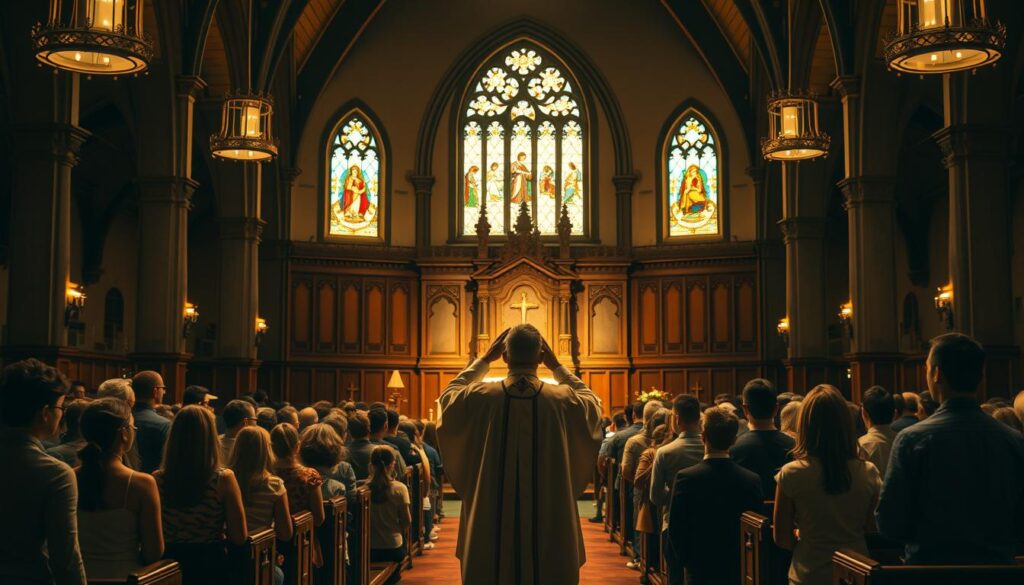
The journey of this faith practice stretches back to the earliest days of Christian communities. Its foundations rest on Jesus Christ’s promise to equip followers with divine guidance. Before his ascension, he assured disciples: “The Advocate, the Holy Spirit, will teach you all things” (John 14:26). This pledge shaped how believers understood spiritual growth.
Scriptural References and Early Church Practices
The Acts of the Apostles shows believers receiving the Holy Spirit through prayer and laying hands. In one account, Peter and John place hands on Samaritans, enabling them to embrace spiritual gifts (Acts 8:14-17). These moments became blueprints for later traditions.
Early Christians viewed this ritual as deepening baptismal vows. By the third century, bishops anointed candidates with oil, symbolizing the Spirit’s presence. Though methods evolved, the core idea remained: empowering individuals through sacred connection.
Reformation Insights and Evolving Perspectives
Reformers like Luther recognized biblical roots in these practices but questioned their sacramental role. They argued that while the Word of God supported spiritual affirmation, Christ hadn’t explicitly commanded it as a sacrament. This led to revised approaches in many denominations.
Lutherans and Anglicans preserved the rite as a public commitment tool. Methodists later adopted it to nurture personal faith journeys. Today, these traditions honor scripture’s guidance while focusing on individual readiness rather than ritual obligation.
Exploring Protestant Church Confirmation and Its Spiritual Significance
Across Christian traditions, a meaningful ceremony often marks when young believers take ownership of their spiritual path. This milestone blends education with celebration, creating space for personal growth within a supportive community. While methods differ, the core purpose remains: transitioning from inherited beliefs to intentional devotion.
Public Profession of Faith in Protestant Contexts
For many baptized as infants, this rite lets them reaffirm vows made on their behalf. Teens typically complete months of study before standing before their congregation. As one Lutheran leader shared: “It’s not just about answering questions—it’s about showing your heart’s commitment.”
Liturgical groups treat this as a sacramental event tied to baptismal grace. Their ceremonies often include:
- Renewing promises through personal testimony
- Receiving blessings from spiritual leaders
- Joining adult worship practices
Meanwhile, Baptist communities approach things differently. They see believer’s baptism as combining initiation and public declaration. This table shows key contrasts:
| Feature | Liturgical Practice | Baptist Tradition |
|---|---|---|
| Primary Focus | Affirming baptism | Adult conversion |
| Typical Age | 12-14 years | Any age after conversion |
| Biblical Basis | Church heritage | New Testament models |
These approaches reflect diverse views on scripture’s role. Yet both aim to foster lasting spiritual connections that guide daily life.
Understanding the Role of the Holy Spirit in the Confirmation Process
At the heart of spiritual growth lies a divine partnership that transforms believers from within. This sacred connection finds its roots in the day of Pentecost, when early followers experienced an outpouring of spiritual power. Many see this moment as the blueprint for how faith communities embrace divine guidance today.
Pentecostal traditions emphasize tangible encounters with the holy spirit. The Assemblies of God teach that “the baptism of the holy spirit is a vital experience beyond salvation”, often marked by speaking in tongues. They point to Acts 19, where believers received spiritual gifts through prayer and laying on of hands.
Connection with Pentecost and the Gifts of the Spirit
Mainline groups approach this differently. While they honor the gifts of the holy spirit, most focus on strengthening faith rather than dramatic manifestations. Common elements include:
- Teaching about wisdom, understanding, and courage as spiritual tools
- Emphasizing daily reliance on divine guidance
- Celebrating community support through mentorship programs
Lutheran and Methodist practices often link confirmation to receiving the holy spirit through education. Teens learn how biblical teachings apply to modern challenges. One pastor explained: “It’s about equipping youth with eternal truths, not just rituals.”
Across denominations, the laying on of hands remains significant. This ancient practice symbolizes transferring spiritual authority and blessings. Whether through quiet prayers or vibrant worship, the goal stays consistent: awakening hearts to God’s ongoing work in believers’ lives.
Comparative Denominational Practices in Confirmation
Christian traditions showcase rich diversity in how they mark spiritual milestones. From oil anointments to adult baptisms, each approach reflects unique theological priorities while honoring shared biblical roots.
Catholic, Eastern Orthodox, and Anglican Traditions
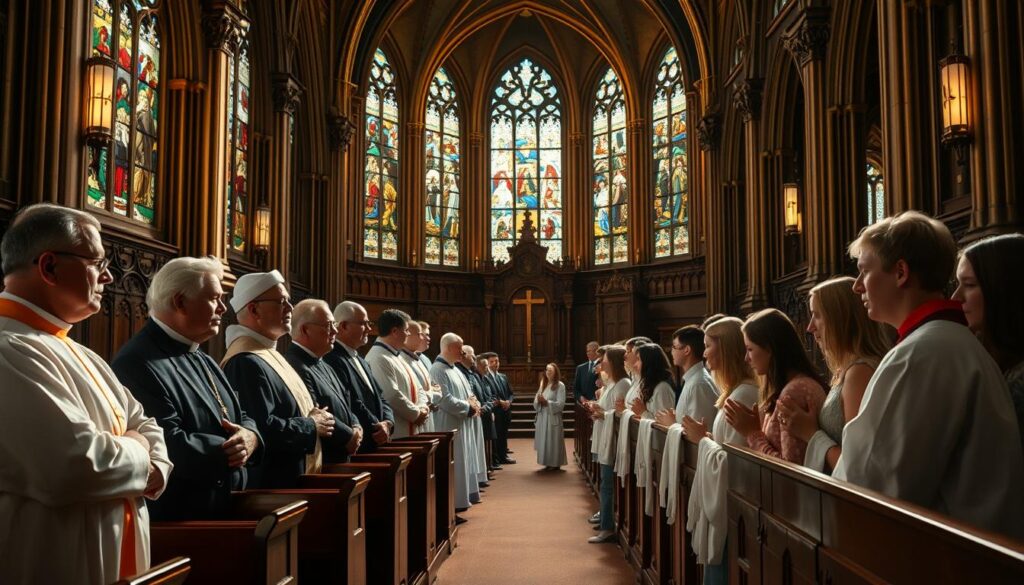
In the Roman Catholic Church, bishops anoint candidates with sacred oil during confirmation. This practice symbolizes receiving the Holy Spirit’s gifts. Anglican ceremonies also feature bishops laying hands but skip the oil, focusing instead on personal faith renewal.
Eastern Orthodox communities combine baptism and confirmation into one ritual called Chrismation. A priest typically applies blessed oil immediately after immersion, even for infants. “This unified approach emphasizes God’s grace from life’s earliest stages,” explains a Greek Orthodox leader.
Methodist and Baptist Approaches
Methodists view confirmation as a voluntary step for any age. Ministers lead services where participants publicly affirm their beliefs through hand-laying blessings. Preparation often involves months of classes exploring Christian teachings.
Baptist congregations take a different path. They prioritize adult baptism through full immersion as the primary faith declaration. “We follow New Testament models where belief precedes baptism,” notes a Southern Baptist pastor. This approach removes traditional confirmation ceremonies entirely.
| Tradition | Key Practice | Leadership |
|---|---|---|
| Roman Catholic | Oil anointment | Bishop required |
| Eastern Orthodox | Chrismation with baptism | Priest typically |
| Methodist | Public affirmation | Minister leads |
Preparing for Confirmation: Rites, Catechesis, and Community Involvement
Stepping into spiritual adulthood requires both personal dedication and communal support. Modern preparation blends classroom learning with sacred gestures, creating a bridge between ancient traditions and contemporary faith journeys.
Catechetical Classes and Spiritual Education
Today’s candidates explore their beliefs through interactive sessions rather than rote memorization. “We’ve moved beyond dusty catechism booklets,” shares a youth minister from Texas. Personalized spiritual education now addresses real-world challenges like social media ethics and peer relationships.

- Small-group discussions about faith in daily life
- Service projects demonstrating Christian values
- Mentorship pairings with congregational leaders
The Laying on of Hands and Ritual Significance
This ancient practice remains central across denominations. Spiritual leaders explain it as transferring blessings rather than magical empowerment. One Lutheran pastor notes: “Our touch represents the community’s support, not just clerical authority.”
| Past Practice | Modern Adaptation |
|---|---|
| Memorized answers | Personal faith statements |
| Rigid age requirements | Readiness-based timing |
| Isolated preparation | Intergenerational mentoring |
Many congregations now host joint ceremonies, allowing candidates from multiple locations to celebrate together. This approach strengthens regional faith networks while honoring individual spiritual paths.
Conclusion
Marking a pivotal moment in spiritual growth, this sacred practice unites believers across generations. Through personal commitment and communal support, it strengthens both individual faith and collective worship. While methods differ among denominations, each approach honors the journey from childhood teachings to adult spiritual responsibility.
From liturgical ceremonies to believer’s baptism, these traditions showcase Christianity’s rich diversity. Some emphasize sacramental grace, while others focus on voluntary declarations. Yet all share a common goal: helping individuals embrace their role as active participants in religious life.
The transition from infant baptism to mature discipleship remains central to this process. By reaffirming vows made on their behalf, believers claim ownership of their spiritual path. This milestone isn’t just about rituals—it’s about building lasting connections with divine guidance and community.
Modern preparation blends education with hands-on service, creating meaningful opportunities for growth. Whether through mentorship programs or interactive classes, congregations equip youth with tools for lifelong faith. These efforts ensure the practice stays relevant in our rapidly changing world.
Explore how your local community celebrates this spiritual stepping stone. Discover the beautiful balance between ancient traditions and contemporary expressions of belief—a bridge connecting heartfelt devotion with everyday Christian living.
FAQ
How does confirmation differ between Protestant and Catholic traditions?
In the Catholic Church, confirmation is a sacrament emphasizing the Holy Spirit’s gifts, often administered by a bishop. Protestant traditions view it as a public profession of faith, focusing on personal commitment rather than sacramental grace.
What role does the Holy Spirit play in confirmation?
The Holy Spirit is central to the rite, seen as empowering individuals with spiritual gifts. This ties to Pentecost, where believers received the Spirit’s strength to live out their faith boldly.
At what age do most denominations practice confirmation?
Ages vary. Catholics often confirm around 12–14, while Lutherans or Methodists may align it with adolescence. Some Baptist groups emphasize believer’s baptism instead, typically after a personal decision.
Why is confirmation considered a public act?
It symbolizes a voluntary embrace of faith, often after catechism. Public affirmation strengthens communal bonds and accountability, reflecting a mature step in one’s spiritual journey.
How did the Reformation reshape confirmation practices?
Reformers like Luther shifted focus from sacramental rituals to teaching and personal faith. This led to catechism-based preparation, prioritizing understanding over ceremony in many Protestant circles.
Do all Christian denominations require confirmation?
No. Anglicans and Eastern Orthodox practice chrismation (similar to confirmation) alongside baptism. Groups like Baptists emphasize believer’s baptism alone, viewing public testimony as sufficient.
What’s the significance of laying on hands during confirmation?
This ancient act symbolizes blessing and the Holy Spirit’s presence. It connects participants to apostolic traditions, representing spiritual empowerment and communal support.
How do converts experience confirmation?
Converts often undergo catechism to learn doctrine before affirmation. In Catholic or Anglican settings, they might receive the sacrament alongside baptism if not confirmed earlier.
Can infants be confirmed?
Typically no, except in Eastern Orthodoxy, where chrismation follows infant baptism. Most traditions reserve confirmation for those old enough to profess faith personally.
Is confirmation linked to First Holy Communion?
In Catholicism, confirmation usually precedes Communion. Protestants often merge the two, emphasizing a holistic commitment to faith without strict sacramental stages.