In the 16th century, a transformative shift reshaped Christianity. This branch of faith emerged as a response to theological debates, prioritizing personal connection with scripture over institutional intermediaries. Central to its identity is the conviction that salvation comes through faith rather than human effort—a principle that continues to unite millions globally.
This religious tradition emphasizes individual spiritual responsibility and direct access to sacred texts. Followers believe in the “priesthood of all believers,” rejecting hierarchical structures that separate worshippers from divine truth. The Bible stands as the ultimate guide, with practices evolving around its teachings rather than external traditions.
Today, this vibrant spiritual family includes over 833 million people worldwide. From Lutherans to Baptists, various denominations share foundational ideas while expressing them through distinct worship styles. What began as a reformation effort now represents one of Christianity’s largest and most diverse expressions.
Key Takeaways
- Originated during 16th-century reforms challenging established religious authority
- Teaches salvation through faith alone, not deeds or rituals
- Recognizes scripture as the supreme authority for Christian practice
- Unites 833+ million followers across numerous denominations
- Combines shared core principles with cultural adaptability
- Five foundational statements (Sola principles) define theological priorities
Understanding the protestant church definition
The term “Protestant” has roots in a bold political stand from 1529. Six German princes and fourteen cities formally opposed religious restrictions set by the Diet of Speyer. This act of defiance gave the movement its name, marking the start of a spiritual revolution.
What began as a political label soon grew into a religious identity. By the 1550s, the name described communities breaking from Roman Catholic traditions. These groups shared core ideas like scripture-based faith and personal spiritual access.
Today’s Protestant landscape includes diverse expressions of Christianity. From high-church Anglicans to informal Pentecostal gatherings, these faith communities maintain distinct practices while upholding shared principles. The table below highlights key differences:
| Denomination | Origin Period | Distinct Practice |
|---|---|---|
| Lutheran | 16th Century | Liturgical worship with sacraments |
| Baptist | 17th Century | Believer’s baptism by immersion |
| Methodist | 18th Century | Small group discipleship models |
This variety stems from the original reformers’ emphasis on local interpretation of biblical teachings. Modern congregations continue valuing personal faith over rigid structures, keeping the spirit of the 1529 protest alive in new contexts.
Historical Roots and the Reformation Movement
A single act of defiance in 1517 sparked a spiritual revolution across Europe. On October 31, a German monk named Martin Luther nailed his Ninety-Five Theses to a church door in Wittenberg. This bold move challenged the sale of indulgences and ignited what became known as the Protestant Reformation.
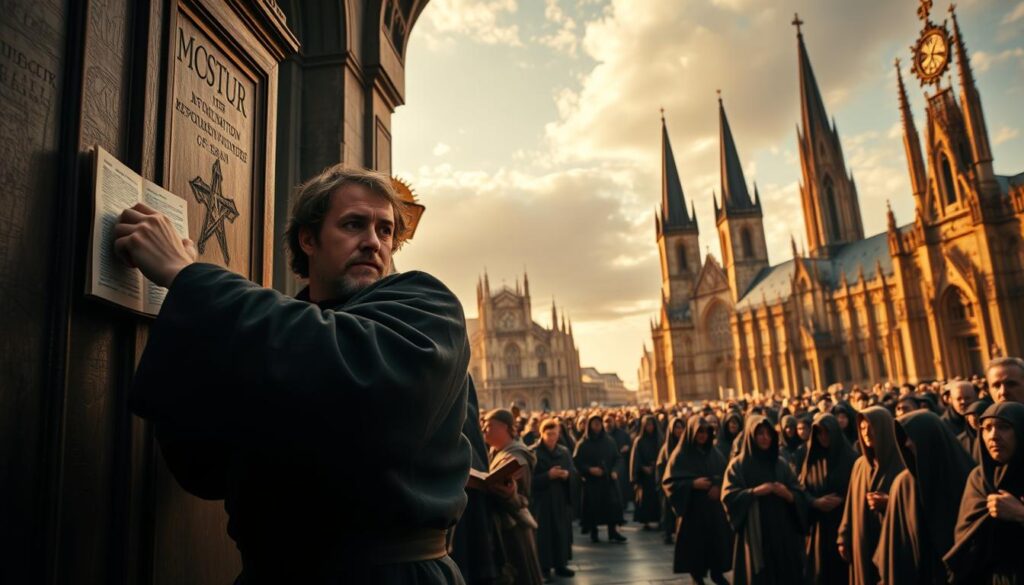
Martin Luther and the Ninety-Five Theses
Luther’s document argued salvation came through faith alone—not payments to religious institutions. His ideas spread rapidly thanks to the printing press, reaching ordinary people and rulers alike. The Reformation movement gained momentum as critics questioned long-standing traditions.
John Calvin and Huldrych Zwingli’s Reforms
Switzerland became another hotspot for change. Huldrych Zwingli reimagined communion as symbolic rather than literal, while John Calvin developed doctrines about predestination. Calvin’s teachings influenced nations from Scotland to Hungary, shaping new worship styles.
These reformers shared a common goal: returning to biblical foundations. Their efforts created lasting shifts in Christian history, proving ideas could reshape societies. By 1550, Europe’s religious landscape looked utterly different from just decades earlier.
Proto-Protestantism and Early Reform Movements
The roots of religious transformation stretch back earlier than many realize. Over a century before Luther’s famous protest, courageous thinkers began questioning traditional power structures. Their ideas planted seeds that would later blossom into full-scale reformation.
Influence of Wycliffe and Hus
John Wycliffe rocked 14th-century England by challenging spiritual hierarchies. This Oxford scholar insisted scripture—not religious leaders—should guide faith. He famously declared: “The Bible is for the ploughboy as much as the priest.” His team translated Latin texts into English, letting ordinary people access sacred teachings directly.
Wycliffe’s reforms extended beyond theology. He argued kings held spiritual authority equal to clergy—a radical idea that shook established power dynamics. Though condemned as heretical, his work inspired future movements.
Jan Hus carried these ideas to Bohemia decades later. As Prague’s university rector, he criticized corrupt clergy and communion restrictions. His fiery sermons attracted thousands seeking authentic faith. When burned at the stake in 1415, Hus became a martyr symbolizing reform’s cost—and its irresistible pull.
These early voices proved change wasn’t born in 1517. They showed how questioning authority and prioritizing scripture could reshape spiritual landscapes. Their courage laid tracks for later reformers to build upon.
Key Figures and Influential Leaders
Two names stand out in reshaping Christianity’s trajectory through bold ideas and unwavering conviction. These thinkers didn’t just challenge norms—they built new frameworks that millions still follow centuries later.

Martin Luther’s Impact on Church Reform
Martin Luther became Christianity’s accidental revolutionary. Though best known for his 1517 protest, his true legacy lies in reimagining faith itself. He insisted scripture belonged to all people, not just clergy. “Why should one man control what God meant for everyone?” he argued.
Luther’s writings spread like wildfire across Northern Europe. His translation of the Bible into German let ordinary folks engage directly with sacred texts. This empowered local communities to shape their spiritual practices without relying on distant authorities.
John Calvin and the Spread of Reformed Theology
While Luther sparked change, John Calvin organized it. His systematic approach transformed scattered reforms into lasting institutions. Calvin’s teachings emphasized God’s sovereignty, shaping churches from Geneva to colonial America.
Presbyterian and Reformed traditions still reflect his detailed doctrinal frameworks. Unlike Luther’s focus on individual faith, Calvin created structures that balanced personal belief with communal accountability. His work proved reforms could build societies, not just critique them.
Core Doctrines and Theological Beliefs
Three revolutionary ideas transformed how millions connect with their faith. These guiding principles shape worship practices and personal spirituality across diverse communities. At their heart lies a radical trust in divine grace and accessible truth.
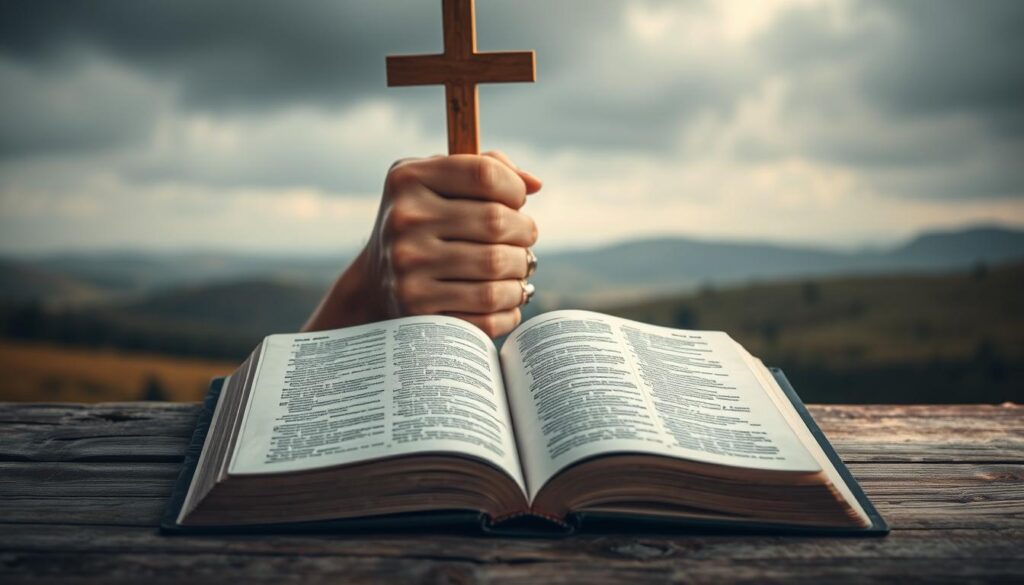
Sola Scriptura: The Book as Compass
Sola Scriptura places sacred texts above human traditions. This doctrine asserts that scripture alone holds ultimate spiritual authority. Followers study biblical teachings directly, fostering personal connections rather than relying on institutional interpretations.
Sola Fide: Grace Through Trust
The concept of justification by faith reshaped ideas about salvation. Believers maintain that acceptance comes through heartfelt trust, not ritual observance. As one reformer noted: “We clasp forgiveness like a child holds a parent’s hand – not earned, but freely given.”
| Principle | Focus | Impact |
|---|---|---|
| Sola Scriptura | Biblical authority | Empowers personal study |
| Sola Fide | Faith-based salvation | Simplifies spiritual requirements |
| Universal Priesthood | Shared leadership | Democratizes religious practice |
These doctrines work together like interlocking gears. Scripture provides direction, faith enables connection, and shared responsibility strengthens communities. Together, they form a spiritual framework emphasizing individual access to divine truth.
Modern congregations continue applying these core beliefs in creative ways. From interactive Bible studies to collaborative decision-making, the legacy of these teachings remains vibrant. They prove ancient ideas can adapt while keeping their transformative power.
The Five Solae and Their Significance
Five Latin declarations revolutionized spiritual thought during the Reformation era. These phrases—collectively called the Five Solae—became battle cries for reformers seeking to refocus Christianity on its foundational truths. They continue to shape core doctrines for millions today.
Sola Gratia and Solus Christus
Sola Gratia (grace alone) upended traditional views of salvation. This teaching declares redemption comes solely through divine favor, not human effort. As reformers argued, no ritual or deed earns God’s mercy—it’s freely given.
Solus Christus (Christ alone) reinforces this idea by naming Jesus as humanity’s only bridge to the divine. Early believers rejected systems requiring earthly mediators, insisting personal faith connects individuals directly to sacred truth.
Soli Deo Gloria and the Role of Grace
Soli Deo Gloria (glory to God alone) ties these doctrines together. Every aspect of salvation—from initiation to completion—stems from divine action. Followers celebrate this truth by directing all honor toward their creator, not institutions or individuals.
These principles created a spiritual framework prioritizing divine initiative over human systems. By centering on grace, Christ’s role, and God’s glory, they offer a cohesive vision of faith that remains relevant across cultures and generations.
FAQ
What makes a church "Protestant"?
Protestant communities emphasize teachings like Sola Scriptura (Scripture alone) and salvation through faith, not rituals. They emerged from 16th-century reforms challenging Catholic practices, focusing on personal faith and biblical authority.
How did Martin Luther spark the Reformation?
In 1517, Luther published his Ninety-Five Theses, criticizing indulgences and corruption. His ideas spread rapidly, inspiring movements to reject papal authority and redefine Christian practices across Europe.
Why are John Calvin and Huldrych Zwingli important?
Calvin systematized Reformed theology, stressing God’s sovereignty and predestination. Zwingli led reforms in Switzerland, advocating for simplified worship and rejecting traditions not rooted in Scripture.
Were there reformers before Luther?
Yes! Figures like Jan Hus and John Wycliffe critiqued Catholic doctrines centuries earlier. Wycliffe translated the Bible into English, while Hus’s teachings on lay access to Scripture influenced later reformers.
What are the Five Solae?
These core principles include Sola Fide (faith alone), Sola Gratia (grace alone), and Soli Deo Gloria (glory to God alone). They summarize Protestant theology’s focus on divine grace over human effort.
How did Protestant beliefs affect colonial America?
Groups like the Puritans in Massachusetts Bay sought religious freedom to practice reformed teachings. Their emphasis on individual conscience shaped early American views on governance and community.
Do all Protestant groups share the same doctrines?
While many agree on basics like salvation through Christ, denominations differ on baptism, communion, and church structure. Lutherans, Baptists, and Methodists, for example, have unique traditions.