Walking into a new spiritual community can feel intimidating, especially when you’re unsure what to wear. While most congregations prioritize warmth and inclusion over strict rules, choosing respectful clothing shows care for the setting and those around you. Modest choices that cover shoulders, chest, and knees are widely appreciated across denominations.
Attire preferences often reflect a congregation’s style. Traditional services might lean toward business casual, while modern gatherings could welcome jeans and relaxed tops. When in doubt, slightly dressier options ensure you blend in comfortably. Remember: your presence matters more than perfection.
Many first-time visitors worry about standing out, but communities value sincerity over outfits. Focus on clean, well-fitting pieces that let you engage fully in worship. This guide will help you navigate unspoken norms, from classic denominational services to contemporary gatherings.
Key Takeaways
- Modest clothing choices demonstrate respect for sacred spaces and community values
- Attire expectations vary between traditional and contemporary worship styles
- When uncertain, lean toward slightly formal options to feel confident
- Comfortable outfits help maintain focus on spiritual connection
- Clean, well-fitting garments work for most congregations
Exploring the Foundations of Protestant Church Attire
Understanding what to wear begins with knowing why certain traditions exist. For centuries, religious spaces have balanced reverence with cultural shifts. The earliest ministers wore special garments, but later movements embraced simplicity to focus on teachings rather than appearance.
Roots in Reformation Values
Sixteenth-century reforms rejected ornate clerical robes, favoring practical clothing. This shift reflected a belief that spiritual connection matters more than outward displays. Many congregations today maintain this philosophy, though interpretations vary widely.
Modern Denominational Approaches
Different groups express their values through clothing in unique ways:
| Denomination | Attire Style | Worship Features |
|---|---|---|
| Anglican/Lutheran | Business formal | Hymns, liturgical structure |
| Baptist/Methodist | Business casual | Mixed music styles |
| Pentecostal | Modest casual | Contemporary gospel |
| Non-denominational | Everyday wear | Band-led worship |
Leaders often set the tone – pastors in suits may signal formal expectations, while clergy in jeans suggest relaxed norms. Regional culture also plays a role. Southern congregations might prefer Sunday best, whereas urban groups lean casual.
Music styles further influence clothing choices. Churches using scripture-based songs often maintain traditional dress, while those with modern bands typically welcome casual outfits. Always remember: modesty remains key across all worship forms.
Choosing the Right Attire for Church Services
Selecting appropriate clothing for spiritual gatherings combines personal comfort with community respect. While expectations vary between congregations, polished yet practical outfits strike the perfect balance. Let’s explore how to navigate different dress codes while maintaining authenticity.
Balancing Formal and Casual Options
Many spiritual communities embrace both dressy and relaxed styles. This table shows common choices across different service types:
| Service Style | Women’s Options | Men’s Options |
|---|---|---|
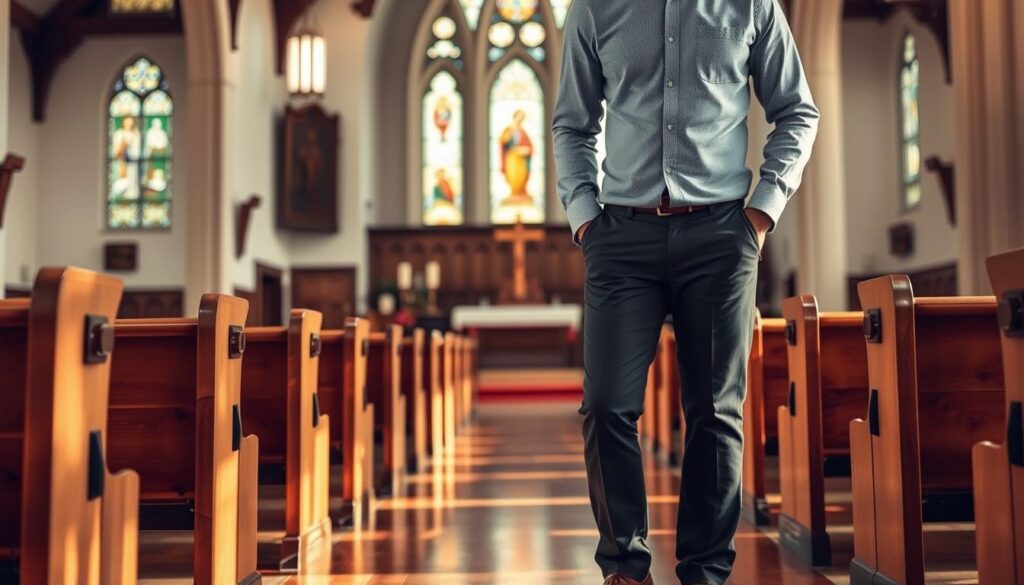
| Traditional | Knee-length dresses | Dress shirts + slacks |
| Contemporary | Tailored jeans + blouses | Dark jeans + polos |
| Mixed | Skirts + cardigans | Khakis + button-downs |
When uncertain, observe regular members’ clothing during your first visit. Dark-wash jeans often work better than distressed styles in casual settings. Layered outfits let you adapt to temperature changes while maintaining coverage.
Tips for Modesty and Appropriateness
Focus on these key elements for respectful dressing:
- Shoulder coverage: Choose capped sleeves over strapless tops
- Hemlines: Aim for knee-length or below when sitting
- Necklines: Keep cleavage concealed with higher cuts
Comfort matters as much as appearance – you’ll want to focus on worship, not adjusting your outfit. Structured fabrics resist wrinkling during extended services. For footwear, consider supportive shoes since many gatherings involve standing during hymns.
Tips for Adopting the Protestant Church Dress Code in Modern Worship
Finding your style in a worship setting balances personal expression with community respect. Today’s congregations value authenticity, but thoughtful clothing choices show care for shared values. Let’s explore how to honor traditions while staying true to yourself.
Navigating Cultural and Local Expectations
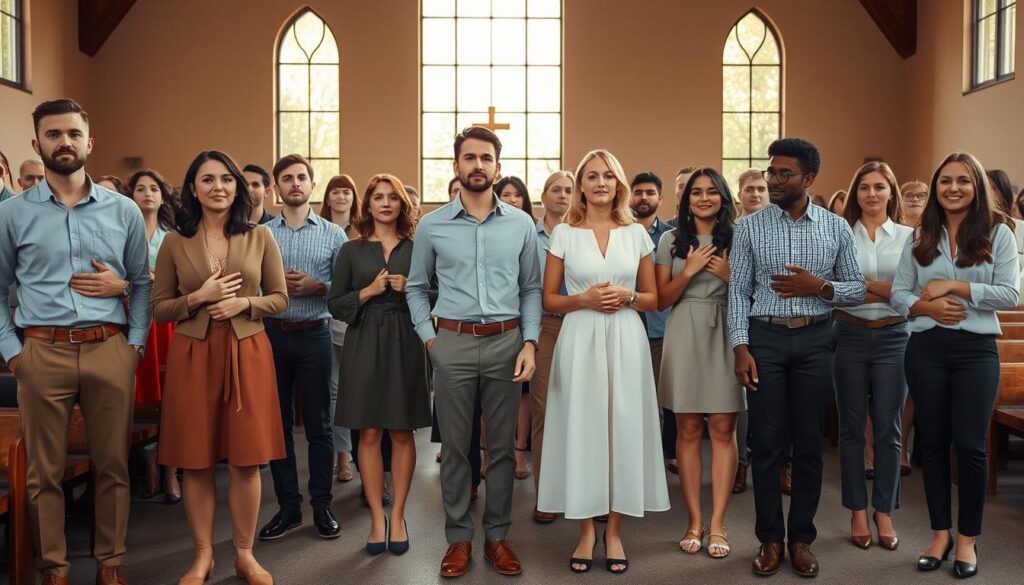
Regional differences shape what people wear. In Southwest Florida, flip-flops fit right in, while Midwestern congregations often prefer collared shirts. Observe regular members’ choices during your first visit – their outfits reveal unspoken norms.
Incorporating Personal Style with Traditional Elements
Add personality through accessories or color while keeping cuts modest. A patterned scarf or leather bracelet can showcase individuality without distracting others. As one fashion-conscious pastor notes: “My crisp white sneakers let me connect with younger members while maintaining professionalism.”
Practical Outfit Inspirations for Various Occasions
Build a versatile wardrobe with these mix-and-match options:
| Occasion | Women’s Options | Men’s Options |
|---|---|---|
| Regular Service | Midi skirt + knit top | Chinos + linen shirt |
| Holiday Event | Wrap dress + blazer | Sport coat + dress jeans |
| Outdoor Gathering | Cropped trousers + flats | Polo + technical pants |
Age-appropriate choices matter. Teens might rock clean sneakers, while seniors could opt for tailored separates. Remember: your clothing should help you focus on worship, not attract attention. When in doubt, ask yourself – does this outfit honor the place and people around me?
Conclusion
Confidence in spiritual gatherings starts with understanding your community’s culture rather than memorizing rules. Many pastors intentionally choose clothing that balances approachability with reverence – a helpful cue for newcomers. While some congregations reserve communion for members, all typically welcome visitors warmly regardless of their outfits.
Your attire should honor the sacred space without causing stress. Homeless individuals often find acceptance in these communities precisely because focus stays on spiritual connection over appearances. Observe regular attendees’ styles, then adapt your wardrobe using comfortable pieces that reflect your personality.
Modern worship spaces value authenticity above strict traditions. A teenager’s clean sneakers or a senior’s tailored blazer both work when paired with respectful coverage. What matters most is showing up ready to engage meaningfully with others.
Ultimately, your presence demonstrates care for the congregation and its values. As denominations evolve, the core principle remains: clothing should facilitate connection, not distract from it. Wear what lets you participate fully while respecting the collective experience.
FAQ
How do denominations influence what’s considered appropriate?
Denominations often reflect unique cultural or theological values, which shape expectations. For example, liturgical traditions might lean toward formal attire, while contemporary congregations embrace relaxed styles. Always observe local customs or ask leaders for clarity.
Are jeans acceptable for casual services?
Many modern congregations welcome jeans, especially in relaxed settings. Pairing them with a collared shirt or blouse balances comfort and respect. Check the congregation’s vibe beforehand—some prioritize neatness over strict formality.
How do I navigate cultural expectations if I’m new?
Start by attending a service to observe common styles. When in doubt, opt for business casual—think slacks, skirts, or dresses in muted tones. Over time, you’ll learn how to blend personal flair with community norms.
What guidelines ensure modesty in attire?
Aim for clothing that covers shoulders, knees, and midriffs. Avoid overly tight fits or flashy patterns. Neutral colors and simple accessories often align with values of humility and focus on worship.
Can I incorporate trendy styles without disrespecting traditions?
Yes! Modern fits like tailored jumpsuits or linen shirts work well. Balance bold choices with classic elements—for example, pair a statement necklace with a modest dress. Prioritize cleanliness and intentionality in your look.
What should I wear for weddings or special events?
Formal occasions typically call for suits, dresses, or skirts below the knee. Darker hues like navy or charcoal are safe, but check invitation notes for themes. Accessories like ties or hats can add personality without overshadowing the event.
Do age or generational differences affect dress norms?
Often, yes. Older members might prefer suits or Sunday-best dresses, while younger attendees lean into smart-casual looks. Focus on unity—whether polished or relaxed, attire should reflect reverence for the gathering.