Nestled on Peter’s Hill in Ireland’s historic County Louth, St. Peter’s stands as a living chronicle of faith and community. For over 800 years, this sacred site has welcomed worshippers, surviving wars, sieges, and cultural shifts. Its Georgian-era design, completed in 1753, showcases elegant symmetry and timeless craftsmanship.
The current structure replaced an earlier medieval building damaged during Cromwell’s 17th-century campaign. Architect Hugh Darley’s vision blended classical proportions with practical worship spaces, while Francis Johnston’s 1793 spire added striking verticality. Today, the building remains a spiritual hub under Revd. Dr. Iain Jamieson’s leadership.
Beyond its role as a place of prayer, St. Peter’s has anchored the local town’s social fabric. Its north-bank location near the River Boyne made it a natural gathering spot. Visitors today encounter not just architectural beauty but also centuries of stories etched into its walls.
Key Takeaways
- St. Peter’s has operated as a worship center since medieval times, spanning eight centuries
- The Georgian-style structure features Hugh Darley’s design and a later spire addition
- Serves as both a religious site and community focal point in County Louth
- Survived historical conflicts including Cromwell’s 1649 siege
- Offers insights into Ireland’s architectural evolution and Christian traditions
The Historical Roots of Protestant Church Drogheda
St. Peter’s origins trace back to the Anglo-Norman period, marking a pivotal shift in Ireland’s religious architecture. Norman knight Hugh de Lacy secured this riverside site before 1186, planting seeds for eight straight centuries of spiritual practice.
Anglo-Norman Beginnings and Medieval Foundations
The dedication to St. Peter reveals its Norman roots – Celtic traditions favored local saints. Builders crafted the original peter church using techniques seen at Mellifont Abbey. Shared tile patterns and stonework suggest master artisans shaped both landmarks.
By the 13th century, the complex boasted six chapels serving different purposes. From baptisms to bishop meetings, this wasn’t just a place of prayer. It functioned as Armagh Diocese’s temporary cathedral, hosting major religious events.
| Period | Development | Significance |
|---|---|---|
| 12th Century | Hugh de Lacy establishes site | Anglo-Norman religious foothold |
| 13th-16th Century | Six-chapel complex expands | Diocesan administration center |
| 17th Century | Cromwellian damage occurs | Sets stage for Georgian rebuild |
Transition from Early Worship to the Georgian Era
War damage in 1649 created an opportunity for reinvention. Hugh Darley reimagined the medieval building in 1753, blending old foundations with Georgian elegance. His design honored the church ireland‘s legacy while modernizing worship spaces.
Though the spire came later, Darley’s work ensured continuity. The town‘s growth mirrored the church‘s evolution – both rooted in history yet adapting through time.
Architectural Marvels and Design Legacy
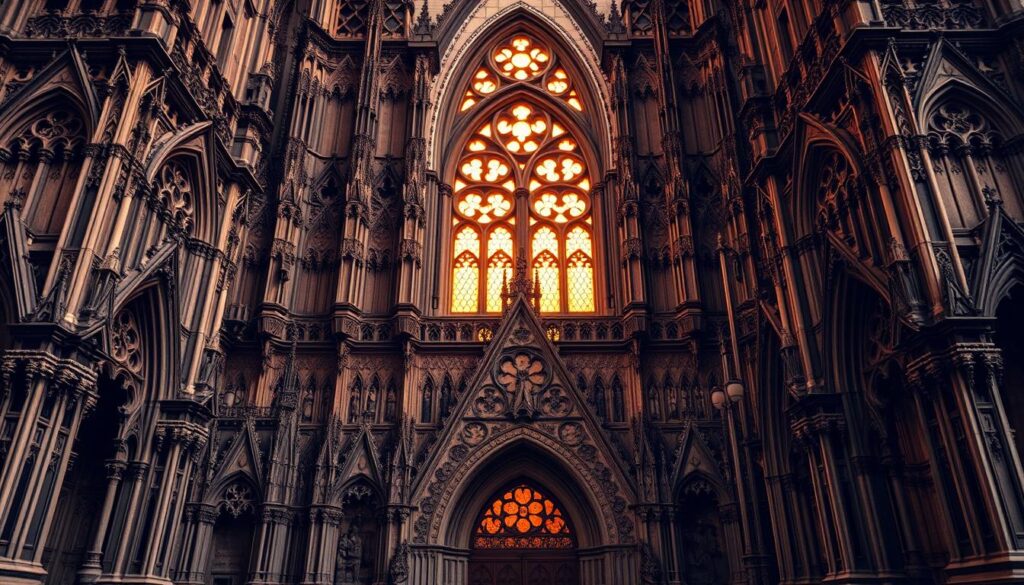
St. Peter’s stands as a masterclass in architectural harmony, blending bold geometry with delicate details. Dublin architect Hugh Darley set the stage in 1753 with a building that redefined sacred spaces. His vision fused Palladian precision with Baroque flair, creating a landmark that still captivates visitors.
Georgian and Baroque Influences
Darley’s design showcases three limestone bays with horizontal channelling – a signature Georgian technique. The interior church originally featured box pews arranged by social status. Italian artisans added dramatic plasterwork in the chancel, their swirling patterns contrasting with the structure’s clean lines.
Iconic Spire and Stone Craftsmanship
Francis Johnston’s 1793 spire addition created an unforgettable silhouette. This Gothic-inspired crown sits atop Darley’s classical base like stone lace. Local craftsmen sourced limestone from nearby quarries, their tool marks still visible in the new church’s weathered surfaces.
Restorations and Interior Reordering
Late 19th-century renovations removed private pews for communal bench seating. The 1907 sanctuary update introduced the current pulpit and prayer desk. These changes preserved Darley’s vision while adapting to evolving worship needs.
| Feature | Designer | Year | Style |
|---|---|---|---|
| Main Structure | Hugh Darley | 1753 | Palladian |
| Spire Addition | Francis Johnston | 1793 | Gothic Revival |
| Sanctuary Update | Local Craftsmen | 1907 | Edwardian |
Architectural historians Christine Casey and Alastair Rowan praise the building’s “strong, masculine presence” – a testament to Darley’s skill in balancing grandeur with purpose. Every stone tells a story of adaptation, from Norman foundations to Georgian reinvention.
The Legacy of protestant church drogheda
Centuries of faith and tradition converge at St. Peter’s, where spiritual leadership and community bonds intertwine. As a former Pro-Cathedral for the Diocese of Armagh, this sacred space shaped Ireland’s religious landscape through pivotal decisions and ceremonies.
Role in Ireland’s Ecclesiastical History
From 1186 to 1559, clergy gathered here for synods that determined doctrine across the church ireland. Over 200 years, eight Primates found their final rest within these walls – their tombs forming a stone chronicle of Anglican leadership.
| Primate | Years Active | Contribution | Historical Period |
|---|---|---|---|
| John Colton | 1397-1404 | Strengthened diocesan governance | Late Medieval |
| Henry Ussher | 1595-1613 | Championed Irish-language scripture | Reformation Era |
| Christopher Hampton | 1613-1625 | Navigated political tensions | Early Modern |
Impact on Local Heritage and Community Identity
Today’s worshippers walk where bishops once ordained priests. The brief history of this community hub shows remarkable adaptability – hosting Christmas markets during peace and sheltering people during conflict.
Revd. Dr. Iain Jamieson and Revd. Canon Joyce Moore continue this legacy. Their leadership helps preserve ancient traditions while addressing modern spiritual needs, proving sacred spaces can evolve without losing their soul.
Artifacts, Bells, and Organ: Preserving History
Three remarkable treasures reveal St. Peter’s dedication to safeguarding its past. From musical marvels to baptismal relics, these artifacts connect modern visitors with centuries of spiritual practice.
The Story of the Snetzler Organ
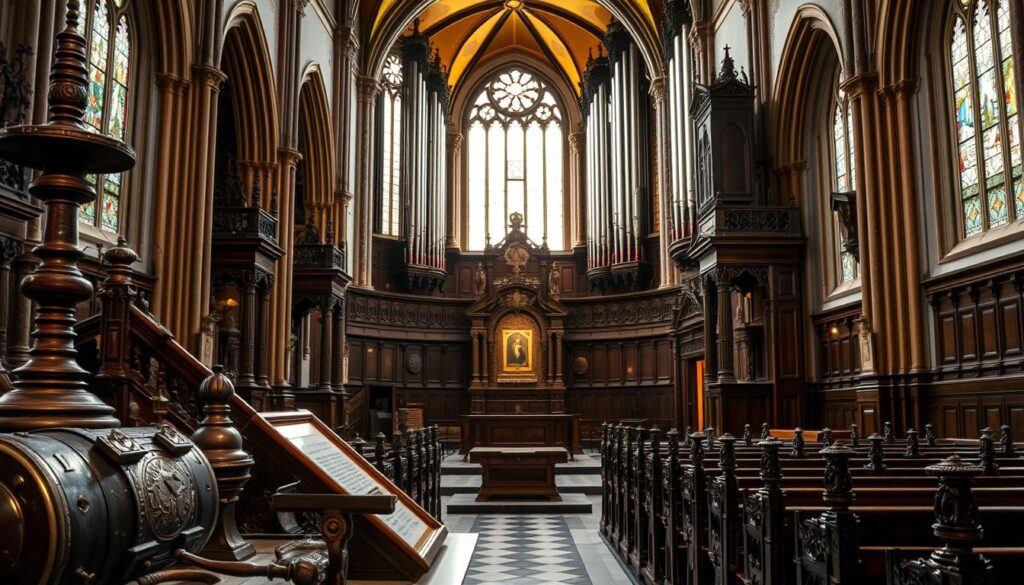
London organ builder John Snetzler crafted a masterpiece in 1771 that nearly became sea treasure. The instrument survived a shipwreck near Skerries before arriving in Drogheda. Thanks to the Corporation of Drogheda, which gave £300 for repairs, its rich tones still accompany services today.
Historic Bells and Their Cultural Significance
Cromwell’s troops left the original five bells severely damaged in 1649. Over a century later, John Rudhall cast eight new bells that transformed the tower. Their weekly peals create a living link to 18th-century worship traditions.
| Artifact | Year | Key Detail |
|---|---|---|
| Snetzler Organ | 1771 | Rescued from shipwreck |
| Rudhall Bells | 1791 | Eight-bell peal installed |
| Medieval Font | 13th Century | Restored in 1921 |
| Cadaver Stone | 1525 | Memorializes Goldyng family |
The Medieval Font and Other Relics
Helen M. Roe’s research in the Journal of the Royal Society highlights the octagonal font’s detailed carvings. Once used as a farm trough, this sacred object returned to its purpose in 1921. Nearby, a weathered tomb stone shows skeletal figures – a stark medieval reminder of life’s brevity.
The churchyard holds more secrets beneath its grass. Each artifact whispers stories of resilience, from rescued organs to bells that outlasted war. Together, they form a tangible chain linking past and present.
Community, Worship, and Cultural Heritage
At the heart of County Louth’s landscape stands a testament to enduring community spirit. This historic site continues to bridge past and present through vibrant gatherings and shared traditions. Weekly services blend ancient rituals with contemporary relevance, while special events celebrate local artistry and storytelling.
Modern Worship Services
Sunday mornings resonate with Snetzler organ melodies unchanged since 1771. Revd. Dr. Iain Jamieson leads inclusive services that welcome all generations. Summer concert series transform the nave into a cultural hub, featuring Irish folk musicians and poetry readings.
Outreach and Education
School groups explore the building’s hidden stories through interactive tours. Volunteers host genealogy workshops helping visitors trace ancestral connections. The annual heritage fair showcases traditional crafts, from stone carving to bell maintenance techniques.
Through these efforts, the community ensures its legacy remains alive and accessible. Each event reinforces the site’s role as both spiritual anchor and cultural touchstone for future generations.
FAQ
What makes St. Peter’s architectural design unique?
The structure blends Georgian elegance with Baroque flourishes, highlighted by Francis Johnston’s iconic spire. Its limestone craftsmanship and reordered interior reflect centuries of evolving artistry.
How did St. Peter’s contribute to Ireland’s religious history?
As part of the Diocese of Armagh, it served as a spiritual hub during key moments, including the 1649 siege. Its role in shaping local faith traditions remains central to the town’s identity.
Are there notable artifacts inside the building?
Yes! The rare 18th-century Snetzler organ and medieval baptismal font stand out. The bells, recast in 1886, also hold cultural significance tied to the region’s heritage.
Has the site undergone major renovations?
Extensive restorations in the 19th century repaired Cromwellian-era damage. Hugh Darley redesigned the interior, preserving its historic character while adapting spaces for modern worship needs.
Can visitors attend services today?
Absolutely. Regular gatherings continue, blending traditional liturgy with community outreach. It remains a living center for faith, art, and shared memory in Co. Louth.
What’s the connection to Helen Roe’s research?
The Royal Society of Antiquaries’ journal documents her studies on the site’s medieval roots, including its Anglo-Norman origins and transitions through the Georgian era.