Step into sacred spaces where faith and function unite. Across centuries and continents, these gathering places have evolved to reflect both theological values and cultural contexts. Let’s explore what makes them distinct – and why their designs continue to inspire.
From New England meeting houses to Southern chapels, these structures showcase remarkable diversity. Some boast soaring steeples, while others favor minimalist designs. This variety stems from differing interpretations of scripture and communal priorities.
Beyond Sunday services, these buildings often serve as hubs for education and social support. Many host food drives, concerts, and youth programs. Their layouts typically emphasize accessibility, reflecting the belief that everyone can connect directly with the divine.
Regional materials and historical events shaped their evolution. Early settlers used local timber, while urban congregations later embraced Gothic Revival styles. Each choice tells a story about the people who built it.
Key Takeaways
- Designs range from ornate to simple based on denomination and location
- Spaces prioritize congregational participation over hierarchy
- Multi-purpose use supports both worship and community needs
- Architectural choices reflect core theological principles
- Historical context influences building materials and styles
- Layouts emphasize scripture-centered gatherings
Understanding the Essence of Protestant Church Features
The roots of Protestant worship spaces grow deep in history, shaped by revolutionary ideas that challenged established norms. During the 16th century, reformers sought to simplify spiritual practices while emphasizing personal connection with scriptural foundations.
Historical Origins and Doctrinal Shifts
Martin Luther’s 1517 critique of indulgences sparked a movement that reshaped Christianity. This break from the Catholic Church led to new architectural priorities. Buildings became tools for teaching rather than ceremonial showcases.
| Aspect | Catholic Tradition | Protestant Approach |
|---|---|---|
| Artwork | Elaborate icons | Minimal decoration |
| Authority | Church hierarchy | Bible-centered focus |
| Worship Style | Priest-led rituals | Congregational participation |
Core Beliefs and Worship Practices
Central to this christian faith is the concept of “sola scriptura” – scripture alone guides believers. This belief transformed interiors. Pulpits took center stage, while stained glass scenes gave way to clear windows symbolizing spiritual clarity.
Communal singing became a hallmark of services, reflecting the priesthood of all believers. Unlike older traditions, these spaces encouraged active engagement rather than passive observation.
Key Elements of Protestant Worship and Community
Gathering spaces become alive through shared rhythms of devotion and connection. Weekly meetings blend ancient traditions with modern expressions, creating environments where both regulars and newcomers find belonging.
Shared Experiences That Build Bonds
Sunday services act as anchor points for many congregations. These gatherings typically feature scripture readings, heartfelt singing, and sermons that make ancient texts feel relevant. Midweek groups often dive deeper – think Bible studies or prayer circles that nurture personal growth.
Music bridges generations here. One service might blend pipe organs with electric guitars, while another sticks to century-old hymns. This flexibility reflects the living nature of spiritual practices across denominations.
Navigating Customs With Care
Visitors will find open doors but should mind local customs. While most places welcome guests to join singing or prayers, communion often carries membership requirements. Dress codes lean toward modesty – covered shoulders and knees show respect without needing formal attire.
Many congregations use their spaces for more than worship. Food banks, addiction support groups, and free concerts frequently share the calendar. This dual purpose makes these buildings true community hubs, serving practical and spiritual needs alike.
Exploring Architectural Variations in Protestant Churches
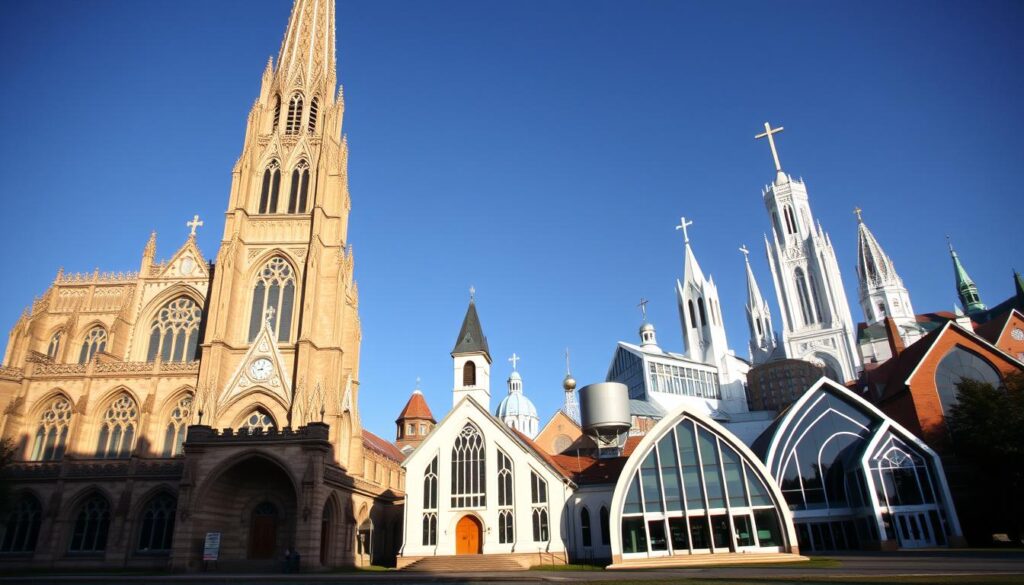
Architectural choices tell silent stories of belief and belonging. Over centuries, these spaces transformed to match evolving spiritual priorities while respecting local traditions. Let’s examine how form followed faith through three key eras.
Design, Simplicity, and Symbolism
Early reformers favored functional layouts over decorative excess. “A plain room focuses minds on God’s word,” wrote one 17th-century minister. Pulpits became central fixtures, flanked by simple benches facing forward. Clear glass replaced stained windows, symbolizing spiritual transparency.
| Period | Style | Key Features | Example |
|---|---|---|---|
| 16th Century | Adaptive Reuse | Whitewashed walls, removed statues | Converted abbeys |
| 19th Century | Gallo-Roman | Circular plans, columned entryways | Parisian temples |
| 20th Century | Modernist | Concrete curves, open floorplans | Marseille-Provence (1954) |
Adaptations From Old to New
French communities pioneered creative conversions after the Reformation. They transformed medieval religious buildings by stripping altars and adding elevated pulpits. By the 1800s, new constructions echoed classical styles, using local stone for grandeur. The 1900s brought radical experiments – think sweeping concrete curves that still directed attention toward scripture readings.
Regional materials often dictated designs. Mountain towns used timber beams, while coastal areas opted for weather-resistant brick. This blend of practicality and symbolism created distinct yet purposeful worship spaces across generations.
Impact on Community, Education, and Daily Life
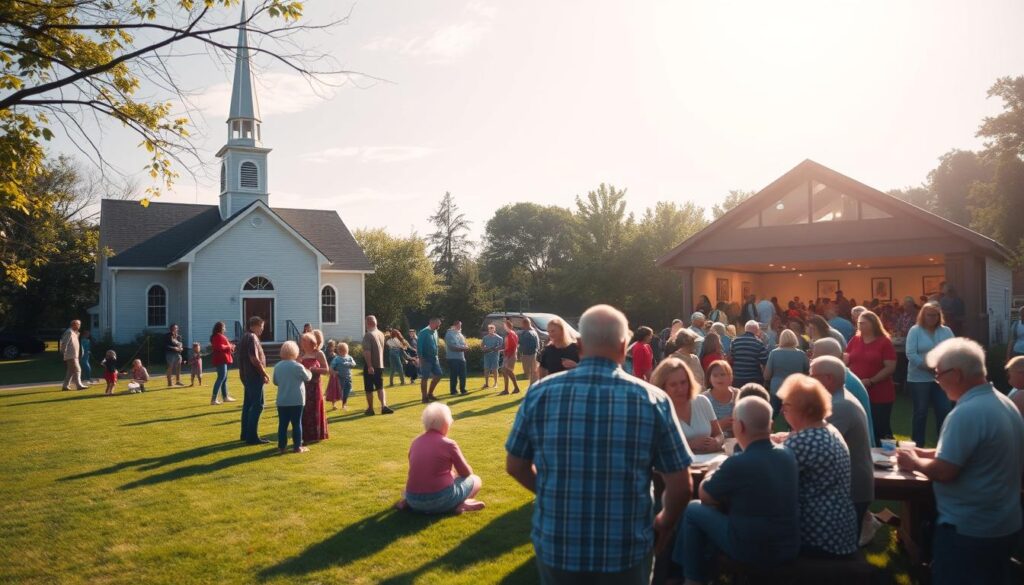
Neighborhoods thrive when shared spaces become engines of connection. Across America, these institutions blend spiritual guidance with practical support, creating ripples of positive change. Their doors stay open for both Sunday sermons and Tuesday tutoring sessions.
Churches as Community Centers and Educational Hubs
Many congregations run after-school programs where kids tackle homework alongside Bible stories. Adults find opportunities too – from job training workshops to English language classes. One pastor notes: “Our building hums with activity seven days a week – that’s when faith becomes action.”
During crises, sanctuaries transform. Hurricane survivors find hot meals in fellowship halls. Winter nights turn Sunday school rooms into temporary shelters. This adaptability makes these spaces vital safety nets.
Evolution of Religious Buildings in Social Contexts
Some groups start small – gathering in living rooms or leasing storefronts. This approach keeps resources focused on people rather than property. As needs grow, so do the spaces. A converted warehouse might house both worship services and a food pantry.
Modern designs reflect new priorities. Ramped entrances welcome wheelchair users. Solar panels crown rooftops where steeples once stood. These changes show how timeless values meet contemporary challenges.
Protestant Church Features: History and Modern Evolution
Five centuries of spiritual transformation have reshaped how communities gather and grow. What began as a theological revolution now stands as a living legacy, blending ancient truths with modern expressions of faith.

From the Reformation to the Present Day
Martin Luther’s 1517 stand sparked more than doctrinal debate—it birthed new ways of worship. When French rulers revoked religious freedoms in 1685, believers met secretly in forests and caves. These “Desert” gatherings prioritized portable communion sets and hymnbooks over grand buildings.
Persecution forged resilience. Communities developed rotating meeting locations, often using natural landmarks as navigation points. This ingenuity preserved their traditions during 102 years of underground worship.
Architectural and Cultural Transformations Over Time
Modern sanctuaries carry echoes of this adaptive spirit. The empty cross—a stark reminder of Christ’s resurrection—replaced ornate crucifixes. Church designs increasingly used local materials, from New England timber to Texan limestone.
Consider these shifts:
| Era | Focus | Symbol |
|---|---|---|
| 1500s | Scripture access | Open Bibles |
| 1700s | Survival | Portable pulpits |
| 2000s | Community | Multi-use spaces |
Influence on Protestant Religious Practices Today
The five sola principles still shape weekly services. Sermons dissect biblical texts line by line, while worship songs echo Reformation-era hymns. Many congregations blend historic liturgy with projection screens and livestreams.
Regional flavors abound. Southern churches might host potluck dinners after services, while urban centers offer ESL classes. Yet all share a core commitment—making ancient truths resonate in changing times.
Conclusion
Sacred spaces evolve, yet their purpose remains timeless. Through five centuries of change, these gathering places have balanced tradition with innovation. Their designs tell stories of communities prioritizing connection over ceremony.
Simple layouts and clear symbolism reflect core beliefs about spiritual access. From wooden benches to modern halls, every choice serves a dual purpose. Spaces welcome both worship and neighborhood food drives, proving faith thrives through action.
Today’s buildings continue adapting while honoring their roots. Solar panels now sit beside century-old steeples, blending sustainability with heritage. Multi-use areas host everything from youth programs to Bible study groups, showing how ancient wisdom meets modern needs.
The future will bring new designs, but the mission stays clear. These spaces remain anchors of hope, offering belonging and life-changing support. As they evolve, their heartbeat continues – creating places where all can grow, serve, and find meaning.
FAQ
How do Protestant beliefs differ from Catholic teachings?
Key differences include a focus on scripture as the ultimate authority, salvation through faith alone, and the priesthood of all believers. These ideas emerged during the Reformation, challenging traditions like papal authority and sacramental rituals.
Why is simplicity emphasized in many worship spaces?
This reflects Reformation-era values of prioritizing scripture and community over ornate decorations. Minimalist designs aim to avoid distractions, directing attention to teachings and collective participation.
What role do communities play in services?
Gatherings often emphasize shared participation, such as congregational singing, group prayer, and lay leadership. This fosters connection and reinforces the idea that everyone contributes to spiritual life.
How have architectural styles evolved over time?
Early groups repurposed existing structures or built modest halls. Over centuries, designs blended local culture with doctrinal values—like lecture halls for preaching or circular layouts to highlight unity.
Are there specific dress codes for attending services?
Most encourage modesty but prioritize personal comfort. While some congregations maintain traditional attire, many adopt casual wear to reflect inclusivity and focus on spiritual engagement over appearance.
How do these religious buildings support education?
Many host Bible studies, youth programs, and charity initiatives. Historically, they’ve also founded schools and universities, linking faith with literacy and ethical development.
What modern trends are shaping practices today?
Contemporary music, multimedia tools, and informal settings are common. Some blend ancient rituals with new traditions, while others prioritize social justice or interfaith dialogue.
How does the resurrection of Jesus influence teachings?
It’s central to messages of hope and redemption, symbolizing victory over sin and death. Sermons often connect this event to personal renewal and communal purpose.