When two hearts unite in lifelong commitment, some ceremonies stand out for their deep spiritual roots and warm community spirit. Many faith-based celebrations blend centuries-old customs with fresh, personal touches—creating moments that feel both sacred and uniquely modern.
Denominations like Baptists, Lutherans, and Methodists shape these events with their distinct traditions. What makes these gatherings special? They’re not just about exchanging vows. Every element—from hymns to scripture readings—invites guests to celebrate faith alongside the couple. This active participation turns observers into joyful witnesses of a covenant blessed by loved ones.
Modern pairs often appreciate how these services balance reverence with creativity. While the core rituals honor biblical teachings about marriage, there’s room for personalized music, decor, or readings. It’s this harmony of old and new that transforms a ceremony into a heartfelt worship experience.
Key Takeaways
- Faith-based ceremonies blend spiritual traditions with modern personalization
- Guests actively participate through hymns, prayers, and vow affirmations
- Different denominations offer unique interpretations of marriage rituals
- The service emphasizes spiritual unity as the foundation for lifelong commitment
- Customizable elements allow couples to reflect their personalities and values
Introduction to Protestant Church Weddings
Sacred unions rooted in faith have shaped meaningful milestones for generations. These ceremonies blend ancient traditions with heartfelt connections, creating moments where personal commitment meets divine purpose.
Historical Overview and Religious Diversity
Christian marriage traditions stretch back to biblical times, with Jesus’ first miracle at a Cana celebration highlighting its spiritual importance. Over centuries, denominations like Baptists and Methodists developed unique practices while keeping covenant marriage at their core. This sacred bond between a man and woman reflects Christ’s relationship with believers, as described in Ephesians 5.
Though rituals vary, all share key elements: scripture readings, vows before God, and congregational support. Some services feature traditional hymns, while others incorporate modern worship songs—proof that timeless truths adapt across eras.
Cultural Significance and Community Involvement
More than just a legal agreement, holy matrimony unites families and faith communities. Guests don’t merely watch—they participate through prayers, responsive readings, and affirming the couple’s promises. Many churches require pre-marital counseling, ensuring partners build their union on shared values.
This emphasis on community creates lasting support networks. As one pastor notes: “Marriage thrives when nurtured by loving accountability.” From flower arrangements to reception meals, members often contribute talents, making each ceremony a collective labor of love.
Planning Your Protestant Church Wedding: A Step-by-Step Guide
Creating a meaningful celebration that aligns with your spiritual foundation requires thoughtful preparation. Let’s explore the essential steps to transform your vision into reality while honoring sacred traditions.
Contact Your Church and Officiant
Reach out to your spiritual leader before booking venues or vendors. Many denominations recommend connecting 6-12 months ahead, especially for popular dates. The bride and groom typically meet their officiant 3-4 times to discuss ceremony structure, scripture selections, and personal touches.
One pastor shares: “These conversations help us craft services that reflect each couple’s journey while maintaining theological integrity.”
Scheduling, Pre-Marital Counseling, and Legal Requirements
Mark your calendar considering both civil and religious timelines. The Episcopal Church requires at least 30 days’ notice, while others prefer longer lead times. Mandatory counseling sessions—often 4-6 weeks—equip couples with communication tools rooted in faith principles.
Legal essentials include:
- State-issued marriage licenses
- Two adult witnesses
- Documentation of baptism (if required)
Those previously divorced may need special approvals. A Methodist minister notes: “We view marriage as lifelong covenant—exceptions require careful discernment.”
Ceremony Elements and Timeless Traditions
Time-honored rituals weave through these celebrations like golden threads, creating a tapestry of spiritual connection. Each carefully chosen element carries generations of meaning while allowing space for personal expression.
The Processional, Readings, and Hymns
Special music signals the start as mothers take their seats. Young attendants often lead the way—flower petals scattering like promises. The main party follows, culminating in the bride’s entrance, whether escorted by family or walking confidently alone.
Sacred texts anchor the service. Many couples select “Love is patient, love is kind” from 1 Corinthians or Ruth’s “Where you go I’ll go” pledge. These readings remind everyone that marriage thrives on selfless commitment.
Exchange of Vows, Rings, and Blessings
Hearts race as partners face each other. Voices steady, they declare: “To have and to hold from this day forward…in sickness and health.” These words from the Book of Common Prayer transform personal promises into sacred bonds.
Metal circles slide onto fingers as each says: “I give you this ring as a symbol of my vows.” Joined hands rest in the officiant’s grasp, receiving a blessing for unity. Congregational hymns then rise like incense, wrapping the couple in communal support.
Through every “I do” and clasped palm, ancient customs meet modern hearts. The result? A ceremony that feels both timeless and unmistakably yours.
Modern Elegance Meets Timeless Practices
Today’s couples are reimagining sacred celebrations by weaving personal stories into cherished rituals. This fusion creates ceremonies where ancestral wisdom dances with fresh creativity—each choice reflecting shared values while honoring spiritual foundations.
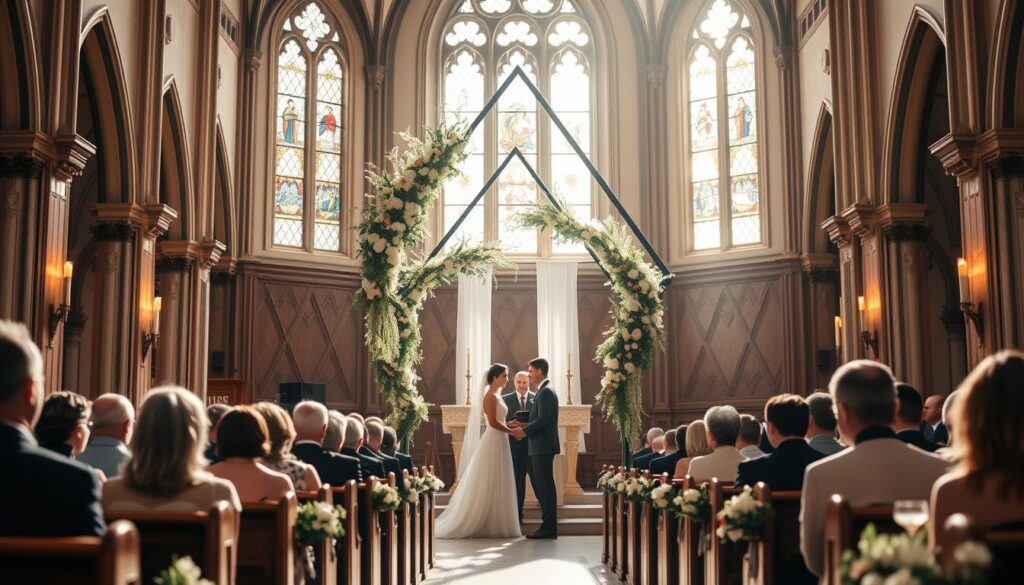
Incorporating Contemporary Touches into Tradition
Processional music sets the tone for this balancing act. A man might walk with both parents to an acoustic cover of a worship song, while bridesmaids carry floral hoops instead of bouquets. Customized vows often blend classic phrases like “to have and to hold” with modern promises about Netflix compromises and adventure goals.
Unity rituals gain new depth through symbolic acts. Sand blending becomes a beach-loving couple’s metaphor for partnership. Others plant saplings using soil from childhood homes—roots intertwining like their lives.
Personalizing the Ceremony with Unique Elements
Readings transform when couples share how specific Bible verses guided their journey. One pair used Song of Solomon passages from their first dating anniversary. Another included a deceased grandmother’s handwritten prayer in the program.
The reception extends this harmony. Geometric centerpieces might frame antique family Bibles. Playlists mix gospel choirs with indie folk tracks—proof that joy needs no genre. As one officiant notes: “When two become one, their celebration should sing in both voices.”
Conclusion
As the final prayer echoes through the sanctuary, two lives become one through sacred promises. The husband and wife stand united, their “for richer for poorer” vows echoing generations before them. Joined hands and exchanged rings become tangible reminders of a covenant marriage blessed by community and divinity.
Surrounded by loved ones, the bride and groom begin their journey fortified by collective prayer. These moments transcend mere tradition—they anchor the couple’s life together in something eternal. The Holy Spirit’s presence lingers long after the recessional, guiding them through future joys and challenges.
Whether facing sickness or health, this union remains rooted in more than human effort. It reflects a divine blueprint where man and woman mirror sacred love. Every solemn vow, every whispered blessing, becomes part of their story—a testament to holy matrimony’s enduring power to transform two into one.
FAQ
Do we need to attend pre-marital counseling?
Many congregations encourage couples to participate in pre-marital counseling. This helps strengthen communication and aligns expectations. Sessions often cover topics like conflict resolution, financial planning, and spiritual unity.
Can we personalize vows or include non-traditional readings?
Absolutely! While traditional vows from the Book of Common Prayer are popular, many officiants allow personalized promises. Discuss options like secular poems, song lyrics, or cultural traditions with your clergy to blend modern touches with timeless practices.
Are there guidelines for attire during the ceremony?
Modesty and respect for the sacred space are key. Avoid overly casual outfits or revealing styles. Brides often choose dresses with sleeves or shawls, while grooms opt for suits or tuxedos. Coordinate with your venue for specific recommendations.
How long does a typical service last?
Most ceremonies run 30–45 minutes. This includes the processional, hymns, scripture readings, exchange of rings, and final blessings. Time may vary if you include extras like unity candles or guest participation.
Can non-members host their ceremony in a Protestant sanctuary?
Policies differ by denomination and congregation. Some churches welcome non-members, especially if one partner has ties to the faith. Reach out early to discuss requirements, such as membership classes or facility fees.
Is a reception held at the same location?
While receptions often occur off-site, some congregations have fellowship halls or event spaces. Ask about decor rules, catering restrictions, and time limits. Outdoor gatherings on church grounds can also create a charming, intimate vibe.