Imagine a global movement that reshaped spiritual life for millions. This branch of Christianity, rooted in 16th-century reforms, offers a distinct approach to worship and belief. At its core lies a powerful idea: salvation through faith alone, not deeds or rituals.
These communities prioritize scripture as their ultimate guide, encouraging personal connections with divine teachings. With over 1.2 billion followers today, their influence spans continents and cultures. You’ll find vibrant congregations from Texas storefronts to African megachurches, all sharing foundational principles while celebrating local traditions.
What began as a challenge to established religious authority became one of history’s most transformative spiritual awakenings. The movement’s growth accelerated through vernacular Bible translations and grassroots leadership. Modern expressions range from traditional denominations to independent groups, each adapting centuries-old values to contemporary life.
Key Takeaways
- Central belief in salvation through faith rather than works
- Scripture serves as the primary authority for doctrine
- Global community spanning 1.2 billion adherents
- Originated in 16th-century religious reforms
- Diverse practices unified by core principles
- Significant cultural impact across six continents
Introduction to Protestant Churches
Picture a tapestry of spiritual communities shaping modern faith across continents. These groups form one of Christianity’s largest branches, united by shared convictions yet bursting with cultural variety. At their heart lies a revolutionary idea: every person can connect directly with divine truth through scripture and personal conviction.
Overview of Protestantism
This vibrant movement includes over 50 major denominations, from Lutherans to Pentecostals. While practices differ, all prioritize biblical authority and salvation through faith. You’ll find stained-glass cathedrals in Europe alongside open-air services in Africa—each reflecting local flavors while honoring core principles.
The Scope of the Ultimate Guide
We’ll explore how these communities transformed societies, from sparking education reforms to inspiring civil rights movements. Discover how 16th-century debates about religious authority still influence modern believers. You’ll see why independent congregations are growing fastest today, blending ancient truths with contemporary worship styles.
Our journey covers theological roots, cultural impacts, and surprising connections between historic traditions. Whether you’re curious about Calvinist teachings or charismatic revivals, this guide illuminates how diverse groups maintain unity through shared spiritual foundations.
Understanding the “protestant churches definition”
What began as a political statement became a spiritual revolution. The label “Protestant” first emerged in 1529 when German leaders challenged religious restrictions at the Diet of Speyer. They weren’t creating a new faith—they were fighting for freedom to practice existing beliefs.

Three pillars define these communities. Scripture stands supreme over human traditions, personal trust in divine grace replaces ritual-based salvation, and every believer becomes their own spiritual ambassador. This triad shapes worship styles from hymn-singing Lutherans to spirited Pentecostal gatherings.
Unlike medieval practices requiring institutional mediation, these groups emphasize direct divine connections. Members read sacred texts personally rather than relying solely on clergy interpretations. This approach sparked both unity in core beliefs and diversity in local customs.
While rejecting papal authority and certain Catholic doctrines, these communities maintain foundational Christian teachings. The Trinity, Christ’s divinity, and salvation through faith remain central. Modern expressions preserve this balance—honoring ancient truths while adapting to cultural shifts.
Historical Roots of Protestantism
Think of a time when questioning authority changed the world. The spiritual revolution we now call the Protestant Reformation didn’t appear overnight—it grew from centuries of simmering tensions. By the late medieval period, many believers felt disconnected from religious leaders who seemed more focused on power than spiritual guidance.
The Role of the Reformation
Three explosive forces collided in the 16th century: growing literacy, political ambition, and disgust with church corruption. As printing presses spread, ordinary people could suddenly read scripture themselves—no need for clergy to interpret it. This shift undermined the Catholic Church’s control over spiritual truth.
National rulers saw their chance. “Why should foreign powers dictate our faith?” became a rallying cry. When German princes protected Martin Luther after his 1517 protests, they weren’t just defending theology—they were claiming local authority over distant religious power.
Impact of the 16th Century Movements
The Reformation’s shockwaves reached far beyond Sunday services. Vernacular Bibles birthed national languages. Public schools emerged to teach reading, creating educated citizens. Even economics shifted as some groups linked hard work with divine favor.
These changes created lasting patterns. Congregations began governing themselves rather than waiting for Rome’s approval. Worship simplified—no more Latin chants ordinary folks couldn’t understand. This reform movement proved spiritual revolutions could reshape societies, not just altars.
Proto-Protestant Movements and Early Reform
Long before Luther’s protests echoed through Europe, courageous thinkers planted seeds of religious change. These early reformers dared to question centuries of tradition, sparking ideas that would later ignite the Reformation. Their stories reveal how grassroots movements can challenge powerful institutions.
Pioneers of Spiritual Revolution
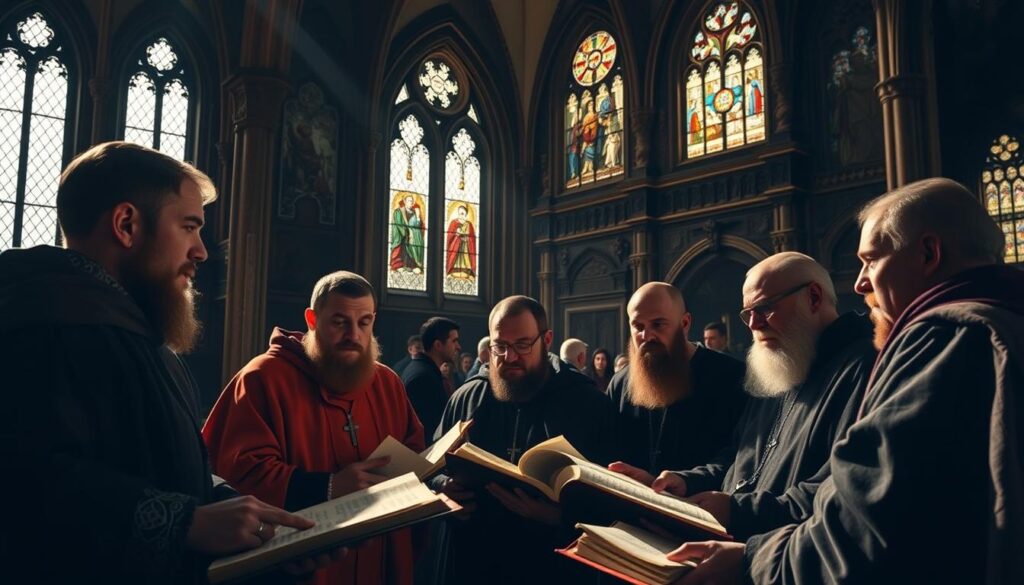
John Wycliffe shook 14th-century England by declaring scripture superior to church authority. He famously argued, “The sacred text belongs to plowboys as much as priests.” His team produced the first complete English Bible, making divine teachings accessible to common people.
Jan Hus continued this reform movement in Bohemia. At Prague University, he condemned corrupt clergy and fought for communion practices including both bread and wine. His fiery sermons drew thousands—and eventually, the attention of religious authorities.
Both men paid dearly for their convictions. Hus faced execution in 1415, burned at the stake for heresy. Wycliffe’s remains were later exhumed and desecrated. Yet their ideas survived, circulating through handwritten texts and secret gatherings.
Three lasting impacts emerged from these events:
- Scripture translation into everyday languages
- Questioning of religious hierarchy’s absolute power
- Emphasis on personal faith over ritual observance
These proto-reformers proved that challenging established authority could reshape spiritual history. Their legacy shows how bold ideas, once unleashed, can’t be extinguished—even by fire.
Martin Luther and the Rise of the Protestant Reformation
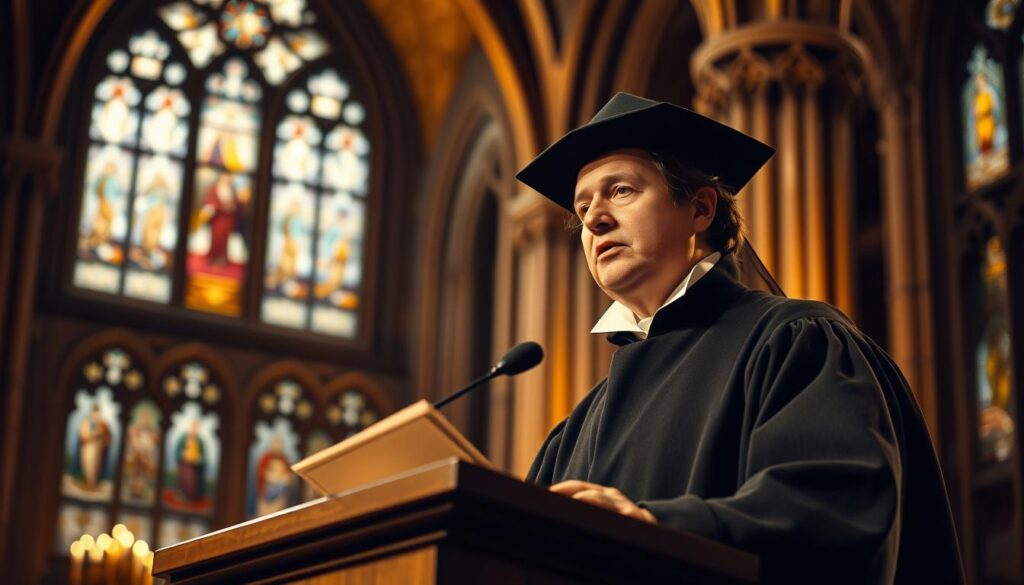
A single document reshaped Europe’s spiritual landscape forever. On October 31, 1517, an Augustinian monk nailed ninety-five arguments to a church door in Wittenberg. This act of defiance against religious authority became the spark for sweeping changes across continents.
Ninety-Five Theses and Its Significance
Luther’s theses targeted a specific church practice – selling forgiveness through indulgences. “Why does the pope’s wealth grow while poor believers buy false peace?” he asked. His radical claim? Salvation comes through faith, not financial transactions.
The printing press transformed academic critiques into wildfire. Within months, translated copies reached common people from Paris to Prague. For the first time, many realized they could approach the divine without Catholic Church intermediaries.
Transformation Across Europe
Luther’s ideas spread faster than plague through 16th-century Germany. Local rulers saw an opportunity to break from Rome’s control. By 1525, over half the population in northern states attended Lutheran services emphasizing scripture over rituals.
This spiritual revolution birthed unexpected changes:
- Vernacular Bibles empowered laypeople to interpret scripture
- Public schools emerged to promote literacy
- National identities strengthened against foreign religious control
The Protestant Reformation proved ideas could topple empires. Luther’s focus on grace as God’s gift continues shaping modern Christianity, reminding believers that true transformation begins within.
Influential Reformers: John Calvin and Huldrych Zwingli
While Luther ignited the Reformation’s initial spark, other thinkers constructed enduring theological frameworks. John Calvin’s systematic approach reshaped religious communities from Geneva to Glasgow. His teachings emphasized divine sovereignty, arguing that God’s plan governed all aspects of human existence.
Calvinism Versus Lutheranism
Calvin’s focus on predestination created clear distinctions from Lutheran beliefs. Where Martin Luther stressed individual faith as salvation’s pathway, Calvin’s doctrine highlighted God’s ultimate authority in choosing believers. This divergence birthed two influential traditions within the broader movement.
Swiss reformer Huldrych Zwingli added unique perspectives, viewing communion as symbolic rather than literal. His insistence on scriptural purity influenced church governance models still used today. Reformed groups preferred this label, reflecting their commitment to biblical realignment over mere opposition.
Calvinist ideas spread rapidly through Europe, shaping denominations in France and the Netherlands. Presbyterian systems empowered congregations through elected leadership—a radical shift from hierarchical structures. These innovations demonstrate how theological debates forged lasting spiritual legacies.
FAQ
What distinguishes Protestant groups from the Roman Catholic tradition?
These groups emphasize Scripture alone as the highest authority, rejecting papal infallibility. They also teach that salvation comes through faith, not works, and prioritize individual interpretation of the Bible. Key figures like Martin Luther and John Calvin shaped these beliefs during the Reformation.
How did the Protestant Reformation begin?
The movement started in 1517 when Luther publicly challenged Catholic practices, such as selling indulgences, by posting his Ninety-Five Theses. This act sparked debates across Europe and led to the formation of new Christian communities separate from Rome.
What’s the difference between Calvinism and Lutheranism?
Calvinism, founded by John Calvin, stresses predestination—the idea that God preordains salvation. Lutheranism, rooted in Martin Luther’s teachings, focuses on grace through faith alone. Both reject Catholic rituals but differ in governance and worship styles.
Were there reformers before Martin Luther?
Yes! Figures like John Wycliffe and Jan Hus criticized Church corruption in the 14th and 15th centuries. Wycliffe translated the Bible into English, while Hus advocated for congregational singing and clergy accountability. Their ideas laid groundwork for later reforms.
Why are the Ninety-Five Theses significant?
Luther’s document questioned Catholic doctrines like penance and indulgences. Its rapid spread—thanks to the printing press—ignited public debate, weakened papal authority, and encouraged others to challenge tradition, reshaping European Christianity.
How did Scripture shape Protestant beliefs?
Reformers promoted sola Scriptura, arguing the Bible—not Church leaders—should guide believers. This led to translations in local languages, empowering ordinary people to engage directly with Scripture and fostering personal faith over ritual.
What impact did 16th-century movements have globally?
They spurred colonization, missionary work, and cultural shifts like promoting literacy. Conflicts between Catholics and reformers also triggered wars, reshaping politics and inspiring later movements for democracy and human rights.
What key teachings define Protestant theology?
Core ideas include salvation by grace through faith, the priesthood of all believers, and Scripture as the sole divine authority. These principles reject medieval Catholic practices, emphasizing a direct relationship with God.