Let’s explore how spiritual traditions in this region evolved over centuries. From ancient Roman settlements to medieval reforms, the story of Christian communities here shaped a unique religious identity. Their journey reflects both deep-rooted beliefs and changing cultural tides.
By the 3rd century, early followers established practices that would later influence the mother church of the Anglican tradition. Through figures like Augustine of Canterbury, these groups grew into organized institutions. The 16th-century reforms then redefined their role, blending theology with national identity.
Today, over 26 million members worldwide follow teachings rooted in texts like the Thirty-nine Articles. These documents outline core principles while allowing flexibility for modern believers. It’s a balance of tradition and adaptation that continues to inspire.
Key Takeaways
- Early Christian communities in England date back to Roman times.
- The Anglican tradition emerged as a blend of theology and cultural identity.
- Key reformers and leaders shaped its doctrines over centuries.
- Foundational texts guide worship practices for millions today.
- Political and social changes deeply influenced its development.
Introduction and Scope
Uncover how a centuries-old religious movement spans continents today. With 70 million followers across 165 countries, the Anglican tradition represents one of the largest Protestant networks in the world. This global family recognizes the Church of England as its historical foundation while celebrating regional diversity.
What makes this communion unique? Local groups govern themselves while maintaining spiritual ties through shared traditions. The Archbishop of Canterbury serves as a unifying figure – like a respected elder at a family reunion – without controlling authority beyond English borders.
Below table shows how Anglican membership distributes globally:
| Region | Members | Key Characteristics |
|---|---|---|
| Africa | 42 million | Fastest-growing community |
| North America | 3 million | Blends traditional and modern practices |
| British Isles | 1.7 million | Historical roots and cultural influence |
From bustling London parishes to rural chapels, these communities adapt ancient rituals to modern needs. Some use drone photography for building preservation, while others stream services globally. This way of balancing heritage with innovation keeps the tradition vibrant.
Our exploration will provide essential information about how the Church of England shaped spiritual landscapes from Sydney to San Francisco. You’ll discover both the challenges and opportunities facing these communities in our interconnected age.
Historical Roots of English Christianity
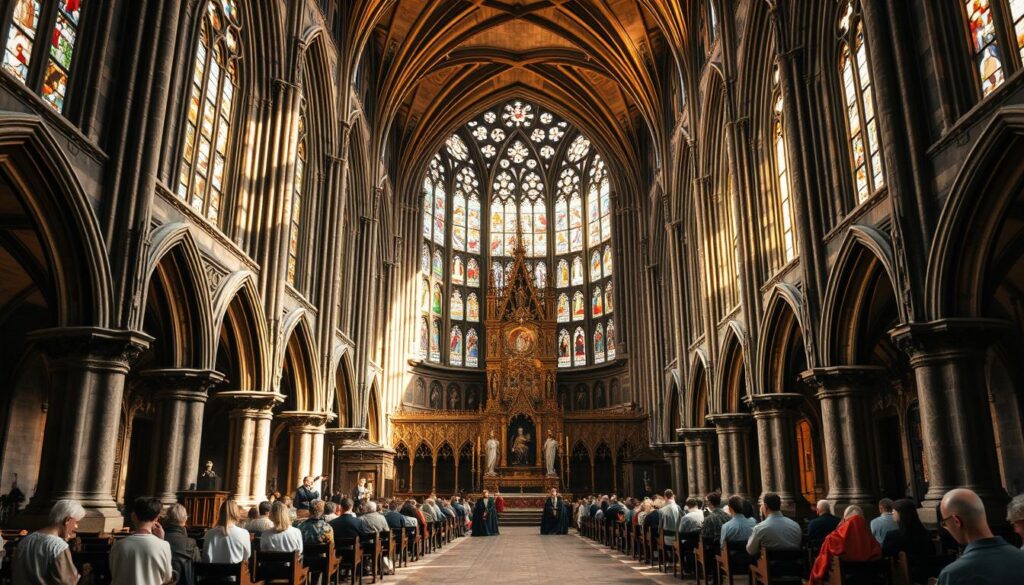
The story of faith in England begins with whispers of belief etched into ancient stones. Long before grand cathedrals rose, small groups gathered in shadowed corners of Roman villas. Their legacy would shape spiritual paths for generations.
Early Christianity in Roman Britain
Third-century artifacts like the Water Newton Treasure reveal active Christian communities under Roman rule. When empires crumbled, new challenges arrived. Pagan Anglo-Saxons swept across the land, pushing believers to western strongholds. Celtic monks kept faith alive through illuminated manuscripts and remote monasteries.
The Anglo-Saxon Legacy
Everything changed when Pope Gregory I spotted Anglo-Saxon slaves in a Roman market. “Not Angles, but angels,” he reportedly declared. His 597 mission led by Augustine converted King Æthelberht of Kent. The Canterbury seat became Christianity’s foothold in England.
Two traditions clashed then blended:
| Aspect | Celtic Tradition | Roman Tradition |
|---|---|---|
| Leadership | Monastic communities | Urban bishops |
| Worship Style | Nature-inspired | Formal liturgy |
| Easter Dates | Lunar calculations | Solar calendar |
Royal conversions became strategic tools. Kings adopted the new faith to strengthen alliances. By 664, the Synod of Whitby chose Roman practices, uniting England under one spiritual framework. This fusion created the Church of England’s DNA – adaptable yet rooted.
The English Reformation: Breaking Away
A royal love story reshaped spiritual landscapes forever. What began as Henry VIII’s personal quest for a male heir became England’s most consequential religious transformation. This seismic shift blended political ambition with theological innovation.
Henry VIII’s Role in the Split
In 1527, the king sought Pope Clement VII’s approval to annul his marriage to Catherine of Aragon. When denied, Henry turned Parliament into his ultimate weapon. Laws like the 1534 Act of Supremacy declared him “Supreme Head” of the Church of England, severing ties with Rome.
This wasn’t just about divorce papers. Henry centralized power, dissolving monasteries and redirecting wealth. His actions created a national church balancing traditional rituals with royal authority.
Thomas Cranmer and Liturgical Change
The king’s chief reformer revolutionized worship practices. As Archbishop of Canterbury, Cranmer crafted the Book of Common Prayer in 1549. Its English-language services replaced Latin masses, making faith accessible to ordinary people.
Cranmer’s work laid doctrinal foundations through the Thirty-nine Articles. These guidelines preserved some Catholic Church traditions while embracing Protestant ideas. His marriage reforms even influenced modern wedding vows!
Though Henry initially resisted full Protestantism, Cranmer’s innovations stuck. The Church of England became a unique blend – neither fully Roman nor radically Reformed. This middle path still defines Anglican identity today.
The Role of the Book of Common Prayer
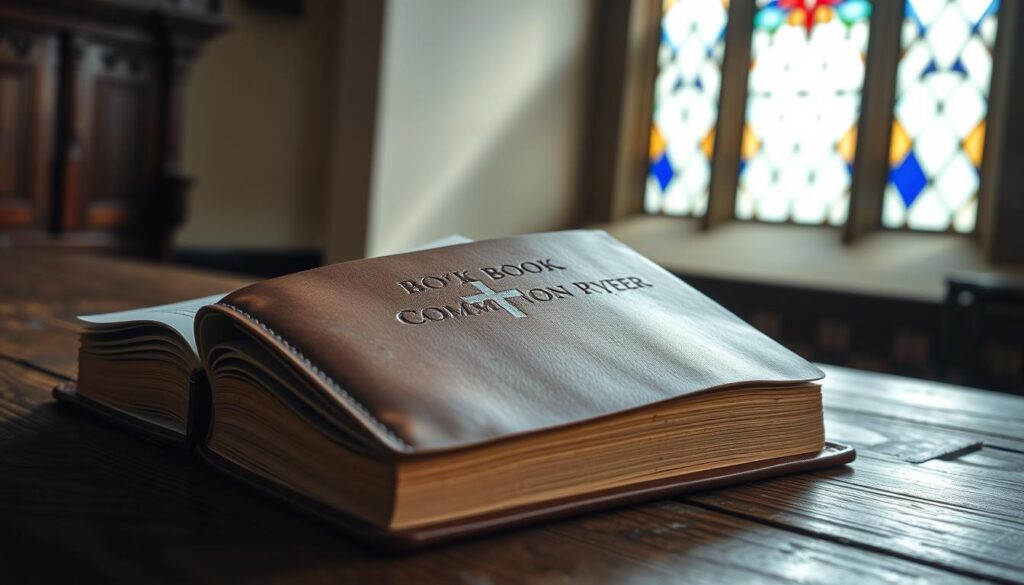
Imagine holding a book that reshaped spiritual lives for millions. The Book of Common Prayer did just that, transforming how people connected with their faith daily. First published in 1549, this revolutionary text became the heartbeat of Anglican practice.
Liturgical Reforms and Daily Worship
Archbishop Thomas Cranmer’s genius lay in balancing change with familiarity. His 1549 edition replaced Latin rituals with clear English – a radical shift. Yet, the structure felt comforting to congregations. Morning prayers and communion services now echoed in the people’s tongue.
The 1552 revision took bolder steps. It clarified Protestant views on communion, stating the bread and wine were “signs” of grace rather than physical transformations. This table shows key differences:
| Edition | Language | Communion View |
|---|---|---|
| 1549 | English | Symbolic presence |
| 1552 | English | Memorial emphasis |
| 1662 | English | Balanced theology |
Impact on Anglican Doctrine
Cranmer’s work quietly wove Protestant ideas into worship. The Thirty-nine Articles, embedded in later editions, rejected Catholic teachings like transubstantiation. Instead, they highlighted faith as the path to salvation.
Three lasting effects emerged:
- Standardized services across regions
- Daily prayer routines for personal devotion
- A flexible framework allowing modern updates like Common Worship
Today, the 1662 version remains iconic, while newer resources address contemporary needs. From baptism vows to funeral rites, the Book of Common Prayer still guides millions in their spiritual journey.
Spread and Influence of Anglicanism
Picture a spiritual web connecting continents through shared traditions. The Anglican Communion represents this living network – 70 million members across 165 countries, all tracing their roots to the Church of England. From tropical parishes to urban cathedrals, this family thrives through adaptation and mutual respect.
Global Reach Through Collaboration
British colonial expansion planted seeds for this growth. Settlers carried prayer books and practices overseas, establishing spiritual outposts. These groups later became self-governing provinces while keeping ties to their English origins. Today’s Anglican Communion operates like a constellation – individual stars shining brightly, yet part of a greater pattern.
The Archbishop of Canterbury serves as a compass rather than a captain. Though lacking formal authority abroad, this figure fosters unity through symbolic leadership. Regional groups address local needs while sharing resources like liturgical guides and disaster relief strategies.
| Region | Membership | Distinct Features |
|---|---|---|
| Africa | 42 million | Rapid growth, vibrant youth engagement |
| Asia | 1.2 million | Interfaith dialogue focus |
| North America | 3 million | LGBTQ+ inclusion debates |
| Oceania | 1 million | Indigenous cultural integration |
Africa’s explosive growth reshapes the communion’s future. Nigerian Anglicans outnumber English church attendees five-to-one. Yet all provinces still recognize the Church of England as their historical mother. This balance of independence and connection makes the Anglican Communion uniquely resilient in our changing world.
Modern challenges test this global family. Climate change initiatives and social justice debates prompt collaborative solutions. Through online networks and regional conferences, the communion proves ancient traditions can thrive in new contexts.
Key Figures Shaping Protestant Traditions
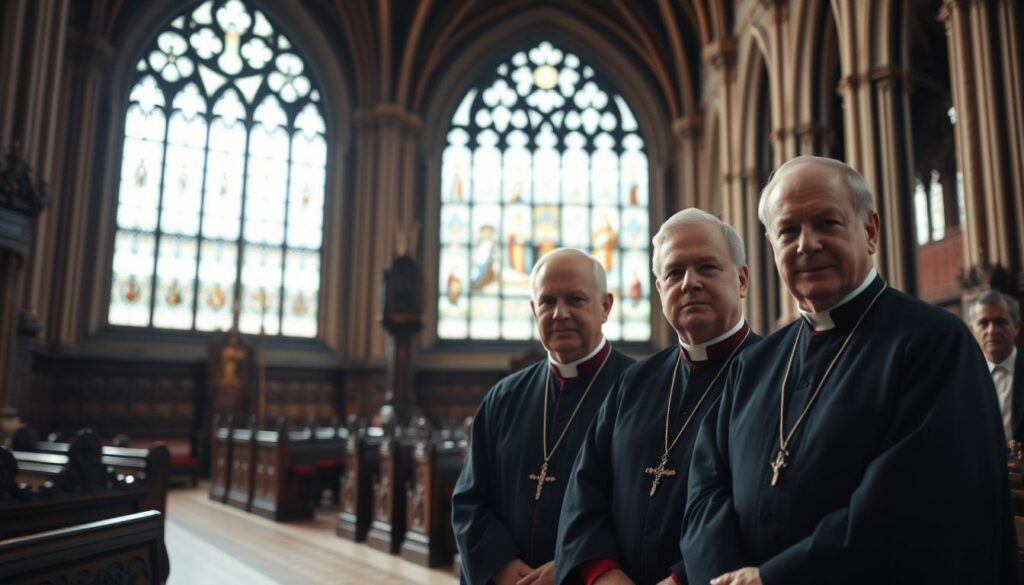
Behind every spiritual movement stand visionaries who turn ideas into lasting legacies. The Church of England thrives through leaders balancing ancient wisdom with modern realities. Their stories reveal how faith adapts while staying rooted.
Reformers and Theologians
Thomas Cranmer’s fingerprints remain on Anglican practices centuries after his death. As Archbishop of Canterbury, he crafted the Book of Common Prayer – a masterpiece blending poetic language with reformed theology. His 1549 liturgy gave worshippers direct access to sacred texts in their native tongue.
Cranmer’s theological framework still guides the Church of England today. The Thirty-nine Articles he helped create outline core beliefs while allowing room for interpretation. This table shows his enduring influence:
| Innovation | Impact | Modern Relevance |
|---|---|---|
| English liturgy | Democratized worship | Base for contemporary services |
| Doctrinal articles | United diverse views | Reference for ethical debates |
| Marriage reforms | Shaped family values | Influences wedding ceremonies |
Modern Leadership Influences
Today’s leaders navigate complex challenges with Cranmer’s innovative spirit. Since Justin Welby’s 2025 resignation, acting Primate Stephen Cottrell steers the Church of England through transitional waters. His collaborative approach reflects the church’s three-part governance:
- Bishops providing spiritual guidance
- Clergy managing daily operations
- Lay people ensuring community representation
This structure allows ancient traditions to address modern life challenges. Current debates on social justice and technology integration show how leaders balance heritage with progress. Their decisions shape millions’ spiritual journeys while honoring five centuries of reformed faith.
Contemporary Landscape of Protestant Churches England
Modern faith communities navigate a world where ancient traditions meet digital-age realities. The Church of England today balances 26 million baptized members across diverse theological streams. From incense-filled Anglo-Catholic services to vibrant evangelical gatherings, these groups share historic roots while embracing new ways of spiritual connection.
Current Trends in Worship and Practice
Sunday mornings now blend centuries-old liturgy with fresh approaches. Many parishes use projectors for hymn lyrics or host podcast-style discussion groups after services. This table shows how traditional and modern elements coexist:
| Traditional | Modern | Hybrid |
|---|---|---|
| Choral evensong | Worship bands | Acoustic folk masses |
| Printed prayer books | App-based devotionals | QR code liturgy access |
| Stone altars | Pop-up street chapels | Historic buildings with tech upgrades |
Evangelical groups drive much of this innovation. Their emphasis on personal faith experiences attracts younger people, though some long-time members worry about losing cherished rituals.
Challenges and Opportunities Today
Falling attendance and budget constraints push communities to rethink their role. Many now focus on social outreach – food banks outnumber pews in some urban areas. Yet heated debates continue about:
- Women’s leadership roles in clergy
- Same-sex marriage recognition
- Environmental stewardship commitments
Creative solutions emerge nationwide. One rural congregation turned their churchyard into a community garden. Another streams worship services in multiple languages. Through these adaptations, the Church of England seeks to honor its past while remaining relevant in rapidly changing times.
Historical Milestones in England’s Religious Evolution
Time capsules of faith reveal turning points that forged a nation’s spiritual path. The Church of England emerged through eras of conflict and compromise, each chapter leaving indelible marks on worship practices and national identity.
Reformation Events and Milestones
Mary I’s five-year reign (1553–1558) briefly reversed Protestant reforms, reuniting England with Rome. Her successor Elizabeth I cemented change through the 1559 Settlement. This landmark policy blended traditional rituals with reformed theology, creating stability after decades of upheaval.
The 1660 Stuart Restoration revived the Church of England after Puritan rule. Authorities revised the Book of Common Prayer, adding services for royal events. This era solidified the church’s role as both spiritual guide and partner to the crown.
The Restoration and Beyond
By the 18th century, new laws shaped religious governance. The 1701 Act of Settlement ensured Protestant succession, tying faith to monarchy. These decisions still influence constitutional matters today.
Three key outcomes defined this period:
- Balanced worship styles accommodating diverse believers
- Legal frameworks protecting the church’s national role
- Ongoing dialogue between ancient traditions and modern thought
From Tudor courtrooms to digital-age parishes, the Church of England continues evolving. Its story reminds us how faith communities adapt while honoring centuries of shared history.
FAQ
How did Christianity first take root in England?
Christianity arrived during Roman rule, blending local traditions with Roman practices. After Rome’s decline, Anglo-Saxon missionaries like Augustine of Canterbury revived the faith, establishing monasteries and shaping early English spirituality.
What triggered the separation from the Roman Catholic Church?
Henry VIII sought to annul his marriage to Catherine of Aragon, but the Pope refused. This led to the 1534 Act of Supremacy, declaring the monarch head of the Church of England and severing ties with Rome.
How did the Book of Common Prayer shape Anglican practices?
Written by Thomas Cranmer, the book standardized worship in English instead of Latin. It emphasized scripture and sacraments, creating a unified liturgy that remains central to Anglican identity today.
What role did Thomas Cranmer play in the Reformation?
As Archbishop of Canterbury, Cranmer reformed doctrine and worship. He authored the Book of Common Prayer and the Thirty-Nine Articles, blending Protestant ideas with Catholic traditions to define Anglican theology.
How did Anglicanism spread globally?
Through colonization and missionary work, the Anglican Communion grew into a worldwide network. Today, it includes over 85 million members across 165 countries, united by shared liturgy but diverse in cultural expression.
How does the Anglican Communion stay united despite differences?
The Communion relies on the Lambeth Conference, where bishops collaborate on doctrine and social issues. While disagreements exist—like women’s ordination—shared worship and scripture foster mutual respect.
What are current challenges for Anglican churches?
Debates over LGBTQ+ inclusion, declining attendance, and balancing tradition with modern values test the Church. However, outreach programs and interfaith dialogue offer paths for renewal.
How did the Restoration impact religious policies?
After the 1660 monarchy restoration, the Act of Uniformity reinstated the Book of Common Prayer. This ended Puritan influence but also excluded nonconformists, shaping England’s religious diversity.
Are women allowed to become clergy in the Anglican Church?
Yes! Since 1994, women have served as priests in the Church of England. In 2015, the first female bishops were ordained, marking a significant shift in leadership roles.
How does the Church of England balance tradition with modern values?
It retains historic rituals like Holy Communion while addressing contemporary issues like climate change and social justice. Local parishes often adapt practices to meet community needs without compromising core beliefs.