In a nation historically shaped by Catholicism, a vibrant minority faith community quietly thrives. Representing about 3% of the population, this group traces its roots to revolutionary thinkers like John Calvin – who was actually French – and his contemporaries. Their legacy continues to influence spiritual life across the country today.
The journey of these religious communities reveals remarkable adaptability. From early persecution to modern acceptance, their story intertwines with France’s cultural evolution. Did you know nearly 2 million people identify with this tradition nationally, while globally, similar beliefs unite over 800 million followers?
Modern expressions of this faith showcase surprising diversity. Traditional congregations share space with energetic new movements, creating a dynamic spiritual mosaic. Geographic patterns tell their own tale – stronger presence in certain areas reflects centuries of migration and cultural exchange.
Beyond Sunday services, these groups serve as neighborhood anchors. They organize food drives, host language classes, and preserve historical landmarks. This practical approach to faith helps bridge ancient traditions with contemporary needs.
Key Takeaways
- Historical roots trace back to French reformers like Calvin and his peers
- Modern communities blend traditional and contemporary worship styles
- Geographic distribution reveals patterns of cultural preservation
- Active social engagement defines their community role
- Global connections balance with local French identity
Historical Roots and Evolution of French Protestantism
What began as theological debates soon sparked a movement that would reshape France’s spiritual landscape. By the mid-1500s, reformers like John Calvin laid groundwork emphasizing personal faith and scriptural authority – ideas that spread like wildfire through underground networks.
Calvinism, Huguenots, and Early Reformation Influences
Calvin’s followers, known as Huguenots, became France’s largest Reformation group. At their peak, they comprised 15% of the population before the 1572 St. Bartholomew’s Day massacre. “This wasn’t just religious conflict,” notes historian Hans J. Hillerbrand, “but a struggle for cultural identity.”
The 1598 Edict of Nantes brought temporary peace, granting worship rights and fortified cities. Southern regions flourished with vibrant communities, though tensions simmered beneath the surface. This fragile tolerance lasted nearly 90 years – until royal ambitions changed everything.
The Impact of the Edict of Nantes and Its Revocation
Louis XIV’s 1685 Edict of Fontainebleau revoked religious protections, launching Europe’s largest forced conversion campaign. Soldiers billeted in Huguenot homes (called dragonnades) terrorized families into Catholicism. Nearly 200,000 fled abroad, taking skilled trades with them.
Persecution continued for generations until the 1789 Declaration of Rights restored liberties. In 1985, President Mitterrand’s formal apology acknowledged centuries of suffering, stating: “The Republic remembers its errors and honors the resilience of persecuted communities.”
Diversity and Regional Presence of Protestant Communities
France’s spiritual landscape reveals unexpected diversity through its faith groups. Two areas stand out for their enduring religious heritage. Let’s explore how geography shaped belief systems across generations.
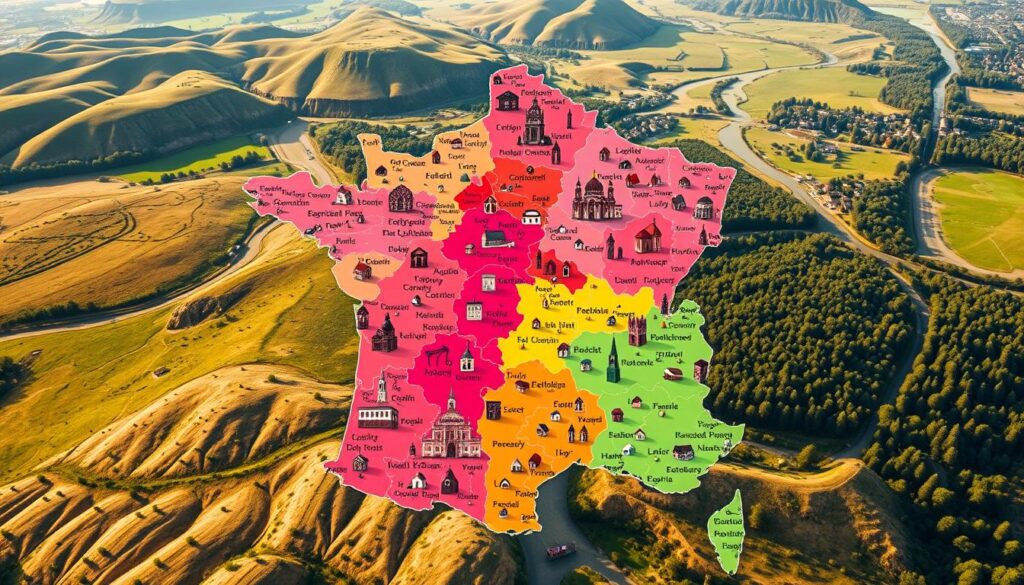
Alsace: Crossroads of Tradition
Alsace’s unique position created a safe space for reformers. While other areas banned non-Catholic worship, this border region maintained Lutheran practices. Today, 17% of Bas-Rhin residents identify with these traditions – France’s highest concentration.
Southern Strongholds
The sunbaked hills of Languedoc tell a different story. Here, the reformed church took root through centuries of conflict. “Our steeples outlasted kings’ decrees,” says Pastor Émilie Rousseau from Gard. Her parish traces its lineage to 1560s Huguenot meetings.
| Region | Department | Protestant Presence |
|---|---|---|
| Alsace | Bas-Rhin | 17.4% |
| Alsace | Haut-Rhin | 7.3% |
| Languedoc | Gard | 7.2% |
| Rhône-Alpes | Drôme | 6.8% |
Modern communities balance heritage with new influences. Urban centers like Paris blend historic parishes with multicultural congregations. This mix keeps worship spaces vibrant while honoring regional roots.
Modern Developments in Protestant Churches France and Their Contemporary Relevance
France’s spiritual tapestry keeps evolving with fresh threads of belief. At the heart of this change stands the French Protestant Federation, founded in 1905 to unite diverse faith groups under one banner. This umbrella organization now connects over 1,400 parishes and 1,600 spiritual leaders nationwide.
The Rise of Evangelical and Pentecostal Movements
Dynamic new expressions of faith are reshaping communities. An Evangelical congregation opens its doors every 10 days, with 700,000 now participating in these vibrant gatherings. This growth contrasts with shrinking numbers in traditional denominations, though mergers like the 2013 United Protestant Church show historic groups adapting.
The French Protestant Federation: Unity Amid Diversity
As the main voice for 900,000 members, the Federation bridges ancient traditions and modern practices. Its 25-member council represents everyone from Reformed traditionalists to charismatic Pentecostals. “Our strength lies in shared values,” explains a Federation spokesperson, “not uniform beliefs.”
This cooperative body also tackles social issues, proving ancient institutions can address contemporary needs. With membership applications still rising, the Federation demonstrates how varied movements can thrive together while keeping individual identities intact.
FAQ
How did Protestantism begin in France?
The movement grew from 16th-century Reformation ideas, particularly Calvinism. Followers, called Huguenots, faced persecution but shaped early communities through underground networks and theological debates.
Why was the Edict of Nantes important?
Issued in 1598, it granted limited religious freedom to Huguenots, ending decades of conflict. Its 1685 revocation by Louis XIV forced many to flee or practice secretly, weakening the community for generations.
Where are Protestant groups concentrated today?
Regions like Alsace and Occitanie retain strong ties due to historical tolerance or resistance. Cities such as Montpellier and Strasbourg still host active parishes and cultural landmarks.
How did regional conflicts shape these communities?
Wars of Religion in the 1500s caused mass displacement. Later, migration to Switzerland or Germany preserved traditions, while some returned post-1789 to rebuild congregations.
What newer movements are growing now?
Evangelical and Pentecostal groups attract younger members with contemporary worship styles. Their focus on outreach and social projects contrasts with traditional Reformed or Lutheran practices.
What role does the French Protestant Federation play?
Founded in 1905, it unites 30+ denominations, promoting dialogue and shared values. It advocates for religious freedom and represents members in national discussions on ethics and education.