Spain’s spiritual landscape extends far beyond its iconic cathedrals. Over 4,300 evangelical congregations now thrive nationwide, with vibrant communities in cities like Madrid and coastal towns alike. This growth reflects the country’s evolving cultural tapestry, where international residents and travelers find welcoming spaces for multilingual worship.
These faith centers span 803 municipalities, offering services in English and other languages. Major urban hubs host the highest concentrations—Madrid alone has 420 locations. Catalonia leads among regions with 928 gathering places, while Andalusia and Valencia follow closely. Many congregations blend global traditions with local customs, creating unique cultural bridges.
The expansion of these communities mirrors Spain’s demographic shifts. Over two decades, their presence has tripled compared to other minority faith groups. Whether you’re relocating or vacationing, these spaces provide connection points beyond typical tourist experiences.
Key Takeaways
- Spain hosts 4,359 evangelical congregations across 803 towns and cities
- Madrid (420) and Barcelona (220) have the highest urban concentrations
- Catalonia leads regions with 928 worship locations
- English-speaking services cater to international visitors and residents
- Communities have grown 3x faster than other minority faith groups since 2000
Overview of Spain’s Protestant Spiritual Landscape
Spain’s religious history holds a hidden chapter marked by transformation and resilience. For centuries, spiritual expression existed under strict control, but recent decades reveal surprising shifts reshaping the nation’s identity.
Historical Background and the Inquisition’s Impact
The 16th century brought brutal suppression of alternative beliefs. Between 1559-1562, authorities destroyed over 5,000 religious texts in coordinated burnings. “This wasn’t just censorship – it was cultural annihilation,” notes historian María López. By 1600, only 0.2% of the population practiced non-Catholic faiths.
Modern Shifts and the Rise of Evangelical Communities
Today’s landscape tells a different story. Urban centers host thriving groups where 40% of attendees are Latin American immigrants. These gatherings often feature:
- Bilingual worship services
- Community support programs
- Cultural exchange events
| Group | 2000 | 2021 |
|---|---|---|
| Catholic Identification | 84.7% | 61.4% |
| Religious Minorities | 1.1% | 2.6% |
| Non-Believers | N/A | 34.2% |
This evolution reflects broader social changes. Over 20 years, spiritual exploration has become part of Spain’s urban fabric, particularly among younger generations and international residents.
A Guide to Protestant Churches in Spain
From bustling cities to sun-kissed coasts, Spain’s faith communities blend global traditions with local warmth. Modern gathering spots cater to diverse needs, offering everything from beachside baptisms to mountain-view meditations.
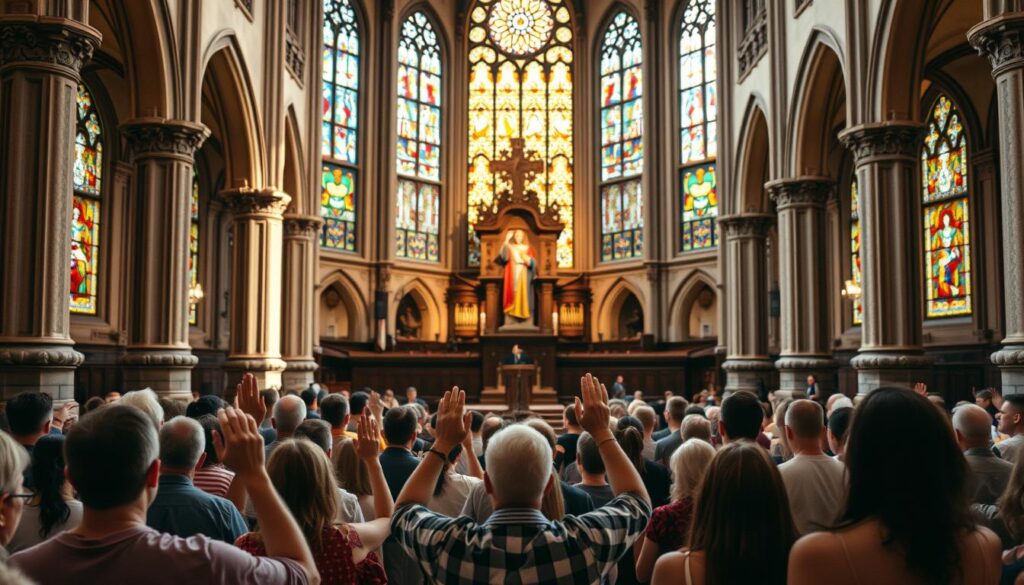
International Church Examples and Their Services
Alicante International Christian Assembly welcomes visitors with trilingual Sunday gatherings at 11 AM. Madrid’s Mountainview International Church provides English worship with Spanish translation, while Barcelona 121 Church hosts evening services featuring modern music. Many maintain active websites for streaming options and event updates.
Urban Hubs vs. Rural Outreach
Metropolitan areas like Barcelona and Madrid boast multiple places of worship within walking distance of transit hubs. Coastal towns focus on seasonal programs for international residents. Rural congregations often partner with local charities, blending spiritual practice with community mission work.
Diverse Worship Practices and Multilingual Services
Sunday rhythms vary widely across these groups:
- Calahonda Baptist Church mixes traditional hymns with gospel influences
- Barcelona International Church streams bilingual Bible studies
- Madrid International Church offers afternoon services in three languages
Most communities host small groups for book clubs, language exchanges, and volunteer projects. Digital platforms like YouTube and Facebook keep global members connected between visits.
Trend Analysis of Evangelical Expansion in Spain
Urban centers across the Iberian Peninsula reveal fascinating shifts in spiritual participation. The Observatory of Religious Pluralism tracks these changes through detailed demographic studies, offering insights into modern faith trends.
Statistical Insights from the Observatory of Religious Pluralism
Recent data shows evangelical groups account for 56% of Spain’s non-Catholic places of worship. Their growth outpaces other faith communities, with 20 consecutive years of expansion. “This movement reshapes urban spiritual maps,” observes a Barcelona-based researcher.
| Religion | Places of Worship |
|---|---|
| Roman Catholic | 22,947 |
| Evangelical | 4,359 |
| Muslim | 1,749 |
| Jehovah’s Witnesses | 633 |
The Role of Migration and Urban Concentration
Latin American immigrants drive much of this growth. Cities like Madrid host 420 evangelical communities – more than all Muslim and Jehovah’s Witness facilities combined. Coastal regions see similar patterns, while rural areas remain underserved.
Three key factors fuel this trend:
- Cultural ties from Latin American members
- Multilingual services attracting global residents
- Strategic focus on high-population areas
These dynamics create vibrant hubs where 65% of attendees are under 45. As urban populations grow, so does the demand for diverse worship experiences.
Conclusion
Spain’s spiritual identity continues rewriting its narrative through thriving international faith communities. Over 4,300 places of worship now create accessible spaces for global visitors and residents, blending cultural traditions with modern practices.
Digital tools like church websites and social media pages simplify finding services. Many groups update their online presence weekly, sharing multilingual event details and streaming options. This tech-savvy approach helps people connect before arriving.
These communities offer more than Sunday gatherings. Weekly mission work, small groups, and cultural exchanges build lasting bonds. “Our fellowship meals feel like mini United Nations assemblies,” shares a Madrid-based leader.
From coastal towns to urban hubs, these places of worship reflect Spain’s evolving demographics. Their growth story shows how faith communities adapt, creating bridges between cultures while maintaining vibrant spiritual lives.
FAQ
How has Spain’s history influenced faith communities today?
The Inquisition’s suppression of non-Catholic beliefs left a lasting impact, but modern Spain now embraces greater religious diversity. Groups like evangelical communities have grown steadily, fostering vibrant worship spaces nationwide.
Are there English-speaking congregations available?
Yes! Cities like Madrid and Barcelona host international fellowships such as Barcelona International Church, offering multilingual services. These hubs cater to expats and locals seeking connection through shared faith practices.
What role does migration play in spiritual growth here?
Newcomers from Latin America, Africa, and Europe have enriched urban centers with dynamic mission work. This cultural blend fuels outreach programs and supports diverse groups seeking fellowship.
Do rural areas have active worship centers?
While urban hubs dominate, smaller towns are seeing grassroots efforts. Organizations like Alianza Evangélica Española focus on rural outreach, creating intimate gatherings that strengthen local connections.
How do worship styles vary across the country?
From contemporary bands to traditional hymns, practices reflect each community’s identity. Many integrate tech-friendly tools like live streaming to engage younger generations and global audiences.
Where can I find data on faith-based demographics?
The Observatory of Religious Pluralism provides updated stats on population trends. Their reports highlight growth in evangelical groups and shifting attendance patterns since 2020.