What does it mean to follow Jesus through a Protestant lens? For millions, this faith tradition offers a distinct way to understand his life and teachings. Let’s explore how this perspective developed and why it continues to shape beliefs today.
Christianity has many voices, each interpreting spiritual truths through unique cultural and historical contexts. The Protestant view emphasizes direct engagement with scripture and personal faith. This approach began during the Reformation but remains vibrant in modern worship and daily life.
We’ll look at core ideas like salvation through grace and the role of scripture in shaping beliefs. You’ll see how these teachings influence everything from church practices to personal relationships. Our goal isn’t to debate differences but to appreciate how communities connect with divine truth in meaningful ways.
Key Takeaways
- Protestant views of Jesus grew from Reformation-era challenges to church authority
- Scripture plays a central role in understanding Christ’s nature and mission
- Salvation through faith alone remains a cornerstone belief
- Cultural shifts continue to shape modern interpretations
- This tradition values personal spiritual experiences alongside community practices
Historical Context and Theological Origins
Sixteenth-century Europe saw religious ideas clash like never before. Reformers demanded changes to church practices, sparking debates that still shape worship today. Their arguments about scripture and salvation created lasting divisions – and unexpected connections.
The Reformation and Its 500-Year Legacy
Martin Luther’s 95 Theses didn’t just challenge indulgences – they reshaped how people related to faith. By translating the Bible into common languages, reformers put sacred texts directly into believers’ hands. This shift made personal scripture study central to spiritual life.
Three key changes emerged from this period:
- Salvation through faith rather than deeds
- Scripture as ultimate authority over church tradition
- Simplified worship practices focused on preaching
Ecumenical Dialogue and Shifting Perspectives
Modern churches still grapple with Reformation-era questions. The 1952 Lund Principle captures this tension perfectly:
“Act together in all matters except those where deep differences compel separation”
Recent efforts show progress. Pope Francis’ joint service with Lutherans marked the Reformation’s 500th anniversary. Yet core differences remain, particularly around:
| Issue | Historic View | Modern Dialogue |
|---|---|---|
| Scripture vs Tradition | Contradictory | Complementary aspects |
| Salvation | Faith vs Works | Shared emphasis on grace |
| Church Authority | Centralized vs Local | Collaborative models |
These conversations continue evolving as new generations reinterpret ancient truths. While some differences persist, the shared focus on Christ’s teachings offers common ground for future dialogue.
Understanding the Protestant Jesus: Faith, Salvation, and Worship
Central to this spiritual framework is the conviction that Christ embodies both divine authority and human experience. This dual nature shapes every aspect of belief, from individual redemption to collective practices.
Scriptural Foundations and the Nature of Jesus
The Word of God serves as the ultimate guide for understanding Christ’s role. Hebrews 8 clarifies his position: seated at the Father’s right hand, fully divine yet fully human. This God-man concept forms the bedrock of spiritual identity.

Believers emphasize spiritual connection over physical presence. As 2 Corinthians 5:7 states,
“We live by faith, not by what we see”
. This principle fuels worship through prayer and scriptural engagement rather than material symbols.
Salvation, Ministry, and a Living Faith
Salvation emerges as a gift received through trust, not earned by deeds. Churches focus ministry efforts on sharing this message, urging people to embrace Christ’s sacrifice as their sole path to redemption.
Three markers define this approach:
- Direct access to God through the Son
- Communal worship centered on biblical teaching
- Personal responsibility in spiritual growth
This framework creates dynamic faith practices. Followers view daily obedience as worship, transforming routine actions into expressions of devotion. The truth of scripture becomes both compass and catalyst for meaningful living.
Comparing Protestant and Catholic Views on Jesus
Two ancient branches of Christianity share core beliefs yet express them through distinct practices. These differences stem from how each tradition interprets scripture and applies it to modern worship.
Eucharist: Symbolism vs. Spiritual Presence
Catholic teachings state the Eucharist becomes Christ’s actual body and blood during Mass. Their doctrine declares:
“The whole Christ is truly contained in the Eucharist”
This belief leads to practices like Eucharistic adoration, where believers pray before consecrated bread. Many churches display it in ornate vessels called monstrances.
Protestant communities view communion differently. They see bread and wine as symbols recalling Christ’s sacrifice. This way of remembrance focuses on spiritual connection rather than physical transformation.
Different Paths to Salvation and Ministry
Catholic theology ties salvation to sacraments like baptism and Eucharist. John 6:53’s command to “eat his flesh” shapes this approach. Ministry aims to bring people into sacramental life.
Protestant traditions emphasize faith as the sole requirement for redemption. Their churches prioritize preaching the Word and personal relationships with Christ. Ministry success measures often focus on individual spiritual growth.
| Area | Catholic Practice | Protestant Practice |
|---|---|---|
| Communion | Real presence | Symbolic remembrance |
| Scripture | Church + Bible | Bible alone |
| Leadership | Priestly mediation | Direct access |
Both traditions honor Christ through their distinct approaches. While practices differ, shared devotion to the man from Nazareth continues to shape billions of lives worldwide.
Evangelical vs Mainline: Divergent Perspectives on Christ
Modern Christianity reveals a tapestry of beliefs within its Protestant branches. Two distinct threads – evangelical and mainline traditions – weave contrasting patterns in how they understand spiritual truth. These differences shape worship styles, outreach efforts, and interpretations of sacred texts.

Core Beliefs and the Role of Personal Conversion
Evangelical communities hold four foundational principles. They view scripture as free from error, teach salvation through Christ alone, require personal conversion experiences, and prioritize evangelism. Many describe faith as a transformative experience, often marked by specific “born-again” moments.
This approach creates vibrant outreach programs. Churches focus on sharing the word through mission trips and youth ministries. As one pastor explains:
“Our calling is to make disciples, not just attendees”
Modernist Interpretations and Traditional Conservatism
Mainline Protestants often approach theology differently. They see the Bible as God’s word expressed through human authors. This view allows for reinterpretation across generations while maintaining core teachings.
| Aspect | Evangelical | Mainline |
|---|---|---|
| Scripture | Literal truth | Contextual message |
| Salvation | Exclusive path | Multiple possibilities |
| Outreach | Conversion focus | Social justice emphasis |
Both traditions value serving communities, but through different lenses. While evangelicals might build churches in new areas, mainline groups often establish food banks or literacy programs. These traditions demonstrate how shared devotion can express itself in varied, meaningful ways.
Cultural Influences on the Perception of Jesus
Modern faith communities navigate a unique challenge: making ancient truths resonate in a TikTok world. This tension between timeless teachings and contemporary expression shapes how believers envision sacred figures.
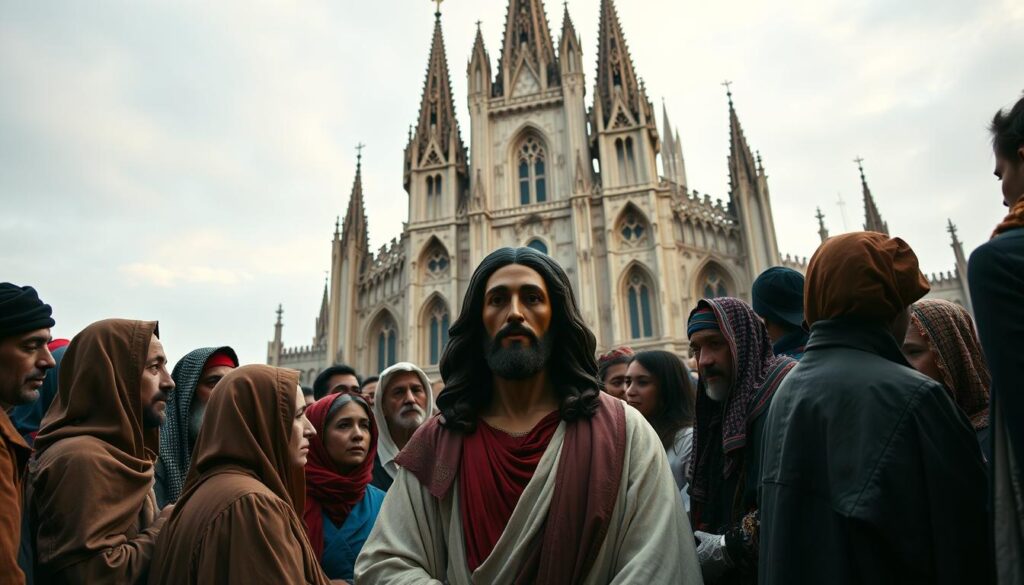
The Impact of American Pop Culture on Faith
Evangelical groups often blend spirituality with mainstream trends. At Holy Land USA, visitors snack on Goliath Burgers while kids wear “The Rock” t-shirts referencing biblical stories. As journalist Peter Feuerherd notes:
“They’re pioneers in baptizing pop culture into the Christian realm”
This approach aims to make spiritual concepts relatable. Three key strategies emerge:
- Using familiar music styles in worship
- Designing casual church environments
- Creating faith-based entertainment venues
Tradition Versus Contemporary Context in Worship
Other communities prioritize solemnity over relevance. G.K. Chesterton captured this perspective, suggesting divine joy exceeds human comprehension:
“His mirth was too great for God to show us when He walked upon our earth”
These contrasting views spark debates about appropriate reverence. Consider how different groups approach key aspects:
| Aspect | Modern Approach | Traditional View |
|---|---|---|
| Worship Style | Casual, interactive | Formal, liturgical |
| Jesus’ Humanity | Emphasized through relatability | Balanced with divine mystery |
| Engagement Methods | Pop culture integration | Historical continuity |
Both perspectives seek to honor sacred truths while connecting with people today. The challenge lies in maintaining depth while making faith feel alive in our time.
Conclusion
The journey through Protestant beliefs reveals how spiritual truth thrives in diverse forms. For five centuries, scripture-centered faith has shaped communities while adapting to cultural shifts. From Reformation roots to modern churches, this tradition maintains its core: salvation through grace, not deeds.
Distinct approaches emerge even within Protestantism. Evangelical enthusiasm for personal conversion contrasts with mainline focus on social justice. Yet both honor Christ as source of redemption. Differences from Catholic views – like symbolic communion versus sacramental presence – highlight unique paths to sacred connection.
Modern believers balance ancient teachings with contemporary life. Some blend worship with pop culture; others preserve liturgical depth. What unites them? Shared conviction that divine authority meets human experience in transformative ways.
Understanding these variations fosters richer dialogue across traditions. Whether through vibrant ministries or quiet devotion, Protestant communities continue reimagining faith’s role in our world – always anchored in the living Word.
FAQ
How do Reformation teachings about Christ differ from older traditions?
The Reformation emphasized Scripture alone as the ultimate authority, shifting focus from church tradition to a direct relationship with God. Leaders like Martin Luther stressed faith over rituals, reshaping how communities viewed Christ’s role in salvation.
Why do some faith groups see communion as symbolic rather than literal?
Many Protestant traditions view the Eucharist as a memorial of Christ’s sacrifice, highlighting spiritual connection over physical presence. This contrasts with beliefs in transubstantiation, reflecting differing interpretations of biblical accounts.
What role does personal conversion play in Evangelical beliefs?
Evangelicals often prioritize individual repentance and a transformative encounter with Christ. This contrasts with Mainline groups, which may emphasize communal faith journeys or social justice as expressions of living faith.
How has American culture influenced modern views of Christ?
Pop culture, media, and shifting social values have led some communities to reinterpret Christ’s teachings in contemporary contexts. This includes blending traditional worship with modern music or addressing current issues through a faith-based lens.
Are Protestant and Catholic teachings on salvation fundamentally different?
While both affirm Christ’s central role, Protestants often teach salvation through faith alone, whereas Catholic theology integrates faith with sacraments and works. These differences stem from interpretations of Paul’s letters and the Gospels.
Why do debates about biblical authority persist in churches today?
Tensions arise between literalist readings and scholarly, context-driven approaches. Issues like gender roles or science-vs-scripture dialogues often reflect deeper questions about how to apply ancient texts to modern life.
How do traditions balance historical practices with new worship styles?
Many congregations blend hymns with contemporary music or use multimedia in services. This mix aims to honor heritage while making spiritual experiences accessible to younger generations, fostering unity across diverse age groups.